Small Pearl Hoop Earrings: Technical Sizing & Metal Guide
An expert technical guide to small pearl hoop earrings, covering wire gauges, pearl proportions, alloy hardness, and closure failure modes.

The Anatomy and Setting Mechanics
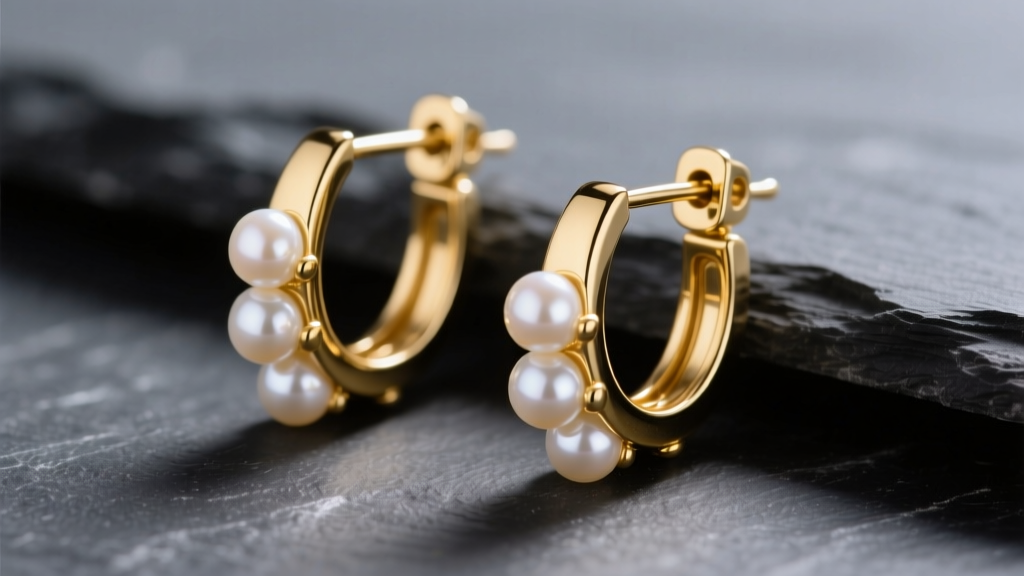
When evaluating small pearl hoop earrings, the structural integrity of the setting is just as critical as the aesthetic appeal. Unlike stud earrings that sit flush against the earlobe, hoops are subject to continuous kinetic stress from jaw movement, hair brushing, and clothing friction. Therefore, the method by which the pearl is secured to the metal wire dictates the lifespan of the piece.
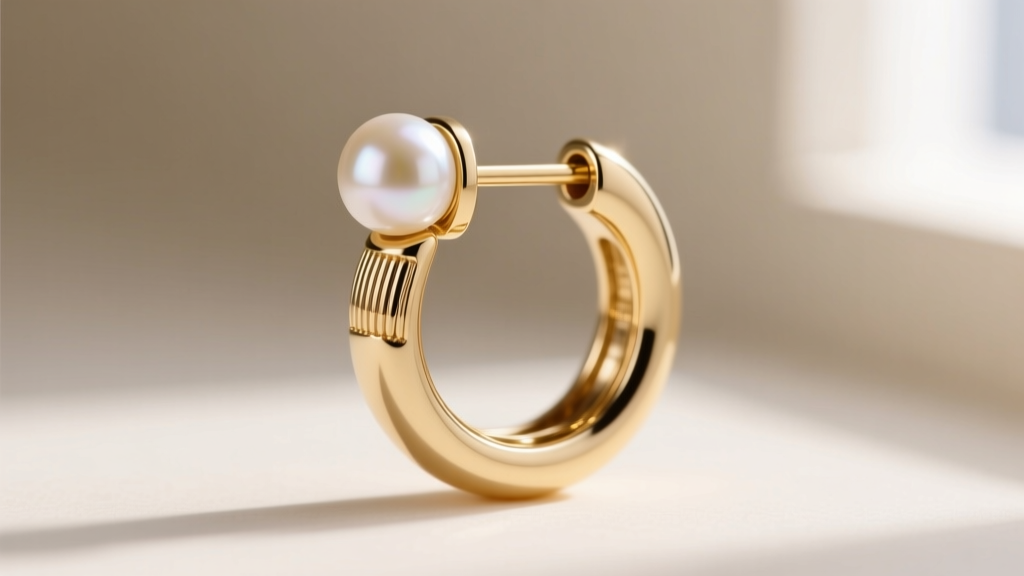
In high-end manufacturing, jewelers utilize a 'peg and cup' setting for half-drilled pearls. The metal wire terminates in a micro-cup (typically 0.8mm to 1.2mm in diameter), and the pearl is drilled to a precise depth of roughly 40% of its total diameter. This half-drilled approach preserves the nacre's structural integrity, preventing the blowout fractures common in fully drilled pearls. The bonding agent used is not standard jewelry glue, but a specialized two-part jeweler's epoxy or high-viscosity cyanoacrylate designed to withstand the natural oils and temperature fluctuations of human skin. Fully drilled pearls threaded onto a continuous wire are generally avoided in premium small hoops, as they tend to spin, exposing the drill hole and creating an uneven visual weight.
Pearl Sizing and the Proportion Matrix
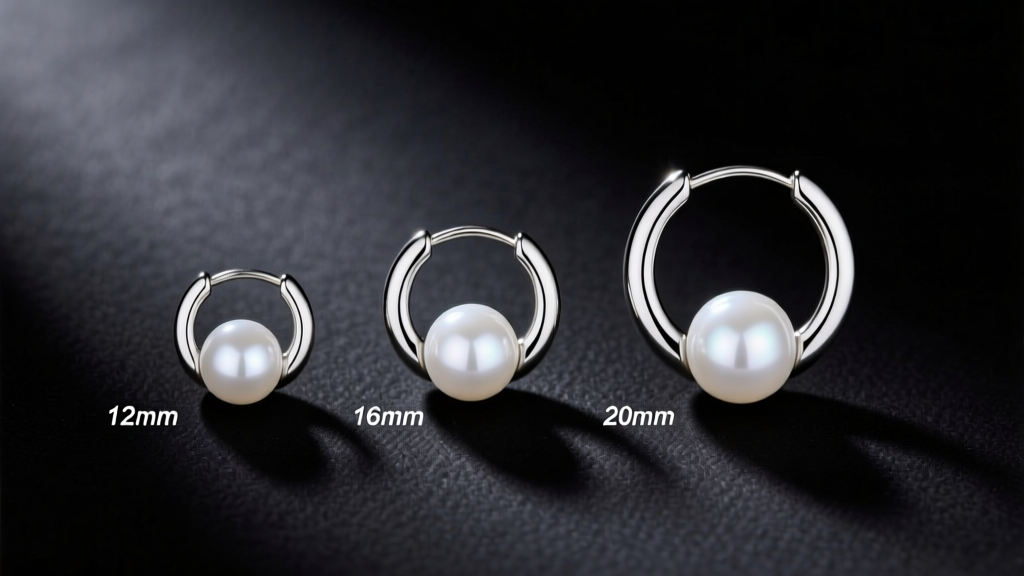
The term 'small' in hoop earrings generally refers to an inner diameter (ID) ranging from 12mm (huggies) to 25mm. However, pairing a pearl with a small hoop requires strict adherence to visual weight ratios. If a pearl is too large for the hoop's diameter, the earring loses its structural elegance and appears bottom-heavy, which can also cause the hoop to sag forward on the earlobe due to an unfavorable center of gravity.
According to classical jewelry design principles, the pearl's diameter should not exceed 40% of the hoop's inner diameter. This ensures the metal remains visible, maintaining the recognizable hoop silhouette while allowing the pearl to act as a focal accent rather than an overwhelming pendant.
| Hoop Inner Diameter | Ideal Pearl Size | Visual Weight Ratio | Style Classification |
|---|---|---|---|
| 12mm (Huggie) | 4.0mm - 5.0mm | 33% - 41% | Minimalist / Stacked |
| 16mm (Small Hoop) | 5.5mm - 6.5mm | 34% - 40% | Everyday Classic |
| 20mm (Medium-Small) | 6.5mm - 7.5mm | 32% - 37% | Statement / Drop |
| 25mm (Standard Small) | 7.0mm - 8.0mm | 28% - 32% | Traditional Hoop |
Metallurgy: Wire Gauge and Alloy Hardness
The metal wire forming the hoop must balance malleability for insertion with rigidity to support the pearl's weight. This balance is governed by the alloy's Vickers Hardness (HV) and the wire's gauge thickness.
Wire Gauge Specifications
For small pearl hoop earrings, the wire thickness is a primary indicator of quality. Mass-market manufacturers often use 22-gauge (0.64mm) or 20-gauge (0.81mm) wire to reduce precious metal costs. However, an 18-gauge (1.02mm) or 16-gauge (1.29mm) wire is the structural sweet spot. Thicker wire prevents the hoop from warping into an oval shape when subjected to lateral pressure, ensuring the closure mechanism continues to align perfectly over years of use.
Alloy Purity and Hypoallergenic Standards
- 14k Gold (58.5% Au): With a Vickers hardness of approximately 135 HV, 14k gold offers superior tensile strength. It is highly resistant to bending and is the optimal choice for hinged clicker closures that require precise mechanical tolerances.
- 18k Gold (75% Au): Softer and richer in color (~125 HV), 18k gold is more prone to micro-scratches and deformation. If an 18k hoop is chosen, it must be engineered with a thicker gauge or a reinforced hollow-tube construction to maintain structural rigidity.
- Platinum 950: While platinum has a lower initial HV (~110 HV), it work-hardens rapidly and possesses immense density. Platinum small hoops are virtually indestructible regarding snap fractures, though they carry a significant weight premium.
For buyers with contact dermatitis, ensuring the alloy is strictly nickel-free is paramount. Reputable manufacturers adhere to the ASTM International standards for nickel release in body jewelry, guaranteeing that the copper, silver, and zinc alloys used in the gold mixture are biocompatible.
Closure Mechanisms and Mechanical Failure Modes
The closure is the most common point of failure in hoop earrings. Understanding the mechanics of these closures allows buyers to select a pair that matches their lifestyle and dexterity requirements.
Hinged Snap (Clicker) Closures
The hinged clicker relies on a microscopic tension spring or a precision-machined groove that locks the post into the receiving tube. The satisfying 'click' indicates the groove is fully seated. Failure Mode: Over time, dead skin cells, lotions, and dust can compact inside the receiving tube. This debris prevents the latch from seating fully, leading to the earring silently unlatching and falling out. Regular ultrasonic cleaning or flushing with isopropyl alcohol is required to maintain the mechanical tolerance.
Latch-Back (Saddleback) Closures
This traditional design features a hinged wire that snaps into a hollow saddle on the opposite end. Failure Mode: The wire post can bend if forced at an incorrect angle during insertion. Once bent, the friction fit is compromised, and the earring will feel loose on the lobe. Furthermore, the hinge pin itself can experience metal fatigue and snap if the earring is repeatedly opened beyond its intended 90-degree angle.
Pearl Grading and Nacre Thickness
Because small pearl hoop earrings position the gemstone in the peripheral vision, the pearl's luster and surface quality are immediately noticeable. According to the Gemological Institute of America (GIA), nacre thickness and crystallization are the primary drivers of a pearl's optical performance.
For saltwater Akoya pearls—frequently used in fine small hoops due to their perfect spherical shape and mirror-like luster—a minimum nacre thickness of 0.4mm is required for long-term durability. Pearls with thinner nacre (often found in commercial-grade jewelry) will eventually peel or chalk when exposed to the acidic pH of human sweat and cosmetics. Freshwater pearls, while composed of solid nacre, often exhibit a softer, more satiny luster due to their non-bead-nucleated cultivation process. When selecting small hoops, prioritize 'Hanadama' certified Akoya or 'Gem-Grade' round freshwater pearls to ensure the surface is free of the calcification bands and mottling that degrade light reflection.
Expert Calibration Tip: When evaluating luster in a retail setting, do not rely on the store's halogen spotlights. Take the small pearl hoop earrings to a shaded area or use the ambient light from a smartphone screen. High-quality nacre will reflect a sharp, distinct image of the light source, whereas low-quality nacre will produce a blurry, diffused glow.
Pricing Tiers and Value Assessment
The market for small pearl hoop earrings is heavily stratified based on material provenance and manufacturing precision. Understanding these tiers prevents overpaying for commercial-grade components disguised as fine jewelry.
- Tier 1: Commercial Fashion ($40 - $90)
Typically features 2mm-3mm 'rice' or button-shaped freshwater pearls on 14k gold-filled or sterling silver wire (20g+). Closures are often simple continuous loops or low-tolerance latch-backs. The adhesive used is prone to degradation within 12-18 months of daily wear. - Tier 2: Fine Jewelry ($250 - $550)
Features 5mm-6mm AA+ grade Akoya or high-round freshwater pearls on solid 14k gold 18-gauge wire. Settings are peg-and-cup with jeweler's epoxy. Hinges are CNC-machined for a secure click. This is the optimal tier for everyday, heirloom-quality wear. - Tier 3: Luxury & Haute Joaillerie ($800 - $2,500+)
Utilizes 6.5mm+ Hanadama-certified Akoya or rare South Sea pearls set in 18k gold or Platinum 950. The metalwork often includes micro-pave diamond accents on the hoop's face. Closures feature internal Omega-spring mechanisms for tension-adjustable security. Brands in this tier provide lifetime servicing for hinge maintenance.
Final Calibration: Choosing Your Pair
Selecting the ideal pair of small pearl hoop earrings requires looking past the initial sparkle and evaluating the engineering beneath the surface. By prioritizing an 18-gauge wire thickness, a half-drilled peg setting, and a pearl diameter that respects the 40% visual weight ratio of the hoop, you secure a piece that is not only visually harmonious but mechanically engineered to endure. For further verification of metal purity and ethical sourcing, always request documentation aligned with the Jewelers of America guidelines, ensuring your investment is as ethically sound as it is structurally resilient.


