2026 Gift Guide: Best Small Turquoise Earrings for Every Occasion
Discover the perfect small turquoise earrings for every occasion in our 2026 gift guide. Learn about matrix types, metal pairings, and styling.

Why Small Turquoise Earrings Make the Perfect Gift
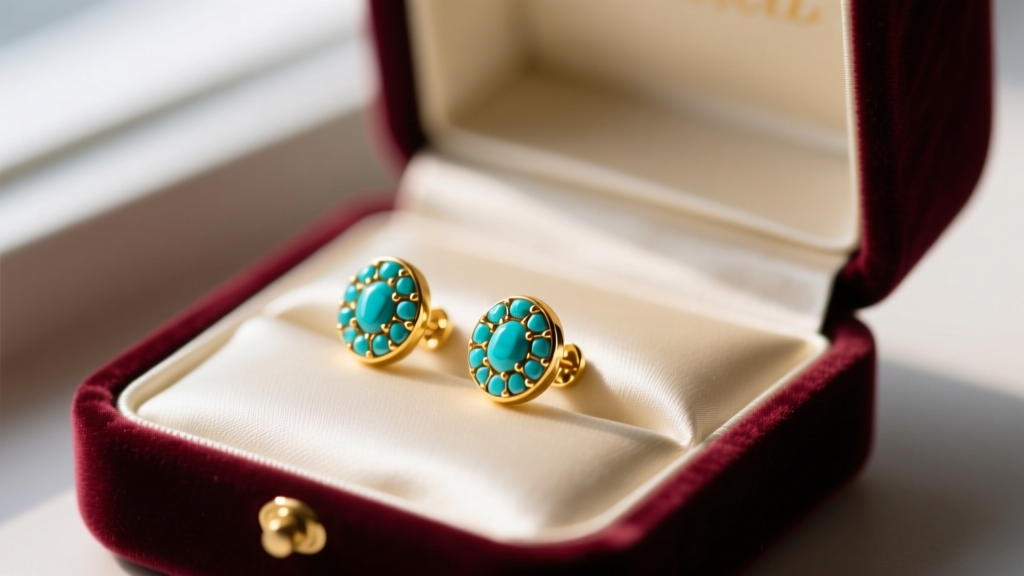
When it comes to gifting fine jewelry, finding a piece that balances everyday wearability with striking visual impact can be a challenge. Enter small turquoise earrings. In 2026, the shift away from oversized, heavy statement pieces toward curated, minimalist ear stacks has made petite turquoise studs, huggies, and delicate drops a top-tier gifting choice. Turquoise offers a universally flattering pop of color that complements every skin tone, from deep mahogany to fair porcelain.
However, gifting turquoise requires more than just picking a pretty blue stone. Turquoise is a relatively soft, porous gemstone (ranking 5 to 6 on the Mohs hardness scale), meaning the setting, the metal pairing, and the stone's treatment history all dictate how well the earrings will survive daily wear. This comprehensive guide will walk you through the gemological nuances, occasion-matching strategies, and technical specifications needed to select the perfect pair of small turquoise earrings for the special someone in your life.
Decoding Turquoise: Matrix, Origin, and Treatment Grades
Not all turquoise is created equal. The value, durability, and aesthetic of the stone depend heavily on its origin and whether it has undergone stabilization. Natural, untreated turquoise is rare and highly porous, meaning it can absorb oils and lotions from the skin, altering its color over time. To combat this, most commercial turquoise is 'stabilized' with a clear epoxy resin to harden the stone and lock in its color.

For the discerning gift-giver, understanding the origin of the stone adds a layer of thoughtfulness to your present. Here is a breakdown of the most common turquoise varieties you will encounter in fine jewelry, along with their typical pricing for small, 14k gold stud settings.
| Origin / Type | Visual Profile | Treatment Status | Price Range (14k Gold Studs) |
|---|---|---|---|
| Sleeping Beauty (AZ) | Solid, bright sky blue with little to no matrix (veining). | Often stabilized or Zachery-treated. | $250 - $450 |
| Kingman (AZ) | Light to deep blue with distinct brown or black spiderweb matrix. | Typically stabilized for structural integrity. | $180 - $350 |
| Persian / Neyshabur | Intense, deep robin's egg blue, usually matrix-free. | Natural (untreated) or lightly waxed. | $400 - $800+ |
| Reconstituted | Uniform blue, made from turquoise dust mixed with resin. | Heavily processed; not considered 'natural'. | Under $100 |
Pro-Tip: Always look for jewelers who disclose their treatment methods. The Zachery process, for instance, is a highly respected, proprietary stabilization method that enhances the stone's luster without adding polymers or dyes.
Occasion Matching: Which Style Fits Her Best?
The beauty of small turquoise earrings lies in their versatility. However, the specific style you choose should align with the recipient's lifestyle and the occasion you are celebrating.
Everyday & Office Wear: Bezel-Set Studs
For the woman who never takes her jewelry off, bezel-set turquoise studs are the ultimate gift. Because turquoise is prone to chipping if knocked against hard surfaces, a full metal bezel (where the gold or platinum completely wraps around the edge of the stone) offers maximum protection. A 4mm to 6mm bezel-set stud provides a subtle, sophisticated flash of color that adheres to strict corporate dress codes while still allowing for personal expression. Opt for a Sleeping Beauty stone here, as the lack of dark matrix reads as more formal and polished.
Milestone Birthdays & Anniversaries: Sleeping Beauty Drops
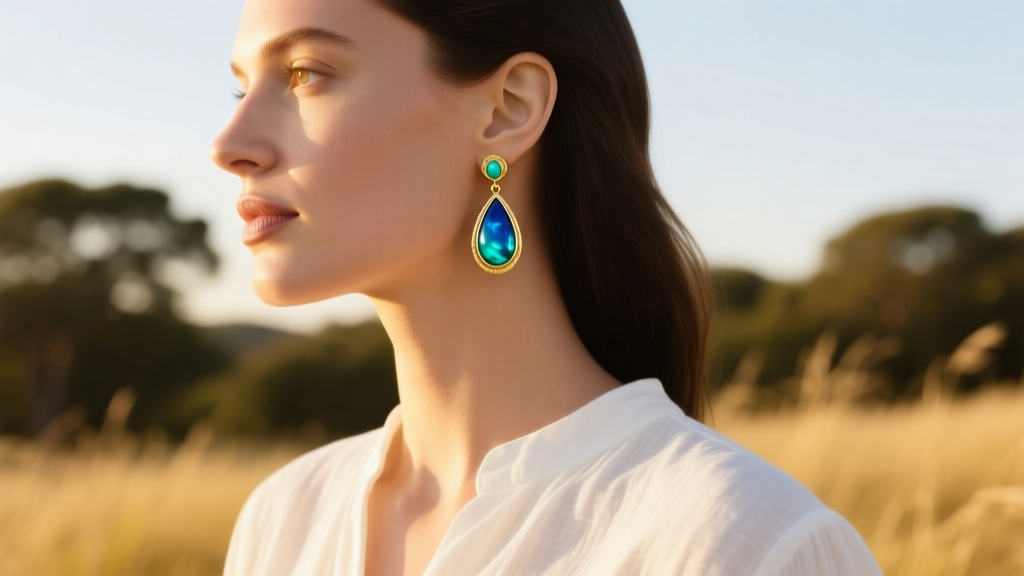
If you are celebrating a 30th birthday or a 5th anniversary (where turquoise is the traditional gemstone), a small drop earring elevates the gift. Look for a design where a petite turquoise briolette or teardrop cabochon hangs from a diamond-accented leverback or post. The movement of a drop earring catches the light and draws attention to the jawline and neck, making it an elegant choice for evening wear and milestone celebrations.
Festival & Boho Gifting: Raw Stone Huggies
For the free-spirited recipient who loves a curated, textured ear stack, turquoise huggie hoops are a phenomenal choice. In 2026, the trend leans toward 'raw' or slightly uneven turquoise beads set into thick, textured gold huggies. The contrast between the organic, unpolished look of the stone and the high-shine recycled gold creates a bohemian yet luxurious aesthetic perfect for weekend wear, travel, and festival seasons.
Metal Pairings and Gauge Specifications for Sensitive Ears
The metal you choose for small turquoise earrings is just as critical as the stone itself, both for aesthetic harmony and dermatological safety.
- 14k or 18k Yellow Gold: The classic pairing. Yellow gold warms up the blue tones of the turquoise and provides a vintage, Southwestern heritage feel. 14k is recommended over 18k for bezels, as the higher copper content in 14k makes the metal slightly harder and more protective for the soft stone.
- Platinum or White Gold: Offers a crisp, modern, and high-contrast look. White metals make the blue of the turquoise appear cooler and more vibrant. This is an excellent choice for winter birthdays or December birthstone gifts.
- Sterling Silver: While traditional, silver requires caution. Silver tarnishes, and the chemicals used to clean tarnished silver can damage porous turquoise. Furthermore, moisture can get trapped between the silver backing and the stone, causing the turquoise to darken or turn green over time. If gifting silver, ensure the stone is fully sealed or stabilized.
The Gauge Factor: Most standard earring posts are 20-gauge (0.81mm thick). However, if you are gifting turquoise drops or slightly heavier huggies, seek out 18-gauge (1.02mm) posts. A thicker post prevents the 'sag' that occurs when a heavy stone pulls on a thin wire, ensuring the turquoise faces forward rather than drooping toward the floor. For cartilage piercings, verify the recipient's gauge, as 16-gauge (1.2mm) is the standard for many upper-ear piercings.
How to Verify Authenticity Before You Buy
The market is unfortunately flooded with dyed howlite and magnesite masquerading as turquoise. When investing in fine jewelry, you must know how to verify authenticity. According to the Gemological Institute of America (GIA), genuine turquoise will exhibit natural variations in color and matrix that are impossible to perfectly replicate in a lab. Dyed imitations often show color concentration in the cracks or veins of the stone when viewed under a jeweler's loupe.
'Turquoise is one of the most commonly imitated gemstones. Buyers should always request disclosure of any dyes, waxes, or polymer treatments from the seller, as these drastically affect both the value and the care requirements of the stone.' — Lang Antiques University
Always purchase from reputable jewelers who provide a certificate of authenticity or a detailed receipt stating the exact origin and treatment status of the turquoise. Avoid 'too good to be true' pricing on large, perfectly uniform, matrix-free stones, as these are almost certainly dyed howlite or reconstituted turquoise dust.
The Final Gifting Checklist
Before you wrap your small turquoise earrings, run through this quick checklist to ensure your gift is ready for a lifetime of wear:
- The Setting Check: Run your fingernail over the bezel or prongs. There should be no gaps where the stone could catch on a sweater or hair.
- The Backing Upgrade: Swap out standard friction butterfly backs for secure silicone or heavy-duty gold screw-backs, especially for valuable drops.
- The Care Card: Include a small note explaining that turquoise should be the 'last on, first off' piece of jewelry. It should never be exposed to perfumes, hairsprays, or ultrasonic cleaners.
- The Packaging: Store the earrings in an anti-tarnish cloth pouch inside a rigid box to prevent the gold from scratching the relatively soft surface of the turquoise during transit.
By paying attention to the gemological details, metal pairings, and structural integrity of the setting, your gift of small turquoise earrings will transcend a simple accessory and become a cherished, wearable heirloom.


