Why Do My Earring Holes Smell? Budget Fixes & Material Value Guide
Discover why your earring holes smell and how to fix it on a budget. Compare material values, cleaning costs, and smart jewelry investments.

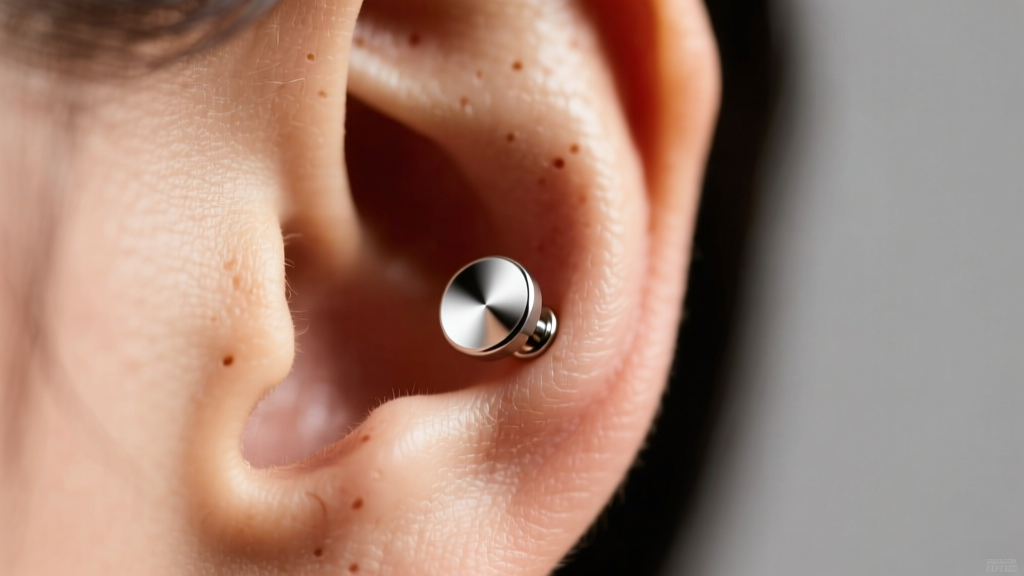
The Hidden Economics of 'Ear Cheese' and Piercing Odor
If you have ever taken out a pair of everyday studs and been hit with a sharp, cheesy odor, you are not alone. The colloquial term 'ear cheese' refers to the buildup of sebum, dead skin cells, and bacteria trapped inside the piercing fistula. But beyond the hygiene concern, smelly earring holes are often a glaring red flag indicating that you are wasting money on the wrong jewelry materials. As a senior evaluator of jewelry value and piercing health, I see consumers constantly trapped in a cycle of buying cheap, 'hypoallergenic' mystery metals, dealing with irritation and odor, and throwing away their money. Understanding why your earring holes smell is the first step toward making budget-savvy, high-value jewelry investments that protect your body and your wallet.
The odor itself is primarily caused by isovaleric acid, a byproduct of skin bacteria breaking down trapped sebum and keratin. However, the catalyst for this buildup is frequently subpar metal. When low-grade alloys oxidize or leach nickel into the skin, they cause micro-inflammation. This inflammation accelerates cellular turnover, meaning your body sheds dead skin cells into the piercing channel at an unnatural rate. You are essentially paying for jewelry that forces your body to produce the very odor you are trying to avoid.
Material Value Matrix: What You Are Actually Paying For
Not all metals are created equal, and the price tag does not always reflect the biological value. To stop the smell, you must upgrade to biocompatible materials. Below is a value assessment of common earring materials based on 2026 market pricing, odor resistance, and long-term viability.
| Material Grade | Avg. Price Range (Pair) | Odor & Irritation Risk | Long-Term Value Assessment |
|---|---|---|---|
| Mystery 'Hypoallergenic' Alloys | $8 - $15 | Extremely High (Porous, traps bacteria) | Poor. Causes infections, leading to medical costs and ruined piercings. |
| 316L Surgical Stainless Steel | $12 - $25 | Moderate to High (Contains 8-10% Nickel) | Fair. Acceptable for fully healed, non-sensitive lobes, but poor for cartilage. |
| ASTM F-136 Implant-Grade Titanium | $30 - $60 | Negligible (Inert, non-porous, nickel-free) | Excellent. The gold standard for value, health, and odor elimination. |
| Solid 14k / 18k Gold (Nickel-Free) | $120 - $350+ | Negligible (Highly inert) | High upfront cost, but exceptional cost-per-wear over a lifetime. |
According to the Association of Professional Piercers (APP), implant-grade titanium (ASTM F-136) is the absolute baseline for safe, long-term wear. While a pair of titanium flat-backs might cost $40 compared to $12 for surgical steel, the titanium will not corrode, will not trigger nickel-induced cellular shedding, and will effectively eliminate the biological environment that causes odors. Surgical steel, despite its clinical-sounding name, contains enough nickel to trigger contact dermatitis in sensitive individuals, a fact well-documented by the Mayo Clinic.
The Mechanical Trap: Why Earring Backs Matter
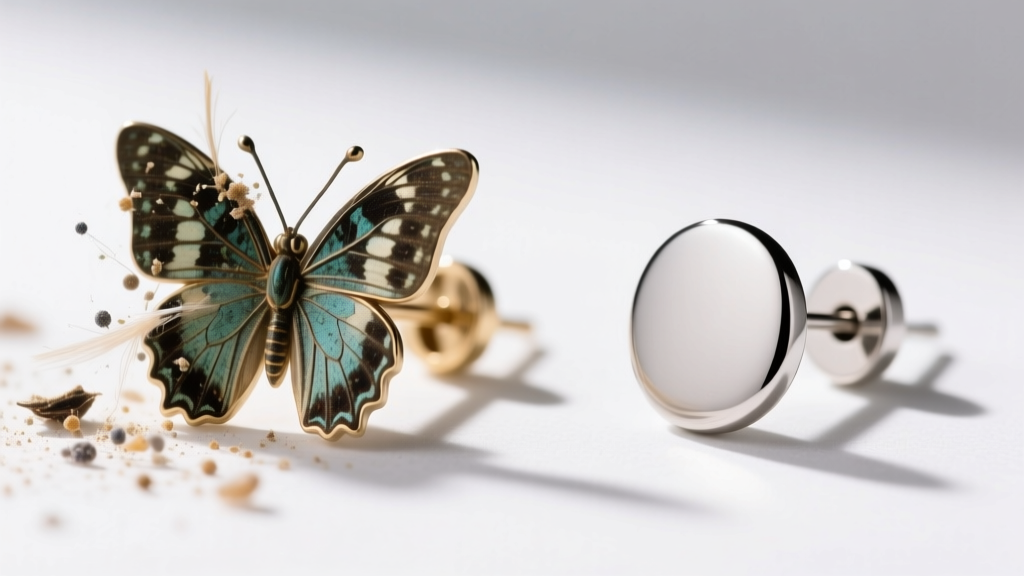
Material is only half the battle; the mechanical design of your earring dictates how much debris gets trapped. If you are wearing traditional post earrings with 'butterfly' or 'scroll' backs, you are utilizing a design that is fundamentally hostile to piercing hygiene.
The Butterfly Back Failure Mode
- Debris Traps: The tiny scrollwork and crevices of a butterfly back act as a net for sebum, hair products, and dead skin.
- Moisture Retention: The back presses flush against the skin, preventing airflow and creating a damp, anaerobic environment where odor-causing bacteria thrive.
- Gauge Mismatch: Most commercial butterfly-back earrings use ultra-thin 20-gauge (0.8mm) or 22-gauge (0.6mm) posts. If your piercing was done at a standard 18-gauge (1.0mm) or 16-gauge (1.2mm), the thin post creates a gap inside the fistula where skin cells accumulate and rot.
The High-Value Solution: Flat-Back Labrets
Switching to threadless or internally threaded flat-back labrets is the single most effective budget-friendly upgrade you can make. A flat-back sits flush against the ear without crevices, allowing the fistula to breathe and making it impossible for debris to hide. While the initial investment in a threadless system (like those from NeoMetal or BVLA) might cost $45 to $70 for the post and decorative end combined, these pieces are modular. You buy the high-quality titanium post once, and simply swap out the decorative ends, saving massive amounts of money over time.
Budget-Friendly Maintenance: Stop Wasting Money on Branded Sprays
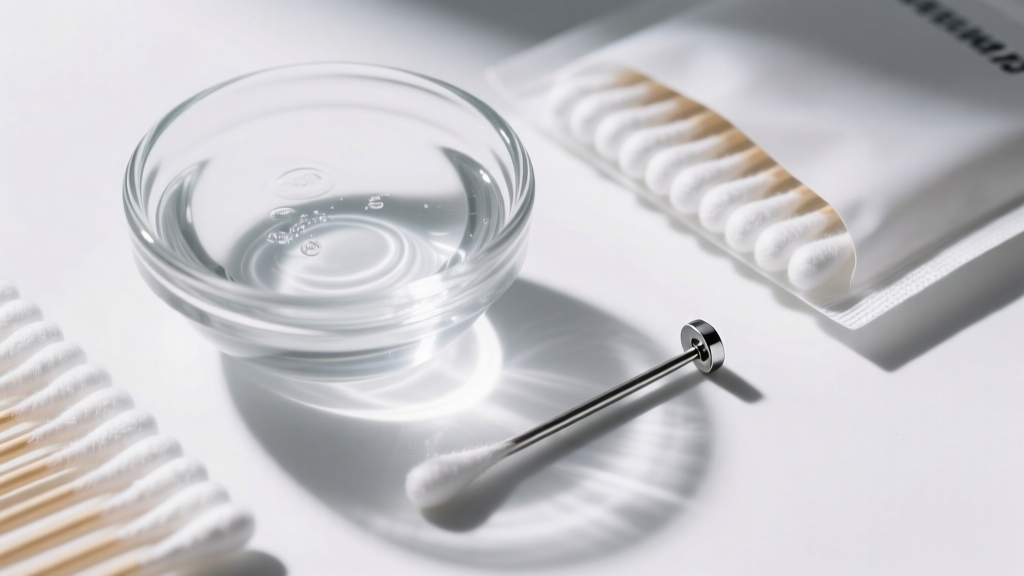
The jewelry industry profits heavily from selling overpriced 'piercing aftercare' sprays and essential oil cleansers. When assessing the budget required to keep earring holes fresh and odor-free, you must reject these marketing traps. The American Academy of Dermatology (AAD) recommends simple, sterile saline for cleaning, noting that harsh chemicals like alcohol, hydrogen peroxide, and tea tree oil actually damage the delicate epithelial cells lining the fistula, causing micro-tears that harbor bacteria and worsen odors.
The $5 vs. $20 Cleaning Protocol
Budget Hack: Do not spend $18 on a 4oz bottle of branded piercing spray. Go to your local pharmacy and purchase a generic can of sterile wound wash saline (0.9% sodium chloride with no additives). It costs roughly $5 for 7oz and is manufactured in a sterile environment, whereas many boutique sprays are just repackaged salt water.
Your Weekly Odor-Elimination Routine:
- Remove and Soak: Once a week, remove your earrings and soak them in a small cup of warm water with a drop of mild, fragrance-free liquid soap (like Castile soap) for 5 minutes.
- Saline Flush: While the jewelry is out, spray sterile saline directly through the piercing channel to flush out trapped sebum. Do not use cotton swabs inside the hole, as cotton fibers can tear and leave debris behind.
- Dry Thoroughly: Moisture is the enemy. Use a hairdryer on the 'cool' setting to completely dry the earlobe before reinserting your jewelry.
- Polish the Metal: Use a clean microfiber cloth to wipe down the titanium or gold posts before reinsertion to ensure no microscopic soap residue remains.
Assessing the ROI: When to Invest in Solid Gold
While implant-grade titanium is the undisputed champion of budget-to-value ratios, there is a tier above it for those willing to assess long-term return on investment (ROI). Solid 14k or 18k gold (specifically alloyed without nickel or cadmium) is highly inert and will never tarnish, oxidize, or harbor odors.
However, the budget assessment here requires looking at cost-per-wear. A $15 pair of gold-plated brass earrings will lose its plating within three months of daily wear, exposing the porous brass underneath, which will rapidly oxidize, turn your skin green, and create a metallic, foul odor. You will replace that $15 pair four times a year ($60 annual cost). Conversely, a $150 pair of solid 14k gold flat-backs will last a lifetime, maintain its biological inertness, and actually retain intrinsic scrap value. Over a five-year period, the solid gold is mathematically the superior financial and hygienic choice for everyday wearers who can afford the initial capital outlay.
The Final Verdict on Piercing Hygiene and Spending
Smelly earring holes are rarely a failure of personal hygiene; they are a failure of material science and mechanical design. By abandoning porous mystery metals, ditching the bacteria-trapping butterfly backs, and refusing to overpay for branded cleaning chemicals, you can permanently eliminate piercing odor. Invest your budget into ASTM F-136 titanium or solid nickel-free gold, utilize flat-back mechanics, and rely on cheap, pharmacy-grade sterile saline. Your piercings will stay fresh, healthy, and financially optimized for decades to come.


