Snake Hoop Earrings: 2026 Budget & Value Buying Guide
Discover the true value of snake hoop earrings in 2026. We break down pricing tiers, material grades, gauge sizes, and clasp mechanics to help you buy smart.

The Serpent Trend: Why Value Assessment Matters in 2026
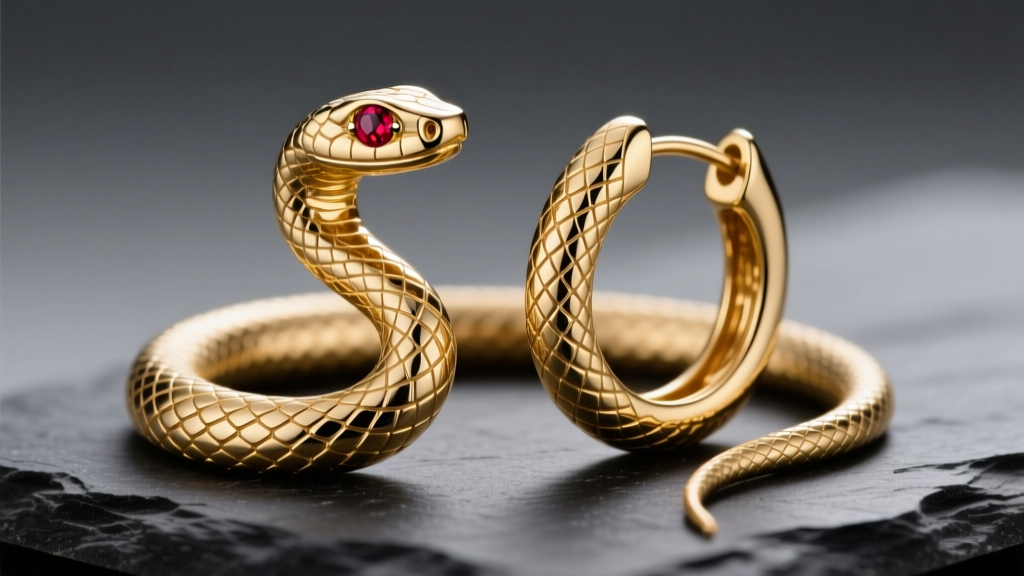
The serpent motif has transcended seasonal fads to become a permanent fixture in modern jewelry boxes. As we navigate the 2026 market, snake hoop earrings remain one of the most searched and purchased categories in body jewelry. However, the explosion in demand has flooded the market with everything from $12 fast-fashion alloys to $800 solid gold heirlooms. For the discerning buyer, the challenge is no longer finding a serpent design; it is determining which price point actually delivers long-term value. Assessing the budget and true worth of snake hoops requires looking past the aesthetic and examining the metallurgy, clasp mechanics, and structural integrity of the piece.
Decoding the Price Tiers: What Are You Actually Paying For?
When shopping for snake hoop earrings, the price tag is usually a direct reflection of the base metal and the thickness of the outer plating. Understanding these tiers is the first step in making a value-driven purchase.
Tier 1: Fast Fashion & Flash Plating ($15 - $35)
At the bottom of the market, you will find snake hoops crafted from brass, copper, or zinc alloys. These pieces rely on "flash plating," a process that applies a microscopic layer of gold or silver (usually less than 0.5 microns). While the initial cost is low, the value proposition is poor. The intricate scales of a snake design create high-friction zones where flash plating flakes off rapidly, often exposing the base metal within three months of regular wear. Furthermore, cheap friction posts on these hoops frequently bend, leading to lost earrings.
Tier 2: Demi-Fine & Heavy Vermeil ($45 - $120)
This is the sweet spot for most buyers seeking the best balance of budget and longevity. True gold vermeil requires a 925 sterling silver base coated with at least 2.5 microns of 14k or 18k gold, a standard strictly regulated by the Federal Trade Commission (FTC). In this tier, you get the rich, luxurious look of solid gold without the exorbitant price tag. High-quality demi-fine snake hoops in this range often feature secure hinged clicker clasps and durable rhodium plating on silver variants to prevent tarnishing.
Tier 3: Solid Gold & Fine Jewelry ($250 - $800+)
For those viewing jewelry as an investment or requiring pieces for 24/7 wear (including showering and swimming), solid 14k or 18k gold is mandatory. According to the Gemological Institute of America (GIA), 14k gold offers the ideal blend of purity and tensile strength for hoops, ensuring the snake's tail and head won't warp under pressure. While the upfront cost is high, the cost-per-wear over a lifetime makes solid gold the ultimate value play for everyday serpent hoops.
Material & Mechanics: The Hidden Costs of Snake Hoops
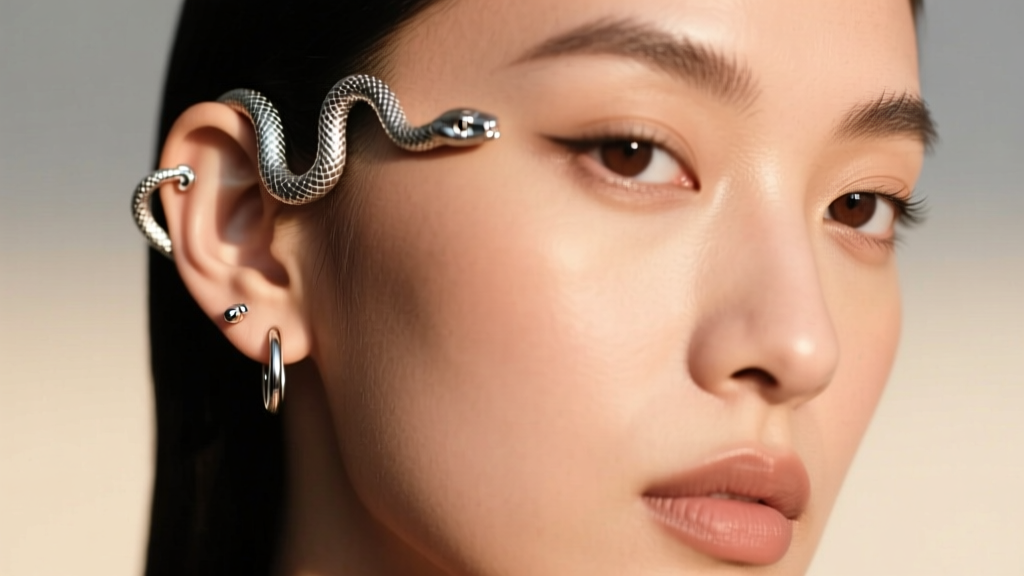
The unique anatomy of snake hoop earrings introduces specific mechanical failure points that generic hoops do not face. The most common issue is the clasp mechanism. Many budget snake hoops use a "cobra head" friction post, where the snake's head acts as the front and the tail wraps around a standard butterfly back. This design is prone to slipping and losing the backing. Premium value is found in "Ouroboros" style continuous hoops or hinged clickers where the snake's tail seamlessly locks into the mouth or head of the serpent with an audible click.
| Material Grade | Expected Lifespan | Clasp Mechanism | Value Score (1-10) |
|---|---|---|---|
| Brass w/ Flash Plating | 3 - 6 Months | Friction Post | 2 |
| 925 Silver (Rhodium) | 3 - 5 Years | Hinged Clicker | 8 |
| 14k Gold Vermeil | 1 - 3 Years | Continuous / Clicker | 9 |
| Solid 14k / 18k Gold | Lifetime / Heirloom | Seamless Continuous | 10 |
Gauge Sizes & Piercing Placements for Serpent Designs
A critical aspect of value assessment often ignored by mainstream fashion guides is gauge thickness and piercing placement. Wearing the wrong gauge not only compromises the aesthetic but can cause physical damage to your piercing, ruining the value of the jewelry entirely.
- Standard Lobe Piercings (20g or 18g): Most traditional snake hoops designed for the earlobe are crafted at 20-gauge (0.8mm) or 18-gauge (1.0mm). These thinner wires allow the snake design to drape elegantly without weighing down the lobe.
- Cartilage & Helix Piercings (16g): If you intend to wear your snake hoops in the upper cartilage, you must size up to 16-gauge (1.2mm). The Association of Professional Piercers (APP) strongly advises against wearing thin, lightweight hoops in fresh or healed cartilage piercings, as the thin wire can cause the "cheese cutter effect," slowly migrating through the tissue and causing permanent scarring.
- Snug & Conch Placements: For inner-ear placements, look for snake huggies or smaller diameter serpent hoops (8mm to 10mm) with a flat-back labret post rather than a traditional hoop wire, ensuring the snake motif sits flush against the ear anatomy.
How to Spot Overpriced Costume Jewelry
In 2026, many fast-fashion brands have inflated their prices to mimic demi-fine branding, charging $60 for what is essentially $15 worth of plated brass. To protect your budget, always check the product specifications for the exact base metal. If a brand uses vague terms like "gold-tone metal" or "alloy blend" without explicitly stating "925 Sterling Silver" or "Solid 14k Gold," you are overpaying for costume jewelry. True value requires transparency in metallurgy.
The Value Verdict: Your 2026 Buying Checklist
To ensure you are getting the best return on your investment when purchasing snake hoop earrings, run the piece through this quick assessment checklist before checking out:
- Verify the Base Metal: Ensure it is at least 925 sterling silver. Avoid brass or nickel alloys entirely to prevent contact dermatitis and rapid tarnishing.
- Check the Plating Thickness: If buying gold, look for the term "heavy vermeil" or a guarantee of 2.5+ microns of gold plating.
- Test the Clasp (If In-Store): Open and close the hoop. A high-value hinged clicker will snap shut with a crisp, secure click. A low-value friction post will feel loose and require constant adjustment.
- Inspect the Scale Detailing: Run your fingernail over the snake's scales. High-value pieces feature deep, CNC-milled or hand-engraved scales. Cheap pieces use shallow stamping that will smooth out and disappear within weeks of friction against hair and clothing.
By prioritizing structural integrity and material transparency over fast-fashion hype, you can secure a pair of snake hoop earrings that offers both striking style and exceptional long-term value.


