Are Snake Huggie Earrings Worth It? 2026 Budget Guide
Discover if snake huggie earrings are worth the investment. Our 2026 budget guide compares materials, pricing tiers, and hardware longevity.

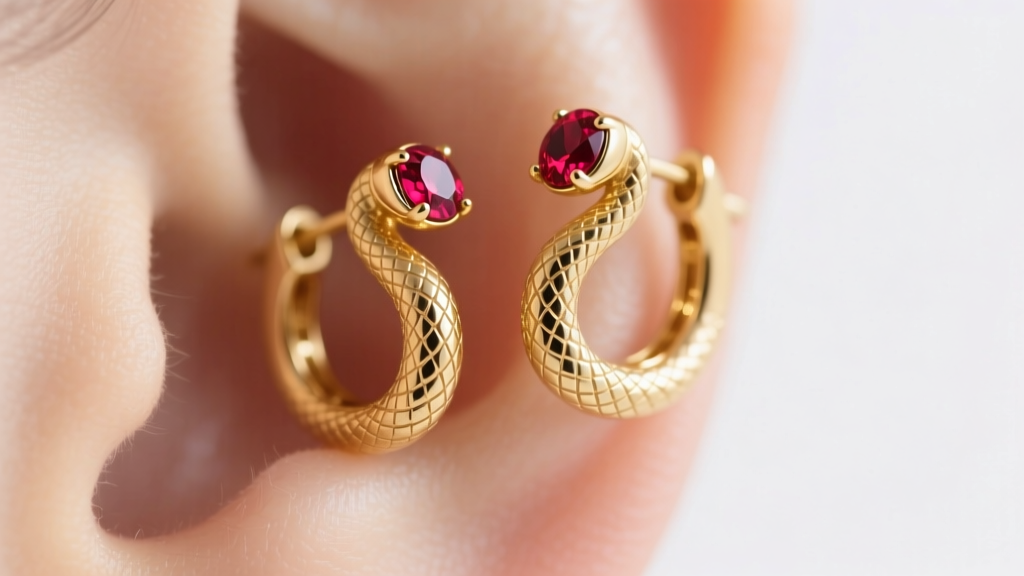
The serpentine motif has slithered its way back into the spotlight, but in 2026, the trend has evolved from dramatic, shoulder-dusting dangles to the highly wearable, everyday snake huggie earrings. These miniature, ear-hugging hoops feature intricate scale texturing, coiled silhouettes, and often subtle gemstone accents like ruby or emerald eyes. But as demand surges, the market has been flooded with options ranging from $12 fast-fashion alloys to $800 solid gold heirlooms. For the budget-conscious collector, the critical question is: where is the actual value, and when are you just paying for a brand name?
As a jewelry analyst, I have evaluated dozens of serpentine huggies across the market. This guide breaks down the metallurgy, mechanical engineering, and true cost-per-wear of snake huggie earrings to help you make a mathematically sound purchasing decision.
The Anatomy of a Serpent: Manufacturing Quality
Not all scales are created equal. The visual appeal of a snake huggie relies entirely on how the scales are formed. Understanding the manufacturing process is your first line of defense against overpriced, low-quality pieces.
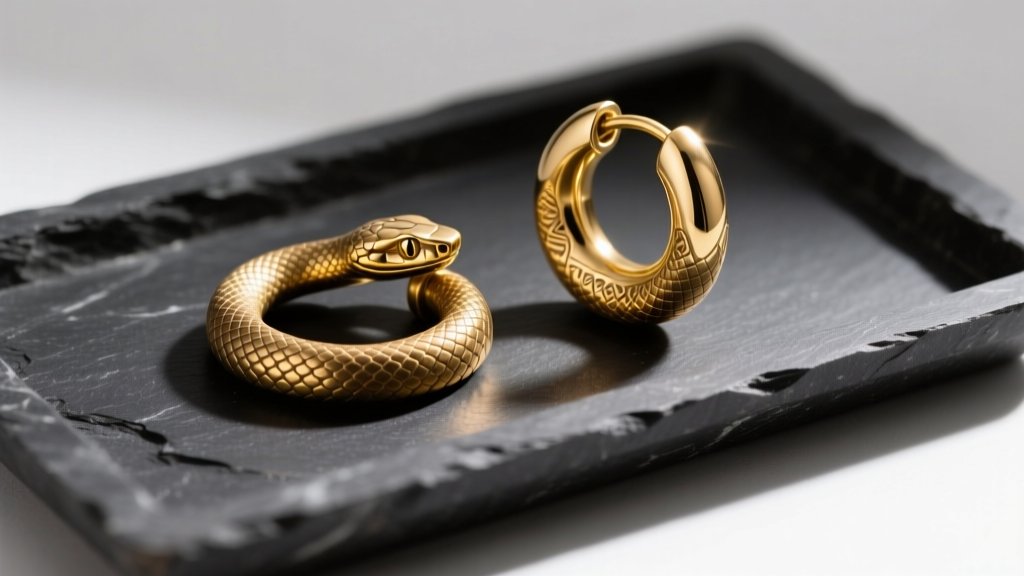
- Lost-Wax Casting (Premium): High-end brands use 3D CAD modeling followed by lost-wax casting. This creates deep, overlapping, three-dimensional scales with crisp edges. The gold or silver flows into a detailed mold, resulting in a heavy, substantial feel.
- Die-Striking & Stamping (Mid-Tier): Many mid-range brands use stamped sheet metal that is bent into a hoop. The scales are pressed into the surface. While durable, the scales look flat and lack the overlapping depth of cast pieces.
- Electroformed or 3D Printed Resin (Budget): The cheapest options often feature a grainy, muddy texture where the scales blur together. These are typically made from base metals and heavily plated to hide manufacturing defects.
Material Grades and True Cost-per-Wear
The metal composition dictates both the longevity of the piece and its safety for sensitive ears. According to the Gemological Institute of America (GIA), the purity and alloy mix of gold drastically affect its hardness and color. Here is how the materials stack up in the 2026 market.
1. Brass/Alloy with Flash Plating ($12 - $35)
These pieces feature a microscopic layer of gold (less than 0.5 microns) over a brass or nickel alloy base. Failure Mode: The plating will wear off within 3 to 6 months of daily wear, exposing the base metal. As noted by the National Center for Biotechnology Information (NCBI), exposed nickel and cheap alloys are the primary culprits behind allergic contact dermatitis. Verdict: Poor value. The cost-per-wear is high because the lifespan is incredibly short.
2. Sterling Silver with Heavy Vermeil ($65 - $140)
Per Federal Trade Commission (FTC) guidelines, gold vermeil must be a minimum of 2.5 microns of gold over a sterling silver base. Many reputable 2026 brands are now pushing this to 3 or 4 microns for extra durability. Failure Mode: Eventually, the friction of taking the huggies on and off will wear through the gold layer at the clasp and hinge points, revealing the silver beneath. Verdict: Excellent value for trend-driven buyers. Offers 2 to 4 years of regular wear before needing re-plating.
3. Solid 14k or 18k Gold ($350 - $850+)
Solid gold will never tarnish, flake, or cause metal allergies. 14k gold (58.5% pure gold) is the sweet spot for huggies because the alloyed metals (like copper and zinc) provide the structural rigidity needed to keep the hoop from bending out of shape. Verdict: The ultimate investment. The cost-per-wear drops to pennies over a lifetime of use.
Price Tier Analysis: The Value Matrix
Use this matrix to align your budget with your expectations. Do not expect heirloom longevity from the entry-level tier.
| Tier | Price Range | Material & Construction | Expected Lifespan | Best For |
|---|---|---|---|---|
| Fast Fashion | $12 - $35 | Brass base, flash plated, stamped scales | 3 - 6 Months | Occasional wear, costumes, testing the trend |
| Mid-Tier / Demi-Fine | $65 - $140 | Sterling Silver, 2.5+ micron Vermeil, cast scales | 2 - 4 Years | Daily wearers on a budget, trend-focused stylists |
| Fine Jewelry | $350 - $850+ | Solid 14k/18k Gold, lost-wax cast, gemstone eyes | Lifetime / Heirloom | 24/7 wearers, sensitive ears, long-term investors |
Mechanical Integrity: Hinges, Clickers, and Snaps
The most common point of failure in any huggie earring is the clasp. Snake huggies present a unique engineering challenge: how to incorporate the snake motif without compromising the security of the closure.
The "Jaw" Friction Clasp
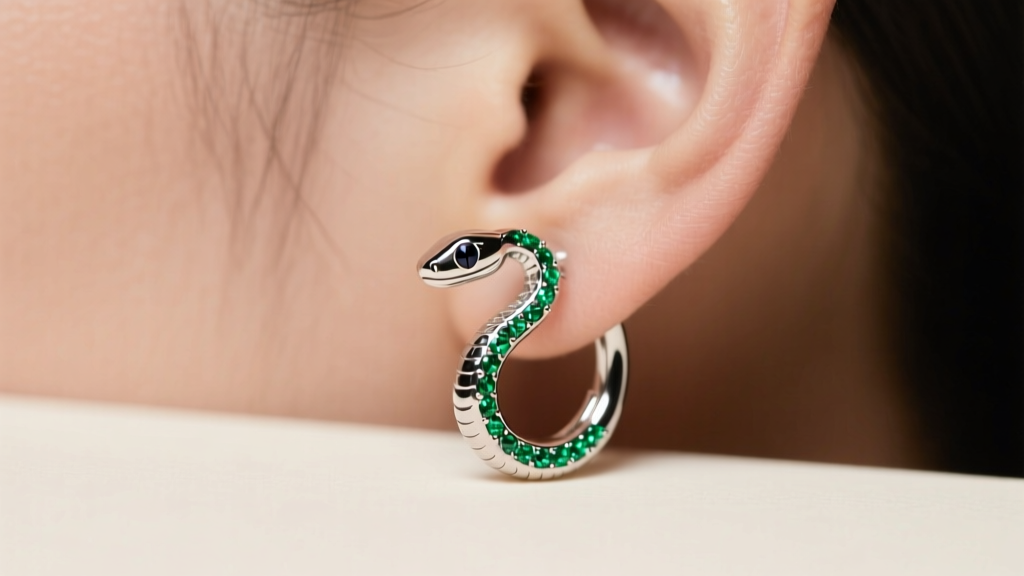
Many designers use the snake’s open mouth as the receiver for the tail, creating a seamless look. The tail acts as a friction post that snaps into the mouth. The Risk: If the manufacturing tolerance is off by even 0.1mm, the friction fit will be too loose, and you will lose the earring. If it is too tight, you will bend the post trying to force it in. Avoid this design in budget-tier jewelry, as cheap manufacturers rarely achieve precise tolerances.
The Hidden Hinge with Micro-Clicker
Higher-end snake huggies prioritize security over absolute seamlessness. They utilize a standard, hidden barrel hinge on the back of the hoop, while the snake's head and tail meet at the front with a secure micro-clicker mechanism. When you close it, you should hear and feel a distinct "click." This is the gold standard for security and is highly recommended for active lifestyles or cartilage piercings where a lost earring is harder to find.
Gauge Sizing and Cartilage Compatibility
Before purchasing, you must verify the gauge (thickness) and inner diameter of the huggie. Snake designs add visual bulk, but the wire itself must fit your piercing.
- Standard Lobe Piercings: Look for an 18-gauge (1.0mm) or 16-gauge (1.2mm) wire with an inner diameter of 10mm to 12mm. This allows the snake to "hug" the lobe without choking it, which can cause swelling and infection.
- Helix / Cartilage Piercings: Cartilage is thicker and less pliable. You will typically need an 8mm to 10mm inner diameter. Ensure the earring is 16-gauge, as 18-gauge wires can sometimes cause the "cheese-cutter effect" in tight cartilage holes if the hoop is too small and pulls downward.
Pro Tip for 2026 Buyers: If you are buying solid gold snake huggies for a healed cartilage piercing, opt for a threadless or internally threaded clicker mechanism rather than a standard hinge. Hinges can trap sebum and dead skin cells in the joint, which is difficult to clean in a cartilage piercing.
The Final Verdict: How to Maximize Your Investment
So, are snake huggie earrings worth the money? The answer depends entirely on where you place your budget.
If you are buying purely for the aesthetic and plan to wear them once a month, a $25 brass pair is a harmless indulgence. However, if you intend to integrate the serpentine motif into your daily rotation, the mid-tier sterling silver vermeil range ($85 - $120) offers the highest mathematical value. You get the intricate 3D lost-wax casting details and the hypoallergenic safety of a silver base, without the steep premium of solid gold.
For those with severe metal sensitivities or those who never take their jewelry off, bypass the mid-tier entirely and invest in a $400+ solid 14k gold pair with a micro-clicker clasp. When evaluated through the lens of cost-per-wear over a decade, solid gold is always the most economical choice in fine jewelry.


