Snakes and Earrings Movie: 2026 Heavy Gauge Piercing Trends
Explore how the Snakes and Earrings movie sparked the 2026 heavy gauge piercing trend. Discover safe stretching methods, materials, and alt-fashion styles.


When discussing the intersection of cult cinema and extreme body modification, few films hold the visceral, enduring impact of Yukio Ninagawa’s 2008 masterpiece, Hebi ni Piasu—known globally as the snakes and earrings movie. Based on Hitomi Kanehara’s Akutagawa Prize-winning novel, the film follows Lui, a disaffected Tokyo youth who descends into the underground world of extreme body modification, culminating in a split tongue and heavily stretched earlobes. While the 'snakes' refer to her intricate back tattoos, the 'earrings' specifically denote heavy-gauge tunnels and plugs. Fast forward to 2026, and the neo-grunge, alt-fashion revival has thrust the aesthetic of the snakes and earrings movie back into the mainstream, transforming extreme ear stretching from a niche subculture into a high-fashion statement.
The Cinematic Catalyst: Redefining the 'Earring'
In traditional jewelry terminology, an earring implies a standard 20-gauge to 14-gauge post or wire. However, the snakes and earrings movie challenged this lexicon. The jewelry featured in the film's underground club scenes consisted of 0-gauge (8mm) and larger cylindrical tunnels, eyelets, and solid plugs. In 2026, avant-garde streetwear brands and high-fashion runways are heavily referencing this mid-2000s Tokyo underground aesthetic. The modern interpretation moves away from the purely shock-value approach of the early 2000s, focusing instead on brutalist geometry, precision-machined metals, and intentional, artistic lobe stretching.
'The cultural hangover from the snakes and earrings movie taught a generation that body modification is not just rebellion; it is the ultimate form of bespoke, permanent jewelry curation.' — Tokyo Alt-Style Journal, 2026
Anatomy of Heavy Gauge Jewelry: Plugs, Tunnels, and Eyelets
To replicate or draw inspiration from the iconic looks of the film, one must understand the structural engineering of heavy gauge jewelry. Standard butterfly backs and friction posts are entirely obsolete at these sizes. Instead, the jewelry relies on mechanical threading and structural flares.
Understanding Flare Types
- Single Flare: Features a lip on one side and is secured by a standard O-ring on the back. Best for newly stretched lobes that lack the elasticity to accommodate wider edges.
- Double Flare: Features lips on both sides, requiring the lobe to be stretched slightly beyond the jewelry's saddle size to 'pop' through. Offers a seamless, hardware-free look.
- Threaded Tunnels: The 2026 gold standard. The tunnel screws into a matching back piece, eliminating the need for silicone O-rings which can harbor bacteria and cause contact dermatitis.
Material Science: What the Movie Got Wrong (and Right)
In the mid-2000s era depicted in the snakes and earrings movie, acrylic and surgical steel were the default materials for stretched ears. Today, professional piercers and dermatologists strongly advise against both for long-term wear in stretched lobes. Acrylic is micro-porous, harboring anaerobic bacteria that cause the notorious 'stretched ear smell,' while low-grade surgical steel contains nickel that triggers allergic reactions in sensitized, stretched tissue.
The 2026 Approved Materials Matrix
| Material | Grade / Specification | Best Use Case | 2026 Trend Status |
|---|---|---|---|
| Implant-Grade Titanium | ASTM F-136 | Fresh stretches, sensitive lobes, threaded tunnels | High-Fashion Standard |
| Borosilicate Glass | Pyrex / Quartz | Dead stretching, taping methods, heavy weights | Minimalist / Alt-Grunge |
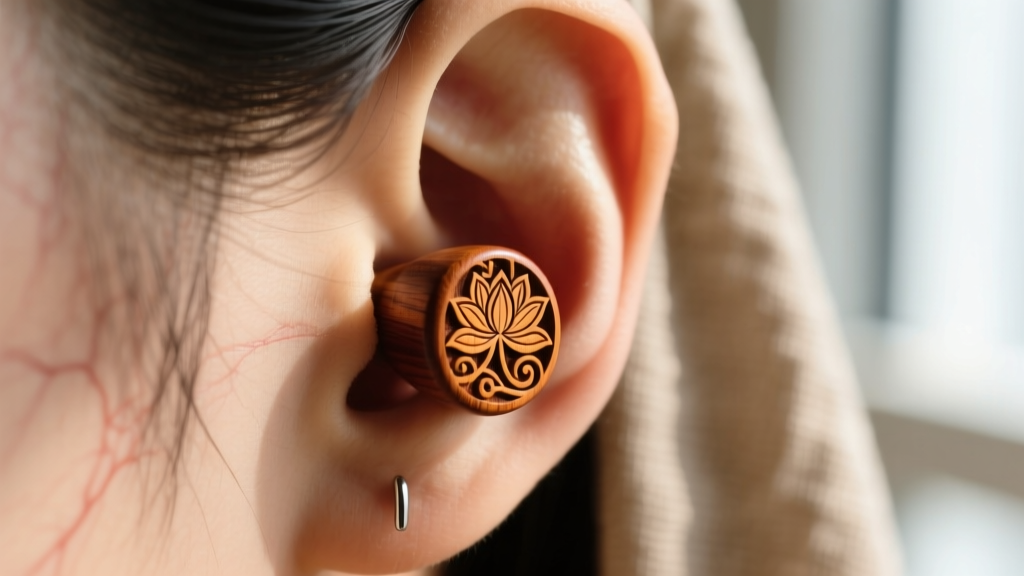
| Organic Woods | Sealed with jojoba/beeswax | Fully healed lobes (1/2" and above) | Neo-Tribal Revival |
| Acrylic | N/A | Short-term photo shoots only | Deprecated / Unsafe |
According to the Association of Professional Piercers (APP), only implant-grade materials like ASTM F-136 titanium and borosilicate glass should be worn in healing or recently stretched tissue due to their mirror-finish surface quality, which prevents micro-tears in the fistula.
The Methodology of the Stretch: Avoiding the 'Blowout'
The most common failure mode in achieving the cinematic stretched lobe is the 'blowout'—a condition where the lobe tissue is forced outward, creating a ring of scar tissue behind the ear. This is almost exclusively caused by the aggressive use of metal tapers, a harmful practice popularized in the 2000s mall-kiosk era.
The PTFE Tape Method (The 2026 Standard)
To safely achieve the heavy gauges seen in cult cinema, the modern stretching protocol relies on the tape-wrapping method. This allows for micro-millimeter increments, respecting the body's natural cellular regeneration.
- Remove your current single-flare glass or titanium plug.
- Wrap 1 to 2 layers of PTFE (Teflon) tape around the jewelry. (Never use vinyl or electrical tape, which contain toxic adhesives).
- Lubricate the tape-wrapped jewelry with pure, unrefined jojoba oil.
- Gently insert. If you feel sharp pain or see 'white' blanching in the tissue, remove a layer of tape. The stretch should feel like a warm pressure, never pain.
- Wait 4 to 6 weeks between tape additions to allow the fistula to build structural collagen.
Styling the Heavy Gauge: Neo-Grunge Meets High Fashion
The legacy of the snakes and earrings movie on IMDb and in fashion archives is its unapologetic embrace of the grotesque and the beautiful. In 2026, styling heavy gauges (00g to 1 inch) requires a balance of proportion. Because the jewelry itself commands immense visual weight, contemporary stylists recommend pairing brutalist, heavy-metal tunnels with high-neck, structured garments. A 12mm solid titanium plug paired with a severe, tailored wool turtleneck creates a striking contrast between organic body modification and rigid sartorial discipline.
Furthermore, the 'earring curation' trend has expanded to the cartilage. While the stretched lobe remains the anchor piece, 2026 trends dictate pairing the heavy gauge lobe with delicate, 16-gauge implant-grade titanium threadless ends in the helix and conch. This juxtaposition—massive, cinematic lobe tunnels alongside microscopic, diamond-set cartilage studs—is the hallmark of the modern alt-fashion enthusiast who respects both the history of underground modification and the precision of contemporary fine jewelry.
Final Thoughts on Cinematic Body Mod
The snakes and earrings movie was never just about the shock value of a split tongue or a stretched ear; it was a profound exploration of autonomy, pain, and the reclamation of the physical body. As heavy gauge jewelry continues to evolve from underground taboo to high-fashion staple, the core lesson remains: respect the tissue. By utilizing ASTM F-136 titanium, abandoning destructive tapers in favor of PTFE tape, and treating your stretched lobes as a permanent canvas for bespoke engineering, you honor the cinematic legacy while embracing the safest, most advanced body modification practices of 2026.


