Spike Dangle Earrings: 2026 Buying Guide & Fit Tips
Discover how to choose the perfect spike dangle earrings in 2026. Explore metal grades, gauge sizes, face-shape matching, and styling tips for edgy looks.

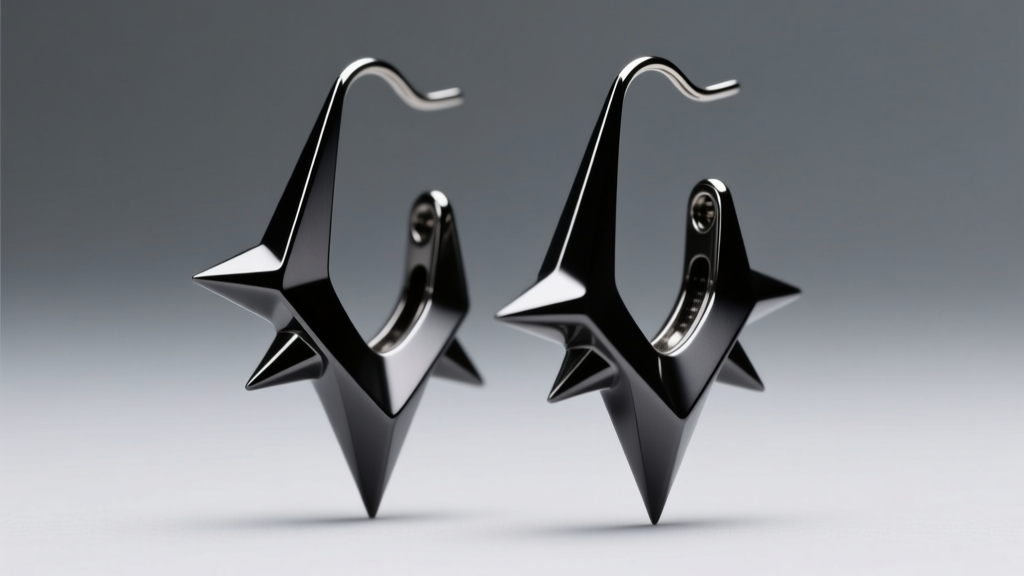
Once relegated strictly to punk and goth subcultures, spike dangle earrings have undergone a massive architectural renaissance. In 2026, they are a staple of high-fashion minimalist streetwear and avant-garde office styling. However, buying a pair of spike dangles is not as simple as picking a pretty design. The unique physics of a weighted, elongated cone introduce specific challenges regarding earlobe stress, post bending, and material tarnishing. This comprehensive buying guide breaks down the exact specifications, material grades, and fit parameters you need to evaluate before investing in your next pair of spike dangle earrings.
The Anatomy of a Perfect Spike Dangle
Unlike standard studs or lightweight hoops, spike dangles possess a bottom-heavy center of gravity. When a 2-inch metal spike hangs from a standard earlobe piercing, the pendulum effect places continuous downward torque on the fistula (the piercing hole). Understanding how to mitigate this stress is the first step in your buying journey.
Post Thickness & Gauge Sizing
The most common mistake buyers make is ignoring the post gauge. Standard fashion earrings typically use a 20-gauge (0.81mm) or 22-gauge (0.64mm) wire post. When subjected to the swinging weight of a solid metal spike, these thin wires will trigger the cheese-cutter effect—a phenomenon where the thin wire slowly migrates downward, stretching and eventually tearing through the earlobe tissue.
- 20-Gauge (0.81mm): Only acceptable for 'micro-spikes' (under 0.5 inches) made from ultra-lightweight hollow materials.
- 18-Gauge (1.02mm): The minimum standard for medium spikes (0.75 to 1.25 inches). Offers a balance of comfort and structural support.
- 16-Gauge (1.29mm): The gold standard for heavy, elongated spikes (1.5 inches or longer). Prevents tissue migration and keeps the earring hanging perfectly plumb.
Clutch Types & Security
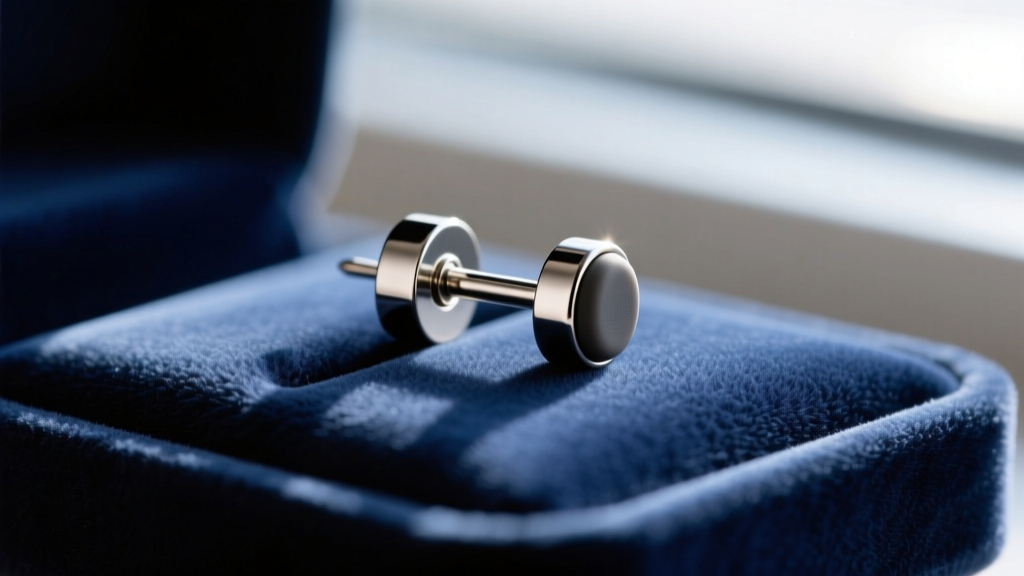
Because spikes catch on hair and clothing, the backing mechanism must be flawless. Avoid standard friction 'butterfly' backs on heavy dangles; the smooth post will easily slip out when the spike snags on a sweater. Instead, look for La Poussière silicone clutches or threaded screw-backs. Silicone clutches provide high-friction grip without damaging the post, while screw-backs offer absolute mechanical security for heavy statement pieces.
Material Grades: What Won't Tarnish or Irritate
Spike dangles require frequent handling to adjust their hang and clean off skin oils from the tapered tips. This constant contact accelerates tarnishing in lower-grade metals. According to the Association of Professional Piercers (APP), choosing biocompatible, nickel-free materials is non-negotiable for long-term wear.
| Material | Grade / Standard | Pros | Cons | Best For |
|---|---|---|---|---|
| Titanium | ASTM F-136 Implant Grade | Hypoallergenic, ultra-lightweight, highly durable. | Limited color options (mostly silver/grey/anodized). | Everyday wear, sensitive lobes, heavy long spikes. |
| Gold | 14k or 18k Solid (Nickel-Free) | Prestigious, retains value, excellent tarnish resistance. | Expensive; 18k is softer and posts may bend easier than 14k. | Luxury statement pieces, evening wear. |
| Surgical Steel | 316L / 316LVM | Affordable, high polish, widely available. | Contains trace nickel; can cause contact dermatitis. | Budget buyers without metal allergies. |
| Brass / Alloys | Unspecified Base Metals | Very cheap, allows for complex casting shapes. | Turns skin green, high nickel release, degrades quickly. | Costume wear (Avoid for healed/sensitive piercings). |
Expert Note: The Gemological Institute of America (GIA) notes that 14k gold is often superior to 18k gold for earring posts because the higher alloy content (like copper or silver) increases the tensile strength of the wire, preventing the post from bending under the weight of a heavy spike.
Matching Spike Dangles to Face Shapes
The aggressive geometry of a spike earring naturally draws the eye downward and outward. You can use this optical illusion to balance your facial proportions.
- Round Faces: Opt for elongated, narrow spikes (1.5 to 2.5 inches). The sharp vertical lines create a visual lengthening effect, slimming the jawline and adding structural contrast to soft curves.
- Square Faces: Avoid short, wide, or chunky triangular spikes, which will echo and exaggerate a strong jaw. Choose medium-length spikes with slightly rounded bases or incorporate a small chain link between the post and the spike to introduce movement and soften the angle.
- Oval Faces: The universal canvas. You can experiment with extreme proportions, from micro-studs with 0.25-inch spikes to dramatic, shoulder-grazing 3-inch cone dangles.
- Heart Faces: Look for spikes that are wider at the base and taper sharply at the bottom. This adds visual weight to the lower half of the face, balancing a narrower chin.

Styling for the Modern Wardrobe
In 2026, the styling rules for spike dangles have relaxed, allowing them to transition seamlessly from boardroom to underground club. For professional environments, choose matte-finished titanium or brushed 14k gold in shorter lengths (under 1 inch). Matte finishes absorb light, making the earring read as a subtle architectural stud rather than an aggressive weapon. For evening wear, high-polish gold or rhodium-plated silver catches ambient lighting, turning the spike into a kinetic light fixture that moves with your head.
Pricing Tiers & What to Expect
When shopping for spike dangle earrings, price is heavily dictated by material purity and casting methods.
- Budget ($15 - $45): Typically 316L surgical steel or brass with gold plating. Expect hollow-cast spikes to keep weight down, but be prepared for plating to wear off the tips within 6 to 12 months of regular use.
- Mid-Range ($60 - $180): Solid sterling silver, anodized titanium, or 10k/14k gold-filled options. This tier offers the best balance of longevity, secure screw-back fittings, and skin-safe materials.
- Luxury ($250 - $800+): Solid 14k or 18k gold, often featuring CNC-machined spikes for mathematically perfect geometric lines. These are heirloom-quality pieces that will never tarnish and can be polished indefinitely.
Common Failure Modes & How to Avoid Them
'The most frequent repair I see with dangle spikes isn't the metal breaking—it's the post snapping at the solder joint where it meets the earring head. The lever-action force of a heavy spike catching on a scarf is enough to sheer a poorly soldered 20-gauge wire.' — Master Bench Jeweler, 2025 Trade Report
To avoid catastrophic failure, inspect the solder joint where the post meets the spike base. It should be smooth, flush, and show no signs of pitting. Additionally, be hyper-aware of your clothing. Spike dangles are notorious for snagging on loose knits, lace, and terry cloth towels. Always remove them before changing clothes or drying your hair to preserve both the earring and your earlobe.
Final Verdict: Building Your Edgy Capsule
Spike dangle earrings are an investment in structural edge. By prioritizing a 16-gauge or 18-gauge post, insisting on ASTM F-136 titanium or solid 14k gold, and matching the spike's proportions to your face shape, you will secure a pair that hangs perfectly and lasts a lifetime. Skip the fast-fashion alloys and invest in precision-machined geometry that elevates your personal style without compromising your piercing health.


