Spiked Earrings: A Technical Guide to Materials, Gauges & Safety
Explore the biomechanics, material science, and gauge requirements for spiked earrings. Learn how to prevent tearing and choose safe, durable alloys.

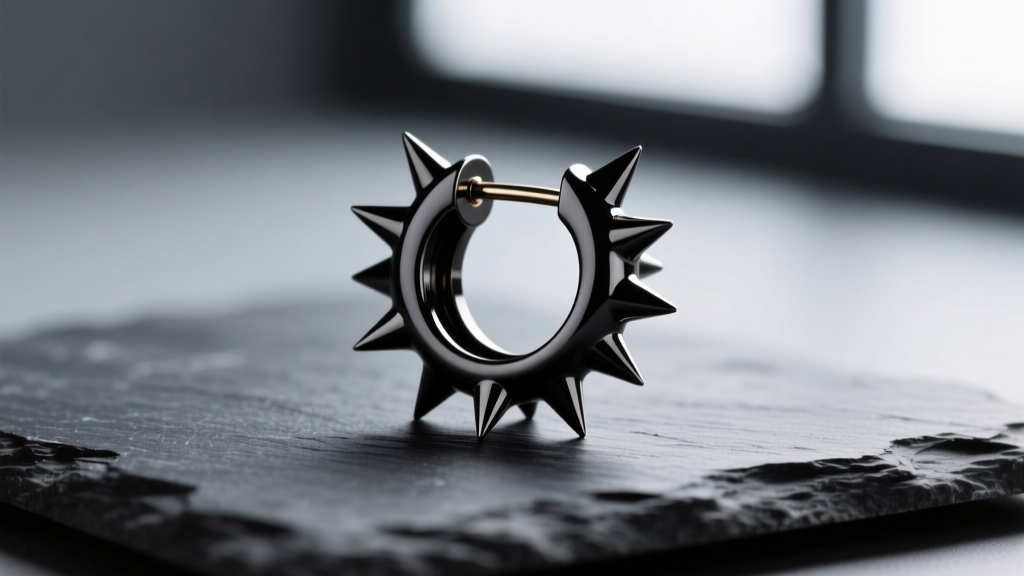
Spiked earrings have long been a staple of alternative fashion, punk aesthetics, and avant-garde high jewelry. However, beneath their striking visual appeal lies a complex intersection of biomechanics, material science, and anatomical limitations. Unlike standard studs or lightweight hoops, spikes introduce significant variables regarding weight distribution, center of gravity, and tensile stress on the piercing fistula. For enthusiasts and collectors, understanding these technical details is not merely an exercise in pedantry; it is essential for preventing tissue damage, migration, and jewelry failure. This expert deep dive explores the engineering principles required to wear heavy, elongated, and sharply contoured earrings safely and comfortably.
The Biomechanics of Spiked Earrings: Weight and Tension
When evaluating any body jewelry, one must consider the physics of the moment arm. A standard 3mm stud sits flush against the skin, meaning its center of gravity is practically aligned with the fistula (the healed tube of tissue forming the piercing). A 1-inch (25mm) spike, however, extends outward, creating a lever. Even if the spike is relatively lightweight, this distance from the pivot point (the fistula) generates rotational torque.
This torque forces the bottom edge of the jewelry post to dig into the lower interior of the piercing channel, while the top edge pulls away. Over time, this continuous directional pressure can lead to the dreaded "cheese-cutter effect," where the jewelry slowly migrates downward through the tissue, thinning the lobe and eventually causing a blowout or complete tearing. To counteract this, the post diameter (gauge) must be increased to distribute the load over a wider surface area, and the overall weight of the spike must be minimized through strategic material selection and hollow-core manufacturing techniques.
Material Science: Density and Alloy Selection
The choice of metal dictates both the biocompatibility and the physical weight of the earring. Because spikes require more raw material to form their elongated shapes, density becomes a critical factor. A solid brass spike will weigh significantly more than an identically sized titanium spike, directly increasing the torque on your earlobe.
According to the Association of Professional Piercers (APP), only specific implant-grade materials should be used in long-term piercings. This is especially true for heavy jewelry that causes micro-friction inside the fistula, which can exacerbate metal allergies.
| Material Grade | Density (g/cm³) | Nickel Content | Verdict for Spikes |
|---|---|---|---|
| ASTM F136 Titanium (Ti-6Al-4V) | 4.43 | None | Ideal. Lightweight, hypoallergenic, and exceptionally strong. |
| 316L Surgical Steel | 8.00 | Low (but present) | Acceptable if healed. Heavy; may cause fatigue in lobes over time. |
| Solid Brass / Bronze | 8.40 - 8.80 | Variable/High | Poor. Too heavy, highly reactive, causes contact dermatitis. |
| Niobium | 8.57 | None | Good for biocompatibility, but too dense and heavy for long spikes. |
As noted by the American Academy of Dermatology, prolonged exposure to nickel-leaching alloys in high-friction environments is a primary cause of allergic contact dermatitis. Because heavy spikes shift and drag against the fistula, opting for ASTM F136 implant-grade titanium is the gold standard for preventing both physical fatigue and immunological reactions.
Gauge Sizing: Preventing the Cheese-Cutter Effect
Standard earlobe piercings are typically done at 20-gauge (0.81mm) or 18-gauge (1.0mm). While these thin diameters are perfectly adequate for lightweight balls or small gems, they are structurally insufficient for spiked earrings. The surface area of a 20-gauge post resting against the bottom of a fistula is minuscule. When subjected to the downward drag of a 12-gram spike, the pressure per square millimeter becomes high enough to slice through cellular tissue.
For any spiked earring exceeding 10 grams or extending more than 15mm from the lobe, a minimum of 14-gauge (1.6mm) is strictly recommended. For larger, heavier gothic or industrial-style spikes, stepping up to 12-gauge (2.0mm) or even 10-gauge (2.5mm) is necessary. Stretching the lobe to accommodate these thicker gauges distributes the gravitational load across a broader band of tissue, effectively neutralizing the cheese-cutter effect and ensuring the longevity of the piercing.
Backing Architectures: Threadless vs. Internally Threaded
The mechanical connection between the spike and the post is a frequent point of failure. Traditional "butterfly" push-backs rely on friction and a thin, often externally threaded post. Externally threaded jewelry features screw threads on the post itself, which act like a file, tearing through the delicate cells of the fistula during insertion and removal. Furthermore, the butterfly back frequently slides down the post due to the forward weight of the spike, causing the earring to droop awkwardly and exposing the sharp threads to the skin.
Professional body jewelers utilize two superior mechanisms for heavy ends:
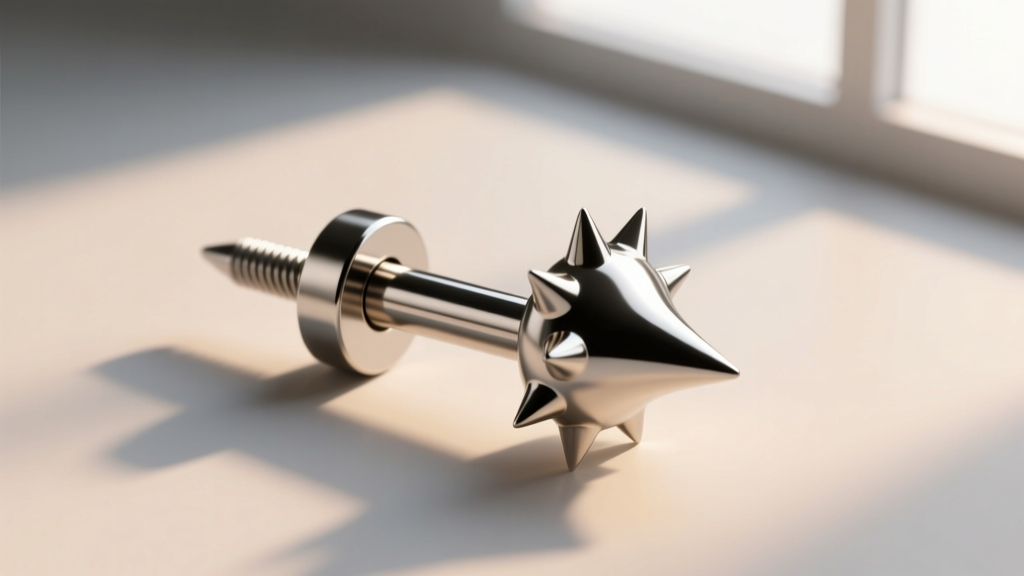
- Internally Threaded: The screw threads are located on the inside of the spike's base, while the post is smooth. This allows for seamless insertion without tissue trauma and provides a secure, flush fit against the lobe.
- Threadless (Push-Pin): The spike features a slightly bent, smooth pin that inserts into a hollow post. The tension of the bent metal against the inner wall of the post creates an incredibly secure lock. This is the preferred method for heavy spikes, as the pulling force of the spike actually wedges the pin tighter into the post, making accidental loss nearly impossible.
Cartilage vs. Lobe: Anatomical Load Limits
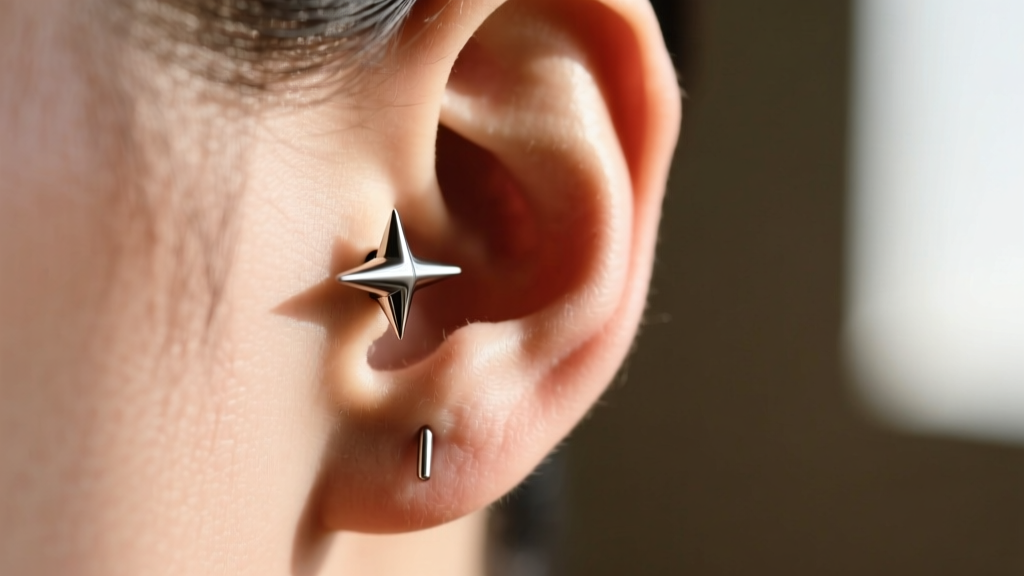
While earlobes are composed of fleshy, elastic tissue capable of stretching and absorbing shock, the upper ear is formed from rigid auricular cartilage. Placing heavy, leveraged spikes in helix, conch, or tragus piercings introduces severe anatomical risks. Cartilage lacks the elasticity to absorb the torque generated by a spike; instead, it transfers the stress directly to the narrow fistula channel. This can lead to cartilage chipping, localized necrosis, or the formation of hypertrophic scarring and keloids.
If you insist on wearing spiked earrings in cartilage piercings, the spike length must be drastically reduced (under 8mm) to minimize the moment arm, and a flat-back labret post must be used to distribute pressure evenly against the back of the ear. Sleeping on cartilage spikes is strictly prohibited, as the sudden pressure can cause the spike to act as a wedge, fracturing the underlying cartilage matrix.
Troubleshooting Common Spiked Earring Failures
"The most common error I see with alternative jewelry is the mismatch of jewelry weight to tissue capacity. A heavy spike on a thin post is a guaranteed migration. Always match the gauge to the gravitational load, not just the size of the initial piercing needle."
- The Earring Constantly Droops Forward: Your post is too long, or you are using a butterfly back. Switch to a custom-fitted flat-back labret post that sits flush against the back of your lobe to eliminate the gap that allows the spike to pivot downward.
- Pain at the Bottom of the Piercing: The cheese-cutter effect is occurring. Remove the jewelry immediately to allow the tissue to rest, and consult a professional piercer about stretching to a thicker gauge (e.g., moving from 16g to 12g).
- Redness and Itching Around the Fistula: You are likely experiencing contact dermatitis from nickel or zinc leaching out of a low-grade alloy. Upgrade to ASTM F136 implant-grade titanium and clean the area with sterile saline.
Ultimately, wearing spiked earrings safely requires treating your jewelry as functional hardware rather than mere decoration. By prioritizing implant-grade titanium, respecting the physics of leverage, and utilizing threadless or internally threaded flat-back architectures, you can achieve a striking aesthetic without compromising the structural integrity of your anatomy.


