Ultimate Guide to Spiral Earring Care, Cleaning, and Storage
Learn expert techniques to clean, maintain, and store your spiral earring jewelry. Prevent tarnish, skin irritation, and metal fatigue with our guide.

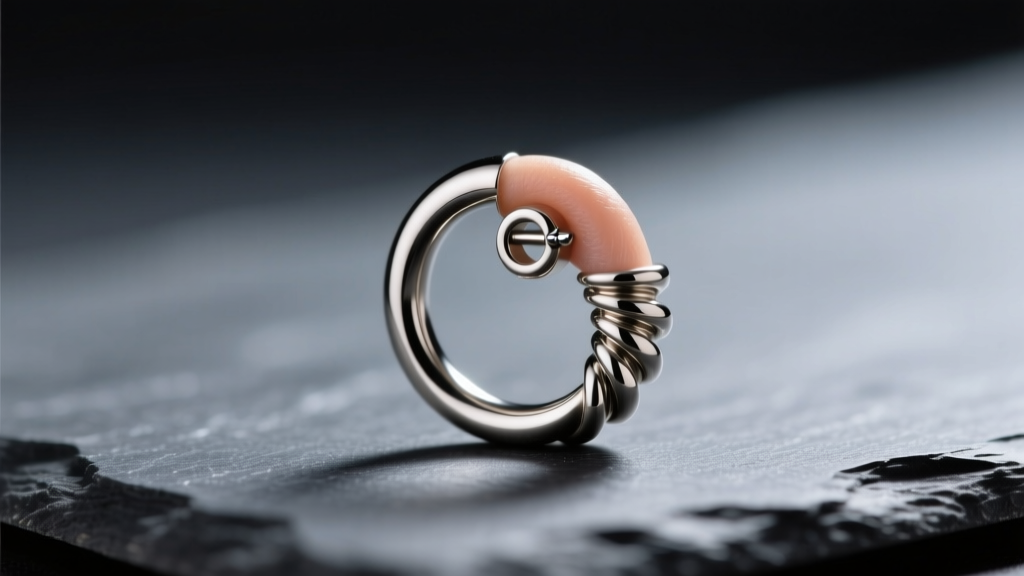
The Anatomy of a Spiral Earring: Why They Need Special Care
Spiral earrings—ranging from continuous cartilage wraps and ear cuffs to spiral tapers and threaded coil studs—are masterpieces of wire manipulation. However, their defining feature, the overlapping coils, makes them uniquely prone to trapping sebum, dead skin cells, hair products, and environmental debris. This buildup, colloquially known in the piercing community as "ear cheese," not only dulls the metal's finish but can also harbor bacteria, leading to contact dermatitis or localized infections in the cartilage folds.
Furthermore, the structural integrity of a spiral earring relies heavily on its gauge thickness. Most cartilage spirals are crafted from 18-gauge (1.0mm) or 16-gauge (1.2mm) wire to allow for flexibility during insertion. Thinner wires are highly susceptible to warping, while thicker 14-gauge (1.6mm) spirals hold tension better but require meticulous cleaning due to their tighter surface-area-to-volume ratio in the coils. Understanding how to properly care for these intricate designs is essential for longevity and skin health.
Step-by-Step Cleaning Protocol for Intricate Coils
Standard wiping is entirely ineffective for spiral earrings because the overlapping loops create microscopic crevices that cloth cannot reach. According to guidelines from the Association of Professional Piercers (APP), mechanical agitation combined with a mild surfactant is the gold standard for body jewelry hygiene.
The Warm Soap Soak Method (For Titanium, Gold, and Niobium)
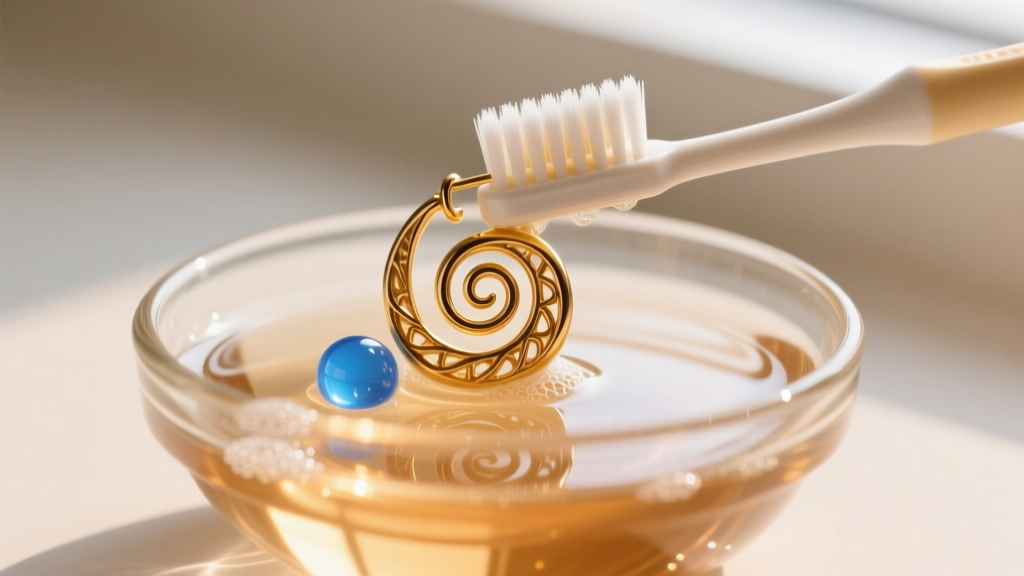
- Prepare the Solution: Mix a few drops of mild, fragrance-free dish soap (like Dawn) into a bowl of warm distilled water. Avoid tap water, as hard water minerals can leave micro-deposits on the metal.
- Soak: Submerge the spiral earring for 5 to 10 minutes. This softens hardened sebum and cosmetic residues trapped between the coils.
- Agitate: Use a soft-bristled baby toothbrush or, ideally, a silicone interdental brush. Gently run the brush along the grooves of the spiral. Never use cotton swabs (Q-tips), as cotton fibers will snag on the wire ends and become permanently wedged in the coils.
- Rinse and Dry: Rinse thoroughly under distilled water. Pat dry with a lint-free microfiber cloth, then use a hair dryer on the "cool" setting to blow moisture out of the tightest spiral gaps.
Ultrasonic Cleaning: When to Use and When to Avoid
Ultrasonic cleaners use high-frequency sound waves to create cavitation bubbles that blast debris from hidden crevices. They are phenomenal for cleaning solid 14k/18k gold or implant-grade titanium (ASTM F-136) spiral cuffs. However, the Gemological Institute of America (GIA) strictly warns against using ultrasonic machines on porous or fractured gemstones. If your spiral earring features inlaid opals, turquoise, pearls, or emeralds, the vibrations can shatter the stones or strip their natural oils. Stick to the manual soak method for gem-set spirals.
Material-Specific Maintenance & Tarnish Prevention
Different metals react differently to the acidic environment of human skin and the chemicals in our atmosphere. Below is a framework for maintaining the specific metals commonly used in spiral earrings.
| Metal Type | Tarnish Risk | Recommended Cleaning Agent | Maintenance Notes |
|---|---|---|---|
| Implant-Grade Titanium (ASTM F-136) | None | Mild soap, Ultrasonic | Highly biocompatible. Will not oxidize or turn skin green. Best for sensitive cartilage. |
| 14k / 18k Solid Gold | Very Low | Mild soap, Jewelry polishing cloth | Avoid chlorine (pools/hot tubs) which can cause micro-pitting and weaken the spiral's tension. |
| Sterling Silver (925) | High | Silver dip, Baking soda paste | Contains 7.5% copper, which oxidizes. Remove before swimming or heavy sweating to prevent blackening. |
| Niobium | None | Mild soap, Warm water | Often anodized to create vibrant colors. Do not use harsh chemicals or polishing cloths, which can strip the anodized layer. |
Preventing Metal Fatigue and Warping in Spiral Wraps
The most common cause of death for a spiral ear cuff or continuous wrap is metal fatigue. When you repeatedly pull the ends of the spiral apart to insert it into your ear, you cause "work hardening." This process alters the crystalline structure of the metal, making it brittle over time until it eventually snaps at the curve's apex.
Expert Tip: Never pull a spiral cuff open by widening the gap. Instead, use the "slide and twist" method. Gently twist the spiral along its horizontal axis to slide it onto the cartilage ridge, minimizing lateral stress on the wire. If you must adjust the tension of a cuff that has become too loose, use nylon-jaw pliers to gently squeeze the coil. The nylon prevents marring the polished metal surface while restoring the necessary grip.
Proper Storage Solutions to Prevent Tangling and Scratching
Because of their corkscrew shape, spiral earrings are notorious for interlocking with other jewelry, creating frustrating tangles that can bend the wire or scratch adjacent pieces. Tossing a spiral wrap into a communal jewelry dish is a guaranteed way to warp it.
- Individual Polybags: Store each spiral earring in its own small, resealable polyethylene bag. Squeeze the air out before sealing to minimize oxygen exposure, which slows down the tarnishing process for silver alloys.
- Anti-Tarnish Strips: Place 3M anti-tarnish paper strips inside your storage bags or jewelry box drawers. These strips absorb hydrogen sulfide and sulfur dioxide from the air, the primary culprits behind silver oxidation.
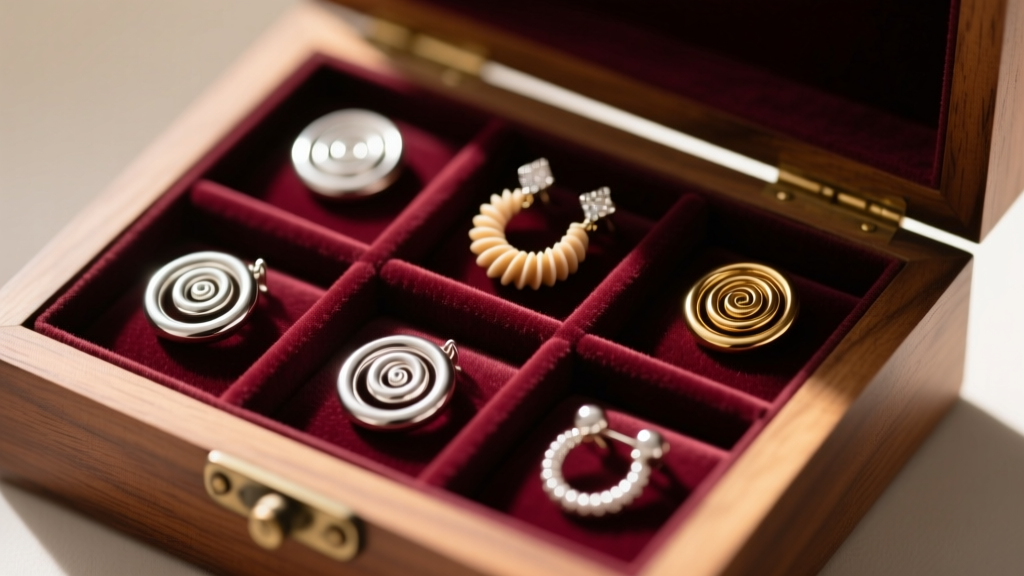
- Compartmentalized Boxes: If using a jewelry box, ensure each spiral has its own velvet-lined slot. Lay them flat rather than hanging them, as gravity can slowly pull the coils downward, altering their original factory-set tension.
Troubleshooting Common Spiral Earring Issues
Issue: The Skin Behind the Ear Turns Green or Black
Diagnosis: This is not an infection, but a chemical reaction. The sweat and oils on your skin are reacting with the copper alloys present in cheap brass, copper, or low-grade sterling silver. The resulting copper salts transfer to the skin. Solution: Coat the inner wire of the spiral with a micro-layer of clear nail polish as a temporary barrier, or ideally, retire the piece and upgrade to an implant-grade titanium or solid 14k gold spiral, which are completely hypoallergenic and non-reactive.
Issue: The Spiral Cuff Keeps Sliding Off the Helix
Diagnosis: The tension has been lost due to the metal relaxing over time or being bent open too far during previous insertions. Solution: Place the cuff on a soft towel. Using your fingers or nylon-jaw pliers, apply very gentle, incremental pressure to squeeze the top and bottom of the spiral closer together. Test the fit frequently; over-squeezing can cause the wire to kink, which creates a weak point and ruins the aesthetic symmetry of the coil.
Issue: Foul Odor Coming from the Coils
Diagnosis: Anaerobic bacteria are feeding on trapped dead skin and sebum deep within the overlapping wire loops. Solution: Perform a deep clean using the warm soap soak method outlined above, but add a drop of tea tree oil to the water for its natural antibacterial properties. Ensure the earring is 100% bone-dry before storing it, as trapped moisture creates a breeding ground for microbial growth.


