Square Earring Value Guide: Budget vs Fine Jewelry 2026
Discover the true value of square earring designs in 2026. We compare budget vs. fine jewelry materials, gauges, and structural integrity.

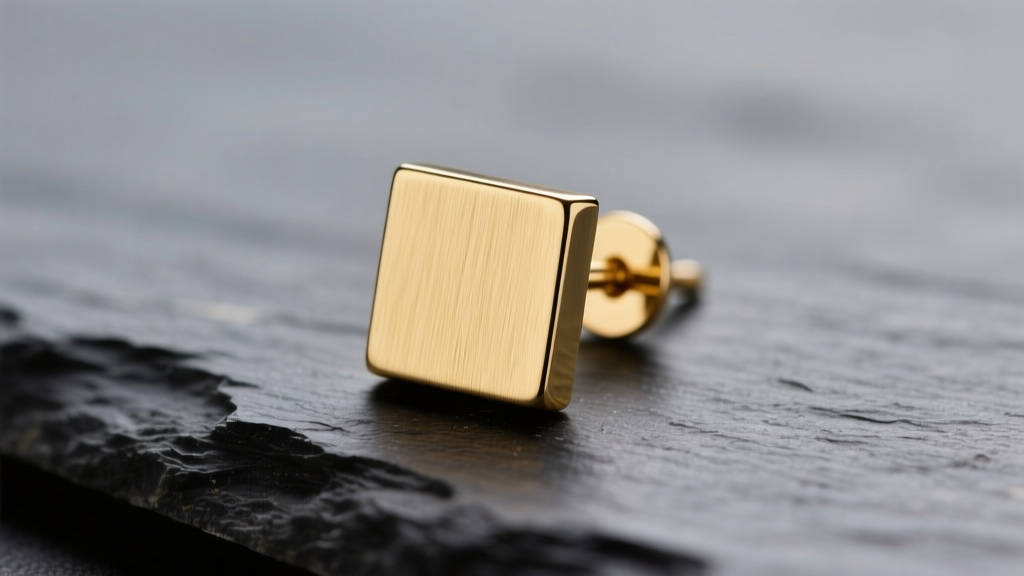
The Geometry of Value: Why Square Earrings Demand Scrutiny
The architectural appeal of the square earring has cemented its place in modern jewelry wardrobes. From sharp-edged geometric studs to hollow square tube hoops, the silhouette offers a bold, structured alternative to traditional circles and ovals. However, as we navigate the 2026 jewelry market, the price disparity between seemingly identical square designs is staggering. You can find a square geometric drop earring for $18 or $1,800. For the discerning buyer, the critical question is not just about aesthetics, but about true material value, structural longevity, and cost-per-wear (CPW).
Unlike round hoops or simple spherical studs, square earrings introduce complex structural vulnerabilities. The 90-degree corners on a square hoop or the sharp edges on a geometric drop require precise metallurgy and expert soldering. When budget manufacturers cut corners on base metals or post gauges, these geometric designs are often the first to fail. This comprehensive value assessment breaks down exactly what you are paying for across different price tiers, helping you distinguish between disposable fashion jewelry and lifelong investments.
The Material Matrix: Base Metals, Vermeil, and Solid Alloys
The foundation of any earring's value lies beneath its surface polish. When evaluating a square earring, understanding the metallurgy is non-negotiable. According to the Federal Trade Commission Jewelry Guides, terms like 'gold plated' and 'vermeil' have strict legal definitions regarding thickness and base materials, yet they are frequently misrepresented in fast-fashion marketing.
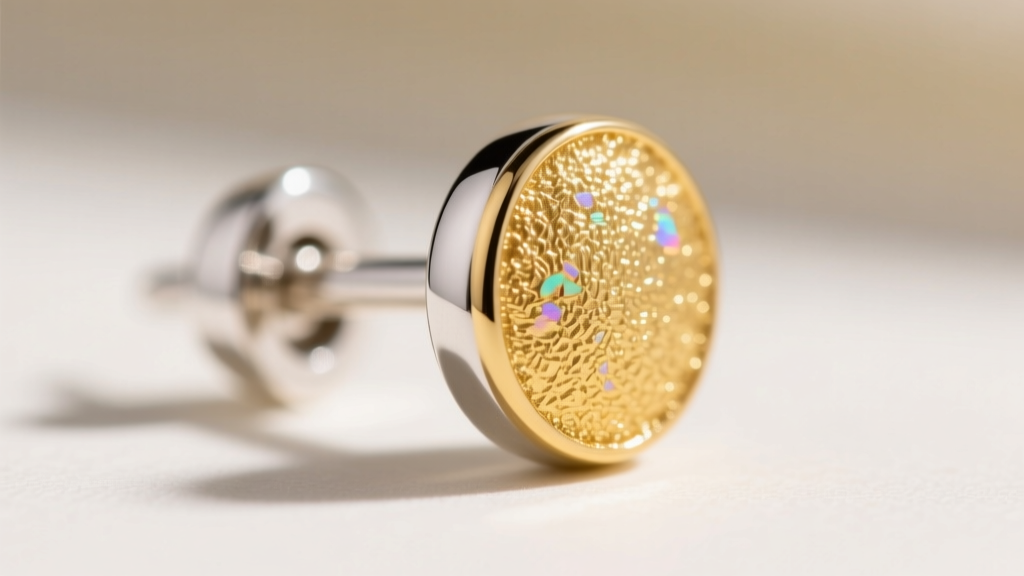
Flash Plating vs. Heavy Vermeil
Budget square earrings (typically under $40) rely on brass or copper bases with 'flash plating.' This process deposits a microscopic layer of gold—usually less than 0.1 microns thick. Because square studs often feature broad, flat surface areas, flash plating wears off rapidly against the skin's natural oils and friction, exposing the reactive brass underneath. This leads to the dreaded 'green ear' phenomenon and contact dermatitis.
Mid-tier value is found in Gold Vermeil (pronounced ver-may). True vermeil requires a sterling silver (.925) base plated with at least 2.5 microns of 10k, 14k, or 18k gold. For a wide square face stud, vermeil offers excellent value, providing the rich luster of solid gold at a fraction of the cost, with a lifespan of 2 to 5 years depending on wear frequency and care.
Solid Gold Alloys: 14k vs. 18k for Geometric Edges
When investing in fine jewelry, the Gemological Institute of America (GIA) notes that gold purity drastically affects durability. 18k gold (75% pure gold) offers a richer, warmer yellow hue but is inherently softer. For a square earring with sharp, defined corners, 18k gold is prone to denting and edge-wear over time. Conversely, 14k gold (58.3% pure gold) is alloyed with higher percentages of copper, silver, or zinc, making it significantly harder. For architectural, sharp-edged square designs, 14k solid gold provides superior structural integrity and edge retention, making it the smarter long-term investment for everyday wear.
2026 Price Tier Analysis & Cost-Per-Wear Matrix
To accurately assess value, we must look beyond the initial price tag and calculate the Cost-Per-Wear (CPW). A $20 pair of earrings that tarnishes in three months has a vastly higher CPW than a $300 pair worn daily for a decade. Below is our 2026 market assessment for square earring designs.
| Market Tier | Price Range | Material Standard | Expected Lifespan | Value Verdict & CPW |
|---|---|---|---|---|
| Fast Fashion | $12 - $35 | Brass base, flash plating (<0.5µ), nickel risk | 3 - 9 months | Poor. High CPW due to rapid degradation and skin irritation. |
| Demi-Fine | $65 - $140 | Sterling silver base, heavy vermeil (2.5µ - 3.0µ) | 2 - 5 years | Excellent. Best balance of upfront cost and aesthetic longevity. |
| Fine Jewelry | $250 - $600+ | Solid 14k or 18k gold, hypoallergenic posts | Lifetime (50+ years) | Superior. Lowest CPW over a lifetime; retains resale value. |
Structural Failure Modes in Geometric Designs
Square earrings present unique engineering challenges that round jewelry does not. The physics of a geometric shape dictate how stress, weight, and kinetic energy are distributed across the metal.
The Corner Stress Fracture
In square hoop earrings, the 90-degree corners are the weakest structural points. When a hoop is accidentally squeezed, dropped, or snagged on clothing, the kinetic energy travels through the wire and concentrates at the bends. Budget manufacturers often use thin, hollow tubing or poorly annealed wire to save on gold weight. Over time, this leads to micro-fractures at the corners, eventually causing the hoop to snap. High-value square hoops utilize laser-welded joints or solid, properly annealed wire that can absorb impact without fracturing.
Post Gauge and Lobe Leverage
The surface area of a square drop earring makes it inherently heavier and more susceptible to wind resistance than a delicate circular drop. Standard earring posts are 20-gauge (0.81mm thick). However, a solid brass or silver square drop weighing more than 4 grams will cause a 20G post to bend backward, creating an awkward angle and potentially tearing the earlobe piercing. When assessing value, always check the post thickness. High-quality, heavy geometric drops should utilize an 18-gauge (1.02mm) or 16-gauge (1.29mm) post, or feature a specialized flat-back disc to distribute the weight evenly across the earlobe.
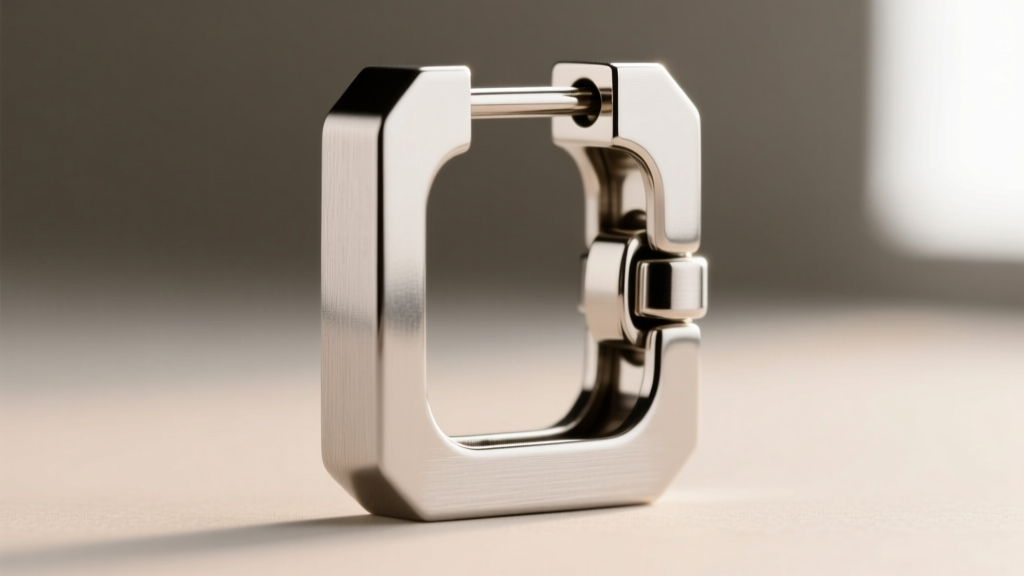
Cartilage vs. Lobe: Weight Distribution for Square Studs
The placement of your square earring drastically alters the value requirements of the hardware. Earlobe tissue is thick and can support heavier, larger square face studs (e.g., 10mm x 10mm). However, cartilage piercings (such as the helix, tragus, or conch) are much thinner and more prone to migration and rejection if subjected to excessive weight or improper angles.
If you are purchasing square studs for cartilage, avoid heavy solid brass bases or thick, flat-back labrets that do not allow for initial swelling. The true value in cartilage jewelry lies in internally threaded or threadless (push-pin) solid titanium or 14k gold ends. Standard friction backs (butterfly clutches) are entirely unsuitable for cartilage square studs; they trap bacteria against the flat cartilage surface and frequently fall out due to the lack of tissue depth to hold the clutch securely. Spending an extra $40 for a threadless solid gold square end is a critical investment in piercing health.
The Buyer’s Checklist: Spotting Hollow Cores and Fake Value
When shopping for square tube hoops or thick geometric bangles, manufacturers often use deceptive techniques to make jewelry appear substantial while using minimal precious metal. Use this checklist to audit the true value of a square earring before purchasing:
- The Tap Test: Gently tap a square tube hoop with your fingernail. A high-pitched, metallic 'tink' indicates a hollow core filled with air or resin. A dull, solid thud indicates a higher density of metal. Hollow square hoops dent easily and cannot be resized or repaired by a jeweler.
- Seam Inspection: Examine the corners of square drops under good lighting. Visible, dark, or bumpy lines indicate cheap soldering. Premium geometric jewelry uses seamless casting or laser welding, leaving the corners perfectly smooth and flush.
- Clutch Quality: For square studs, the backing is just as important as the front. Flimsy, thin-metal butterfly clutches lose their tension within weeks. Look for 'La Pousette' style locking backs or heavy silicone stoppers that secure the geometric weight safely.
- Hallmark Verification: Never trust a piece labeled simply 'Gold.' Look for precise hallmarks stamped on the post: '925' for sterling silver bases, '14K' or '585' for solid 14k gold, and '18K' or '750' for solid 18k gold.
Final Investment Verdict
The square earring is a masterclass in structural jewelry design, but its sharp angles and flat planes leave no room for manufacturing errors. If you are buying a trend-driven, oversized square acrylic or brass drop for a specific season, the budget tier ($15-$40) serves its temporary purpose. However, for everyday architectural studs, square huggies, or medium-sized geometric hoops that will graze your jawline daily, the Demi-Fine (heavy vermeil) or Fine Jewelry (solid 14k gold) tiers offer the only mathematically sound value. By prioritizing 18-gauge posts, solid wire construction over hollow tubes, and secure corner soldering, you ensure your geometric jewelry remains as sharp and structurally sound in 2036 as it is today.


