Square Gold Earrings: The Beginner's Guide to Karats & Fit
Discover how to choose square gold earrings. Learn about karat differences, edge polishing, gauge sizes, and face-shape styling in this beginner guide.

The Appeal of Geometric Silhouettes
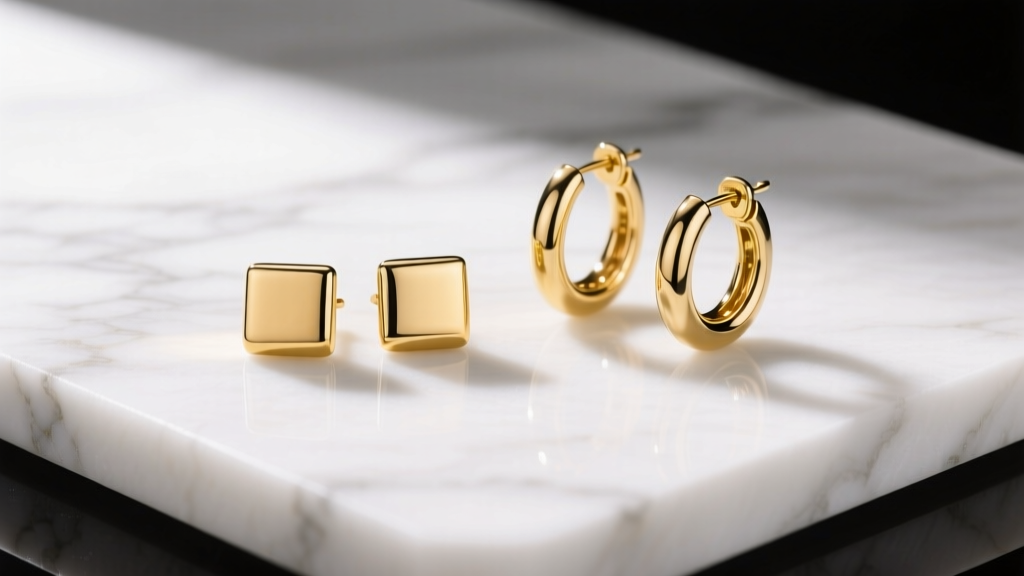
When curating a foundational jewelry wardrobe, geometric shapes provide a modern, structured edge that softer, traditional silhouettes often lack. Among these, square gold earrings have emerged as a staple for both minimalist and avant-garde styling. The sharp lines and clean angles of a square profile catch the light differently than round or oval cuts, creating a distinct architectural look on the ear. However, transitioning from classic circular hoops or simple round studs to angular, geometric designs requires an understanding of structural integrity, metallurgy, and ergonomic comfort.
For beginners, the transition to square shapes can present unexpected challenges. From hair snagging on unpolished 90-degree corners to the structural vulnerability of high-karat gold at sharp points, buying geometric jewelry is more complex than simply picking a shape you like. This comprehensive guide will break down the exact specifications, material grades, and styling frameworks you need to confidently invest in square gold earrings that are both beautiful and comfortable for daily wear.
Decoding Gold Karats for Sharp Corners
One of the most critical mistakes beginners make is assuming that a higher gold karat always equates to a better piece of jewelry. While 24-karat gold is the purest form, it is exceptionally soft and malleable. When gold is formed into a square shape, the corners become structural weak points. A pure 24k gold square stud or hoop will easily dent, bend, or lose its sharp geometric definition if bumped against a hard surface or even pressed tightly against a pillow during sleep.
To maintain the crisp, 90-degree angles that define square earrings, jewelers must alloy the gold with harder metals like copper, zinc, or silver. According to the Gemological Institute of America (GIA), the alloy mixture not only dictates the color of the gold but fundamentally alters its tensile strength and scratch resistance. For geometric shapes, finding the sweet spot between gold purity and structural durability is paramount.
| Gold Karat | Alloy Content | Corner Durability | Best Application | Est. Price Range (Studs) |
|---|---|---|---|---|
| 24k (99.9%) | 0% | Poor (Bends easily) | Avoid for geometric shapes | $400 - $800+ |
| 18k (75%) | 25% | Moderate | Special occasion drops, thick hoops | $250 - $600 |
| 14k (58.3%) | 41.7% | Excellent | Everyday studs, huggies, clickers | $120 - $350 |
| 10k (41.7%) | 58.3% | Superior | Ultra-thin geometric wire, budget | $60 - $150 |
For everyday square gold earrings, 14k gold is widely considered the industry gold standard. It offers enough hardness to keep corners sharp and resilient against daily impacts, while retaining the rich, warm luster associated with fine jewelry.
The 'Corner Catch': Edge Polishing and Comfort
A frequent complaint among first-time buyers of geometric jewelry is the 'corner catch'—the frustrating tendency for sharp 90-degree edges to snag on hair, sweaters, or even scratch the side of the neck. In high-quality manufacturing, a square earring should never actually feel sharp to the touch.
Premium jewelers employ a technique called micro-beveling or edge-tumbling. Instead of leaving the intersection of the square's planes at a harsh, razor-like 90-degree angle, the edges are subtly sanded and polished to create a microscopic curve. This preserves the visual illusion of a sharp, geometric square while ensuring the physical profile is smooth and skin-friendly. When shopping online or in-store, always run your fingertip along the perimeter of the earring. If it feels like it could slice a piece of paper, it will inevitably catch on your hair and cause micro-abrasions on your skin over time.
Wire Profiles and Gauge Sizing
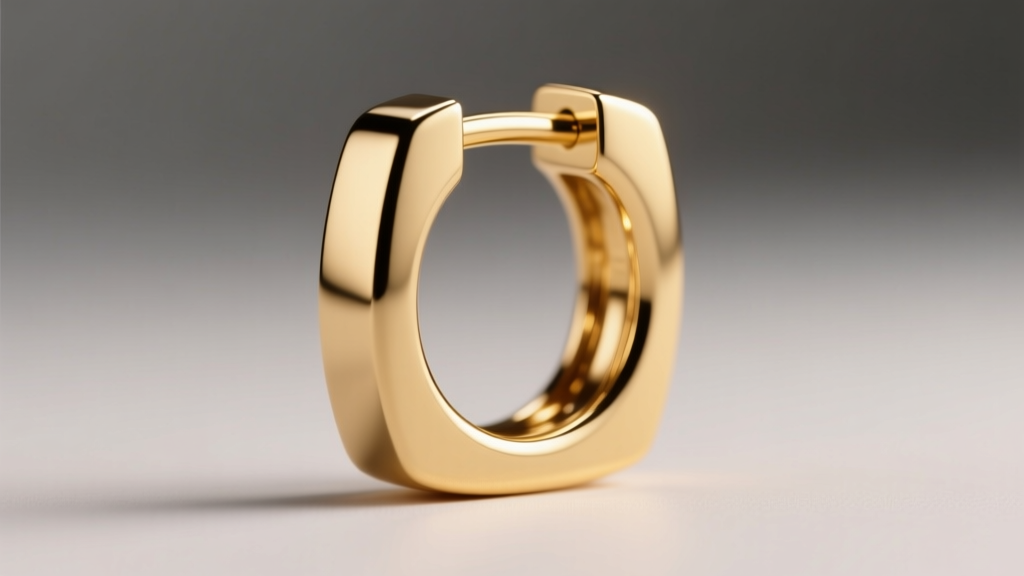
When exploring square gold hoops or huggies, you will encounter two distinct wire profiles: round wire shaped into a square silhouette, and actual square-profile wire. Square wire (where the cross-section of the metal itself is a square) offers a highly modern, brutalist aesthetic, catching light on four distinct planes. However, it requires precise gauge sizing to ensure it fits comfortably through your piercing without causing migration or tearing.
The Association of Professional Piercers (APP) emphasizes that the thickness of the jewelry post or wire must match the healing state and natural gauge of your piercing. Forcing a thick, square-profile wire into a delicate, un-stretched lobe piercing can cause the 'cheese-cutter effect,' where the jewelry slowly migrates downward through the tissue.
- Standard Lobe Piercings (20G - 18G): Most standard earlobe piercings are done at 20-gauge (0.8mm) or 18-gauge (1.0mm). If buying square hoops, ensure the post or the thinnest part of the wire does not exceed 1.0mm to avoid stretching the hole.
- Cartilage and Helix (16G): Cartilage piercings are typically 16-gauge (1.2mm). Square geometric ear cuffs or cartilage studs should match this thickness to prevent irritation bumps caused by jewelry moving too freely in the fistula.
- Square Wire Dimensions: For hoops made entirely of square wire, a dimension of 1.5mm x 1.5mm is standard for a bold look, but this should only be worn in established, older piercings that can accommodate the wider profile.
Styling Square Drops and Studs for Your Face Shape
The visual weight and linear geometry of square earrings interact directly with your facial structure. Understanding these visual dynamics allows you to use jewelry as a tool for balancing proportions.
Round and Oval Faces
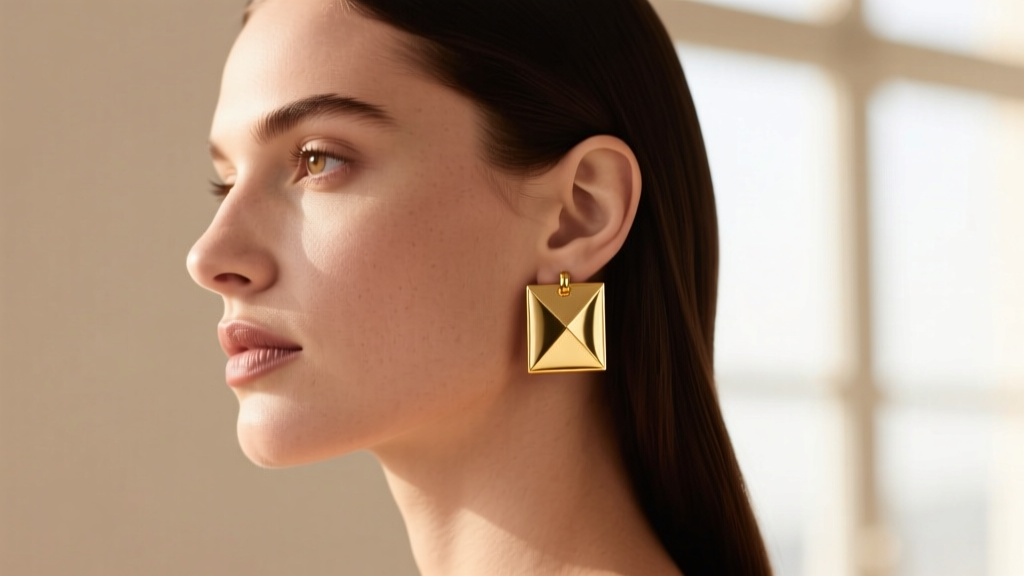
Round faces benefit immensely from the sharp, linear contrast provided by square drop earrings or elongated rectangular dangles. The rigid vertical and horizontal lines introduce structure and help visually elongate the face, drawing the eye downward and accentuating the jawline. Opt for square drops that hang at least an inch below the earlobe to maximize this lengthening effect.
Square and Heart-Shaped Faces
If you naturally possess a strong, angular jawline or a wide forehead tapering to a narrow chin, wearing stark, oversized square hoops can sometimes over-emphasize existing angles, making the face look overly rigid. Instead, look for 'squircles'—a hybrid shape that blends the geometric appeal of a square with softly rounded corners. Alternatively, small, delicate square studs worn directly on the lobe provide a touch of modern geometry without overwhelming your natural facial symmetry.
Real-World Maintenance and Tarnish Prevention
Because square earrings feature distinct corners and flat planes, they are uniquely prone to trapping environmental debris. Lotions, hairsprays, and natural skin oils tend to accumulate in the tight 90-degree crevices where the post meets the back of a square stud, or along the inner seams of a square hoop. Over time, this buildup can dull the gold's finish and, in the case of lower-karat alloys or gold vermeil, accelerate localized tarnishing.
Pro-Tip for Geometric Cleaning: Avoid using harsh ultrasonic cleaners on hollow square hoops, as the vibrations can weaken the soldered corner joints. Instead, use a soft-bristled baby toothbrush dipped in a mild solution of warm water and phosphate-free dish soap. Gently brush the corners at a 45-degree angle to dislodge trapped debris, rinse thoroughly, and pat dry with a microfiber cloth to prevent water spots on the flat planes.
By prioritizing 14k gold for structural integrity, insisting on micro-beveled edges for comfort, and respecting the gauge requirements of your specific piercings, you can seamlessly integrate square gold earrings into your daily rotation. Geometric jewelry is an investment in modern elegance, and with the right technical knowledge, your pieces will maintain their sharp, architectural beauty for decades to come.


