How to Stack Anine Bing Earrings: A Step-by-Step Guide
Learn how to expertly stack Anine Bing earrings with our step-by-step guide. Discover gauge tips, styling frameworks, and vermeil care secrets.


The Anine Bing Ear Aesthetic: Rock-Chic Meets Minimalism
When it comes to curating an ear stack that balances effortless Scandinavian minimalism with a distinct rock-chic edge, Anine Bing earrings are the undisputed gold standard. Known for their signature celestial motifs, chunky silhouettes, and pavé detailing, these pieces are designed to be mixed, matched, and layered. However, building a cohesive ear stack requires more than just buying the most expensive pieces; it demands an understanding of proportion, gauge compatibility, and material science.
In this comprehensive 2026 styling guide, we will walk you through the exact step-by-step process of mapping, stacking, and maintaining your Anine Bing ear curation. Whether you are working with a single lobe piercing or a fully loaded cartilage setup, this framework will help you achieve a high-end, editorial look without compromising the integrity of your jewelry.
Step 1: Understand Your Canvas and Gauge Constraints
Before purchasing any fine jewelry, you must understand the physical limitations of your piercings. The Association of Professional Piercers (APP) notes that standard lobe piercings are typically done at 20-gauge (0.81mm) or 18-gauge (1.02mm), while cartilage piercings (like the helix or tragus) are usually 16-gauge (1.29mm).
Most Anine Bing studs and hoops are crafted with 18-gauge or 20-gauge posts, making them perfect for standard lobe placements. However, if you are attempting to thread an 18-gauge Anine Bing post through a tight, un-stretched 16-gauge cartilage piercing, you risk damaging the post or irritating the fistula (the piercing channel).
- Standard Lobes: Ideal for all Anine Bing studs, drops, and medium-to-large hoops.
- Upper Lobes / Flat Piercings: Best suited for their smaller 5mm-7mm star or initial studs.
- Helix / Cartilage: Proceed with caution; ensure the post length (usually 10mm-11mm for AB) is long enough to accommodate cartilage thickness and swelling.
Step 2: Select Your Anchor Piece
Every successful ear stack relies on an "anchor"—the largest, most visually dominant piece situated in the primary lower lobe piercing. This piece dictates the metal tone, texture, and overall vibe of the remaining stack. For Anine Bing, the anchor is usually a textured hoop or a pavé-encrusted huggie.
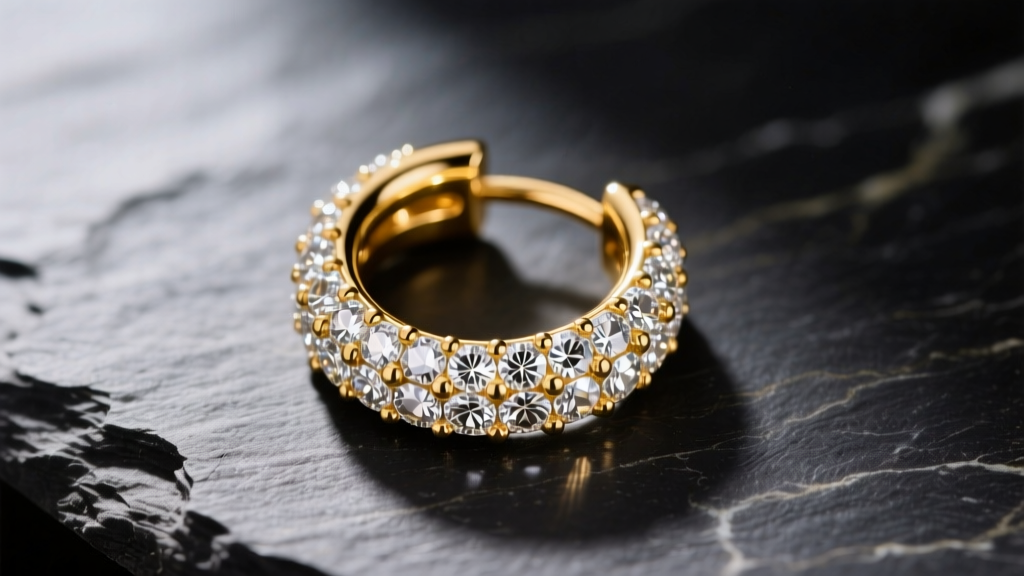
When selecting your anchor, apply the Rule of Visual Weight: the anchor should comprise roughly 50% of the total visual mass of your ear stack. Below is a breakdown of popular Anine Bing anchor pieces and their current market positioning.
| Model / Style | Category | Material | Approx. Price (2026) |
|---|---|---|---|
| The Charlie Hoop (Medium) | Textured Hoop | 14k Gold Vermeil | $195 - $225 |
| Stella Star Stud (Large) | Statement Stud | Sterling Silver / CZ | $125 - $150 |
| Pavé Huggie Hoop | Diamond Huggie | 14k Gold / Natural Diamonds | $450 - $595 |
| Core Chunky Hoop | Minimalist Hoop | 14k Gold Vermeil | $175 - $195 |
Step 3: Layering Mid-Stack Accents and Drops
Once your anchor is secured in the primary lobe, move to the secondary piercings (mid-lobe or upper lobe). The goal here is to create a gradient effect, tapering the size of the earrings as you move up the ear.
The Proportion Framework
If your lower lobe features a 25mm chunky Anine Bing hoop, your second piercing should host a 10mm-12mm huggie or a medium drop earring. Your third piercing (if applicable) should be a flush-fitting 5mm stud, such as the brand's signature tiny initial or diamond star stud. This 50-30-20 visual weight distribution prevents the ear from looking cluttered and ensures each piece gets its moment to shine.
Stylist Tip: Mix metals intentionally. Anine Bing frequently releases collections that blend oxidized sterling silver with 14k gold vermeil. Placing a silver star stud directly above a gold vermeil hoop creates a deliberate, high-fashion contrast that looks far more curated than a mismatched accident.
Step 4: Mastering Vermeil Care and Maintenance
The majority of Anine Bing's accessible fine jewelry line utilizes gold vermeil. Unlike standard gold-plated brass, vermeil requires a sterling silver (925) base and a gold plating of at least 10k, with a thickness of 2.5 microns. While this makes the pieces hypoallergenic and luxurious, the 2.5-micron gold layer is still susceptible to chemical degradation.
According to the Jewelers of America, the leading culprits of vermeil degradation are sulfur, chlorine, and the pH-altering chemicals found in perfumes and lotions. To protect your investment, follow this strict maintenance protocol:
- The "Last On, First Off" Rule: Always put your Anine Bing earrings on after applying perfume, hairspray, and makeup. Remove them immediately upon returning home.
- Dry Storage: Store vermeil pieces in an airtight anti-tarnish pouch. The sterling silver base will oxidize and turn black if exposed to ambient humidity and sulfur in the air once the gold layer wears thin.
- Proper Cleaning: Never use ultrasonic cleaners or harsh silver dips on vermeil. Instead, use a few drops of phosphate-free dish soap and warm water, gently wiping with a microfiber cloth.
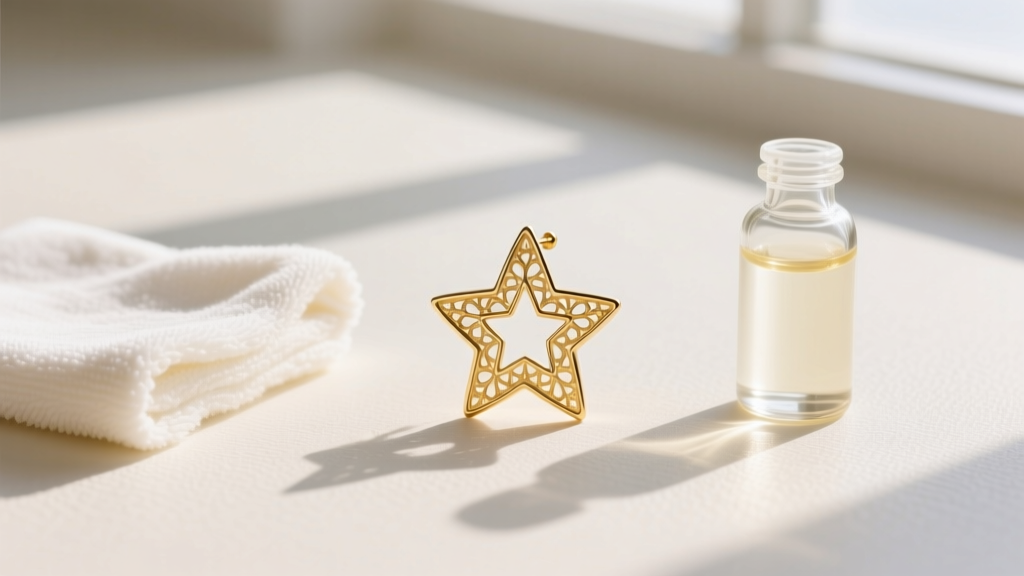
Troubleshooting: Tarnish and Loose Backs
Even with meticulous care, you may encounter two common issues when wearing Anine Bing earrings daily: tarnish creep and friction-back failure.
Addressing Tarnish Creep
If you notice a dark shadow appearing near the post or the butterfly back, this is the sterling silver base oxidizing. Do not use abrasive polishing pads, as they will strip the remaining 2.5 microns of gold. Instead, use a treated jeweler's cloth (like a Sunshine cloth) and very lightly buff the affected area, avoiding heavy pressure on the gold-plated surfaces.
Fixing Loose Butterfly Backs
Anine Bing typically uses standard friction backs (butterfly clutches). Over time, the metal loops on the back can spread apart, causing the earring to slip off the post. To fix this, take a pair of smooth-jawed jewelry pliers and gently squeeze the two metal loops of the butterfly back toward the center. This restores the tension and ensures a secure fit on the 18-gauge post.
Final Thoughts on the Anine Bing Ear Stack
Curating an ear stack with Anine Bing earrings is an exercise in balancing raw, rock-and-roll energy with refined, minimalist elegance. By respecting the gauge limitations of your piercings, adhering to the 50-30-20 visual weight rule, and treating your gold vermeil pieces with the material science they demand, you can build a signature look that is entirely your own. For more insights on fine jewelry curation and brand-specific styling, explore our complete earring archives and brand guides.


