Troubleshooting Hoop Teardrop Earrings: Fixes for Flipping
Stop your hoop teardrop earrings from flipping, tangling, and stretching your lobes. Expert troubleshooting for clasps, weight, and gauge sizes.

The Physics of Failure: Why Hoop Teardrop Earrings Misbehave
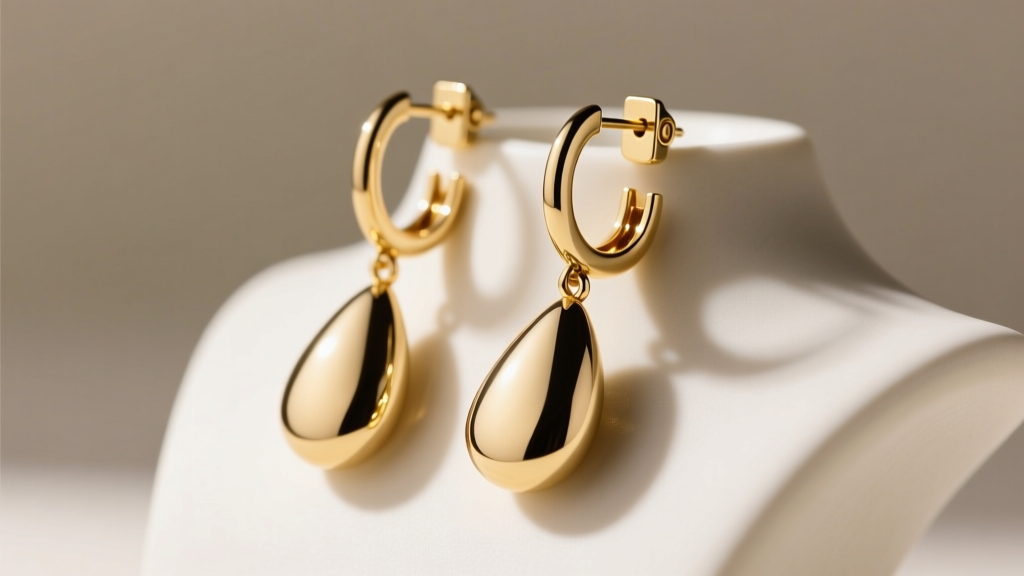
Hoop teardrop earrings are a staple in modern jewelry boxes, blending the continuous line of a classic hoop with the elegant, face-framing elongation of a teardrop charm. However, as we navigate the 2026 jewelry landscape, where oversized silhouettes and mixed-metal aesthetics dominate, the mechanical flaws of this specific earring design have become increasingly apparent. The fundamental issue lies in the physics of the piece: the teardrop acts as a pendulum suspended from a circular axis. This uneven weight distribution creates a shifting center of gravity, leading to the three most common complaints from wearers: incessant flipping, lobe stretching (the 'cheese cutter' effect), and clasp failure.
Troubleshooting these issues requires moving beyond generic jewelry care and understanding the interplay between wire gauge, metallurgical hardness, and piercing anatomy. Whether you are dealing with a pair of vintage 14k gold j-hoops or modern lightweight titanium drops, this guide provides actionable, expert-level solutions to stabilize your earrings and protect your piercings.
Problem 1: The Incessant Flipping and Twisting
The most frustrating flaw of hoop teardrop earrings is their tendency to rotate forward or backward on the earlobe. When the teardrop charm is heavy and the hoop wire is thin, the momentum of the charm causes the entire hoop to spin through the piercing channel. This results in the teardrop facing upward against the cheek or the clasp rotating to the front of the ear.
Solution A: Silicone Stabilizers and Friction Matching
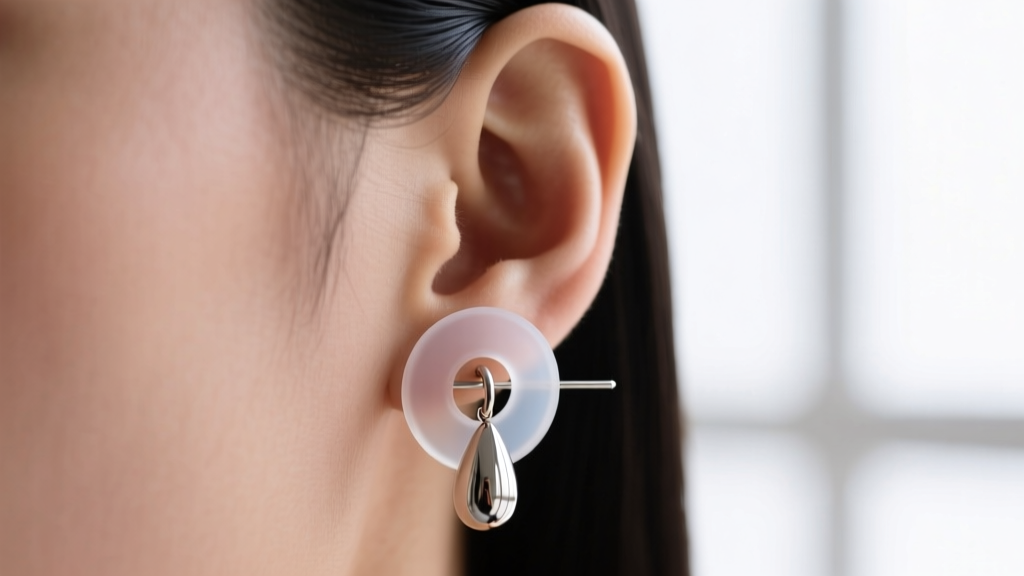
The immediate, non-destructive fix for a spinning hoop is to increase the friction against the back of the earlobe. Standard metal butterfly backs are useless for hoops. Instead, utilize clear silicone earring stabilizer disks (often sold as 'earlobe support patches'). These disks feature a central slit that grips the hoop wire tightly. By placing the disk flush against the back of the earlobe, you create a physical barrier that prevents the hoop from rotating forward. For optimal results, the hole in the silicone disk must be slightly smaller than the gauge of your earring wire to ensure a compressive grip.
Solution B: Upgrading the Wire Gauge
If your earrings are custom-made or you are shopping for a new pair, the wire gauge is your primary defense against flipping. A standard 20-gauge (0.81mm) wire lacks the structural rigidity to support a dangling teardrop without bending and rotating. Upgrading to an 18-gauge (1.02mm) or 16-gauge (1.29mm) wire drastically reduces the pendulum effect by stiffening the axis of rotation. According to guidelines from the Association of Professional Piercers, thicker gauges not only prevent rotation but also promote healthier piercing channels by distributing pressure over a wider surface area of tissue.
Problem 2: Lobe Drag and the 'Cheese Cutter' Effect
When a heavy teardrop charm is suspended from a thin hoop wire, the downward force is concentrated on a microscopic fraction of a millimeter of your earlobe tissue. Over time, this continuous downward drag causes the piercing channel to migrate downward, thinning the tissue in a painful process known in the body modification community as the 'cheese cutter effect.' Once the tissue thins to less than 2mm, the piercing is at high risk of tearing completely through the lobe.
Weight Distribution Matrix
To prevent permanent lobe damage, you must match the weight of the teardrop charm to the appropriate wire gauge and hoop diameter. Smaller diameter hoops (under 15mm) concentrate weight closer to the piercing hole, increasing shear stress. Larger hoops (25mm+) allow the weight to hang lower, altering the vector of force but increasing the risk of snagging.
| Wire Gauge | Thickness (mm) | Max Teardrop Weight | Best Application |
|---|---|---|---|
| 20G | 0.81mm | < 3 grams | Lightweight, hollow-stamped charms |
| 18G | 1.02mm | 3 - 6 grams | Standard medium solid metal drops |
| 16G | 1.29mm | 6 - 10 grams | Heavy gemstone or thick cast drops |
| 14G | 1.60mm | 10+ grams | Statement pieces, stretched lobes |
Note: If you already own a pair of heavy 20G hoop teardrop earrings that are causing lobe drag, you can retrofit them by threading the hoop through a clear, flexible silicone O-ring before inserting it into your ear. The O-ring acts as a cushion, widening the surface area that bears the weight of the teardrop.
Problem 3: Clasp Snagging and Hinge Failure
Hoop teardrop earrings typically rely on one of two closure mechanisms: the hinged snapback or the traditional latchback. Both are prone to specific mechanical failures exacerbated by the swinging motion of the teardrop charm.
Troubleshooting the Hinged Snapback
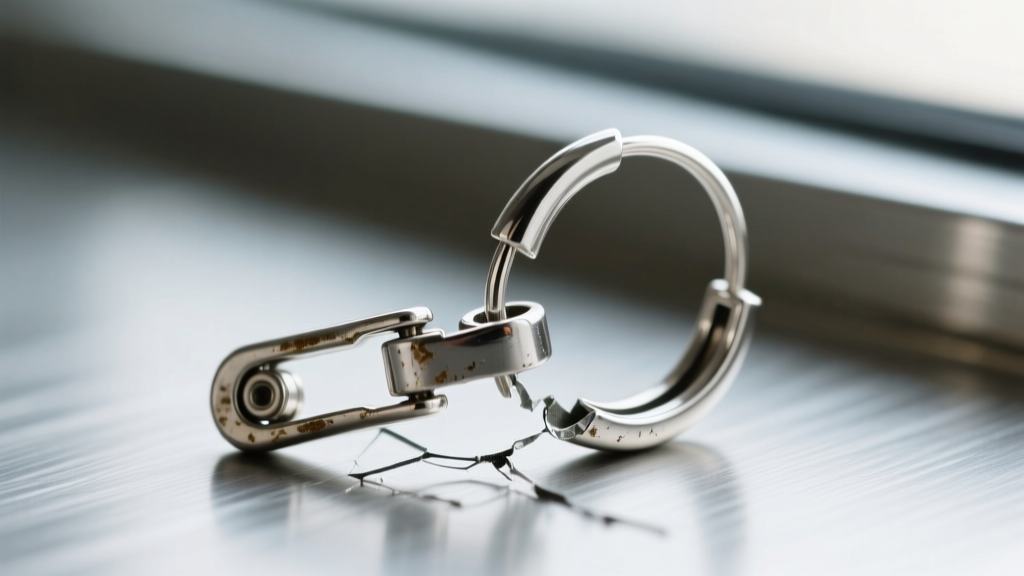
The hinged snapback features a grooved post that clicks into a tensioned metal sleeve. Over time, the constant kinetic energy from the swinging teardrop causes the metal sleeve to stretch, resulting in a clasp that no longer 'clicks' shut or pops open when brushed by hair. The Fix: Do not discard the earring. Using a pair of nylon-jaw pliers (which will not mar the metal finish), gently squeeze the hollow receiving sleeve on the hoop to compress it back into a tighter oval shape. Test the closure with the grooved post; you should hear and feel a crisp snap. If the hinge pin itself is loose, a microscopic drop of jeweler's epoxy applied with a needle tip to the outer hinge joint can stabilize the wobble without freezing the moving parts.
Troubleshooting the Latchback Catch
Traditional latchbacks feature a hinged wire that hooks into a 'C' catch. The primary issue here is hair snagging, which can violently yank the hoop, bending the catch open. To fix a widened 'C' catch, use smooth-jawed chain-nose pliers to gently push the top lip of the catch downward, reducing the gap. Furthermore, running a clear, flexible silicone tubing sleeve (1mm inner diameter) over the latchback wire before closing it will completely eliminate hair snagging and secure the closure against the kinetic pull of the teardrop.
Problem 4: Material Tarnishing and Contact Dermatitis
Because hoop teardrop earrings have more surface area and intricate crevices (especially where the charm attaches to the hoop), they are highly susceptible to trapping moisture, sebum, and cosmetic products. This leads to rapid tarnishing in silver alloys and contact dermatitis in base metals.
Decoding the Alloys
Many mass-market teardrop earrings are cast from brass or zinc alloys and plated with a micro-layer of gold or rhodium. Once the teardrop charm swings and rubs against the neck or hair, this plating wears off, exposing the skin to nickel and copper. According to metallurgical standards referenced by the Gemological Institute of America, consumers should look beyond the term 'hypoallergenic' and demand specific material certifications.
- ASTM F136 Titanium: The gold standard for sensitive ears. It is entirely nickel-free and highly resistant to the acidic pH of human sweat. Ideal for heavy teardrops because titanium possesses a high strength-to-weight ratio, allowing for thinner, lighter hoops that do not sacrifice structural integrity.
- 316L Surgical Steel: Acceptable for healed piercings, but contains trace amounts of nickel. If your teardrop earrings are 316L and causing itching, the issue is likely trapped sweat in the hinge mechanism. Clean the hinges weekly with an ultrasonic jewelry cleaner and a drop of mild dish soap.
- Sterling Silver (925): Highly prone to sulfur-induced tarnishing. If your silver hoop teardrops are turning black, avoid harsh chemical dips. Instead, use an aluminum foil, baking soda, and hot water electrolytic bath to reverse the oxidation without stripping the silver.
Preventative Maintenance Checklist for 2026
To ensure your hoop teardrop earrings remain functional and comfortable, implement this bi-weekly maintenance routine:
- Hinge Lubrication: Apply a microscopic amount of synthetic watch oil to the hinge pin of snapback hoops to prevent metal-on-metal grinding, which weakens the joint over time.
- Post Inspection: Examine the grooved post of your snapback under a jeweler's loupe. If the grooves are worn smooth, the clasp will fail. Have a bench jeweler re-cut the grooves or replace the post.
- Charm Jump-Ring Check: If your teardrop charm dangles from a split jump-ring attached to the hoop, check the gap. The swinging motion often twists split rings open. Solder the jump-ring shut or replace it with a seamless continuous ring to prevent losing the charm.
- Nighttime Removal: Never sleep in hoop teardrop earrings. The leverage exerted by the teardrop charm when your head rests on a pillow can easily bend the hoop out of its circular shape, permanently warping the closure mechanism.
By understanding the mechanical forces at play and respecting the limits of jewelry metallurgy, you can transform your problematic hoop teardrop earrings from a frustrating liability into a secure, elegant, and comfortable daily staple.


