Best Starter Earrings for Guys: Budget & Value Guide
Discover the best starter earrings for guys on a budget. We compare ASTM F136 titanium, surgical steel, and gold options for safe, affordable healing.

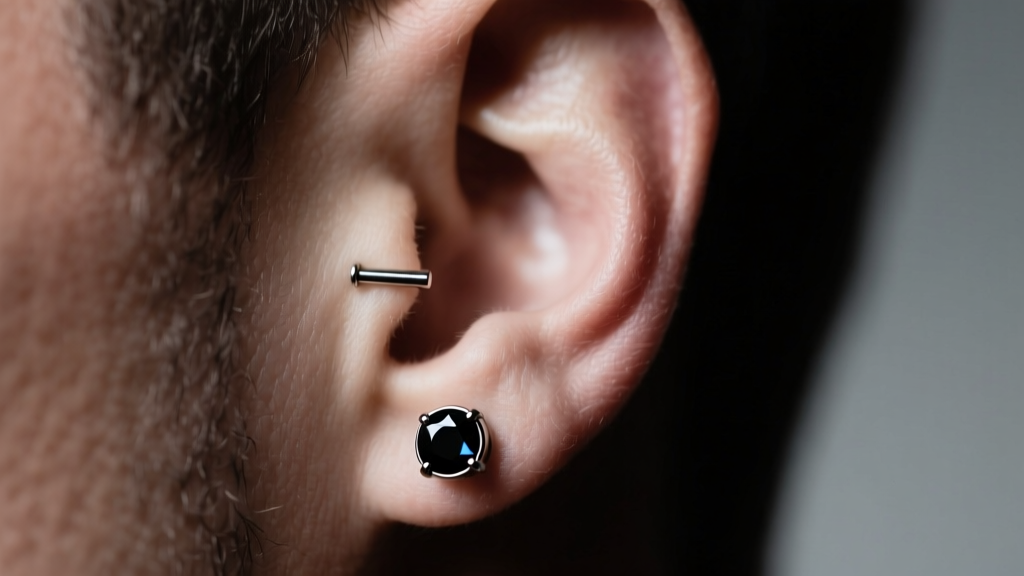
The Economics of Ear Piercings: Why Budget Matters
When navigating the world of men's jewelry, finding the right starter earrings for guys often comes down to a balancing act between upfront cost and long-term biological compatibility. In the current 2026 market, the influx of fast-fashion jewelry has made it easier than ever to find cheap earrings, but this accessibility hides a costly trap. A $5 pair of mystery-metal studs can easily result in a $150 dermatologist visit for contact dermatitis, or worse, a torn earlobe requiring surgical reconstruction.
True value in body jewelry is not about finding the lowest price tag; it is about maximizing the return on your investment through biocompatible materials, precise manufacturing, and structural integrity. This guide breaks down the exact metallurgical standards, gauge requirements, and pricing tiers you need to know to make a smart, budget-conscious purchase for your first piercing.
Material Breakdown: What to Buy and What to Avoid
The single most critical factor in assessing the value of starter earrings for guys is the material grade. Your body treats a fresh piercing as an open wound, and the jewelry acts as a splint while the fistula (the tube of healing tissue) forms.
The Gold Standard on a Budget: Implant-Grade Titanium (ASTM F136)
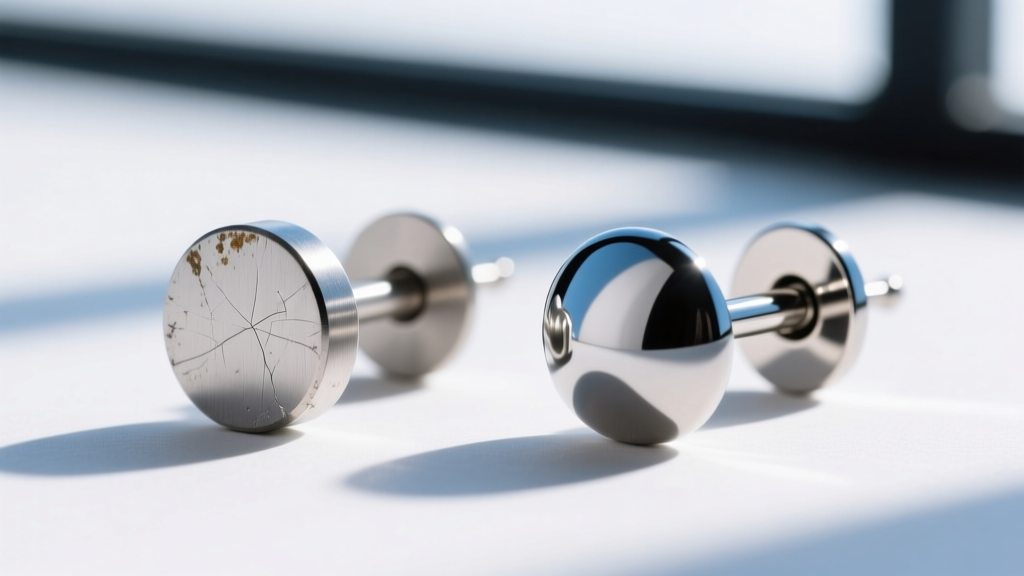
If you are on a strict budget, ASTM F136 implant-grade titanium is your undisputed champion. Unlike cheaper alternatives, this specific alloy contains zero nickel, eliminating the risk of allergic reactions. Furthermore, high-quality titanium posts are polished to a mirror finish. This microscopic smoothness prevents bacteria from harboring in surface scratches, drastically reducing infection rates and healing times. Brands like Neometal and Intrinsic Body offer baseline titanium posts for $8 to $15, making this the most cost-effective, safe choice on the market.
The Budget Trap: 'Surgical' Stainless Steel
The term 'surgical steel' is largely a marketing gimmick. Most cheap earrings labeled as such are made from 316L stainless steel, which contains 8% to 12% nickel. As noted by the Mayo Clinic's research on nickel allergies, prolonged exposure to nickel in open wounds frequently triggers severe contact dermatitis, weeping, and hypertrophic scarring. While 316L steel earrings might only cost $10, the biological tax they exact makes them a terrible value.
Always look for the specific ASTM designation. For steel, you want ASTM F138 (implant-grade), but for titanium, ASTM F136 is the benchmark for initial piercings.
Solid Gold: The Premium Investment
For those with a higher budget, 14-karat or 18-karat solid gold (alloyed without nickel or cadmium) is an excellent option. However, avoid gold-plated or gold-filled starter earrings entirely. The plating will inevitably wear off inside the healing fistula, exposing the reactive base metals underneath.
Gauge and Fit: The Hidden Value in Proper Sizing
Budgeting for starter earrings for guys isn't just about the metal; it is also about the physical dimensions. Buying the wrong gauge or post length will compromise the piercing, forcing you to spend more money on corrective jewelry or professional consultations.
- Standard Lobe Piercings: Opt for 16-gauge (1.2mm) or 14-gauge (1.6mm). While 18-gauge (1.0mm) is common in mall kiosks, thicker gauges prevent the 'cheese-cutter effect,' where thin wire slowly slices through the earlobe under the weight of the jewelry.
- Cartilage (Helix/Tragus): 16-gauge is the industry standard. Cartilage is dense and prone to swelling; a 16G post provides the necessary structural support.
- Post Length (The Swelling Factor): Initial jewelry must accommodate edema (swelling). For lobes, a 5/16-inch (8mm) or 3/8-inch (10mm) post is required. Once swelling subsides (usually 4-8 weeks), you must downsize to a 1/4-inch (6mm) post. Failing to downsize results in the post snagging on collars and hair, causing trauma bumps.
2026 Price Comparison: Where to Spend and Where to Save
To help you allocate your budget effectively, we have mapped out the current pricing landscape for men's starter jewelry. This table illustrates where you can safely cut costs and where you must invest.
| Material / Type | Avg Price Range | Nickel Risk | Value Verdict |
|---|---|---|---|
| ASTM F136 Titanium (Threadless) | $18 - $35 | None | Best Overall Value |
| 316L 'Surgical' Steel | $5 - $15 | High | Avoid Completely |
| 14k Solid Gold (Nickel-Free) | $85 - $250+ | None | Premium Investment |
| Niobium (Anodized) | $20 - $40 | None | Great Alternative |
| Acrylic / Silicone | $3 - $10 | Varies | Never for Healing |
As highlighted by the Association of Professional Piercers (APP), jewelry intended for initial piercings must be made of materials that can withstand the rigors of sterilization and the biological environment of a healing wound. Acrylic and silicone are porous and harbor bacteria, making them entirely unsuitable for starter earrings, regardless of how cheap they are.
The Mechanics of Value: Threadless vs. Internally Threaded
When shopping for high-quality starter earrings for guys, you will encounter two primary connection types: internally threaded and threadless (press-fit). Understanding the difference is crucial for long-term value.
Externally threaded jewelry (where the screw is on the post that passes through the ear) is a budget manufacturing shortcut. Pushing those sharp threads through a fresh piercing tears the delicate healing tissue. Never buy externally threaded starter jewelry.
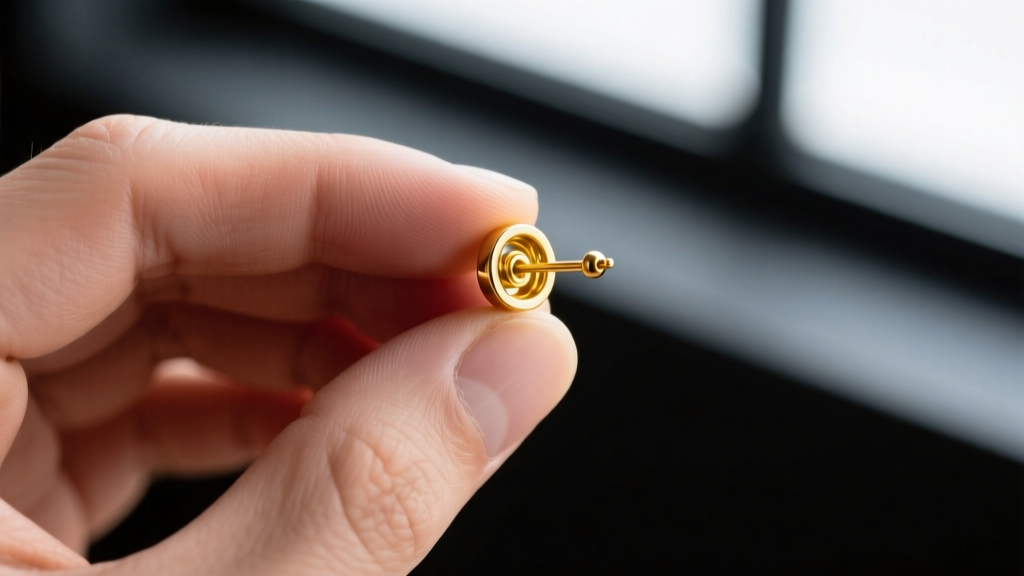
Threadless (Press-Fit) jewelry offers the best long-term value. Brands like Neometal utilize a tiny, slightly bent pin on the decorative end that creates tension inside the hollow titanium post. This allows you to buy one high-quality titanium post ($10) and swap out dozens of different decorative ends ($15-$30) over the years without ever having to remove the post from your healing ear. This modular system saves hundreds of dollars over a lifetime of wear.
Aftercare on a Budget: Maximizing Your Investment
You have invested in ASTM F136 titanium and the correct gauge; do not ruin it with improper, expensive aftercare products. The most effective, budget-friendly aftercare solution is sterile 0.9% sodium chloride wound wash. A simple can of sterile saline costs around $5 at any pharmacy and will last your entire healing period.
Avoid tea tree oil, rubbing alcohol, hydrogen peroxide, and antibiotic ointments. These harsh chemicals destroy the newly forming fistula cells and trap moisture, creating a breeding ground for anaerobic bacteria. Spray the front and back of the piercing twice daily, let it air dry, and leave it alone. This minimalist approach costs pennies a day and yields the best aesthetic results.
Final Verdict: The Smart Buyer's Checklist
When evaluating starter earrings for guys, keep this quick checklist in mind before handing over your credit card:
- Is the metal explicitly labeled as ASTM F136 Titanium or 14k/18k Nickel-Free Gold?
- Is the post thickness at least 16-gauge (1.2mm) for structural integrity?
- Is the connection threadless or internally threaded (never externally threaded)?
- Is the decorative end low-profile to prevent snagging on clothing and headphones?
By prioritizing biocompatible materials and precise engineering over flashy, cheap designs, you ensure that your piercing heals quickly and comfortably. A $25 titanium setup from a reputable brand will always outperform a $10 mystery-metal pair from a mall kiosk, proving that true style and safety are always worth the investment.


