2026 Trend Analysis: Styling Statement Earrings Turquoise
Discover 2026 trends for statement earrings turquoise. Expert styling, gemstone grading, weight management, and investment tiers for bold ear styling.

The 2026 Resurgence: Why Turquoise is Dominating Statement Jewelry
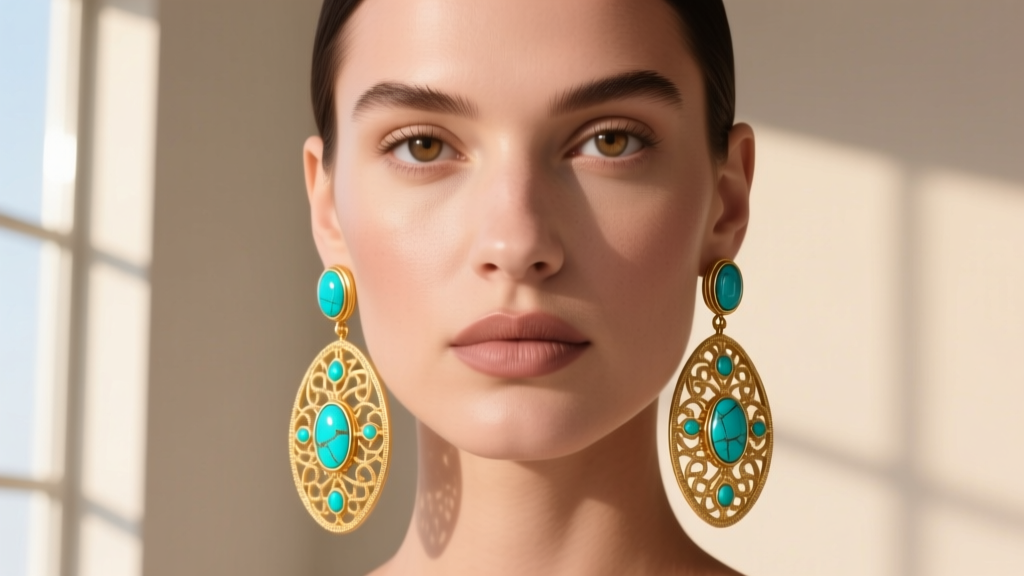
The jewelry landscape in 2026 has decisively pivoted from the ultra-minimalist micro-trends of the early 2020s toward bold, expressive maximalism. At the center of this shift is the resurgence of statement earrings turquoise collectors and fashion editors alike are championing. No longer confined to bohemian or strictly Southwestern aesthetics, turquoise has been recontextualized by contemporary lapidaries and avant-garde designers. We are seeing a massive spike in demand for architectural bezel settings, mixed-metal inlays, and raw, unpolished turquoise nuggets paired with high-karat yellow gold. This gemstone's inherent opacity and striking color palette—ranging from robin's egg blue to deep forest green with intricate spiderweb matrixing—make it an unparalleled focal point for oversized ear styling. According to the Gemological Institute of America (GIA), turquoise has been prized for millennia, but its modern application in high-fashion statement pieces requires a nuanced understanding of both gemology and structural jewelry engineering.
Decoding Turquoise: Natural vs. Stabilized vs. Reconstituted
When investing in oversized turquoise drops or chandelier styles, understanding the material's treatment is critical. Turquoise is a relatively soft, porous phosphate mineral (Mohs hardness 5-6). Because large, flawless natural cabochons are exceedingly rare and fragile, the market relies on various treatments. As a stylist or buyer, you must know exactly what you are paying for.
| Turquoise Type | Characteristics | Durability | Price Tier |
|---|---|---|---|
| Natural (Untreated) | Raw or polished, highly porous, reacts to skin oils and cosmetics over time. | Low (Prone to scratching/color shift) | Premium ($$$) |
| Stabilized | Infused with clear epoxy/resin under pressure to harden the stone and lock in color. | High (Ideal for daily-wear statement pieces) | Mid-Range ($$) |
| Dyed / Enhanced | Lower-grade chalk turquoise treated with resin and artificial blue dyes. | Medium (Color may fade with UV exposure) | Entry ($) |
| Reconstituted | Turquoise dust mixed with resin and molded into blocks. Lacks natural matrix. | High (But holds zero collector value) | Budget ($) |
For high-end statement pieces, Sleeping Beauty (known for its pure, matrix-free sky blue) and Persian Neyshabur turquoise command the highest prices. However, for heavy, oversized dangles that might bump against surfaces, stabilized Kingman turquoise with its iconic copper-pyrite spiderweb matrix is often the smartest choice for longevity.
Engineering the Drape: Weight, Gauge, and Lobe Support
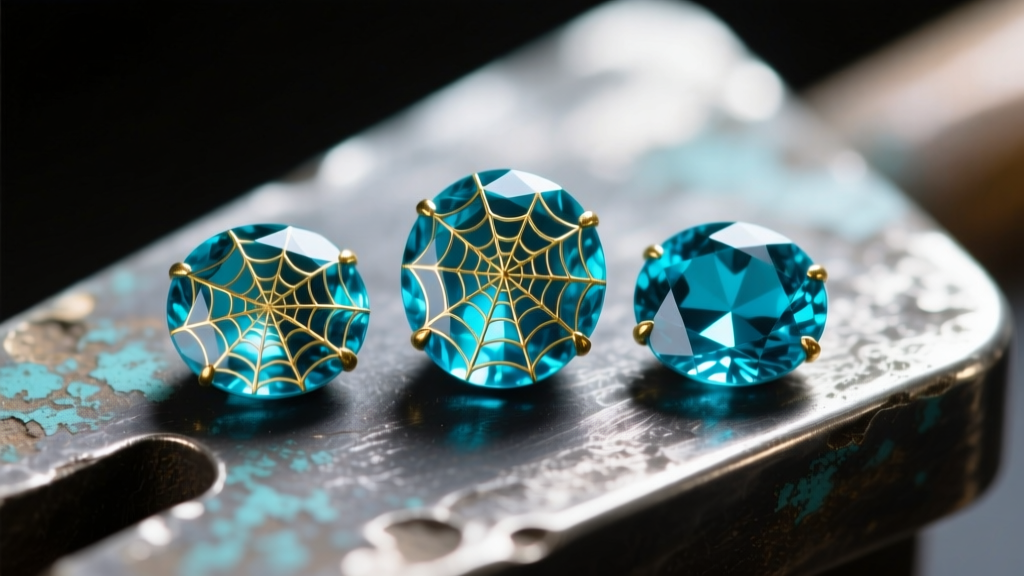
The most common failure mode of statement earrings turquoise designs is not the stone cracking, but the earlobe tearing. Oversized turquoise cabochons, especially when set in solid silver or gold bezels, can easily exceed 15 grams per earring. Standard earlobe piercings are typically done at 20-gauge (0.81mm) or 18-gauge (1.02mm). When a heavy 25-gram earring hangs from a thin 22-gauge (0.64mm) ear wire, it creates a 'cheese cutter effect,' slowly migrating through the tissue and causing irreversible lobe damage.
Practical Framework for Heavy Earring Engineering
- Wire Gauge: Insist on 18-gauge (1.02mm) or 16-gauge (1.29mm) ear wires for any turquoise statement piece exceeding 12 grams. This distributes the weight across a wider surface area of the piercing channel.
- Backings: Standard metal butterfly backs are useless for heavy drops. Utilize jumbo silicone O-rings, locking leverback closures, or screw-backs to prevent the earring from slipping out and dropping onto hard surfaces (which will shatter the turquoise).
- Lobe Support Patches: For evening events featuring massive turquoise chandeliers, apply invisible adhesive earlobe support patches (like LobeWonder) to the back of the ear. These distribute the downward pull across a 2-inch surface area, preventing stretching and fatigue.
Styling Frameworks: Face Shapes and Neckline Pairings
Because turquoise is inherently loud and visually heavy, the silhouette of the statement earring must be balanced against the wearer's facial geometry and neckline. In 2026, the styling rule is 'contrast and complement'.
Face Shape Mapping
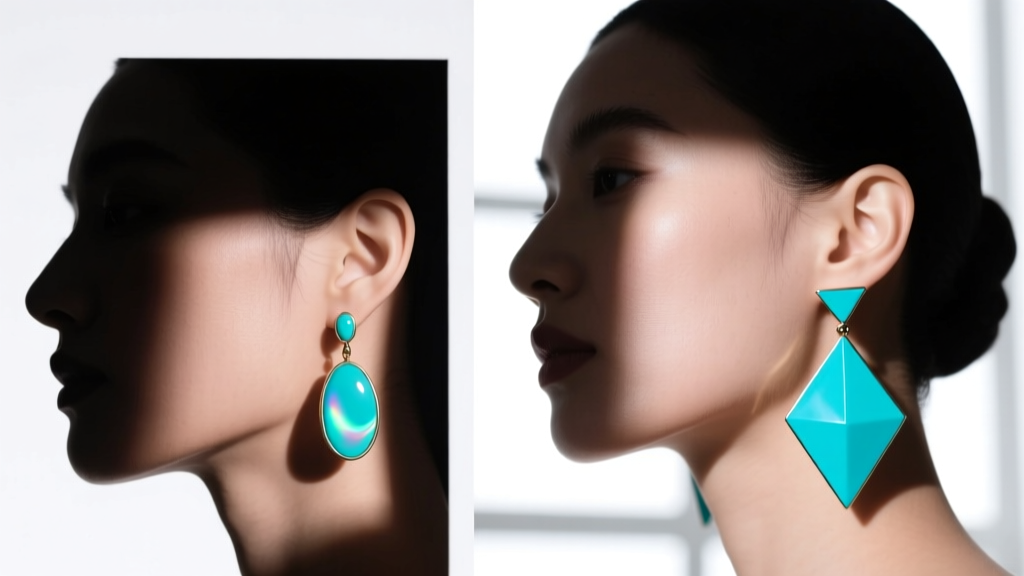
- Round Faces: Avoid circular hoops or round cabochon studs, which exaggerate facial width. Instead, opt for elongated, geometric turquoise drops or angular marquise-cut stones set in linear gold bars to create a lengthening optical illusion.
- Square/Jaw-Heavy Faces: Soften the jawline with curved, oversized oval turquoise dangles or teardrop chandeliers. The organic curves of the stone and metalwork will balance angular bone structure.
- Heart-Shaped Faces: Choose bottom-heavy designs, such as turquoise-encrusted inverted triangles or wide fan-shaped drops, to add visual weight to the narrower chin area.
Neckline Synergy
"Never let the earring fight the collarbone. If wearing a high-neck halter or structured turtleneck, choose elongated turquoise dangles that graze the collarbone. For deep V-necks or scoop necks, opt for wide, horizontal turquoise ear cuffs or shorter, voluminous drops that fill the negative space beside the jaw."
Investment Tiers: What to Expect in 2026
The market for statement earrings turquoise variants is highly stratified. Understanding these tiers ensures you are paying for actual material value and artisan craftsmanship rather than mere brand markup.
- Entry Tier ($80 - $250): Features stabilized or dyed turquoise, often set in brass with heavy gold vermeil or oxidized 925 sterling silver. Stones are typically machine-cut uniform cabochons. Excellent for trend-driven seasonal styling, but the vermeil will eventually wear off with heavy friction.
- Mid-Tier ($250 - $800): The sweet spot for serious collectors. Expect natural or high-grade stabilized Kingman or Mojave turquoise, hand-cut with unique matrix patterns. Settings are usually solid 14k gold-fill or thick 925 sterling silver with custom bezels. Artisan lapidary work becomes evident here.
- Investment Tier ($800 - $3,500+): Museum-quality pieces featuring rare, untreated Sleeping Beauty or Persian turquoise. Set in solid 18k yellow or rose gold, often incorporating diamond melee accents or intricate granulation techniques by master jewelers. These pieces appreciate in value as high-grade turquoise mines continue to deplete globally.
Care and Maintenance: Preserving the Matrix
Turquoise is notoriously temperamental. As highlighted in the GIA Care Guide, this gemstone is highly sensitive to chemicals, heat, and prolonged exposure to direct sunlight. To maintain the vivid color and structural integrity of your statement pieces, strict adherence to a care protocol is mandatory.
The 'Last On, First Off' Rule
Always apply your perfumes, hairsprays, and lotions before putting on your turquoise earrings. The alcohols and oils in cosmetics can seep into the porous surface of untreated stones, causing them to turn a muddy green and degrade the polish. When removing them, wipe the stones gently with a dry, untreated microfiber cloth to remove ambient skin oils and acidity.
What NEVER to Do
- No Ultrasonic Cleaners: The high-frequency vibrations will fracture natural turquoise and completely strip the resin from stabilized stones, leaving them chalky and brittle.
- No Steam Cleaning: Sudden temperature changes and steam can cause thermal shock, leading to internal spider-cracking.
- No Silver Dips: Chemical silver polishing liquids will permanently stain the turquoise matrix. If the silver bezel tarnishes, use a dry polishing cloth and carefully buff only the metal, avoiding the stone entirely.
By understanding the gemological nuances, structural requirements, and styling geometries of turquoise, you can confidently curate and wear statement pieces that are not only visually arresting but engineered to last a lifetime. The 2026 turquoise revival is not just a fleeting trend; it is a return to appreciating bold, earth-born artistry in modern jewelry design.


