Sterling Silver Knot Earrings: Material Properties & Care Guide
Explore the material properties of sterling silver knot earrings, including 925 alloy composition, rhodium plating, and expert tarnish prevention tips.

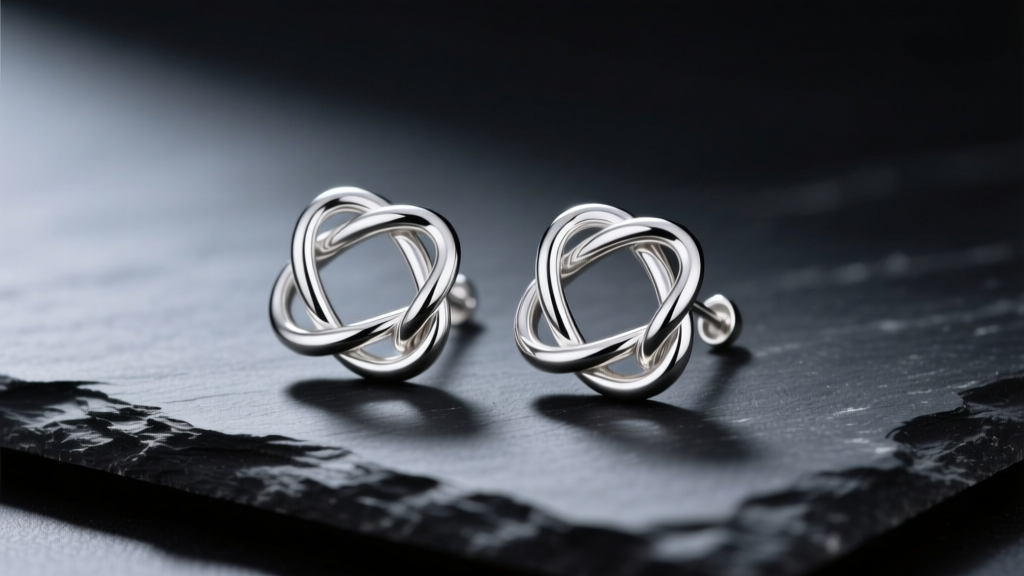
The Metallurgy of 925 Sterling Silver in Complex Jewelry
When evaluating sterling silver knot earrings, understanding the underlying metallurgy is crucial for both jewelers and collectors. Pure silver (999 fine silver) possesses a Brinell hardness of roughly 25, making it far too malleable for structural jewelry. If a knot earring were crafted from pure silver, the interlocking loops and tension bends would easily warp under the minimal stress of daily wear. To solve this, the jewelry industry relies on the 925 standard.
Standard sterling silver consists of 92.5% pure silver and 7.5% alloy metals—traditionally copper. This specific ratio increases the Brinell hardness to approximately 65, providing the necessary tensile strength to maintain the complex geometry of a knot design. According to the Gemological Institute of America (GIA), this copper addition is what grants sterling silver its durability, but it also introduces the metal's primary vulnerability: oxidation. The copper atoms react with atmospheric sulfur and moisture, creating the silver sulfide layer we recognize as tarnish.
Why the Knot Design Demands Specific Material Properties
The anatomy of a knot earring—whether a classic love knot, a sailor's knot, or an intricate Celtic weave—requires a delicate balance of malleability and rigidity. During the manufacturing process, the silver wire undergoes severe plastic deformation as it is bent into overlapping loops.
Work Hardening and Annealing
As the silver wire is bent into the knot shape, it experiences "work hardening" (or strain hardening). The crystal lattice of the metal becomes distorted, making the wire stiffer and more brittle. If a jeweler attempts to complete a complex knot without intermediate annealing (heating the metal to relieve internal stresses), micro-fractures will develop at the tightest bend radii. High-quality sterling silver knot earrings are meticulously annealed during fabrication to ensure the overlapping wires sit flush against one another without snapping or developing stress cracks over time.
Rhodium Plating vs. Bare Silver: A Comparative Analysis
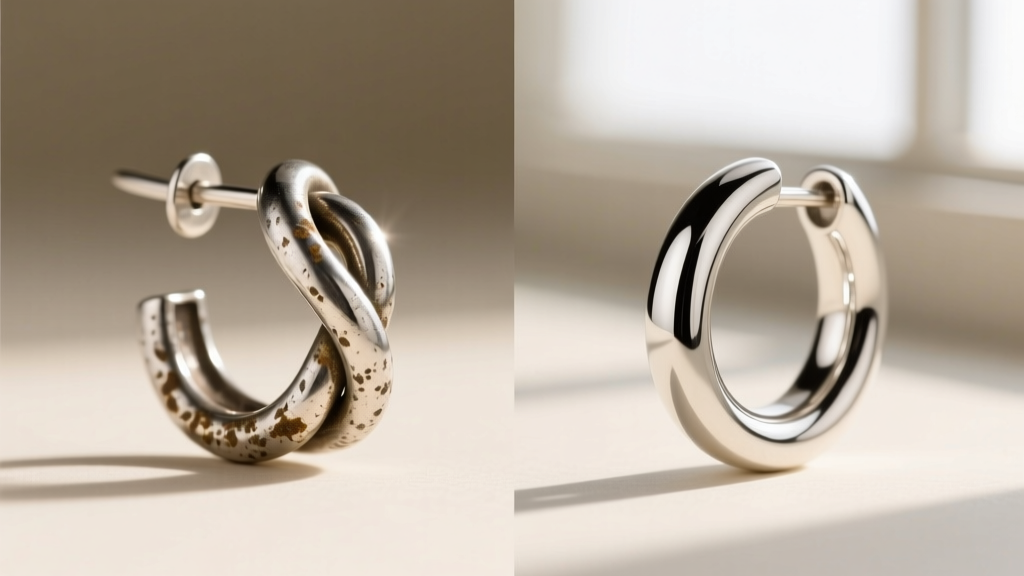
To combat the copper-induced tarnish inherent in 925 silver, many manufacturers apply a rhodium flash. Rhodium is a platinum-group metal that is highly reflective, exceptionally hard, and completely immune to oxidation. However, this plating fundamentally alters the maintenance profile and aesthetic of the earrings.
| Property | Bare 925 Sterling Silver | Rhodium-Plated 925 Silver |
|---|---|---|
| Visual Tone | Warm, slightly yellowish-white luster | Cool, stark white, mirror-like finish |
| Tarnish Resistance | Low (requires regular polishing) | High (immune to sulfur oxidation) |
| 0.5µm - 1.5µm (will eventually wear) | ||
| Patina Development | Develops a vintage, oxidized patina | Remains bright until plating fails |
| Average Cost Premium | Baseline | +15% to 30% over bare silver |
For knot earrings, rhodium plating presents a unique challenge. The overlapping crevices of the knot can trap plating solutions, sometimes resulting in uneven thickness or pooling at the wire intersections. Furthermore, when the rhodium eventually wears away from the high-friction points of the knot, the underlying 925 silver is exposed, creating a two-tone effect that requires professional re-plating to fix.
The Argentium Silver Alternative
For those seeking the warm luster of bare silver without the rapid tarnishing, modern jewelers are increasingly turning to Argentium silver. By replacing a portion of the copper alloy with the metalloid germanium, Argentium (usually stamped 935 or 960) forms a transparent, protective germanium dioxide layer on the surface. This makes Argentium knot earrings highly resistant to tarnish while remaining completely re-meltable and solderable, unlike rhodium-plated pieces.
Gauge Sizes and Structural Integrity
The structural success of sterling silver knot earrings relies heavily on the correct selection of wire gauges. The gauge determines both the visual weight of the knot and its resistance to deformation.
- The Earring Post (20-Gauge / 0.81mm): The post that penetrates the earlobe is almost universally 20-gauge. This is the industry standard for standard lobe piercings, ensuring compatibility with most ear anatomy while providing enough thickness to resist bending when inserting the earring backing.
- The Knot Wire (14-Gauge to 18-Gauge / 1.29mm to 1.02mm): The decorative knot itself requires a thicker wire. A 14-gauge or 16-gauge wire is typically used for the knot structure to ensure the loops hold their shape and do not collapse if the earring is dropped or snagged on clothing. Using wire thinner than 18-gauge for the knot body results in a flimsy piece that will easily lose its geometric tension.
- Soldered vs. Friction Joints: In premium knot earrings, the point where the knot wire meets the 20-gauge post is laser-welded or hard-soldered. In lower-quality mass-produced pairs, this joint may rely on soft solder, which has a lower melting point and weaker shear strength, making the knot prone to snapping off the post under lateral stress.
Advanced Tarnish Prevention and Cleaning Protocols
Maintaining the intricate crevices of a knot design requires specific cleaning protocols. The overlapping wires create micro-environments where moisture, skin oils, and sulfur compounds accumulate, accelerating localized tarnishing.
The Electrochemical Reduction Method
For heavily tarnished bare sterling silver knot earrings, avoid abrasive polishing cloths, which cannot reach the inner loops of the knot and will slowly erode the silver surface over time. Instead, utilize an electrochemical reduction bath:
- Line a glass bowl with aluminum foil (shiny side up).
- Place the knot earrings directly onto the foil.
- Sprinkle a tablespoon of sodium bicarbonate (baking soda) over the jewelry.
- Pour boiling water into the bowl to activate the reaction.
This process creates a galvanic cell where the aluminum acts as an anode and the silver sulfide acts as a cathode. The sulfur atoms are physically transferred from the silver to the aluminum, reversing the tarnish without removing any underlying silver metal. Note: Never use this method on rhodium-plated knot earrings or earrings featuring porous gemstones like turquoise or opals, as the heat and alkalinity can damage the plating and the stones.
Archival Storage Tip: To prevent tarnish between wears, store your sterling silver knot earrings in a sealed polyethylene ziplock bag alongside a 3M Anti-Tarnish strip. These strips absorb airborne sulfur compounds and can protect the intricate wire intersections of the knot for up to 12 months in a standard jewelry drawer.
Final Considerations for the Collector
When investing in sterling silver knot earrings, always verify the hallmark. Authentic pieces will bear a "925" or "Sterling" stamp, usually located on the flat back of the earring post or the butterfly clutch. According to the London Assay Office, proper hallmarking is your legal guarantee of the metal's purity. By understanding the interplay between the 925 alloy composition, the mechanical demands of the knot design, and the protective benefits of modern plating or alloying techniques, you can select a pair of knot earrings that will maintain its structural integrity and brilliant luster for decades.


