2026 Trends: The Evolution of Sterling Silver Stud Earrings
Discover the 2026 style evolution of sterling silver stud earrings. We analyze new textures, gauge trends, and styling frameworks for everyday wear.


The 2026 Shift: From Minimalist to Textured Sterling Silver Stud Earrings
For the better part of a decade, the jewelry market was dominated by the ultra-minimalist aesthetic: perfectly round, high-polish 3mm balls and invisible bezel-set diamonds. However, as we navigate the style landscape of 2026, the pendulum has swung decisively toward organic imperfection and architectural volume. Today's sterling silver stud earrings are no longer just understated placeholders; they are standalone statement pieces characterized by molten textures, hammered finishes, and asymmetric geometric forms.
This shift is largely driven by a consumer desire for tactile jewelry that interacts dynamically with light. Matte finishes and intentionally oxidized crevices are replacing mirror-polished surfaces, giving silver a raw, sculptural quality. According to industry trend forecasts, searches for 'molten silver jewelry' and 'hammered silver studs' have outpaced traditional smooth finishes by over 40% in early 2026. This evolution demands a deeper understanding of material science, as heavier, textured designs require superior structural integrity and advanced alloy compositions to remain comfortable for daily wear.
Material Science: Argentium vs. Traditional 925 Alloys
To understand the modern market, one must look beneath the surface hallmark. Traditional sterling silver is an alloy consisting of 92.5% pure silver and 7.5% copper. While the copper provides necessary tensile strength, it is also the culprit behind silver's notorious vulnerability to tarnish. When copper reacts with sulfur compounds in the air or on the skin, it forms silver sulfide—the dark, dull layer we recognize as tarnish.
In 2026, high-end silversmiths and contemporary fine jewelry brands are increasingly pivoting to Argentium silver. Argentium replaces a portion of the copper with germanium. This addition is revolutionary: germanium migrates to the surface of the alloy and forms a transparent, self-healing oxide layer that dramatically slows down tarnishing. Furthermore, Argentium is available in 93.5% and 96% purities, offering a brighter, whiter luster that rivals platinum without the need for rhodium plating.
Speaking of rhodium, the traditional practice of flash-plating 925 silver with 0.1 to 0.5 microns of rhodium to prevent tarnish is facing pushback from eco-conscious consumers. Rhodium plating inevitably wears off within 6 to 18 months, requiring chemical re-plating. The 2026 preference is leaning toward bare, high-polished Argentium or intentionally patinated traditional 925, celebrating the natural lifecycle of the metal rather than masking it with temporary chemical barriers.
Gauge and Post Anatomy: What is Changing in 2026?
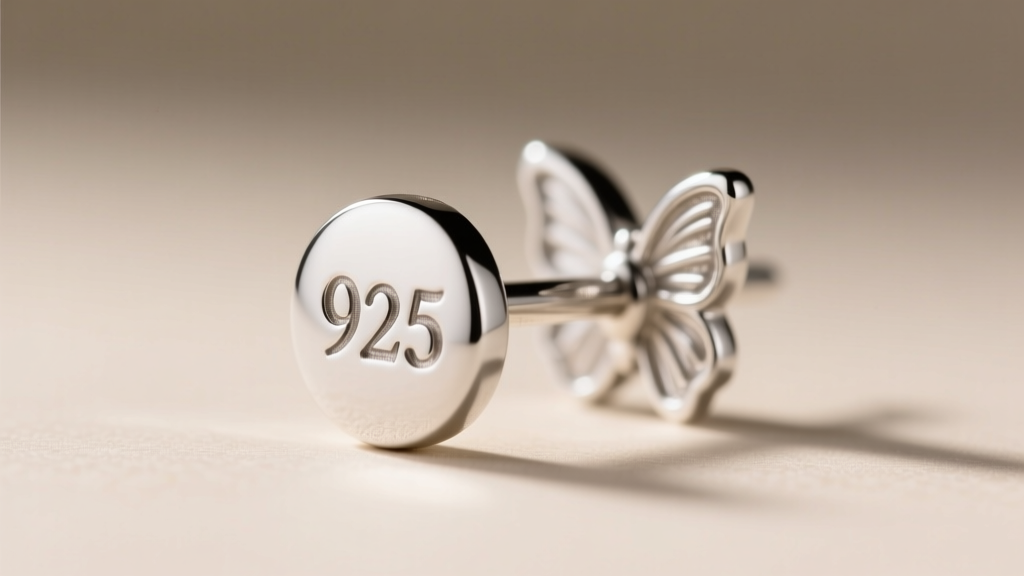
As sterling silver stud earrings become more sculptural and top-heavy, the anatomy of the post and backing must evolve to support the weight. The industry standard 20-gauge (0.81mm) post is increasingly viewed as inadequate for modern statement studs; it bends easily under the weight of a 10mm molten silver dome, causing the earring to droop uncomfortably on the lobe.
The 2026 sweet spot for luxury silver studs is the 18-gauge (1.02mm) post, which offers a 50% increase in cross-sectional area and vastly superior tensile strength. For heavy, elongated, or asymmetric architectural studs, 16-gauge (1.29mm) posts are becoming the standard, often requiring professional piercing or gradual stretching of the lobe.
The Demise of the Butterfly Back
Perhaps the most significant functional shift in 2026 is the rejection of the traditional friction 'butterfly' back. Professional piercers and dermatologists have long warned that the tiny crevices in butterfly backs trap sebum, dead skin cells, and bacteria, leading to contact dermatitis and localized infections. The Association of Professional Piercers (APP) has consistently advocated for smoother, more hygienic alternatives.
Consequently, premium silver jewelry brands are adopting threadless push-pin systems and internally threaded screw-backs. Threadless systems utilize the tension of a slightly bent 18G or 16G pin inside a hollow post, creating a secure, seamless fit that will not fall off during sleep or exercise, while completely eliminating the hygiene traps of butterfly clasps.
| Gauge Size | Diameter (mm) | Best Use Case | Recommended Backing Type |
|---|---|---|---|
| 20G | 0.81mm | Lightweight, delicate 2mm-4mm minimalist studs | Secure-lock friction back |
| 18G | 1.02mm | Standard textured, molten, or gemstone-set studs (5mm-9mm) | Threadless push-pin or screw-back |
| 16G | 1.29mm | Heavy architectural, elongated, or cartilage/helix studs | Threadless push-pin (16G hollow post) |
Styling Framework: The Curated Ear with Silver Studs
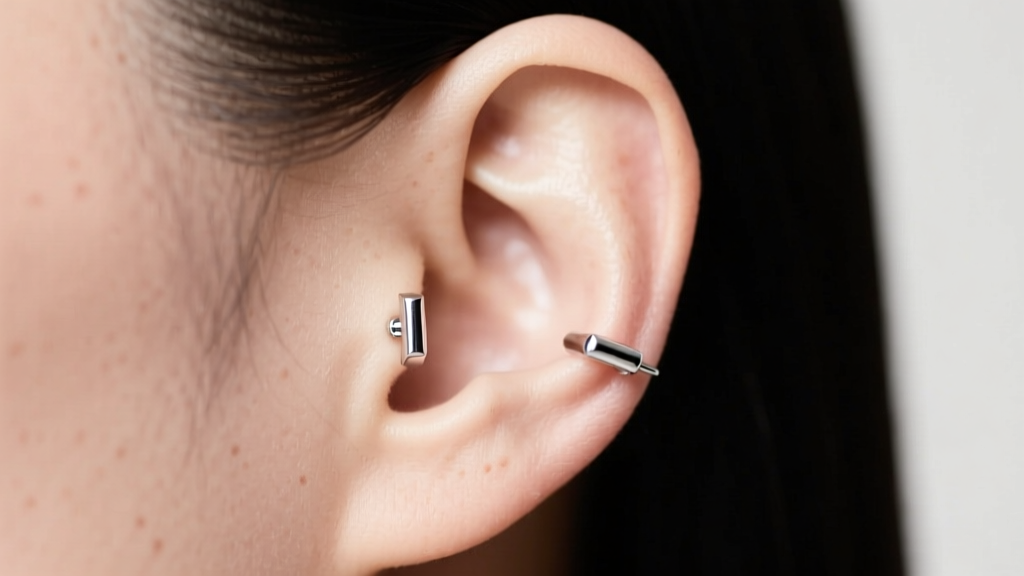
The 'curated ear' concept has matured. In 2026, the goal is no longer to cover every available millimeter of cartilage with matching jewelry. Instead, stylists advocate for the 'Rule of Thirds' and intentional negative space. Sterling silver stud earrings serve as the foundational anchors in this layout.
- The Primary Lobe (Statement): Utilize a single, heavy 16G or 18G textured silver stud (e.g., a hammered shield or molten drop). This acts as the visual anchor of the ear.
- The Secondary Lobe (Complement): Pair with a smaller, geometric 18G stud in a matching finish. If the primary is matte, the secondary should also be matte to maintain textural continuity.
- The Helix/Flat (Accent): Transition to a threadless 16G silver stud with a subtle gemstone accent, such as a bezel-set grey moonstone or black spinel, which complements the cool tones of the silver without overpowering it.
Mixing metals is acceptable, but the 2026 trend heavily favors monochromatic silver palettes for a cohesive, editorial look. When mixing, ensure the texture matches even if the metal color differs—pairing a matte silver stud with a matte white gold helix piece creates a sophisticated, intentional contrast.
Price vs. Value: Market Analysis
Understanding the pricing tiers of sterling silver stud earrings is crucial for identifying true value versus brand markup. The market in 2026 is distinctly segmented into three categories:
- Mass Market ($15 - $45): Typically features traditional 925 silver with thin 20G posts and stamped butterfly backs. Often heavily rhodium-plated to prevent immediate tarnish in retail environments. Value is low due to poor structural longevity and hygiene issues with the backings.
- Contemporary Fine ($50 - $180): The sweet spot for quality. Features Argentium silver or heavily reinforced 925, 18G posts, and secure locking or screw-back mechanisms. Brands in this tier focus on original CAD designs and ethical sourcing. This is where consumers find the best balance of durability, style, and material science.
- Luxury & Artisan ($200 - $600+): Hand-forged, mixed-media pieces utilizing 16G threadless systems. These often incorporate advanced gemstone cutting techniques (like custom rose-cuts) set directly into the silver without prongs, or feature proprietary anti-tarnish nano-coatings. You are paying for master-level craftsmanship and specialized piercing anatomy.
Maintenance and Tarnish Troubleshooting
Even with the advent of Argentium, proper maintenance is required to keep silver looking pristine. The Gemological Institute of America (GIA) notes that silver is highly susceptible to sulfur-based chemicals found in everyday items like wool, rubber bands, and certain cosmetics.
What to Avoid: Never use ultrasonic cleaners on sterling silver stud earrings that feature oxidized (blackened) detailing, as the high-frequency waves will strip the intentional patina. Furthermore, avoid ultrasonics for studs set with soft, porous stones like opals, turquoise, or pearls, as the vibrations can cause internal fracturing.
The Best Cleaning Method: For routine maintenance, use a two-layer jeweler's polishing cloth. The inner layer is impregnated with a mild abrasive and anti-tarnish compound (jeweler's rouge) that removes silver sulfide, while the outer soft flannel layer buffs the metal to a high shine. For heavy tarnish on bare silver (no gemstones), the electrochemical method—submerging the jewelry in a glass dish lined with aluminum foil, filled with boiling water and a tablespoon of baking soda—reverses the chemical reaction, transferring the sulfur from the silver to the aluminum in minutes.
Conclusion
The landscape of sterling silver stud earrings in 2026 is a triumph of material innovation and anatomical refinement. By moving away from flimsy, mass-produced minimalism and embracing robust gauges, hygienic threadless backings, and advanced alloys like Argentium, modern silver studs offer unparalleled longevity and style. Whether you are building a curated ear or investing in a single, sculptural lobe statement, understanding the metallurgy and mechanics behind your jewelry ensures your collection remains as timeless as the metal itself.


