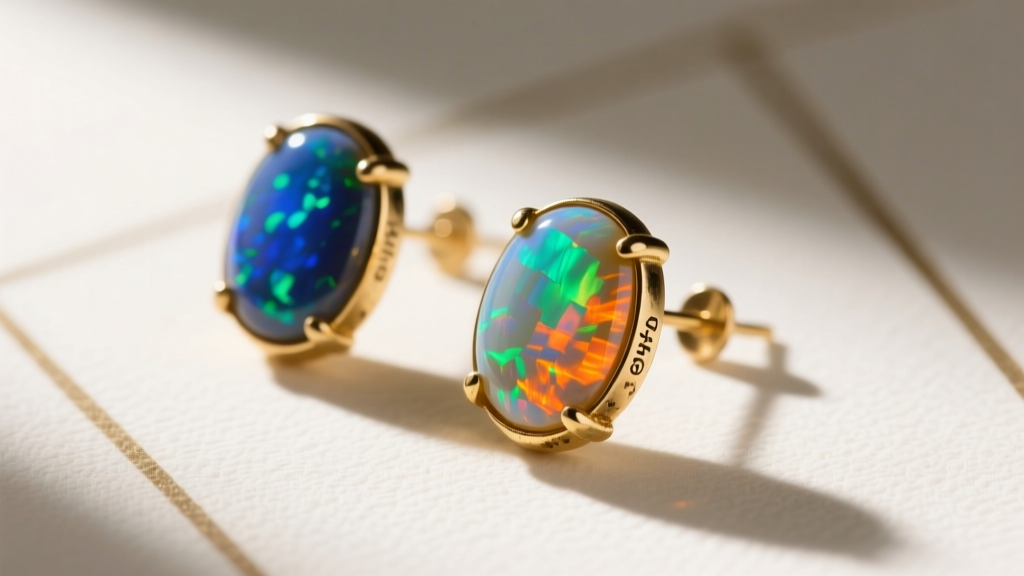
Why Does My Earring Itch? The True Cost of Cheap Jewelry
Discover why your earring itches and the hidden costs of cheap metals. Compare budget alloys vs. implant-grade titanium for sensitive ears.

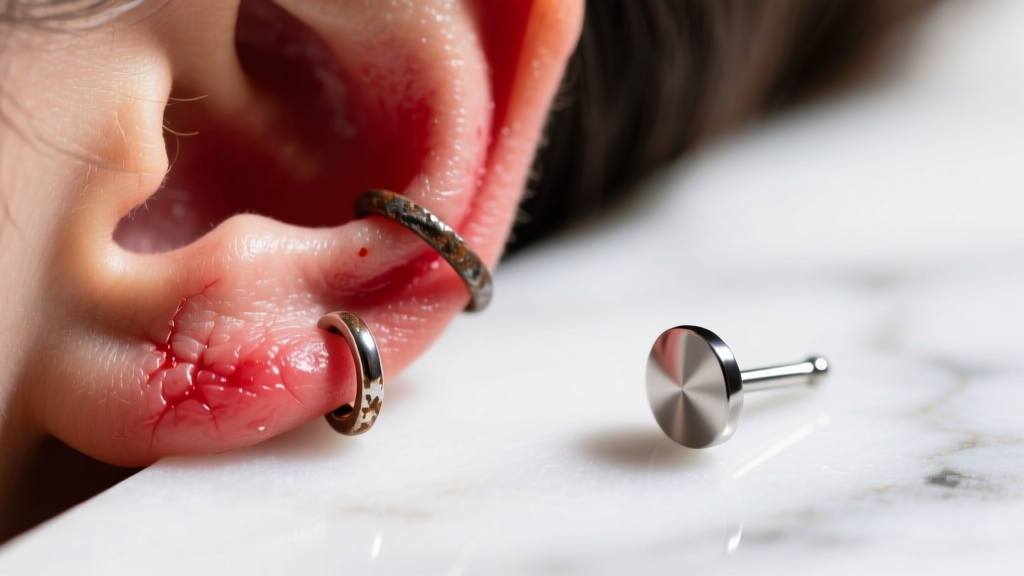
If you have ever found yourself asking, why does my earring itch, you are experiencing one of the most common yet misunderstood issues in body jewelry. That familiar burning sensation, redness, and flaking skin are not just minor annoyances; they are clinical signs of allergic contact dermatitis. While the immediate reaction is often to blame a new piercing or an infection, the true culprit usually lies in the metallurgical composition of your earrings. As we navigate the 2026 jewelry market, the price gap between mass-produced fashion alloys and premium implant-grade metals has narrowed, yet consumers continue to suffer from preventable metal allergies. Understanding the hidden costs of cheap jewelry is essential for both your health and your wallet.
The Real Reason Behind the Itch: Nickel and Alloy Breakdown
The vast majority of earring-related itching is caused by a nickel allergy. According to the American Academy of Dermatology, nickel allergy is the most common cause of allergic contact dermatitis, affecting roughly 18% of adults. The problem with budget earrings is not necessarily that they are made of pure nickel, but rather that they are crafted from base metal alloys (like brass or copper) that are electroplated with a microscopic layer of silver, gold, or rhodium.
When you wear these earrings, three factors accelerate the breakdown of this plating:
- Friction: Inserting and removing the post physically scrapes the plating away over time.
- Sweat and Sebum: The natural acidity of your skin (typically a pH of 4.5 to 5.5) acts as a mild corrosive agent, eating through cheap flash-plating.
- Galvanic Corrosion: When moisture bridges the gap between the base metal and the plating, it creates a micro-battery effect that rapidly degrades the surface.
Once the plating wears thin, nickel ions leach directly into the epidermis. The immune system identifies these ions as foreign invaders, triggering histamine release, localized swelling, and intense pruritus (itching). The EU Nickel Directive strictly limits nickel release to 0.5 µg/cm²/week for prolonged skin contact, but many imported fast-fashion earrings bypass these regulations entirely, releasing up to ten times that limit.
The Budget Trap: Cost Per Wear of Cheap Earrings
From a financial perspective, buying a $12 pair of fashion earrings seems like a win for your budget. However, value in jewelry should be measured by Cost Per Wear (CPW) and Medical Risk. Let us break down the actual financial impact of budget versus premium metals.
Imagine you buy a pair of trendy, gold-plated brass hoops for $15. You wear them four times before the post-plating degrades, triggering an allergic reaction. You must then spend $20 on over-the-counter hydrocortisone cream and take a week off from wearing earrings while your skin heals. Your total cost is $35 for four wears, resulting in a CPW of $8.75.
Now, consider investing in a pair of ASTM F136 implant-grade titanium huggies or studs priced at $45. Because titanium is completely biocompatible and contains zero nickel, you can wear them 300 days a year without a single reaction. Over that same year, your CPW drops to $0.15. The budget option is, paradoxically, the more expensive choice.
Metal Grade Breakdown and Average Pricing
To make informed purchasing decisions, you must understand the difference between marketing terms and actual metallurgical standards. Below is a comparison of common earring materials.
| Material | Grade / Standard | Nickel Content | Avg. Price (Studs) | Value Verdict |
|---|---|---|---|---|
| Surgical Steel | 316L / 316LVM | 8% - 10% (Trapped in alloy) | $5 - $15 | Poor for sensitive skin; high long-term allergy risk. |
| Implant-Grade Titanium | ASTM F136 (Ti-6Al-4V-ELI) | 0% (Nickel-Free) | $25 - $45 | Exceptional value; the gold standard for sensitive ears. |
| Niobium | Reactor Grade | 0% (Nickel-Free) | $20 - $40 | Great for hoops; highly malleable but scratches easily. |
| Solid Gold | 14k or 18k (Nickel-Free Alloy) | 0% (If alloyed with silver/copper) | $80 - $200+ | Premium investment; ensure it is not white gold (which often contains nickel). |
Cartilage vs. Lobe: Why Location Dictates Your Metal Budget
The anatomical location of your piercing drastically alters the risk profile of wearing cheap metals. Earlobes are highly vascular, meaning they have a robust blood supply that promotes rapid healing and helps flush out localized irritants. If an earring itches in your lobe, it is uncomfortable but usually resolves quickly once the offending metal is removed.
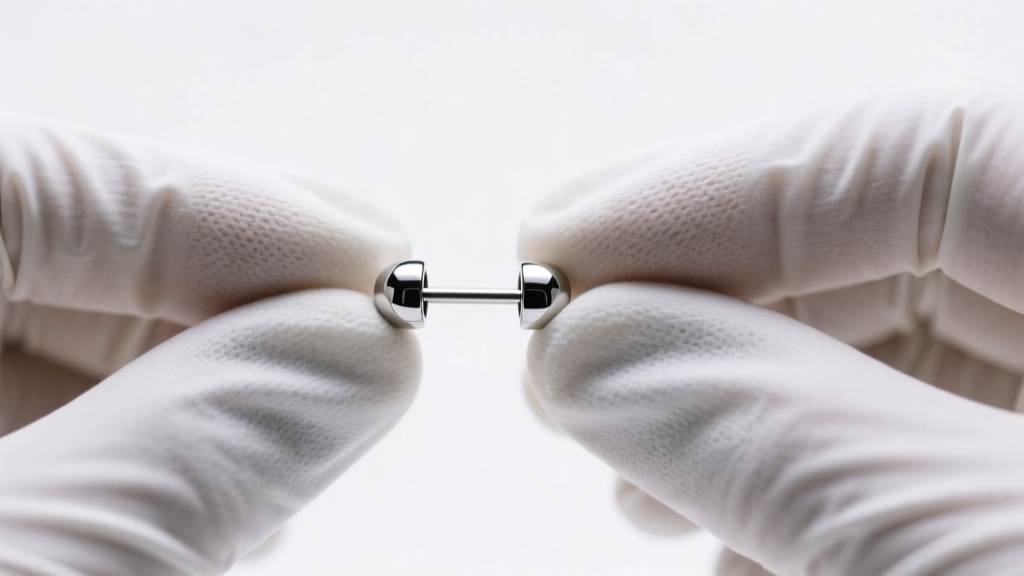
Cartilage, however, is entirely different. The upper ear (helix, tragus, conch) is avascular, relying on surrounding tissues for nutrient delivery and immune response. If a cheap 16-gauge or 14-gauge cartilage earring leaches nickel, the resulting inflammation can quickly escalate into perichondritis—a severe infection of the tissue surrounding the cartilage. Treating cartilage complications often requires prescription antibiotics, steroid injections, or even surgical intervention, alongside the permanent loss of the piercing channel. When it comes to cartilage, purchasing ASTM F136 titanium or solid 14k gold is not a luxury; it is a mandatory medical precaution.
How to Audit Your Current Jewelry Box for Hidden Allergens
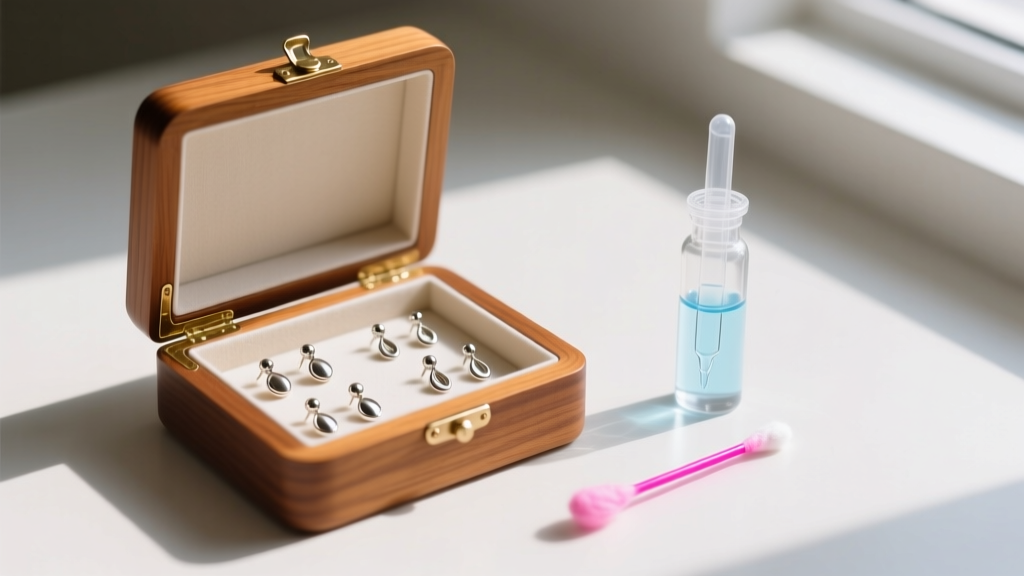
You do not need to throw away your entire collection immediately, but you should audit it. The most reliable method for identifying hidden nickel in your jewelry box is the Dimethylglyoxime (DMG) spot test. Available online for about $15, these liquid testing kits use cotton swabs to detect free nickel ions on the surface of your earrings.
- Apply two drops of the DMG solution to a cotton swab.
- Rub the swab firmly against the earring post or wire for 30 seconds.
- If the swab turns pink or red, the metal is actively leaching nickel and should be discarded or reserved strictly for decorative, non-piercing use.
Additionally, be wary of the magnet test. While a strong neodymium magnet can identify ferrous base metals (like iron or cheap steel), it will not detect copper, brass, or aluminum alloys, which are frequently used in nickel-containing fashion jewelry. Rely on chemical spot tests for accurate results.
The Hypoallergenic Marketing Myth
One of the most pervasive traps in the jewelry industry is the term hypoallergenic. The Federal Trade Commission (FTC) does not strictly regulate this term in the context of jewelry. Legally, hypoallergenic simply means the product is less likely to cause an allergic reaction than a standard alternative—it does not mean the product is 100% nickel-free or allergy-proof.
"Many earrings labeled as hypoallergenic are simply made of surgical steel, which still contains up to 10% nickel. For true safety, consumers must look for specific metallurgical certifications like ASTM F136 or explicit 'nickel-free' guarantees."
According to the Association of Professional Piercers (APP), only specific grades of titanium, niobium, and high-karat gold are recommended for initial piercings and highly reactive tissue. Always bypass the marketing buzzwords on the front of the packaging and read the material specifications on the back.
Strategic Upgrades: Where to Spend and Where to Save
Upgrading your jewelry box does not require an unlimited budget. The key to maximizing value is understanding which parts of the earring actually interact with your biology. The post, wire, or hoop passes through the fistula (the piercing channel) and must be made of premium, biocompatible materials. However, the decorative front or dangling charm only rests against the exterior skin or hangs freely.
This is where threadless and internally threaded jewelry systems (popularized by high-end brands like BVLA, NeoMetal, and Maria Tash) offer incredible financial value. You can invest in a high-quality, 18-gauge implant-grade titanium post for $10, and then purchase a less expensive, intricately designed decorative end made of brass or silver-plated alloy for $15. Because the cheap metal never enters the piercing channel, you eliminate the risk of internal itching and dermatitis while still enjoying trendy, budget-friendly aesthetics on the outside. By decoupling the structural post from the decorative face, you achieve the perfect balance of dermatological safety and financial prudence.