Rod Earrings Piercing Material Guide: Titanium vs Gold
Compare the best metals for your rod earrings piercing. Discover why implant-grade titanium beats surgical steel for healing cartilage and lobes.

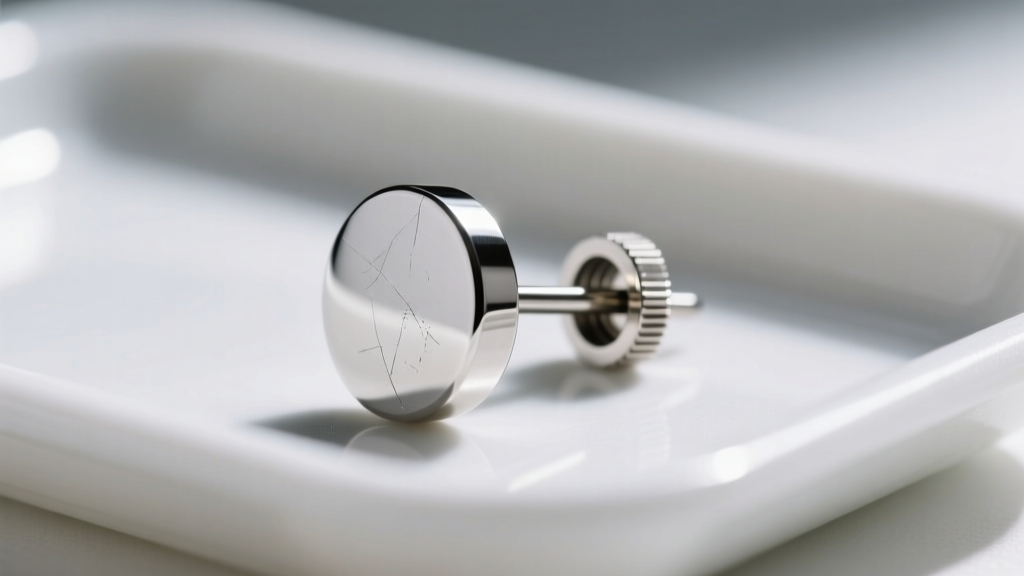
When navigating the complex world of body modification, the jewelry you choose is just as critical as the skill of the piercer. For straight-post jewelry—commonly referred to in the industry as labret studs, straight barbells, or simply rod earrings—the material composition directly dictates the biological response of your tissue. Whether you are healing a fresh helix, managing a stubborn tragus, or upgrading a fully healed conch, understanding the metallurgy behind your rod earrings piercing is non-negotiable. In this comprehensive guide, we break down the exact material properties, ASTM standards, and real-world performance metrics of the most common metals used in straight-post body jewelry.
The Anatomy of a Rod Earring Piercing
Before evaluating metals, we must define the structural parameters of rod earrings. Unlike captive bead rings or seamless hoops, rod earrings feature a rigid, straight post. This design is biomechanically superior for initial piercings because it minimizes movement within the fistula (the healing tissue tube).
There are two primary configurations for rod earrings:
1. Flat-Back Labrets: Featuring a flat disc on one end and a decorative or spherical end on the other. These are the gold standard for ear cartilage (helix, conch, tragus) and lip piercings, as the flat disc rests flush against the tissue, preventing embedding and reducing snagging.
2. Straight Barbells: Featuring two spherical or decorative ends. These are typically reserved for specific placements like the industrial, rook, or nipple, where a flat back might cause pressure necrosis against opposing tissue planes.
Why Material Choice Dictates Healing Success
A fresh piercing is essentially an open wound in a warm, moist, and highly vascularized environment. When a foreign metal object is introduced, the body's immune system immediately assesses it for toxicity. If the metal corrodes, leaches heavy metals, or possesses microscopic surface imperfections, the body will mount an inflammatory response.
This inflammation manifests as hypertrophic scarring (irritation bumps), prolonged swelling, and in severe cases, localized contact dermatitis. According to the Association of Professional Piercers (APP), the surface finish and alloy purity of the jewelry are the primary variables in preventing these adverse reactions. A mirror-polished, biocompatible metal allows epithelial cells to migrate smoothly along the post, whereas a porous or reactive metal traps bacteria and disrupts cellular regeneration.
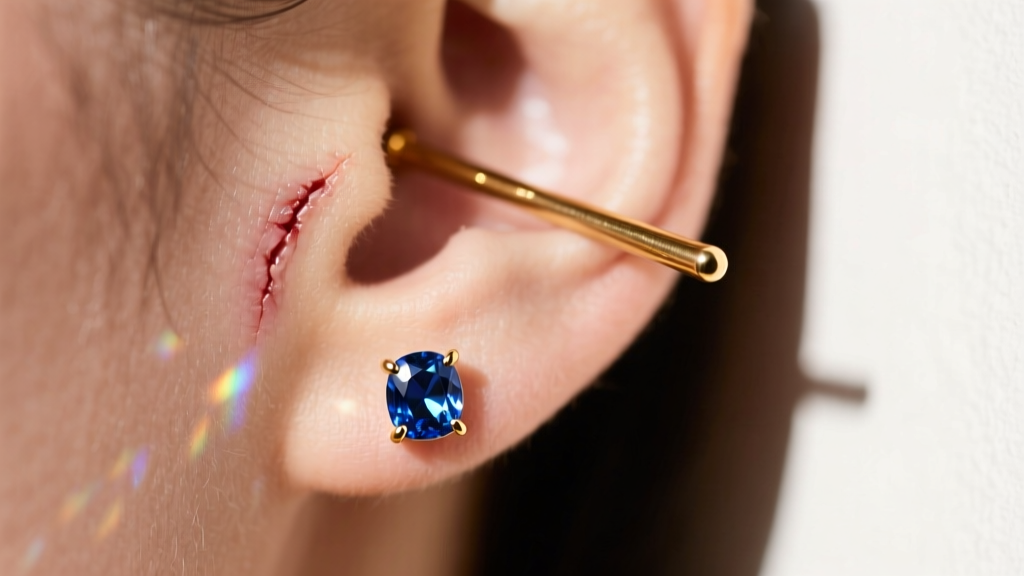
Deep Dive: Top Metals for Rod Earrings
Implant-Grade Titanium (ASTM F136)
Implant-grade titanium, specifically Ti6Al4V ELI (Extra Low Interstitial) compliant with ASTM F136, is the undisputed champion for fresh rod earrings piercings.
Properties: It is entirely nickel-free, highly corrosion-resistant, and boasts a strength-to-weight ratio that makes it incredibly comfortable for long-term wear. The 'ELI' designation means it has reduced levels of oxygen, nitrogen, carbon, and iron, which enhances its fracture toughness and biocompatibility.
Best For: All initial piercings, clients with known metal sensitivities, and MRI-safe requirements.
Pricing: Highly accessible, typically ranging from $15 to $45 for high-quality, internally threaded or threadless posts.
Niobium (UNS Cb)
Niobium is a reactive metal that shares many of titanium's hypoallergenic properties but lacks a specific ASTM standard for implant-grade use. However, it is widely accepted by professional piercers due to its excellent biocompatibility.
Properties: Niobium is denser and heavier than titanium, which some clients notice in larger gauge rod earrings. Its standout feature is its ability to be anodized—using an electrical current to alter the surface oxide layer, producing vibrant, permanent colors without the use of toxic dyes or plating.
Best For: Clients who want colored jewelry for a fresh piercing without resorting to PVD coating.
Pricing: Slightly higher than titanium, usually $25 to $60.
Solid 14k and 18k Gold
Gold is a classic choice, but it requires strict scrutiny. Pure 24k gold is too soft for body jewelry and will easily scratch, harbor bacteria, and deform. Therefore, it must be alloyed.
Properties: For a rod earrings piercing, the gold must be 14k or 18k and specifically alloyed for body jewelry (meaning it is nickel-free and often uses palladium or silver as the hardening agents). Yellow and rose gold are generally well-tolerated, but white gold is a frequent culprit for allergic reactions because it is often alloyed with nickel to achieve its silver color.
Best For: Fully healed piercings, or initial piercings if the specific brand provides metallurgical testing proving zero nickel content.
Pricing: Premium tier, ranging from $80 to over $300 depending on gemstone accents.
The Surgical Steel Trap (ASTM F138)
'Surgical steel' is a marketing term that often masks inferior metallurgy. Even high-quality 316L stainless steel (ASTM F138) contains between 8% and 12% nickel. While the nickel is bound within the alloy, the harsh saline environment of a healing fistula can cause microscopic corrosion, leaching nickel into the tissue.
The Verdict: The Mayo Clinic notes that nickel allergy is one of the most common causes of allergic contact dermatitis. Surgical steel should never be used for a fresh rod earrings piercing. It is only acceptable for fully healed lobes in individuals with no known nickel sensitivity.
Material Comparison Matrix
| Material | Standard / Grade | Nickel Content | Surface Finish | Ideal Use Case |
|---|---|---|---|---|
| Titanium | ASTM F136 (Ti6Al4V ELI) | 0% (Nickel-Free) | Mirror Polish | Initial piercings, sensitive skin |
| Niobium | Commercially Pure | 0% (Nickel-Free) | Anodized / Polish | Colored initial piercings |
| 14k/18k Gold | Palladium Alloyed | 0% (If body-safe) | High Polish | Healed piercings, luxury upgrades |
| Surgical Steel | ASTM F138 (316L) | 8% - 12% | Variable | Healed lobes only (non-sensitive) |
| Acrylic / Bioflex | N/A | 0% | Porous | Never use (harbors bacteria) |
Gauge, Length, and Threading Standards
Material is only half the battle; the physical dimensions and mechanics of the rod earring are equally vital for tissue health.
Precision Gauging
Using the correct thickness prevents the 'cheese-cutter effect,' where a post that is too thin slowly migrates through the tissue under the weight of the jewelry.
18G (1.0mm): Standard for nostril and some delicate tragus piercings.
16G (1.2mm): The industry standard for most ear cartilage (helix, conch, forward helix) and lip piercings.
14G (1.6mm): Used for standard lobes, industrials, and nipples to provide structural stability.
Threading Mechanics
Never use externally threaded jewelry (where the screw is on the post). Forcing sharp, threaded metal through a fistula causes micro-tears and severe trauma. Professional rod earrings will always feature one of two safe mechanisms:
1. Internally Threaded: The screw is on the decorative end, and the post is smooth and hollow. The female receiver is tapped inside the post.
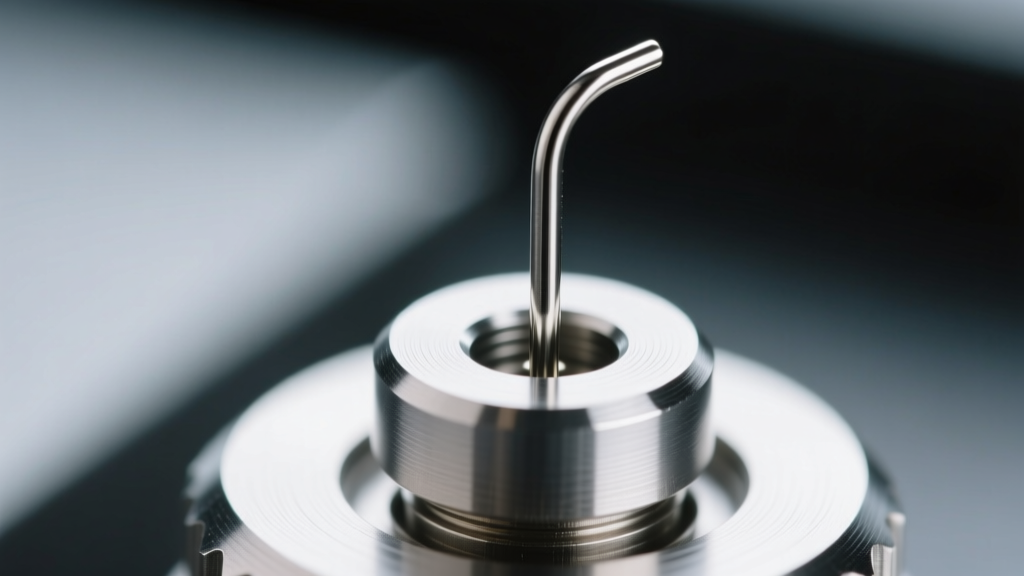
2. Threadless (Push-Pin): The decorative end features a slightly bent pin that creates tension when pushed into the hollow post. This is currently the preferred standard for cartilage, as it eliminates the risk of cross-threading and provides a seamless, secure fit.
Real-World Troubleshooting: When Your Rod Earring Irritates
Even with perfect implant-grade titanium, a rod earrings piercing can develop irritation bumps. When this happens, evaluate the following mechanical failures before blaming the metal:
1. Post Length Mismatch: If the post is too long after the initial swelling subsides, the excess space allows the jewelry to move, flip, and introduce bacteria into the fistula. You must visit your piercer for a 'downsize' (usually switching from a 5/16" post to a 3/16" or 1/4" post) between weeks 4 and 8.
2. Angle Discrepancy: If the piercer's needle angle does not perfectly match the anatomical plane of your ear, the rigid rod earring will sit crooked. This creates uneven pressure on the entry and exit holes, leading to localized swelling and bumps. This requires repiercing once the tissue has healed.
3. Sleeping on the Piercing: Pressure necrosis from sleeping on a fresh cartilage piercing will starve the tissue of oxygen. Use a travel neck pillow to keep your ear suspended in the center hole while you sleep.
Final Verdict on Piercing Metals
When investing in a rod earrings piercing, bypass the mall kiosks and discount bins. The upfront cost of an ASTM F136 implant-grade titanium or properly alloyed 14k gold piece from a reputable manufacturer (such as NeoMetal, Anatometal, or BVLA) is a fraction of the cost of treating a severe infection or correcting a migrated piercing. Demand mirror finishes, threadless or internal threading, and exact millimeter sizing. Your tissue will reward your metallurgical diligence with a fast, seamless, and beautiful healing process.


