Beaded Heart Earrings: The 2026 Budget & Value Guide
Evaluate beaded heart earrings with our 2026 budget guide. We break down material tiers, wire gauges, and pricing to help you spot true quality and value.

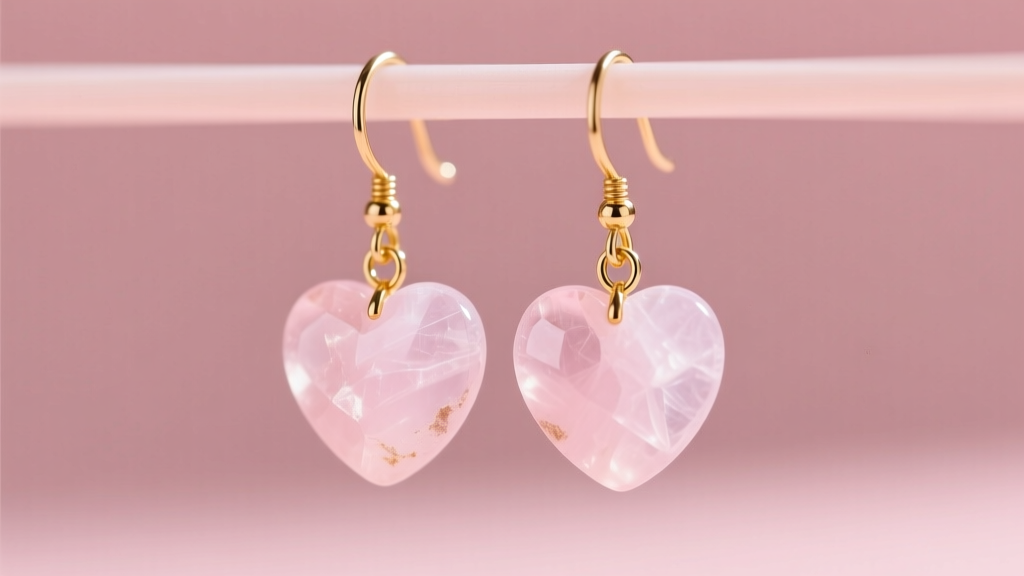
The enduring appeal of beaded heart earrings lies in their perfect intersection of playful sentimentality and versatile styling. However, as we navigate the 2026 jewelry market, the price disparity between seemingly identical pairs can be staggering. You might find a pair of glass beaded hearts at a fast-fashion retailer for $12, while an independent artisan charges $85 for a nearly identical silhouette. As a buyer, how do you determine if you are paying for genuine craftsmanship and material integrity, or simply subsidizing a brand's marketing budget?
This comprehensive budget and value assessment deconstructs the anatomy of beaded heart earrings. We will examine bead composition, wire metallurgy, and structural failure modes to give you a precise framework for evaluating worth. Whether you are shopping for everyday acrylics or investment-grade semi-precious stones, understanding these nuances ensures your jewelry budget is allocated toward pieces that actually last.
The Anatomy of Value: Bead Materials and Treatments
The primary cost driver in any beaded earring is the bead itself. Heart-shaped beads are notoriously difficult to manufacture compared to standard rounds, as the cleft at the top and the pointed bottom require precise molding, cutting, or carving. This complexity creates a wide spectrum of quality and pricing.
Acrylic and Resin (The Budget Tier)
Mass-produced acrylic heart beads are injection-molded, resulting in a visible seam line running down the center of the bead. While lightweight and vibrant, they scratch easily and degrade under UV exposure. In 2026, a fair price for well-assembled acrylic beaded heart earrings is between $8 and $18. Anything above $25 is a severe markup based purely on brand aesthetics.
Czech and Murano Glass (The Mid-Tier)
Glass beads offer superior weight, light refraction, and durability. Pressed Czech glass hearts are uniform and affordable, while lampworked Murano glass hearts feature unique internal patterns (like millefiori or gold foil inclusions). Glass does not yellow or scratch as easily as plastic, making it a high-value proposition for daily wear. Expect to pay $25 to $55 for quality glass beaded heart earrings set in reliable hardware.
Semi-Precious Gemstones (The Premium Tier)
Carved stone hearts—most commonly rose quartz, jade, and aventurine—command premium prices. However, buyers must be wary of treatments. According to the Gemological Institute of America (GIA), a significant percentage of commercial "jade" beads on the market are actually dyed serpentine or quartz. Genuine, untreated Type A jade or high-grade translucent rose quartz requires skilled lapidary work to carve the heart shape without chipping the delicate bottom point. Fair market value for authentic, well-carved semi-precious beaded heart earrings ranges from $65 to $150, depending on the stone's clarity and the hardware used.
2026 Pricing Matrix: What Should You Actually Pay?
To help you benchmark your purchases, we have compiled a value matrix based on current 2026 market data across independent artisans and mid-market jewelry brands.
| Material Tier | Bead Type | Expected Hardware | Fair Price Range (2026) | Value Retention |
|---|---|---|---|---|
| Budget | Injection-Molded Acrylic | Plated Brass / Steel | $8 - $18 | Low (1-2 seasons) |
| Mid-Tier | Pressed Czech Glass | Gold-Filled / Sterling | $25 - $55 | Medium (2-4 years) |
| Premium | Carved Rose Quartz / Jade | 14k Gold-Filled / Solid | $65 - $150 | High (5+ years) |
| Fine Jewelry | Enamel / Pearl / Diamond | Solid 14k / 18k Gold | $250 - $800+ | Excellent (Heirloom) |
Hardware and Wire Gauges: The Hidden Value Killers
A $40 carved rose quartz heart is entirely ruined if it is hung from a flimsy, poorly chosen wire. The hardware is where many mid-tier brands cut corners to maximize profit margins. When assessing beaded heart earrings, you must evaluate the wire gauge and temper.
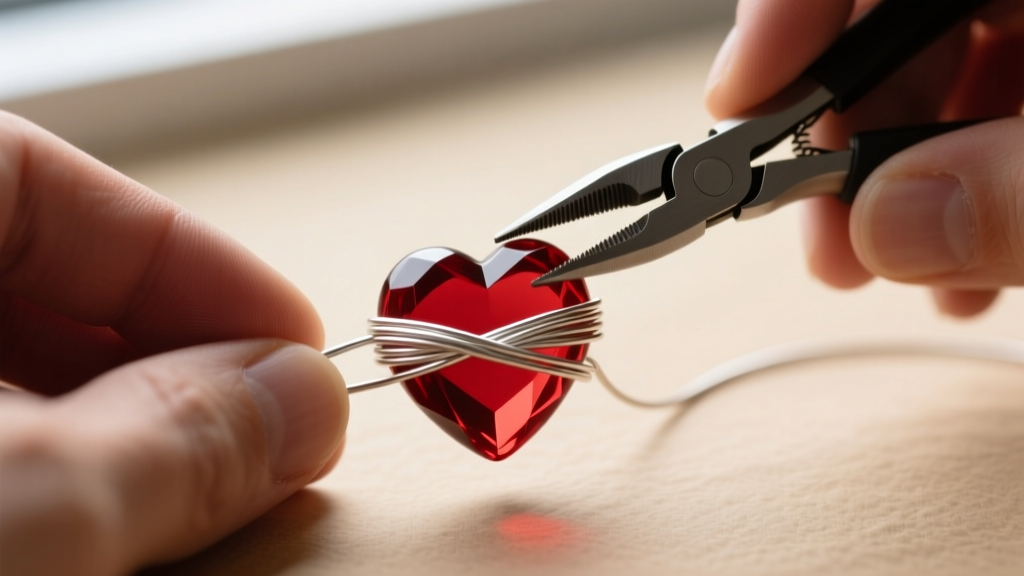
Understanding Wire Gauge and Temper
Wire gauge dictates thickness, while temper dictates stiffness. For beaded heart earrings, the structural integrity of the top loop (the bail) is critical because the heart shape is bottom-heavy, creating a pendulum effect that stresses the wire.
- 24-Gauge (Too Thin): Often used in cheap, mass-produced earrings to save on metal costs. It bends easily and will eventually snap under the swinging weight of a glass or stone heart.
- 22-Gauge (Standard): The ideal balance for most semi-precious and glass beads. It is thick enough to hold a secure wrapped loop but thin enough to pass through standard 1mm bead holes.
- 20-Gauge (Heavy Duty): Best for large, heavy stone hearts or when using French wire hooks. It provides excellent structural support but may not fit through smaller, delicately drilled gemstone beads.
Furthermore, wire temper is crucial. As noted by jewelry supply authority Rio Grande, "dead soft" wire is easy to manipulate but lacks memory, meaning your heart bead will eventually hang crookedly. "Half-hard" wire has been work-hardened, allowing it to maintain its shaped loops and resist pulling open over time. Always look for artisans who specify the use of half-hard wire for structural loops.
Craftsmanship and Failure Modes: What to Inspect
Before purchasing beaded heart earrings, especially from independent makers or online marketplaces, scrutinize the product photos for these common structural failure modes:
1. The Top-Drilled vs. Center-Drilled Dilemma
Heart beads are typically either center-drilled (hole goes vertically through the cleft and the point) or top-drilled (hole goes horizontally through the top lobes). Center-drilled hearts require the wire to exit the bottom point. If the artisan does not use a flush cutter and file the wire end perfectly smooth, the sharp wire tip will scratch your neck or catch on clothing. Top-drilled hearts are generally more secure and hang flatter against the ear, making them a superior choice for heavier materials.
2. Bead Hole Chipping
Carved gemstone hearts are prone to chipping around the drill hole, particularly at the delicate top cleft. If you see white, jagged stress fractures around the wire entry point in the product photos, the lapidary used excessive force or a dull drill bit. This compromises the bead's structural integrity and will lead to breakage.
3. Plating Degradation on Base Metals
If the earrings feature gold-plated brass wire rather than gold-filled or solid gold, the friction from the bead rubbing against the wire loop will quickly wear away the microscopic gold layer. This exposes the brass underneath, leading to rapid tarnishing and the dreaded "green ear" effect caused by copper oxidation reacting with skin acidity.
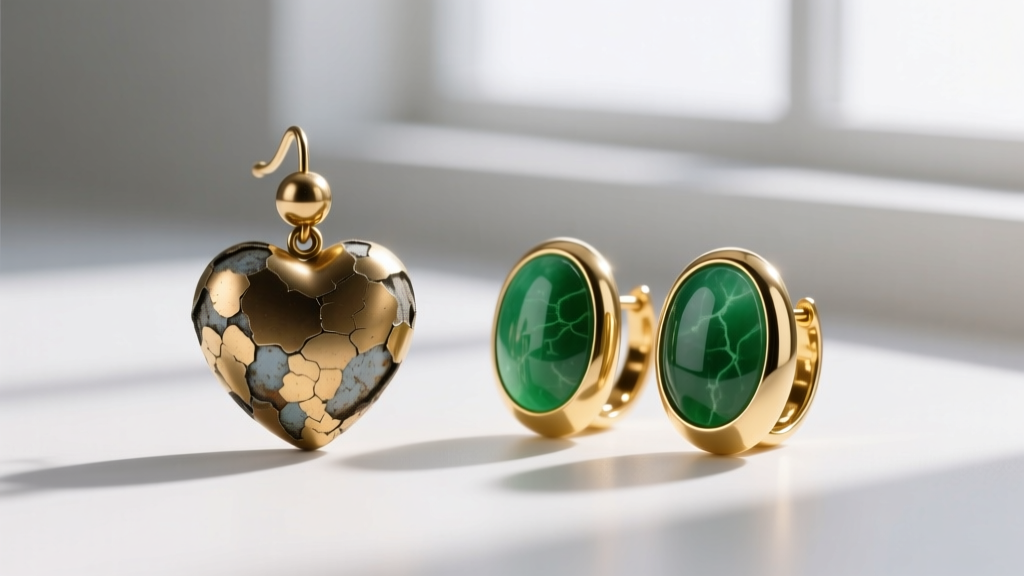
The Buyer’s Value Checklist
Use this quick framework next time you are evaluating a pair of beaded heart earrings to ensure your budget is well spent:
- Check the Seam: Run your fingernail down the center of the bead. If you feel a ridge, it is molded plastic or resin. Adjust your budget expectations accordingly (under $20).
- Verify the Metal: Look for "14k Gold-Filled" (which contains 5% solid gold by weight) or "Sterling Silver." Avoid vague terms like "gold-tone" or "gold-plated" for everyday wear.
- Inspect the Bail: Ensure the wire loop at the top is tightly wrapped and closed. There should be no visible gaps where the bead could slip out.
- Assess the Weight: If buying heavy glass or stone hearts, ensure the earring hooks are sturdy (preferably 20-gauge) and feature a slight curve to prevent the heavy bead from pulling the earring awkwardly forward on the earlobe.
Final Verdict: Allocating Your Jewelry Budget
Beaded heart earrings remain a staple of expressive jewelry styling, but their value is entirely dependent on material transparency and structural engineering. In 2026, the smartest budget allocation favors mid-tier Czech glass or entry-level semi-precious stones paired with gold-filled hardware. This sweet spot ($35 to $75) offers the durability and visual weight of fine jewelry without the exorbitant markup of luxury brand names. By prioritizing half-hard wire, proper drill-hole finishing, and authentic materials, you can build a collection of heart earrings that retains both its sentimental charm and its physical integrity for years to come.


