Sterling Silver Twisted Hoop Earrings: The 2026 Style Guide
Discover why sterling silver twisted hoop earrings are dominating 2026 trends. Explore gauge sizes, styling tips, and metallurgical buying advice.

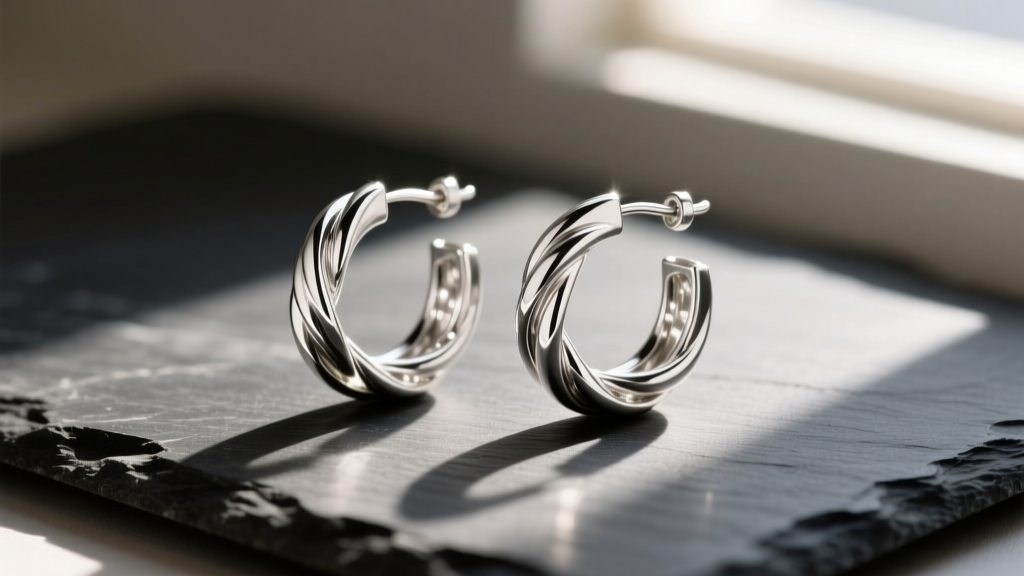
The 2026 Shift: Why Texture is Replacing Minimalism
The jewelry landscape of 2026 has decisively pivoted from the ultra-sleek, quiet luxury minimalism of the early 2020s toward a more tactile, romantic industrialism. At the forefront of this movement are sterling silver twisted hoop earrings. No longer just a basic staple, the twisted hoop offers dynamic light refraction, mimicking the sparkle of pavé diamonds without the associated cost or ethical concerns. The spiral grooves catch ambient light from multiple angles, creating a high-impact visual that satisfies the current consumer desire for 'tactile luxury'—pieces that look intricate and feel substantial.
According to trend forecasters, the demand for textured metals has surged by over 40% this year, driven by a cultural shift toward artisanal, hand-forged aesthetics. The twisted hoop perfectly bridges the gap between everyday wearability and statement-making design, making it a cornerstone of the modern ear curation.
Metallurgical Realities: .925 Sterling vs. Argentium
When investing in sterling silver twisted hoop earrings, understanding the underlying alloy is critical for longevity. Standard .925 sterling silver consists of 92.5% pure silver and 7.5% copper. While the copper provides necessary tensile strength, it is also the primary culprit behind oxidation and tarnish, particularly when trapped in the deep grooves of a twisted design.
In 2026, many premium brands are upgrading to Argentium silver, an advanced alloy that replaces a portion of the copper with germanium. This creates a highly tarnish-resistant metal that maintains its bright white luster significantly longer than traditional sterling. Furthermore, the physical act of twisting the wire causes a metallurgical phenomenon known as 'work hardening.' As the silver's crystal lattice deforms during the twisting process, it becomes harder but significantly more brittle.
Expert jewelers will anneal (heat and slowly cool) the wire to relieve internal stresses before forming the clasp. If this crucial step is skipped in mass production, the hoop is prone to structural snapping at the hinge or wire joint within months of wear.
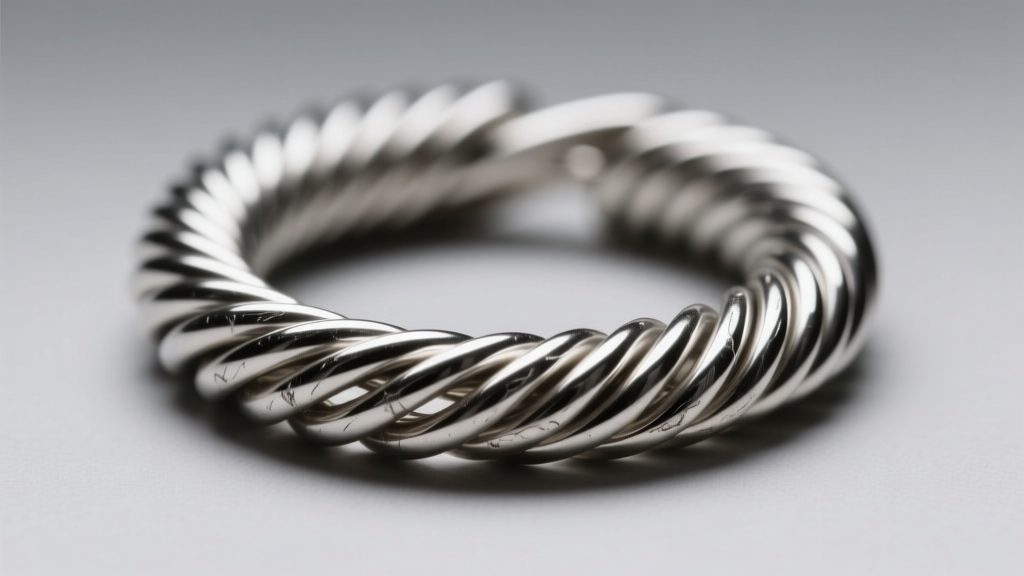
The Gauge, Diameter, and Weight Matrix
Selecting the right proportions is essential for both comfort and structural integrity. A twisted wire is inherently heavier and stiffer than a smooth wire of the same gauge. Below is a decision framework for selecting the ideal specifications based on your piercing placement and lobe thickness.
| Wire Gauge | Diameter | Approx. Weight (per earring) | Best Placement & Use Case |
|---|---|---|---|
| 20g (0.8mm) | 12mm - 15mm | 1.2 - 1.8g | Helix, Forward Helix, Tragus, and second/third lobe piercings. |
| 18g (1.0mm) | 20mm - 30mm | 2.5 - 4.0g | Standard earlobe (huggie to medium hoop). Ideal for everyday wear. |
| 16g (1.2mm) | 35mm - 50mm | 5.5 - 8.5g | Primary lobe piercing. Provides necessary structural support for larger statement hoops without bending. |
| 14g (1.6mm) | 55mm+ | 10g+ | Statement lobe wear. Requires a sturdy, well-healed piercing and a reinforced hinged clasp. |
Curating the Ear: Placement and Face Shape Dynamics
The architectural nature of sterling silver twisted hoop earrings makes them a powerful tool for balancing facial geometry. Because the twist adds visual volume and horizontal width, the diameter you choose should complement your face shape.
- Round Faces: Opt for elongated, oval-shaped twisted drops or medium-sized hoops (30mm-40mm) that sit below the jawline. This creates a vertical illusion that lengthens the face. Avoid tight, wide-gauge huggies that emphasize cheek width.
- Square Faces: Embrace rounded, continuous twisted hoops in the 40mm to 50mm range. The soft, spiraling curves of the silver will offset strong jawlines and angular features.
- Heart-Shaped Faces: Teardrop or slightly bottom-heavy twisted hoops work beautifully, adding visual weight to the lower half of the face to balance a narrower chin.
For ear curation, mixing textures is the defining trend of 2026. Pair a larger 35mm twisted hoop in your primary lobe with a smooth, polished 10mm stud in the second lobe, and a tiny 12mm twisted huggie in the upper helix. This creates a deliberate, curated asymmetry that feels both intentional and effortless.
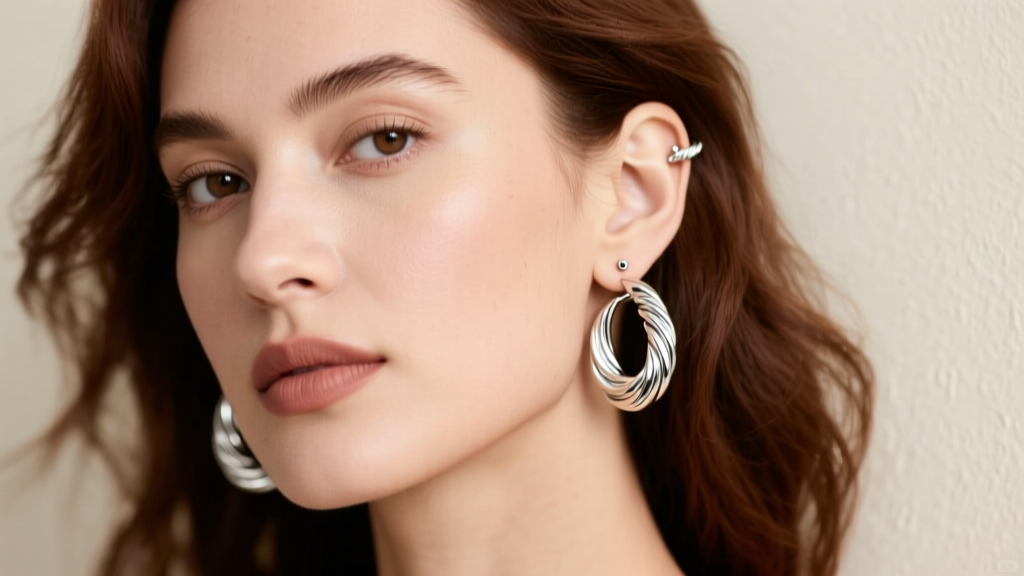
Structural Failure Modes and Groove Maintenance
The very feature that makes these earrings beautiful—the deep spiral grooves—is also their primary maintenance challenge. The valleys of the twist act as micro-traps for sebum, dead skin cells, and environmental sulfur, accelerating localized tarnishing.
How to Clean and Preserve the Finish
Avoid harsh chemical silver dips. These solutions are highly acidic and will strip the high-polish finish from the peaks of the twist, leaving the metal with a dull, matte appearance over time. Instead, adopt a mechanical cleaning approach:
- Soak the earrings in warm water with a few drops of mild, phosphate-free dish soap for five minutes.
- Use an extra-soft baby toothbrush to gently agitate the grooves, working in the direction of the twist to avoid catching and scratching the metal.
- Rinse thoroughly and dry immediately with a microfiber cloth to prevent water spots.
- Use a treated silver polishing cloth only on the raised peaks to restore maximum light reflection.
'Silver is a living metal that reacts to its environment. A twisted hoop requires a bit more mindfulness than a smooth band, but the payoff in light performance and tactile elegance is unmatched in modern jewelry design.' — Master Silversmith Guild Guidelines, 2025
Price Tiers and Authenticity Checks
When shopping, always verify the hallmark. According to The London Assay Office, genuine sterling silver must bear a '925' stamp. On twisted hoops, this is typically laser-engraved on the inside of the wire near the clasp or stamped onto the post of a hinged design.
Market Pricing Breakdown:
- Mass Market ($20 - $45): Usually hollow-core or thinly plated brass with a high copper content. Prone to rapid tarnishing and clasp failure.
- Artisan & Boutique ($50 - $130): Solid .925 sterling silver, properly annealed, featuring secure hinged snap clasps or seamless continuous hoop designs. This is the sweet spot for quality and longevity.
- Fine & Luxury ($150 - $300+): Crafted from Argentium silver or recycled .925 with premium, heavy-duty locking clasps and hand-forged, irregular twists that guarantee no two pairs are exactly alike.
Ultimately, sterling silver twisted hoop earrings represent a masterclass in functional artistry. By understanding the metallurgy, selecting the correct gauge for your anatomy, and committing to proper groove maintenance, you secure a versatile, light-catching staple that will anchor your jewelry wardrobe for years to come.


