My Earring Is Infected: Technical Triage for Piercing Aftercare
Thinking 'my earring is infected'? Learn the clinical differences between irritation and infection, plus metal-grade triage for healing piercings.

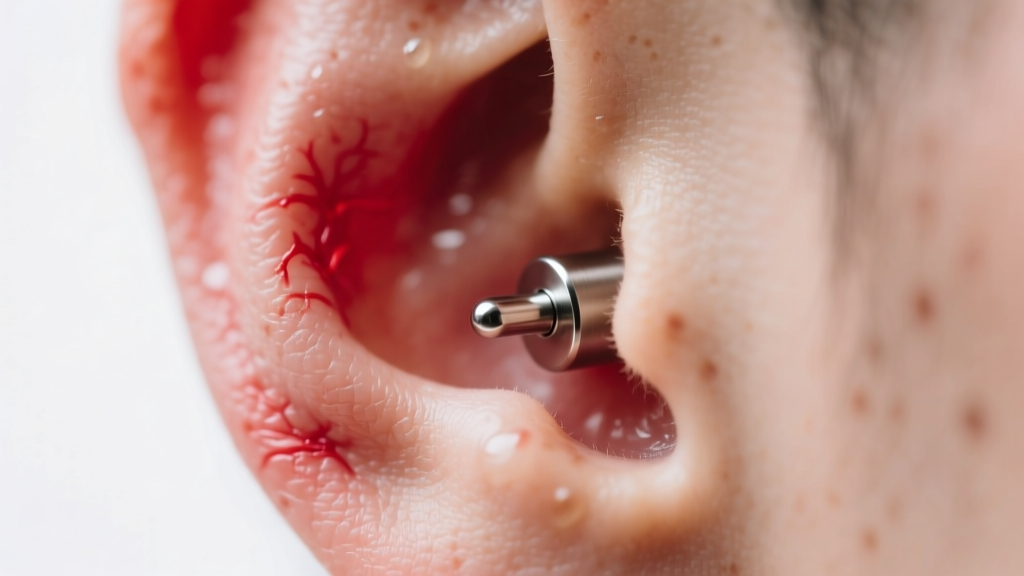
When you look in the mirror and think, my earring is infected, the immediate instinct is often to panic, rip the jewelry out, and apply harsh chemicals. However, from a clinical and metallurgical perspective, this reactive approach frequently exacerbates the tissue trauma and traps bacteria inside the fistula (the piercing channel). True bacterial infections in ear piercings are actually quite rare compared to mechanical irritation, contact dermatitis, and allergic reactions to substandard alloys. To properly address the issue, we must first accurately diagnose the physiological response your body is having, evaluate the metallurgy of your jewelry, and implement a precise, science-backed triage protocol.
The Clinical Reality: Irritation vs. True Infection
The vast majority of clients who search for solutions because their ear is red, swollen, and secreting fluid are not dealing with a bacterial infection. They are experiencing localized irritation or an allergic response. Differentiating between the two is critical, as the treatment protocols are diametrically opposed. Below is a clinical breakdown of symptom presentation.
| Symptom Metric | Irritation / Contact Dermatitis | True Bacterial Infection (Staph/Pseudomonas) |
|---|---|---|
| Exudate (Discharge) | Clear, white, or pale yellow lymph fluid; crusts easily. | Thick, opaque yellow or green pus; often foul-smelling. |
| Temperature | Normal to touch, or very slightly warm due to friction. | Noticeably hot to the touch; radiating heat from the site. |
| Pain Profile | Tender when touched, itchy, or dull ache. | Throbbing, sharp, constant pain that disrupts sleep. |
| Systemic Signs | None. Localized strictly to the piercing site. | Fever, chills, nausea, or red streaks radiating from the ear. |
| Onset Speed | Gradual, or spikes after sleeping on the ear/snagging. | Rapid and acute, often developing within 24 to 48 hours. |
According to the Association of Professional Piercers (APP), removing jewelry during a suspected infection is highly contraindicated. The surface of the skin heals much faster than the internal fistula. If you remove the earring, the entry and exit holes will seal, trapping the infection inside and potentially forming a painful abscess that requires surgical lancing.
Material Failure Modes: Why Your Jewelry Might Be the Culprit
If you are dealing with chronic irritation that mimics an infection, the root cause is often metallurgical failure. Many commercial earrings are labeled as 'surgical steel' or 'hypoallergenic,' which are largely unregulated marketing terms. Standard 316L stainless steel contains between 8% and 10% nickel. When exposed to the saline environment of a healing wound, the steel can corrode at a microscopic level, leaching nickel ions directly into the bloodstream and triggering severe contact dermatitis.
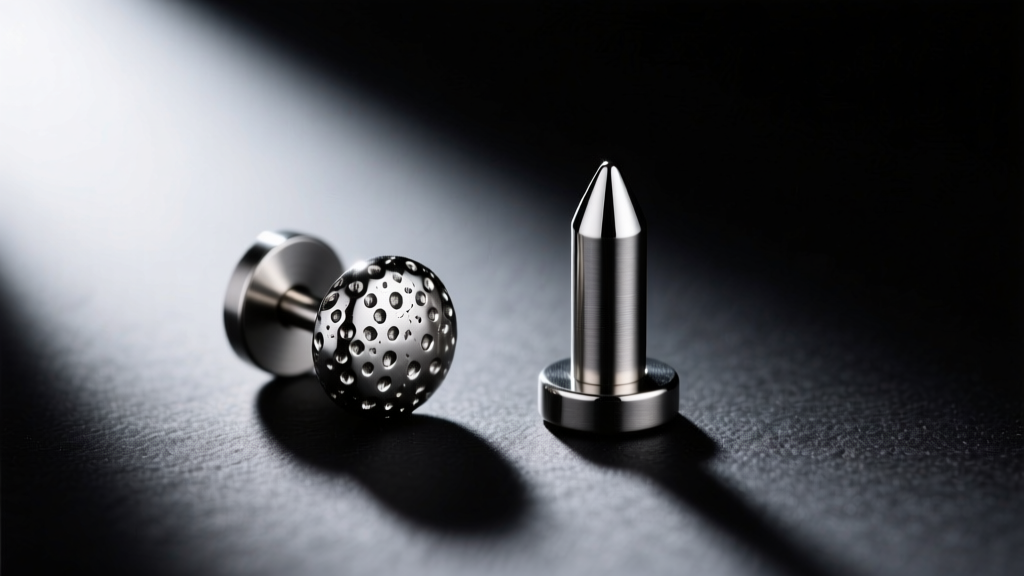
For any fresh, healing, or problematic piercing, the only acceptable standard is ASTM F-136 Implant-Grade Titanium (Ti6Al4V ELI). This specific alloy contains zero nickel and is the exact same metal used in orthopedic joint replacements and pacemakers. Furthermore, implant-grade titanium is polished to a mirror finish with a surface roughness (Ra) of less than 0.5 micrometers. This microscopic smoothness prevents bacteria and dead skin cells from adhering to the post, drastically reducing the risk of biofilm formation and subsequent infection.
If you prefer gold, it must be 14k or 18k and specifically alloyed for body jewelry (nickel-free, with low copper content to prevent oxidation). Avoid anything below 14k, as the higher alloy content increases the risk of heavy metal toxicity and tissue rejection.
Technical Triage Protocol: Step-by-Step Intervention
Once you have assessed the symptoms and verified your jewelry material, follow this strict triage protocol to encourage healing and reduce inflammation.
- Step 1: Retain the Jewelry. Leave the earring in place to maintain the drainage pathway. If the jewelry is too tight and embedding into the swollen tissue, visit a professional piercer immediately to have it swapped for a longer post.
- Step 2: Sterile Saline Flushing. Use only 0.9% sterile sodium chloride solution with no additives, preservatives, or buffering agents. Spray the front and back of the piercing twice daily. The mechanical action of the spray flushes out necrotic tissue and lymph without disturbing the delicate new cells.
- Step 3: Warm Compresses. For stubborn irritation bumps or localized swelling, apply a sterile gauze pad soaked in warm (not hot) saline for 5 to 10 minutes. The heat induces vasodilation, increasing blood flow and bringing white blood cells to the area to accelerate healing.
- Step 4: The LITHA Method. 'Leave It The Hell Alone.' Stop touching, twisting, or rotating the earring. Rotating the jewelry tears the fragile epithelial lining of the fistula and introduces external pathogens directly into the wound bed.
Cartilage vs. Lobe: Vascularity and Healing Timelines
The anatomical location of your piercing dictates both the healing timeline and the severity of potential complications. The earlobe is highly vascularized, meaning it has a robust blood supply that delivers immune cells and nutrients efficiently. Lobe piercings typically heal in 6 to 8 weeks and rarely suffer from severe complications.
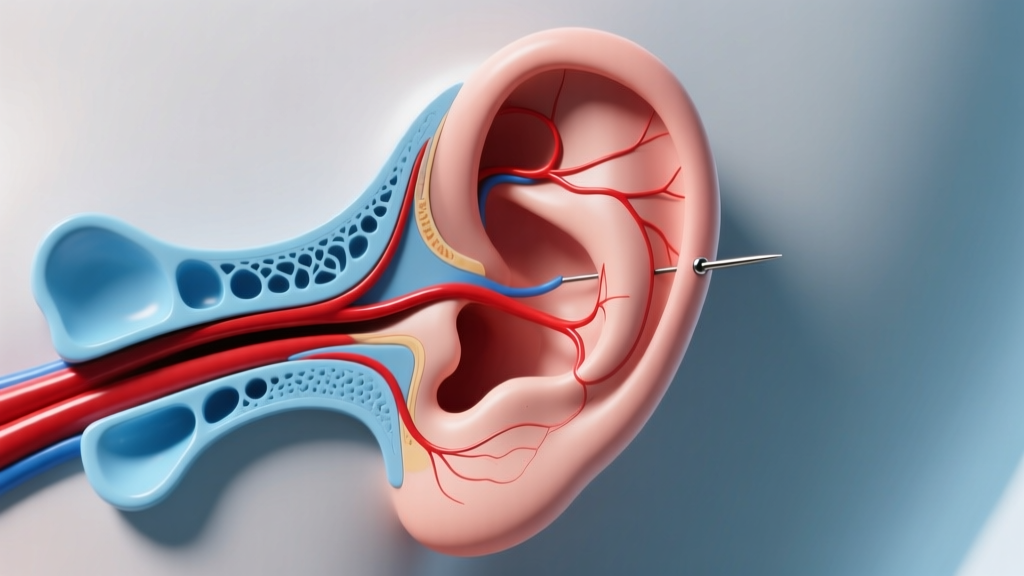
Cartilage, on the other hand, is avascular. It receives no direct blood supply and relies entirely on the perichondrium (the connective tissue surrounding the cartilage) for nutrient diffusion. Consequently, cartilage piercings like the helix, flat, or conch take 6 to 12 months to fully heal. If a true bacterial infection takes hold in the cartilage, it can rapidly develop into perichondritis or chondritis. According to the Cleveland Clinic, untreated cartilage infections can lead to tissue necrosis and permanent structural deformity, commonly known as cauliflower ear. If your cartilage piercing is hot, throbbing, and leaking pus, bypass home remedies and seek oral antibiotics from a physician immediately.
When to Downsize or Upsize: Gauge and Post Length Dynamics
Improper jewelry dimensions are a leading cause of mechanical irritation. When a piercing is first performed, the piercer uses a longer post (e.g., 3/8" or 10mm for lobes, 1/4" or 6mm for cartilage) to accommodate the initial inflammatory swelling. Once the swelling subsides (usually between weeks 4 and 8), the excess post length becomes a liability.
An overly long post allows the earring to move excessively, acting as a lever that creates micro-tears in the fistula. It also increases the risk of snagging on hair or clothing. Conversely, a post that is too short will compress the tissue, restricting blood flow and causing the decorative end to embed into the skin. You must return to your piercer for a 'downsize' to a snug-fitting post once the initial swelling has resolved.
Regarding gauge (thickness), standard lobe piercings are often done at 18G (1.0mm) or 16G (1.2mm). However, for cartilage, a 16G or 14G (1.6mm) needle is strongly recommended. Thicker jewelry provides greater structural stability, reducing the 'cheese-cutter effect' where thin wire slowly migrates through the tissue due to pressure and gravity.
Preventative Metallurgy and Aftercare Chemistry
The final piece of the puzzle is avoiding chemical sabotage. The market is flooded with 'healing' sprays and ointments that actively destroy healing tissue. Never apply Neosporin, Bacitracin, or any petroleum-based ointment to a piercing. These create an occlusive barrier that blocks oxygen, creating an ideal breeding ground for anaerobic bacteria. Furthermore, avoid essential oils like tea tree oil, as well as rubbing alcohol and hydrogen peroxide. These harsh astringents cause chemical burns, destroy healthy fibroblasts, and severely delay the epithelialization process.
Ultimately, if your earring is infected or severely irritated, the solution lies in clinical observation, high-quality implant-grade metals, and a minimalist approach to aftercare. By respecting the biology of the fistula and the chemistry of your jewelry, you can navigate piercing complications safely and effectively.


