Stitch Earrings for Girls: A Technical Safety & Material Guide
An expert technical guide to buying safe Stitch earrings for girls, covering hypoallergenic metal grades, post gauges, and enamel toxicity standards.

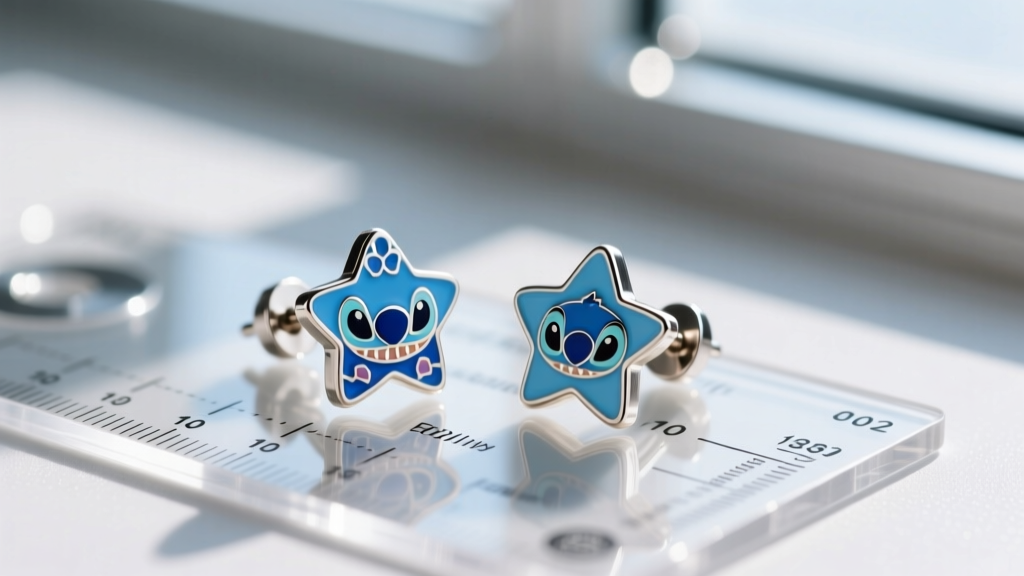
The Metallurgical Reality of Novelty Character Jewelry
The demand for character-themed jewelry has surged, and stitch earrings for girls remain one of the most searched novelty accessories on the market. However, from a metallurgical and pediatric dermatology perspective, the vast majority of these novelty items fail basic safety standards. When parents purchase character earrings from unverified online marketplaces, they are frequently exposing children to unregulated base metals, toxic enamel pigments, and structural failure points that pose both allergic and physical hazards.
According to the American Academy of Dermatology, up to 20% of children develop a nickel allergy, often triggered by prolonged exposure to cheap jewelry. The European EN 1811 standard strictly limits nickel release to 0.5 µg/cm²/week for items intended for prolonged skin contact. Independent lab testing of mass-produced novelty earrings frequently reveals nickel release rates exceeding 5.0 µg/cm²/week—ten times the legal limit. As of 2026, understanding the technical specifications of children's jewelry is no longer optional; it is a critical health requirement.
Material Grades: Decoding the Post and Body Alloys
The term "hypoallergenic" is a marketing buzzword with no legal or medical definition. To ensure safety, you must look for specific metallurgical grades. The earring post (the part that penetrates the skin) and the earring body (the decorative Stitch face) are often made of entirely different alloys. A common failure mode in cheap jewelry is a titanium-washed brass post, where the microscopic plating wears off within days, exposing the child's healing fistula to raw copper and nickel.
| Material Grade | Nickel Release Rate | Biocompatibility | Best Use Case |
|---|---|---|---|
| ASTM F136 Titanium | 0.00 µg/cm²/week | Excellent (Implant Grade) | New piercings, highly sensitive lobes, daily wear |
| 316L Surgical Steel | 0.10 - 0.45 µg/cm²/week | Good (If properly passivated) | Healed piercings, occasional wear |
| 925 Sterling Silver | Variable (Alloyed with copper) | Poor (Tarnishes, causes argyria) | Avoid for children's daily wear |
| Zinc Alloy / Brass | 2.50+ µg/cm²/week | Toxic / Highly Allergenic | Strictly avoid (Costume jewelry) |
For young girls, ASTM F136 implant-grade titanium is the gold standard. This alloy contains zero nickel and is entirely biocompatible, meaning the body's immune system will not recognize it as a foreign threat. If the decorative Stitch face is made of enamel or resin, ensure it is bonded to a titanium or 316L steel base, rather than glued to a zinc alloy casting.
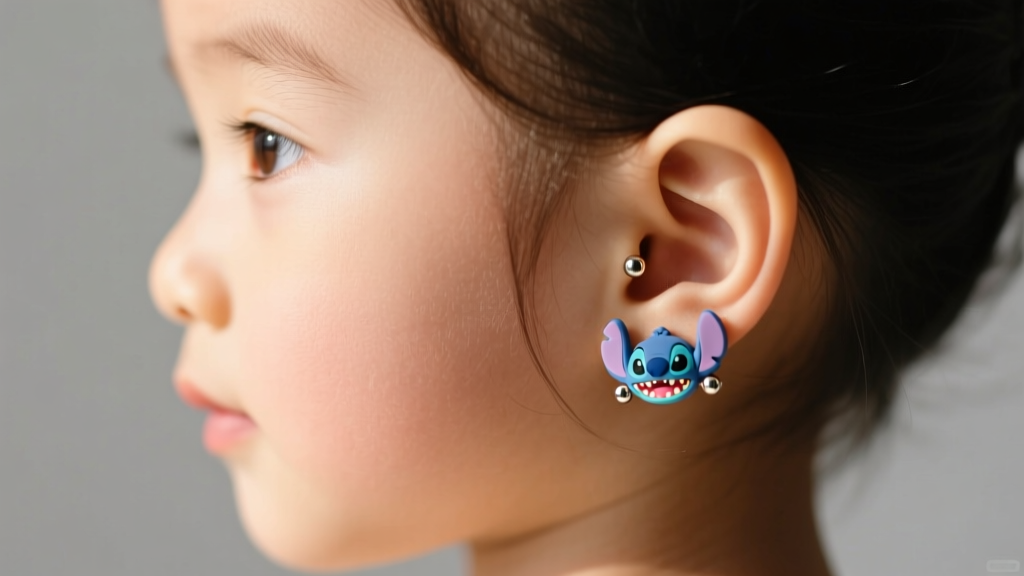
Structural Engineering: Post Gauge and Shear Stress
Beyond metal composition, the physical dimensions of the earring post dictate its longevity and safety. The "gauge" refers to the thickness of the metal wire. Most mass-produced children's earrings utilize a 22-gauge (0.64mm) or even 24-gauge (0.51mm) post to save on material costs. This presents a severe mechanical vulnerability.
The Shear Stress Problem
Children are active; they pull on their hair, tug at their clothes, and frequently touch their ears. A 22-gauge brass or steel post has a very low shear strength. When lateral force is applied to the decorative Stitch head, the thin post bends. Once a post bends, it creates micro-tears inside the earlobe's fistula (the piercing channel), introducing bacteria and causing localized trauma. Furthermore, a bent post is incredibly difficult to remove without visiting a professional piercer or pediatrician.
- 24G - 22G (0.51mm - 0.64mm): High risk of bending and tissue tearing. Avoid.
- 20G (0.81mm): The standard for high-quality children's jewelry. Offers excellent shear resistance while remaining comfortable for standard lobe piercings.
- 18G (1.02mm): Ideal for older girls or cartilage piercings, providing maximum structural integrity.
Choking Hazards and Clutch Mechanics
The backing mechanism of an earring is a frequently overlooked safety hazard. The traditional "butterfly" or "push" back relies on friction and a weak metal spring. Over time, the spring mechanism fatigues, causing the backing to slide off during sleep. For young girls, a detached metal backing in the bed is a significant choking and aspiration hazard.
Additionally, butterfly backs trap dead skin cells, sebum, and bacteria in their tight metal crevices, leading to foul odors and localized infections. For Stitch earrings intended for daily wear by children, experts recommend two alternatives:
- Medical-Grade Silicone O-Rings: These provide a secure, friction-based grip that stretches to accommodate the post but will not slide off accidentally. They are soft, hypoallergenic, and easily cleaned with soap and water.
- Internal-Thread Screw Backs: For maximum security, the post features microscopic threading on the inside, and the backing screws into it. This eliminates the sharp external threads that can tear the earlobe during insertion and makes accidental removal virtually impossible for small hands.
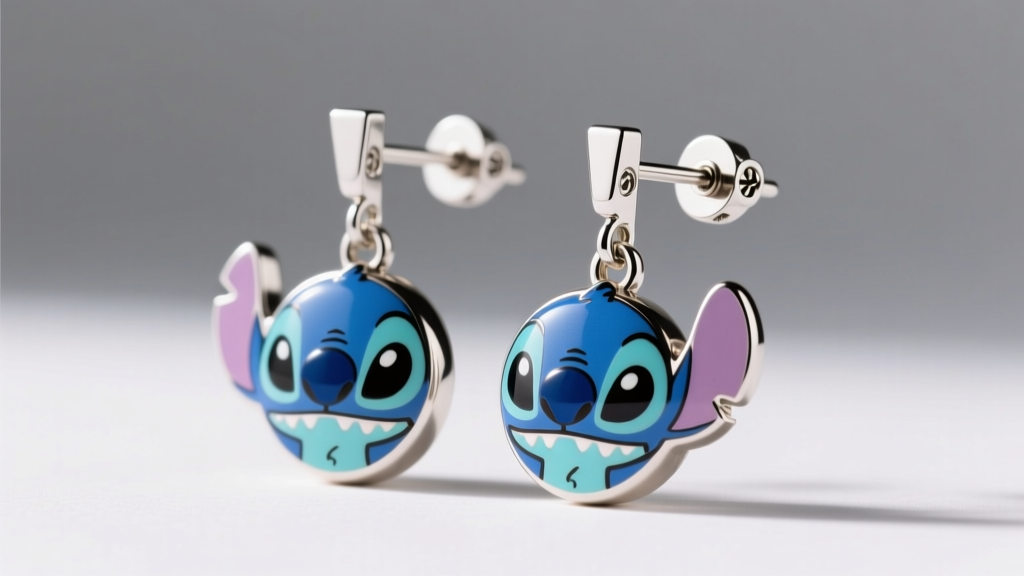
Enamel Toxicity: Lead and Cadmium in Colored Coatings
The iconic blue and black colors of the Stitch character are typically achieved using cold enamel (epoxy resin) or vitreous enamel (fused glass powder). In unregulated manufacturing environments, heavy metals are frequently used as stabilizers or pigment enhancers in these colored coatings. Lead provides a brighter, more durable finish, while cadmium is often used to achieve deep, vibrant blues and blacks.
The Consumer Product Safety Commission (CPSIA) enforces strict limits on children's products in the United States, capping total lead content at 100 parts per million (ppm) and establishing rigorous testing protocols for cadmium. However, jewelry imported via direct-to-consumer dropshipping channels frequently bypasses these customs inspections. When a child sweats, the slightly acidic pH of their skin (typically between 4.5 and 7.0) can cause microscopic degradation of low-quality enamel, leading to the leaching of heavy metals directly into the bloodstream or via hand-to-mouth transfer.
How to Verify Enamel Safety
When purchasing enameled Stitch earrings, look for explicit statements of CPSIA compliance or EU REACH compliance. Reputable manufacturers will provide a Certificate of Compliance (CoC) or lab testing results upon request. If a seller cannot provide documentation verifying that their enamel pigments are free of lead, cadmium, and phthalates, the product should be considered toxic and avoided entirely.
Expert Sourcing Framework: Where to Find Compliant Jewelry
Finding safe, high-quality Stitch earrings for girls requires moving beyond generic marketplace searches and vetting sellers based on their manufacturing transparency. Use this expert framework to evaluate potential purchases:
Red Flags (Avoid These Sellers)
- Vague Material Descriptions: Terms like "alloy," "mixed metals," or "environmentally friendly brass" are red flags for nickel-heavy base metals.
- External Threading: If the post has visible ridges (threads) on the outside that screw into the backing, it will cause micro-trauma to the earlobe upon insertion.
- Flash Plating: If the post is gold or silver-colored but the seller cannot confirm the base metal, it is likely flash-plated brass that will corrode within weeks.
Green Flags (Prioritize These Sellers)
- Explicit Alloy Citations: The listing specifically states "ASTM F136 Titanium" or "Solid 316L Surgical Steel."
- Specialized Pediatric Brands: Companies that specialize in hypoallergenic children's jewelry (such as Tini Lux, Blomdahl, or specialized Etsy artisans who cast in titanium) are far more likely to adhere to safety standards than generic novelty shops.
- Transparent Backings: The seller includes medical-grade silicone clutches or flat-back screw mechanisms as standard equipment.
By prioritizing metallurgical integrity, structural gauge thickness, and verified enamel safety, you can ensure that the Stitch earrings your child wears are not only a fun expression of their favorite character but also entirely safe for their developing biology.


