Back of Earring Is Stuck in Earlobe: Expert Removal Guide
Learn expert techniques for when the back of earring is stuck in earlobe. Discover safe extraction methods, tissue care, and prevention.

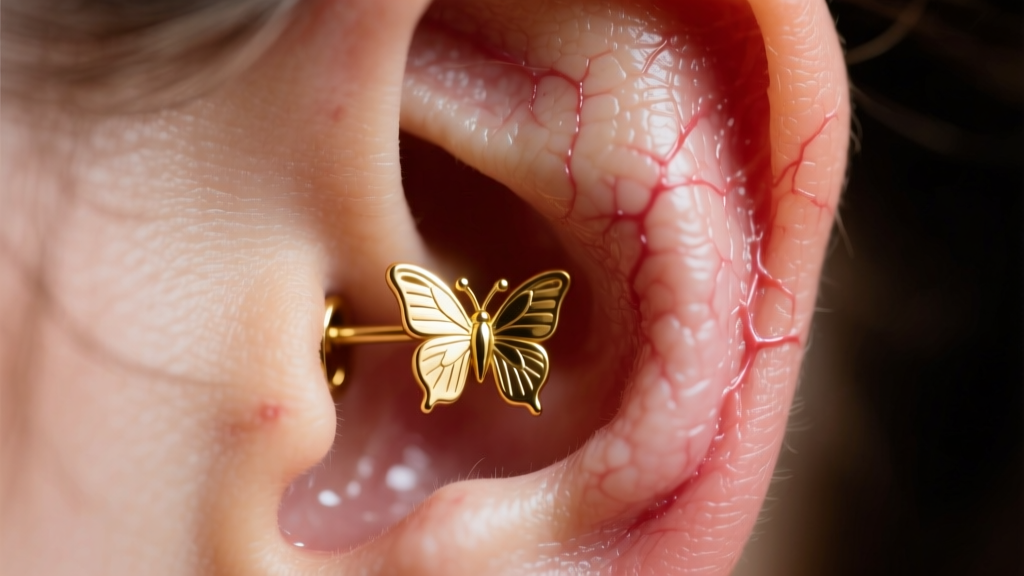
The Biomechanics of Embedded Earring Backs
Discovering that the back of earring is stuck in earlobe tissue is a stressful experience, but understanding the biomechanics of why this occurs is the first step toward safe removal. The human earlobe is primarily composed of adipose (fat) tissue, loose connective tissue, and a dense network of capillaries, lacking the rigid cartilage found in the upper ear. When a standard friction earring back—commonly known as a butterfly clutch—is fastened too tightly, it restricts local lymphatic drainage and venous return. This compression triggers localized edema (swelling).
Standard earring posts typically measure between 6mm and 8mm in length, designed for a 20-gauge (0.81mm) or 18-gauge (1.02mm) piercing fistula. If the surrounding tissue swells beyond the post's length due to trauma, allergic contact dermatitis, or sleeping on the jewelry, the epidermis begins to envelop the clutch. The body's natural healing response attempts to close the wound, effectively swallowing the foreign object. Furthermore, sebum, dead skin cells, and coagulated blood can act as a biological cement, seizing the metal components together and making manual removal nearly impossible without the proper mechanical advantage.
Hardware Failure Points: Comparing Earring Backs
| Clutch Type | Retention Mechanism | Embedding Risk | Primary Failure Mode |
|---|---|---|---|
| Butterfly Friction | Tension on post notch | High | Tissue overgrowth over the wire; slipping too far down the post. |
| Screw Back | Threaded engagement | Medium | Cross-threading from sebum buildup; overtightening strips the micro-threads. |
| La Pousette | Spring-loaded lock | Medium-High | Spring failure; tissue swelling prevents the release mechanism from being depressed. |
| Flat-Back Labret | Threadless tension / Internal thread | Very Low | Only occurs if the post is severely undersized for the initial swelling phase. |
Emergency Extraction Protocol: Step-by-Step
When the back of earring is stuck in earlobe tissue, brute force is your worst enemy. Pulling blindly will tear the delicate fistula lining, leading to scar tissue formation (hypertrophic scarring) and potential infection. Follow this clinical extraction protocol to safely free the jewelry.
Step 1: Vasoconstriction and Hygiene
Before attempting removal, you must reduce the edema. Apply a sterile, wrapped ice pack to the earlobe for 5 to 7 minutes. The cold induces vasoconstriction, shrinking the capillaries and reducing the volume of the swollen tissue. Afterward, wash your hands thoroughly with an antibacterial soap and cleanse the earlobe with a sterile 0.9% sodium chloride (saline) wound wash. Avoid using rubbing alcohol or hydrogen peroxide, as these are cytotoxic and will damage the fragile, healing cells inside the fistula.
Step 2: Strategic Lubrication
Friction is the primary barrier to removal. Apply a generous amount of a water-based, sterile lubricant to the post and the embedded clutch. Medical-grade silicone lubricants or sterile saline gel work best. Do not use petroleum jelly, baby oil, or heavy ointments. These substances are anaerobic; if they are pushed into the piercing channel during extraction, they can trap bacteria and cause a severe localized infection.
Step 3: The Tissue Depression Method
Bare fingers lack the necessary friction to grip a smooth metal clutch, especially when coated in saline or natural skin oils. Put on a pair of textured nitrile medical gloves. Place your thumb and index finger on the front of the earlobe, gently pressing the skin inward toward the post. This technique, known as tissue depression, forces the swollen skin away from the edges of the butterfly clutch, exposing the metal. Once the edge of the clutch is exposed, use your other gloved hand to grip the back and gently wiggle it side-to-side (not pulling straight out) to break the seal of dried sebum and skin cells.
Step 4: Mechanical Advantage with Hemostats
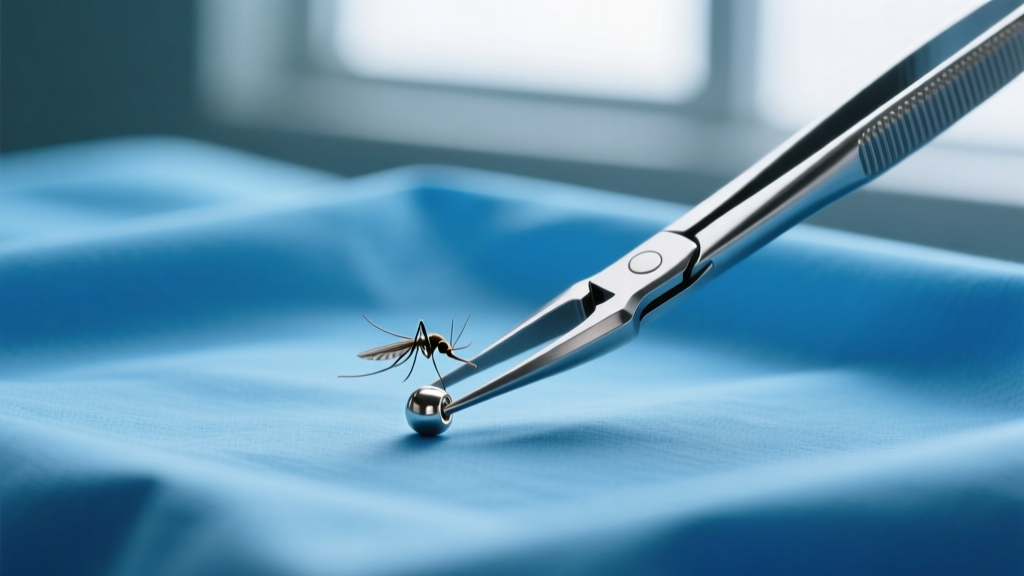
If the post is flush against the front of the earlobe and you cannot grip it, you need mechanical leverage. Using a pair of sterilized stainless steel mosquito hemostats (locking forceps), carefully clamp onto the front stud or the exposed base of the post. The hemostats provide an immovable anchor. With the front secured, use your gloved fingers to push the earlobe tissue forward, off the post, rather than pulling the back off the earlobe. If dealing with a seized screw-back, the hemostats will hold the front steady while you use a rubber-gripped tool to apply counter-clockwise torque to the back.
Metallurgy and Tissue Reaction: The Nickel Factor
A frequent underlying cause of sudden, severe swelling that traps an earring back is Allergic Contact Dermatitis (ACD). According to the Mayo Clinic, nickel allergy is one of the most common causes of skin reactions, affecting up to 36% of women. Many commercial earrings are made from 316L "surgical stainless steel," which contains between 10% and 14% nickel.
When the skin barrier is compromised by a piercing, sweat and lymphatic fluid interact with the metal, causing nickel ions (Ni2+) to leach into the tissue. This triggers a Type IV delayed hypersensitivity reaction. The resulting inflammation causes rapid, aggressive swelling that can engulf a standard 7mm post in a matter of hours. If you suspect a nickel allergy is the root cause of your embedded earring, removal is urgent to prevent tissue necrosis. Once removed, the jewelry must be discarded or replaced with verified ASTM F136 implant-grade titanium, which is entirely nickel-free and biocompatible.
When to Seek Professional Medical or Piercer Intervention
There is a distinct line between a stubborn earring back and a medical emergency. If the tissue has completely encapsulated the clutch—meaning no metal is visible on the back of the earlobe—the jewelry is fully embedded. Attempting to dig it out with needles, tweezers, or fingernails will cause severe lacerations and introduce staphylococcal bacteria into the wound.
Seek immediate assistance from an APP-certified professional piercer or a dermatologist if you observe any of the following clinical signs:
- Complete Encapsulation: The skin has healed over the back of the post.
- Signs of Infection: Purulent discharge (thick yellow/green pus), radiating heat, or red streaks extending down the neck (lymphangitis).
- Necrosis: The tissue immediately surrounding the post turns dark purple, black, or pale white, indicating a loss of blood supply.
- Severe Pain: Pain that throbs in time with your heartbeat and is unrelieved by over-the-counter NSAIDs (like Ibuprofen).
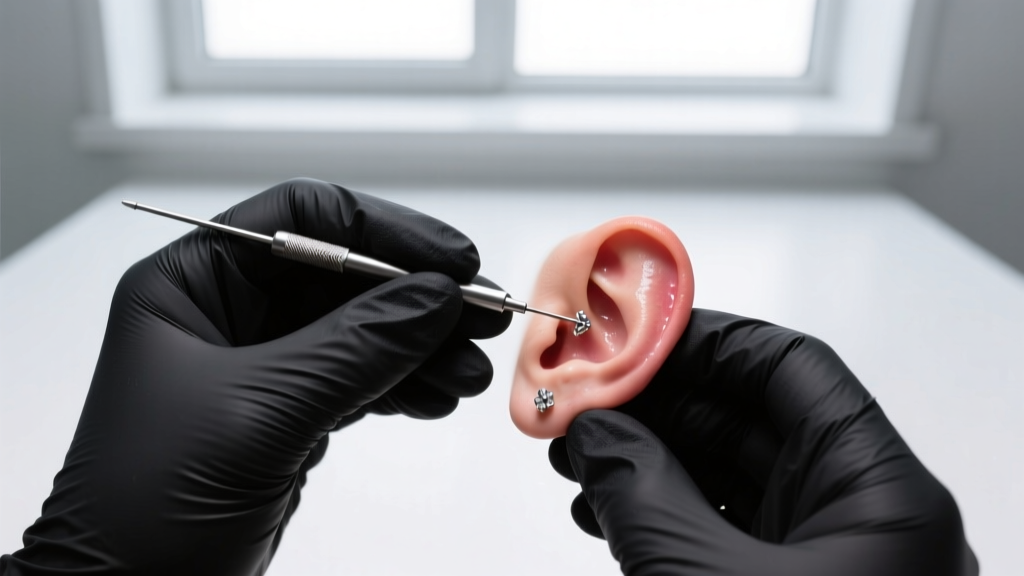
A professional piercer can often resolve partial embeddings using specialized insertion tapers and sterile dermal elevators. In cases of complete encapsulation, a minor in-office surgical procedure under local anesthesia (lidocaine) may be required to make a micro-incision and extract the hardware.
Long-Term Prevention: Upgrading Your Hardware
The most effective way to ensure you never face a situation where the back of earring is stuck in earlobe tissue again is to eliminate butterfly clutches entirely. The modern standard for both fresh and healed lobe piercings is the flat-back labret.
"Internally threaded or threadless jewelry made from implant-grade titanium (ASTM F136) is the standard of care for initial piercings and long-term wear, drastically reducing the risk of tissue trauma and allergic reactions." — Association of Professional Piercers (APP)
Threadless (push-pin) jewelry utilizes the tension of a slightly bent pin inside a hollow post to stay secure. Because there is no clutch pressing into the back of the ear, the tissue is free to breathe, swell, and move naturally. For healed earlobes, upgrading to 16-gauge (1.29mm) or 18-gauge (1.02mm) flat-back labrets with a 2mm to 3mm post length provides a secure, flush fit that makes embedding anatomically impossible. Investing in high-quality, precision-machined hardware from reputable brands like Neometal or Intrinsic Body not only elevates your aesthetic but safeguards the structural integrity of your piercing fistula for life.


