Studded Hoop Earrings: 2026 Trend & Style Analysis
Discover the 2026 trend forecast for studded hoop earrings. Explore styling frameworks, material grades, gauge sizes, and face-shape pairing guides.

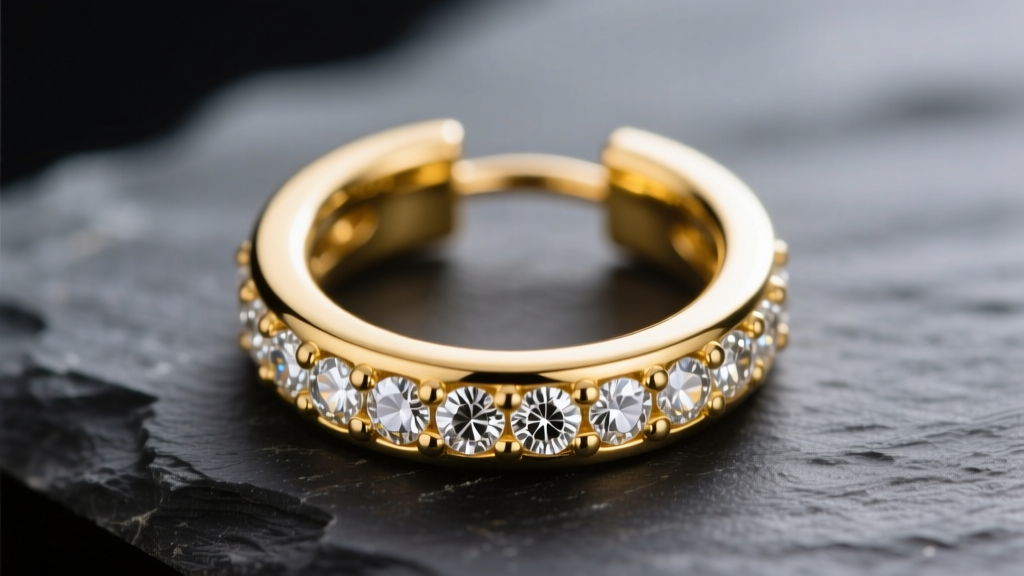
The landscape of ear styling has undergone a massive shift as we move through 2026. While minimalist, unadorned wire hoops dominated the early 2020s, the current zeitgeist heavily favors studded hoop earrings. This hybrid silhouette merges the structural continuity of a classic hoop with the focal brilliance of gemstone or metallic studs. However, navigating this trend requires more than just picking a pretty design; it demands a rigorous understanding of material science, piercing mechanics, and facial proportion frameworks.
Material Grades and Durability: What to Actually Buy
When investing in studded hoops, the base metal dictates both the longevity of the piece and the health of your piercing. The market is currently flooded with misleading terminology, making it vital to distinguish between flash-plated brass, PVD-coated steel, and solid precious metals.
Implant-Grade Titanium vs. Surgical Steel
For fresh piercings or highly reactive cartilage lobes, ASTM F136 implant-grade titanium is the undisputed standard. According to the Association of Professional Piercers, implant-grade titanium contains virtually zero nickel, eliminating the most common trigger for contact dermatitis. Conversely, standard surgical steel (often 316L) contains trace nickel and is only suitable for fully healed, non-reactive lobes. In 2026, high-end demi-fine brands are increasingly utilizing PVD (Physical Vapor Deposition) coating over 316L steel bases to offer durable, tarnish-resistant gold finishes in the $45 to $85 range.
Solid Gold and Gemstone Integration
For fine jewelry collectors, 14k and 18k solid gold remain the benchmark. When evaluating studded hoops featuring diamonds, pay close attention to the setting mechanism. Prong settings on thin hoops are notorious for snagging on hair and sweaters. The 2026 trend heavily favors bezel-set and flush-set stones, which offer a smooth profile. The Gemological Institute of America (GIA) notes that for small melee diamonds typically used in hoop studs, clarity and color grades are often downgraded to SI1/SI2 and I/J to maintain accessible price points ($350 to $800) without sacrificing visible brilliance.
| Material | Grade/Standard | Best Application | 2026 Price Range |
|---|---|---|---|
| 316L Stainless Steel | Commercial / PVD Coated | Healed lobes, fashion trends | $35 - $90 |
| Titanium | ASTM F136 Implant-Grade | Cartilage, sensitive ears, fresh piercings | $60 - $150 |
| 14k Solid Gold | 58.5% Pure Gold Alloy | Everyday wear, heirloom pieces | $250 - $600 |
| Platinum | 95% Pure Platinum | High-end diamond studded hoops | $1,200+ |
Gauge Sizing and Piercing Placement Mechanics

A critical failure point in studded hoop earrings is selecting the wrong gauge (wire thickness) for the specific piercing placement. The added weight of the studs alters the center of gravity, putting uneven stress on the fistula (the piercing hole).
Lobe vs. Cartilage Requirements
- Standard Lobe (20g to 18g): For traditional earlobe piercings, an 18-gauge (1.0mm) or 20-gauge (0.8mm) wire is standard. Because lobe tissue is soft and pliable, it can accommodate thinner wires even with the added weight of small cubic zirconia or sapphire studs.
- Helix and Cartilage (16g to 14g): Cartilage is rigid and prone to migration. If you are threading a studded hoop through a helix or forward helix piercing, you must use a 16-gauge (1.2mm) or 14-gauge (1.6mm) wire. Using a thin 20g wire with heavy studs in cartilage will result in the cheese cutter effect, where the wire slowly slices through the tissue due to localized pressure.
Furthermore, the internal diameter of the hoop must account for the swelling of the tissue and the thickness of the studs. A standard 15mm huggie hoop might fit a lobe perfectly, but a cartilage piercing typically requires a minimum 20mm diameter to prevent the studs from pressing into the side of the ear.
Face Shape and Proportion Framework
Studded hoop earrings are not a monolith; their visual weight can dramatically alter facial proportions. In 2026, stylists are moving away from the one-size-fits-all approach, instead utilizing specific hoop diameters and stud distributions to balance facial geometry.
- Round Faces: Avoid small, perfectly circular studded huggies, which can emphasize facial width. Instead, opt for elongated drop hoops (30mm to 40mm in length) where the studs are concentrated at the bottom third of the earring. This draws the eye downward, creating an illusion of length.
- Square Faces: Angular jawlines are beautifully softened by medium-sized (20mm to 25mm) circular hoops featuring a continuous channel-set stud pattern. The continuous sparkle creates a curved visual line that offsets sharp bone structure.
- Heart-Shaped Faces: With a wider forehead and narrower chin, the goal is to add volume at the jawline. Bottom-heavy studded hoops, or teardrop-shaped hoops with clustered gemstone studs at the base, provide the necessary visual counterbalance.
- Oval Faces: The most versatile canvas. Oval faces can pull off the ultra-trendy micro-huggies (10mm to 12mm) completely encrusted in pavé studs, sitting tightly against the earlobe for a curated, subtle flash of light.
Styling Forecast: The Asymmetrical Ear Curation
The most dominant styling trend for studded hoops in 2026 is the asymmetrical cluster. Rather than wearing identical hoops in every piercing, curators are mixing textures, metals, and stud sizes across a single ear. A highly sought-after configuration involves pairing a thick, 14k gold 12mm studded huggie in the primary lobe piercing with a delicate, 18g titanium 20mm hoop featuring a single floating diamond stud in the upper helix.
The modern ear curation is about deliberate imbalance. Mixing the heavy, light-catching texture of a fully studded lobe hoop with the negative space of a thin, single-stud cartilage hoop creates a dynamic, architectural look that feels deeply personal. — Editorial Direction, Jewel Style Radar Trend Report 2026
This approach allows consumers to invest in one high-quality, heavily studded anchor piece for the lobe, while utilizing more affordable, minimalist single-stud hoops for secondary piercings.
Real-World Troubleshooting: Snagging, Warping, and Clasp Failure
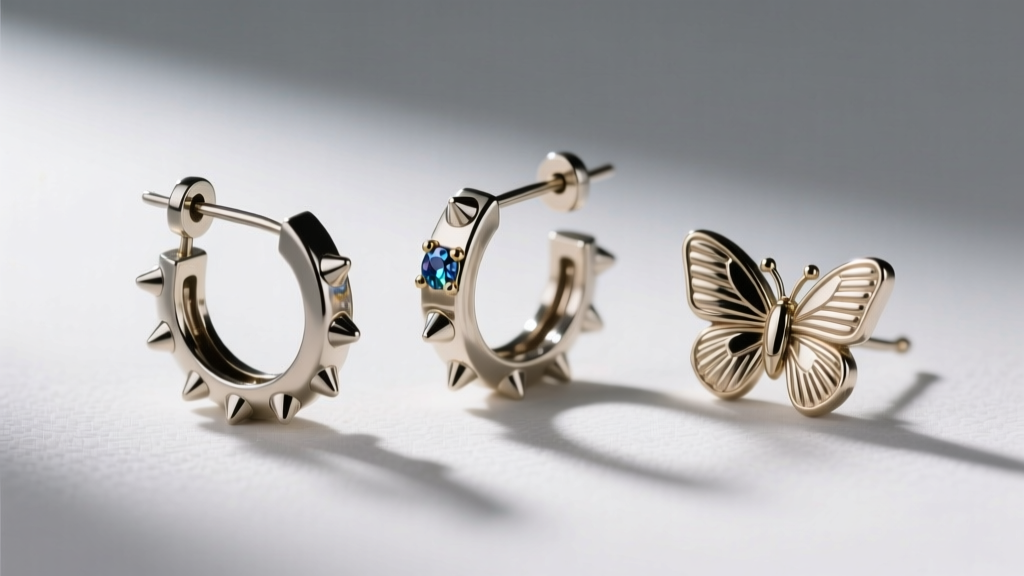
Despite their aesthetic appeal, studded hoop earrings introduce unique mechanical vulnerabilities. Understanding these failure modes will save you from lost jewelry and damaged piercings.
The Warping Issue
When heavy gemstone studs are soldered onto a thin, continuous wire hoop, the metal can warp into an oval shape under the stress of daily wear. To prevent this, look for hoops constructed with a tube wire or D-wire profile, which offers superior structural rigidity compared to standard round wire. Alternatively, brands are increasingly using laser-welded reinforcement joints directly behind the stud settings to maintain the perfect circular geometry.
Closure Mechanisms and Security
The clasp is the weakest link on any hoop. For studded designs, the weight distribution can cause traditional latch-backs to slowly pull open. Hinged snap closures with a satisfying click are currently the industry standard for demi-fine lobe hoops, offering a secure lock. For cartilage piercings, seamless clickers (where the decorative studded segment hinges open and clicks securely into the opposite end of the hoop) are vastly superior to friction backs, which can easily be pulled off by hairbrushes or pillowcases.
Ultimately, mastering the studded hoop trend in 2026 requires looking past the sparkle. By prioritizing implant-grade materials for sensitive piercings, respecting the physics of gauge thickness, and strategically mapping stud placement to your unique facial geometry, you can elevate this trend from a fleeting fashion moment to a permanent, sophisticated staple in your jewelry rotation.


