Metallurgy & Gems: The Golden Earring Twilight Effect
Explore the metallurgy and gemology behind the golden earring twilight aesthetic, from dusk-hued 14k alloys to pleochroic sapphire optics.

The Physics of the Golden Earring Twilight Aesthetic
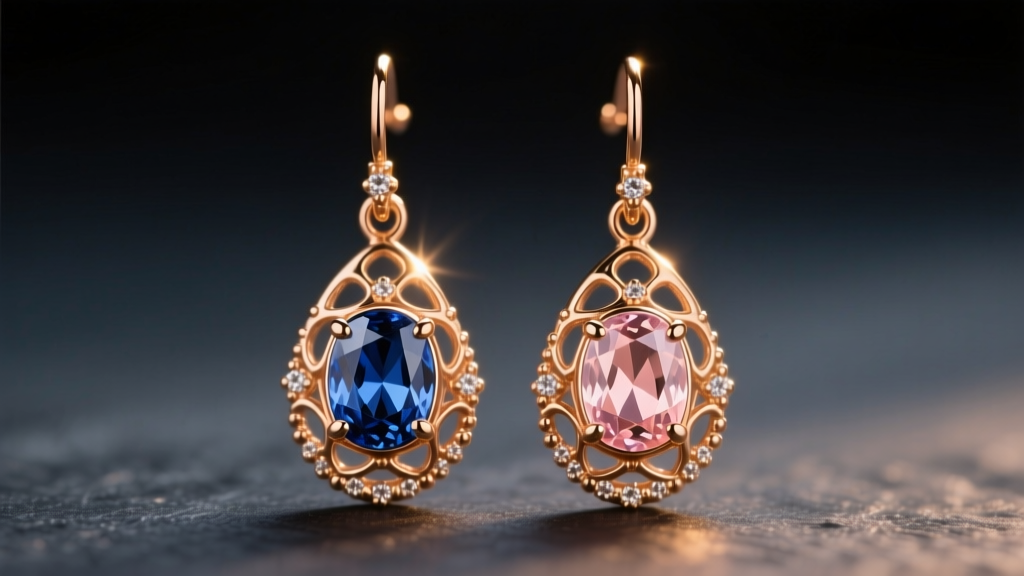
The phrase "golden earring twilight" is frequently used in high jewelry circles to describe a highly specific optical phenomenon. It refers to the way certain gold alloys and gemstone pairings interact with low-lux, warm-temperature lighting conditions—specifically the civil and nautical twilight hours when ambient color temperatures drop to between 3000K and 4000K. Unlike standard yellow gold, which can appear flat or overly brassy in dusk lighting, a true twilight-optimized earring leverages specific metallurgical ratios and gemological pleochroism to create a glowing, ember-like effect.
Understanding this effect requires a deep dive into both material science and optical physics. When the sun dips below the horizon, Rayleigh scattering filters out shorter blue wavelengths, leaving predominantly red, orange, and amber light. Jewelry engineered for this environment must be designed to absorb and reflect these specific wavelengths, maximizing visual contrast against the deepening shadows of evening.
Rayleigh Scattering and Low-Lux Environments
Standard 18k yellow gold (typically 75% Au, 12.5% Cu, 12.5% Ag) relies heavily on silver to dilute the gold's natural intensity, resulting in a pale yellow that requires high-lux, broad-spectrum light (like midday sun or 5000K LED studio lighting) to achieve maximum brilliance. In twilight conditions, this alloy loses its fire. The "twilight" aesthetic demands an alloy that thrives in low-lux amber light, necessitating a shift in the copper-to-silver ratio and the strategic use of gemstones that exhibit dichroism or pleochroism.
Metallurgical Formulations: Engineering the Dusk Alloy
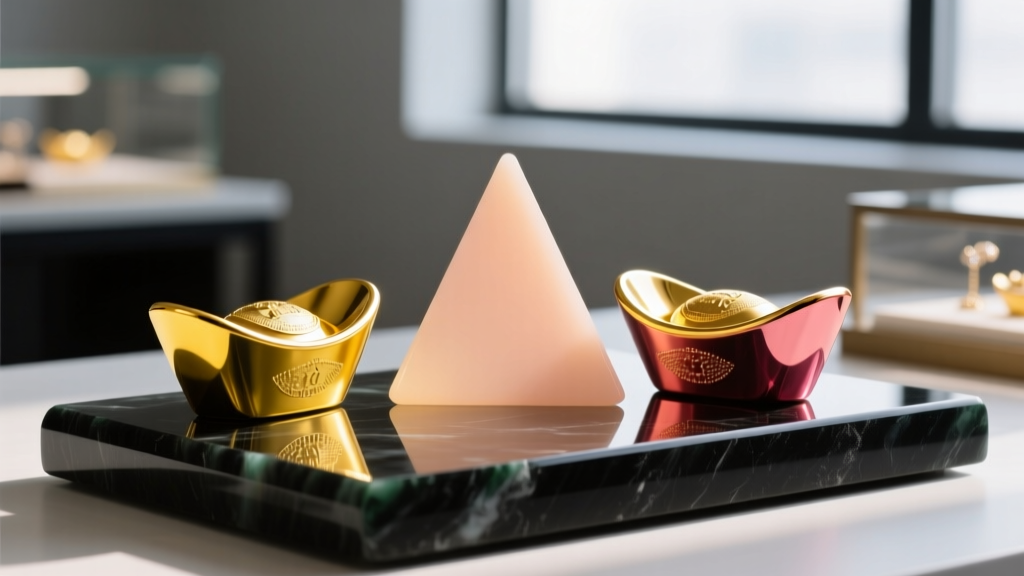
To achieve the quintessential golden earring twilight hue, master jewelers formulate a specialized 14k alloy that sits precisely between traditional yellow and rose gold. This "dusk" or "peach-bronze" alloy is engineered to capture the warm ambient light of evening while maintaining structural integrity for intricate earring components like French hooks and tension bezels.
Vickers Hardness and Workability
The exact formulation for a 14k Twilight Dusk Alloy typically consists of 58.5% pure gold, 24.0% copper, and 17.5% silver. The elevated copper content (compared to the 16.5% in standard yellow gold) shifts the reflected light spectrum toward the warm amber end, perfectly matching twilight conditions. However, copper also increases the Vickers Hardness (HV) of the alloy. While standard 14k yellow gold sits around 110-120 HV, the twilight dusk alloy reaches 135-145 HV. This increased hardness is highly advantageous for earring posts and clutch mechanisms, reducing the risk of bending, but it requires careful annealing during the fabrication of complex drop earring chains or filigree elements.
| Property | Standard 14k Yellow | 14k Twilight Dusk Alloy | Standard 14k Rose |
|---|---|---|---|
| Gold (Au) | 58.5% | 58.5% | 58.5% |
| Copper (Cu) | 16.5% | 24.0% | 33.0% |
| Silver (Ag) | 25.0% | 17.5% | 8.5% |
| Vickers Hardness (HV) | 110-120 | 135-145 | 140-150 |
| Optical Temp Response | Muted in Low Lux | Absorbs Blue/Reflects Amber | Overpowering Red/Orange |
Gemological Pairings: Pleochroism in Twilight Sapphires
The metal is only half the equation. The golden earring twilight effect is most dramatically amplified when paired with "twilight sapphires"—a trade term for parti-color (bicolor) sapphires that exhibit distinct blue, purple, and orange/gold zoning. According to the Gemological Institute of America (GIA), corundum (sapphire) is strongly pleochroic, meaning it shows different colors when viewed along different crystallographic axes.
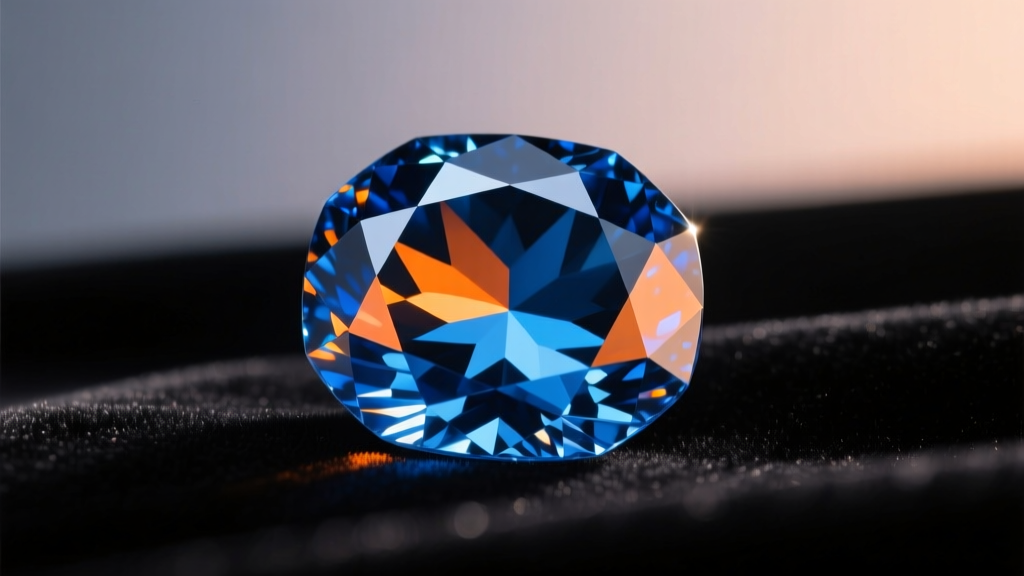
For a twilight earring, the lapidary must orient the gemstone's table facet at a precise angle to the c-axis. This ensures that the warm orange/gold zones face outward, catching the fading sunlight, while the deeper blue/purple zones remain visible in the pavilion, providing a high-contrast backdrop that makes the gold alloy appear to glow. Montana Yogo sapphires and certain Australian parti-sapphires are the premier choices for this, boasting a refractive index (RI) of 1.76 to 1.77, which ensures excellent light return even as ambient lux levels plummet.
Structural Hardware: Gauge and Clutch Specifications
Earrings designed for the twilight aesthetic often feature substantial drop elements or heavy geometric studs to maximize the surface area of the dusk alloy. This weight necessitates rigorous hardware specifications to prevent lobe tearing and ensure security.
- Post Gauge: For twilight studs exceeding 3.5 grams, standard 20-gauge (0.8mm) posts are insufficient. An 18-gauge (1.0mm) or 16-gauge (1.2mm) post is required to resist shear stress and bending.
- Clutch Mechanisms: Friction backs (butterfly clutches) are prone to failure on heavy drops due to the gradual wearing of the metal groove. La Pousette clutches, which utilize a mechanical spring-loaded locking mechanism, are mandatory for securing heavy twilight drop earrings.
- French Hook Wire: Drop earrings should utilize 16-gauge (1.2mm) or 14-gauge (1.6mm) wire for the ear wire, with a minimum 15mm drop length to clear the earlobe and allow the gemstone to catch directional light.
Surface Finishes: Satin vs. High Polish in Low Light
The surface texture of the gold dramatically alters its twilight performance. A mirror-polished finish creates specular highlights, which can result in harsh, blown-out reflections when catching the final rays of the sun. Conversely, a brushed or satin finish diffuses light, creating a soft, continuous glow that mimics the ambient light of dusk. Expert jewelers often employ a dual-finish technique: a satin-brushed shank or hoop body paired with a high-polish bezel. This structural diversity ensures the earring maintains a soft twilight aura while the polished bezel acts as a reflector, throwing light back into the pavilion of the twilight sapphire.
Sourcing and Authenticating Twilight Collections
When sourcing pieces that embody the golden earring twilight aesthetic, buyers must look beyond marketing terminology and verify the metallurgical and gemological data. Reputable fine jewelers and the World Gold Council emphasize the importance of transparent alloy disclosure. Request a gemological report for any parti-sapphire to verify the absence of beryllium diffusion treatments, which can artificially induce the orange/gold hues necessary for the twilight effect. True twilight sapphires derive their color from natural iron and titanium inclusions, ensuring the optical phenomena remain stable and authentic under all lighting conditions.
"The true test of a twilight-optimized earring is not how it looks under a 5000K grading lamp, but how it behaves when the sun dips below the horizon and the world turns to amber." — Master Lapidary & Metallurgy Guild
By understanding the precise copper-to-silver ratios, the crystallographic orientation of pleochroic gemstones, and the structural requirements of heavy-gauge hardware, collectors and designers can master the golden earring twilight effect, creating pieces that come alive exactly when the day ends.


