How to Style Bad Bunny Earrings: Step-by-Step Guide
Learn how to curate and style Bad Bunny earrings with our step-by-step guide. Master pearl, cross, and cuff placements for an iconic 2026 ear stack.

The Benito Effect: Decoding the Bad Bunny Earring Stack
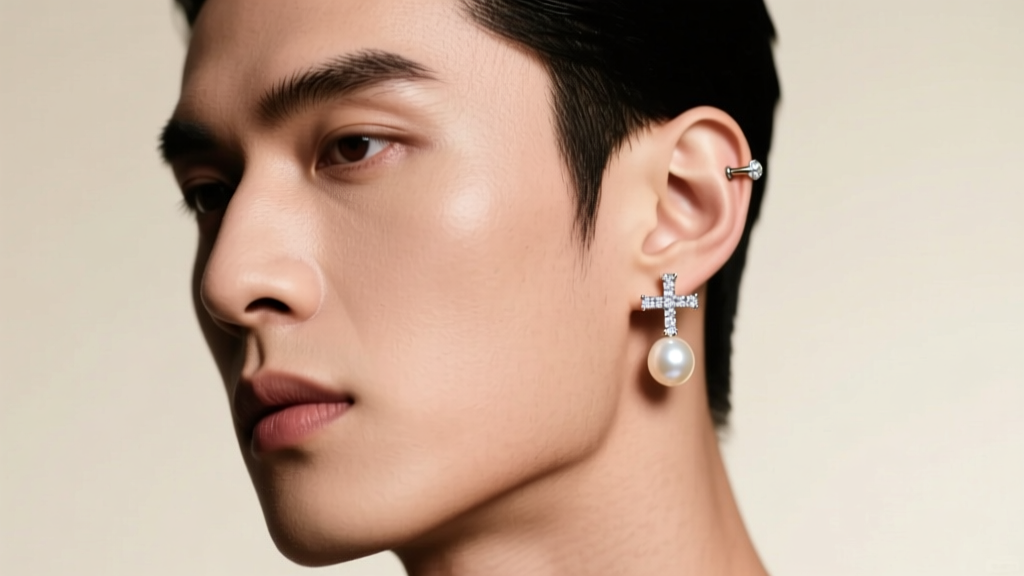
Benito Antonio Martínez Ocasio—globally known as Bad Bunny—has fundamentally rewired the cultural conversation around men's and gender-fluid jewelry. What began as a rebellious stylistic choice has evolved into a permanent fixture in mainstream fashion. As we navigate the style landscape of 2026, the "Bad Bunny earring" aesthetic remains a dominant force, characterized by an unapologetic mix of organic pearls, iced-out diamond crosses, and structural ear cuffs. This guide provides a meticulous, step-by-step framework to curate, pierce, and style an ear stack that channels this iconic look, grounded in professional jewelry standards and anatomical precision.
Step 1: Map Your Piercing Placements and Gauges
Before purchasing jewelry, you must understand the anatomical canvas. Bad Bunny’s ear stacks rely on a strategic distribution of visual weight across multiple piercing sites. Below is the standard gauge and placement framework utilized by professional piercers to achieve this specific aesthetic.
| Piercing Placement | Standard Gauge | Recommended Jewelry Type | Healing Time |
|---|---|---|---|
| Standard Lobe | 20g - 18g (0.8-1.0mm) | Pearl drops, diamond studs | 6 - 8 weeks |
| Upper Lobe | 18g - 16g (1.0-1.2mm) | Huggie hoops, small chains | 8 - 12 weeks |
| Helix (Cartilage) | 16g - 14g (1.2-1.6mm) | Cross studs, ear cuffs | 4 - 8 months |
| Tragus | 16g (1.2mm) | Tiny bezel-set diamonds | 3 - 6 months |
According to the Association of Professional Piercers (APP), always opt for implant-grade titanium (ASTM F136) for initial piercings. Once fully healed, you can transition to the 14k or 18k solid gold pieces required for the high-end Bad Bunny aesthetic.
Step 2: Select the Core "Bad Bunny" Earring Styles
The Signature Pearl Drop
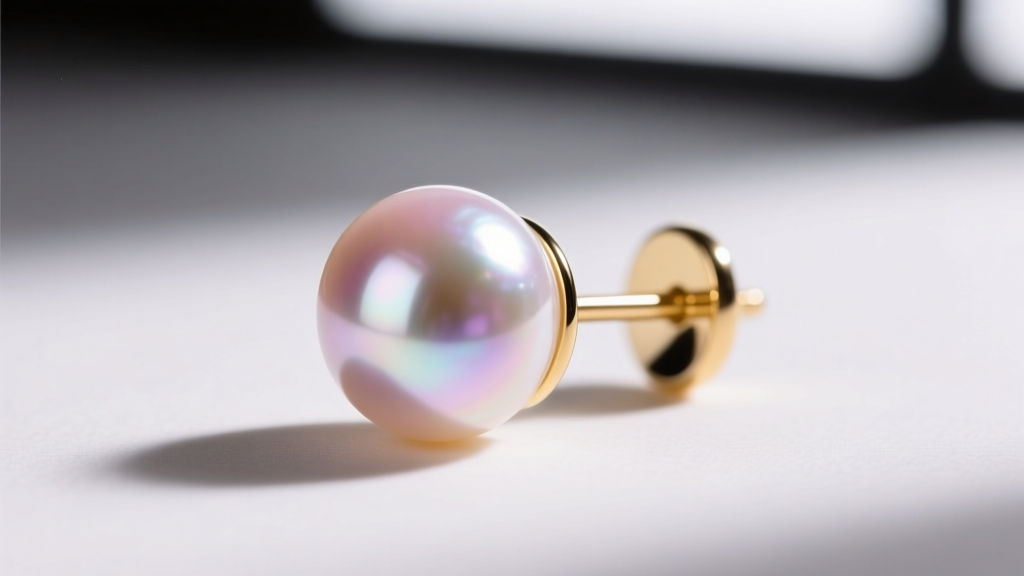
The cornerstone of the Benito look is the pearl drop earring. Bad Bunny frequently favors high-luster, round or slightly baroque pearls suspended from minimal gold hardware. To replicate this, look for an 8mm to 11mm pearl. While Akoya pearls offer a mirror-like luster (typically priced between $200 and $600 per pair), high-grade AAA freshwater pearls provide a nearly identical visual impact at a more accessible $50 to $120 price point. The drop should hang approximately 1.5 inches below the lobe to create the necessary vertical elongation.
The Diamond Cross and Huggie Combo
Contrasting the organic softness of pearls is the structural brilliance of diamond crosses. For the upper lobe or helix, a 10mm to 14mm pavé diamond cross in 14k white or yellow gold is essential. In 2026, lab-grown diamonds (VVS1 clarity, F-G color) are the industry standard for these pieces, offering exceptional fire without the $2,500+ natural diamond markup. Pair this with a 12mm 14k gold huggie hoop in the lobe directly beneath it to create a cohesive, interconnected stack.
The Mid-Helix Ear Cuff
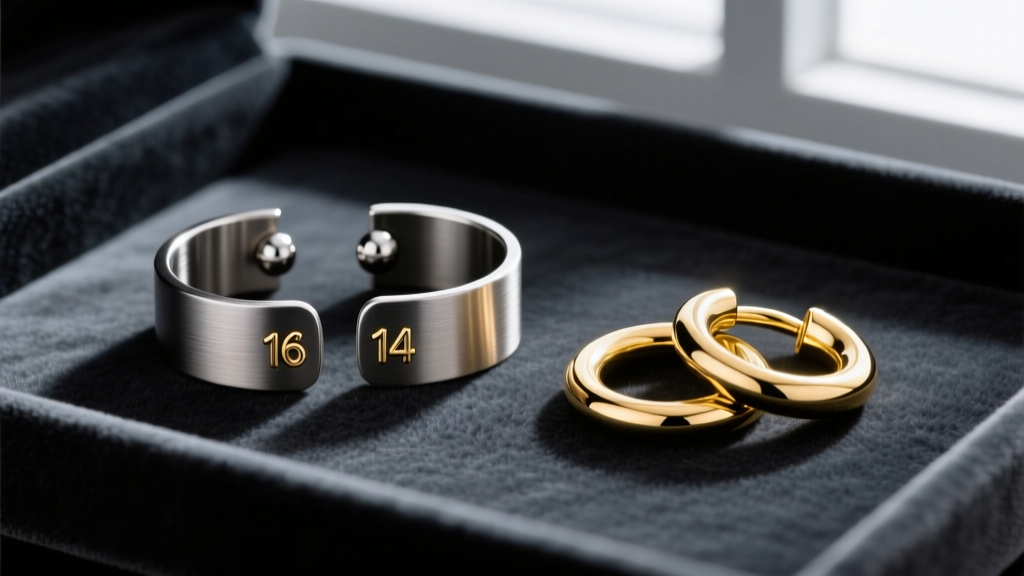
For those unwilling to commit to cartilage piercings, the ear cuff is a vital tool. Bad Bunny often utilizes chunky, textured gold or diamond-encrusted cuffs on the mid-helix. Ensure your cuff has an adjustable tension band; it should slide over the thinnest part of the helix and sit snugly without cutting off circulation. A 16-gauge thickness equivalent provides the best grip and visual presence.
Step 3: Material Selection and Skin Sensitivity
Curating a stack that you can wear daily requires strict attention to metallurgy. The market is flooded with "gold-plated" brass or copper alloys that will oxidize, turn your skin green, and trigger contact dermatitis.
- Solid 14k/18k Gold: The gold standard for healed piercings. When selecting gold, understand that 14k gold consists of 58.5% pure gold alloyed with metals like copper, silver, and zinc. This specific metallurgical blend provides the tensile strength necessary to prevent huggie hoops from warping during daily wear, a common failure mode in softer 22k or 24k pure gold pieces.
- Implant-Grade Titanium (ASTM F136): Completely nickel-free and biocompatible. Essential if you are actively stretching a piercing or healing a new cartilage placement.
- 316L Surgical Steel: A budget-friendly alternative for healed lobes, though it contains trace amounts of nickel. Avoid if you have known metal sensitivities.
Step 4: Balancing the Ear Stack for Your Face Shape
Bad Bunny possesses a broader, slightly rounded jawline. His stylists deliberately utilize long pearl drops and vertical dangles to draw the eye downward, elongating his facial proportions. When building your own stack, apply these geometric principles:
Rule of Verticality: If you have a round or square face shape, prioritize vertical drop earrings (1.5 to 2.5 inches) and avoid wide, chunky hoops that add horizontal width. If you have an oblong face, reverse this: opt for wider huggies and horizontal ear cuffs to add necessary width.
Furthermore, maintain the "Rule of Thirds" in your stack. The visual weight should be heaviest at the bottom (the large pearl or diamond drop), medium in the middle (the huggie hoop), and lightest at the top (a tiny tragus stud or delicate helix cuff). This prevents the ear from looking top-heavy and cluttered.
Hair styling plays an equally critical role in this aesthetic. The Bad Bunny look relies on unobstructed visibility of the cartilage and lobe placements. If you have longer hair, utilizing a slicked-back style, a tight fade, or a buzz cut ensures the vertical lines of the pearl drops are not lost in visual clutter. The negative space around the ear is just as important as the jewelry itself.
Maintenance: Cleaning Pearls vs. Diamonds
A critical mistake many make is treating all jewelry materials equally. The Bad Bunny stack combines organic gems (pearls) with crystalline structures (diamonds), requiring vastly different maintenance protocols.
For Diamonds and Gold: Use an ultrasonic cleaner or a soft-bristled toothbrush with warm water and a few drops of mild dish soap. This removes sebum and dead skin cells that dull the diamond's light return. As noted by the Gemological Institute of America (GIA), regular cleaning maintains the refractive index visibility of the stone.
For Pearls: Never use ultrasonic cleaners, steam, or harsh chemicals on pearls. Pearls are organic, porous gems with a Mohs hardness of just 2.5 to 3.0. Wipe them gently with a damp microfiber cloth after every wear to remove acidic skin oils, which can degrade the nacre over time and destroy the luster. Always put your pearl earrings on *after* applying cologne, hairspray, and skincare products.
Final Styling Thoughts
Emulating the Bad Bunny earring aesthetic is not about merely copying a celebrity; it is about embracing the juxtaposition of masculine and feminine design codes. By meticulously selecting your gauge sizes, investing in solid 14k gold and high-luster pearls, and respecting the anatomical geometry of your face shape, you can curate an ear stack that is both culturally resonant and structurally impeccable.


