How to Style and Care for Handmade Earth Earrings
Learn how to select, style, and maintain handmade earth earrings. Expert guide on polymer clay, terracotta, wood, and hypoallergenic hardware.

The Rise of Artisan Earth Earrings
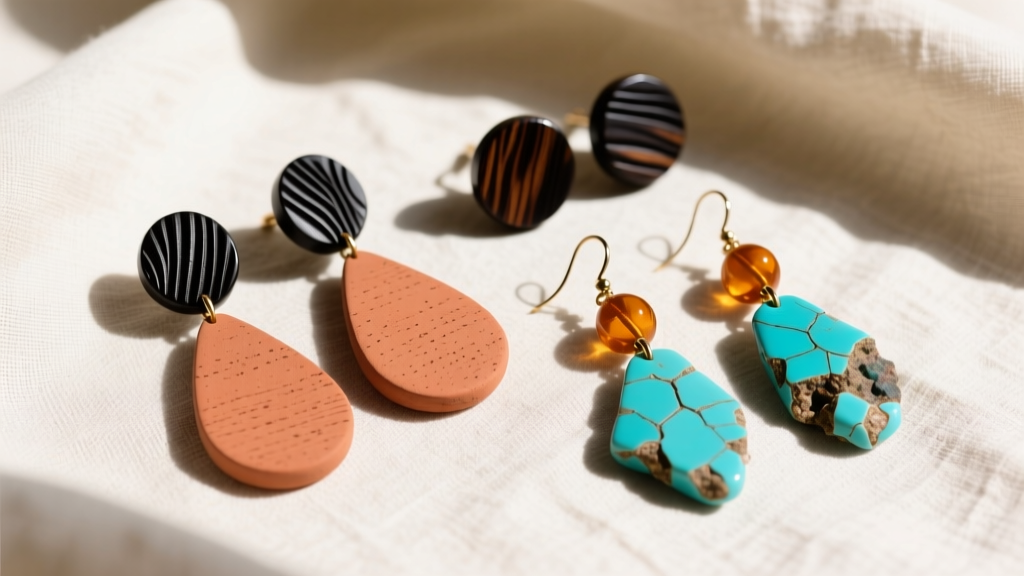
Earth earrings represent a return to grounded, organic aesthetics. Unlike mass-produced stamped metals, handmade earth earrings utilize natural or earth-derived materials like polymer clay, raw terracotta, carved hardwoods, and unpolished porous stones. As the jewelry market in 2026 continues to shift toward sustainable, slow-fashion accessories, understanding how to properly select, style, and maintain these organic pieces is critical. Because these materials behave fundamentally differently than gold or silver, they require specific hardware pairings and maintenance routines to prevent degradation, lobe tearing, and material snapping.
Step 1: Selecting the Right Earth Material
Not all earth-inspired materials share the same structural integrity. When purchasing or crafting earth earrings, you must evaluate the material's porosity, weight, and flexibility. A common mistake is treating delicate terracotta with the same wear-and-tear expectations as dense ebony wood. Below is a decision framework for choosing your primary material based on lifestyle and durability needs.
| Material | Avg. Weight (per earring) | Porosity & Fragility | Typical Artisan Price Range | Best For |
|---|---|---|---|---|
| Polymer Clay | 1.5g - 4g | Low porosity; flexible but snaps if bent at the drill hole. | $22 - $55 | Everyday wear, bold geometric shapes, lightweight dangles. |
| Raw Terracotta | 5g - 12g | Highly porous; shatters on impact. Requires a polyurethane dip. | $35 - $85 | Occasional wear, matte earthy textures, statement studs. |
| Carved Hardwood (Ebony/Walnut) | 3g - 8g | Non-porous when oiled; highly durable but sensitive to prolonged water exposure. | $55 - $140 | Minimalist drops, carved hoops, sensitive lobes. |
| Porous Stone (Turquoise/Jasper) | 8g - 15g | Micro-porous; absorbs oils and lotions, leading to matrix discoloration. | $75 - $180 | Special occasion dangles, bohemian layering. |
Step 2: Sizing Hypoallergenic Hardware for Heavy Drops
The most frequent failure mode for handmade earth earrings is hardware mismatch. Artisans typically drill holes in clay and wood using 1.5mm to 2.0mm drill bits. However, standard commercial earring posts are 20-gauge (0.81mm). When you insert a thin 20G wire into a 1.5mm clay hole, the earring will constantly wobble, tilt forward, and eventually cause the clay to crack around the stress point.
The Flat-Back Labret Solution
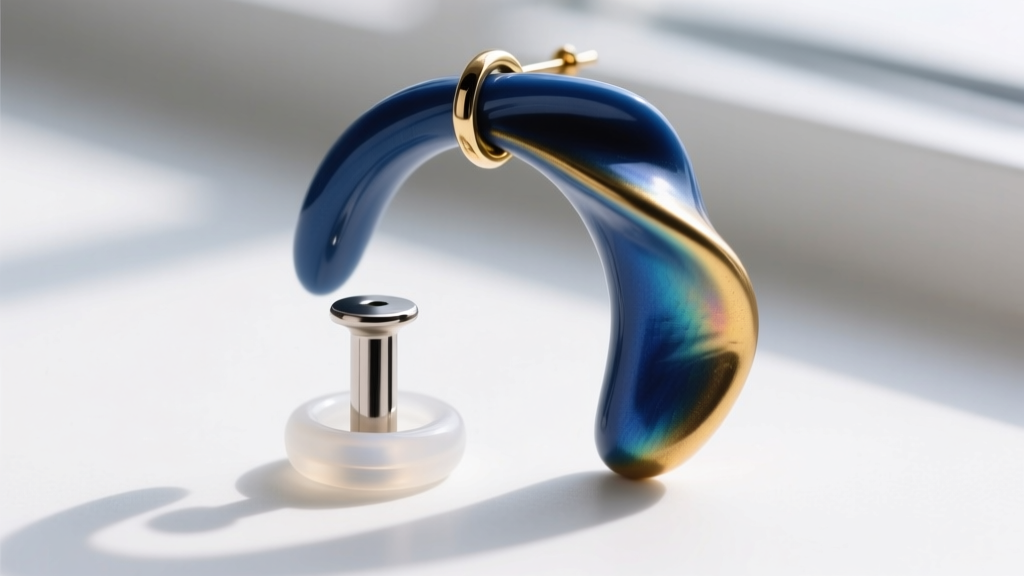
To stabilize heavy earth drops, abandon traditional butterfly-back wires. Instead, use 16-gauge (1.2mm) or 14-gauge (1.6mm) implant-grade titanium flat-back labrets. According to the Association of Professional Piercers (APP), ASTM F136 implant-grade titanium is the gold standard for biocompatibility, virtually eliminating nickel allergies. The flat disc sits flush against the back of the earlobe, distributing the weight of a 10-gram terracotta drop evenly across the tissue, preventing the dreaded 'droopy lobe' effect. Secure the front piece with a silicone O-ring rather than a metal clutch to grip the thicker post without crushing the clay.
Step 3: Styling Earth Tones for Your Face Shape
Earth earrings often feature bold, organic silhouettes that can dramatically alter facial proportions. Styling them requires an understanding of visual weight and geometric contrast.
Round and Oval Faces
For round faces, the goal is elongation. Avoid large, circular polymer clay hoops or wide terracotta discs, which will emphasize facial width. Instead, opt for long, angular earth drops—such as a 2.5-inch carved walnut teardrop or a linear jasper dangle. The vertical lines draw the eye downward, creating an illusion of length. Oval faces possess balanced proportions and can comfortably carry the visual weight of wide, geometric clay arches and asymmetrical wood cuffs.
Square and Heart-Shaped Faces
Square faces benefit from softening harsh jawlines. Choose earth earrings with curved, organic edges, like raw, unpolished river-stone drops or circular terracotta huggies. Avoid sharp, triangular clay dangles that mimic the jaw's natural angles. Heart-shaped faces (wider forehead, narrow chin) require bottom-heavy visual weight. Look for inverted triangle wood carvings or cluster earrings featuring heavy turquoise beads at the base to balance the lower half of the face.

Step 4: The Ultimate Cleaning and Maintenance Routine
Because earth materials lack the non-reactive permanence of precious metals, they require a tailored maintenance protocol. Treating porous stones or raw wood with standard jewelry cleaners will permanently ruin the piece.
Polymer Clay and Sealed Terracotta
Polymer clay is essentially a PVC-based plastic. It is highly susceptible to staining from foundation, self-tanner, and denim transfer. Never submerge polymer clay in water. Instead, wipe the surface gently with a fragrance-free baby wipe or a microfiber cloth dampened with 90% isopropyl alcohol. If you are crafting your own earth earrings, always seal the raw clay with a coat of UV-curing resin to create an impermeable, glass-like barrier against cosmetic oils.
Carved Hardwoods (Ebony, Maple, Walnut)
Wood is a living material that dries out and micro-fractures in low-humidity environments. Every 6 to 8 weeks, buff your wooden earth earrings with a drop of pure jojoba oil or food-grade mineral oil. Avoid olive oil, which can turn rancid over time and develop a sour odor against the warmth of the skin. Store wood earrings in a breathable cotton pouch, never in an airtight plastic bag where trapped moisture can invite mold growth.
Porous Stones (Turquoise, Lapis Lazuli, Jasper)
The Gemological Institute of America (GIA) explicitly warns against using ultrasonic cleaners or steamers on porous, earth-mined stones. Turquoise, for example, is often stabilized with resins or waxes; ultrasonic vibrations will shatter the stone's internal matrix, while harsh chemicals will strip the stabilizing agents, leaving the stone chalky and brittle. Clean porous earth stones using only a soft, dry, untreated jeweler's cloth. Apply all perfumes, hairsprays, and lotions at least 15 minutes before putting on your stone earrings to prevent chemical absorption into the stone's natural fissures.
Final Thoughts on Sustainable Ear Styling
Mastering the art of wearing earth earrings is about respecting the physical limitations of natural materials. By pairing heavy terracotta and wood with thick-gauge titanium hardware, matching organic silhouettes to your specific facial geometry, and adhering to strict, material-specific cleaning protocols, you ensure that your artisan pieces remain vibrant and structurally sound for years. Earth earrings are not just accessories; they are wearable pieces of nature that demand mindful curation.


