How to Style, Clean, and Wear Black Tassel Earrings
Learn how to style, clean, and maintain black tassel earrings. Discover face-shape matching, thread types, and hardware weight tips.


Black tassel earrings remain a definitive power accessory in any jewelry wardrobe. Whether you are navigating a minimalist corporate environment or attending an evening gala, the fluid movement and light-absorbing depth of a black tassel provide an unmatched blend of drama and sophistication. However, as we move through 2026, the styling of tassel earrings has evolved beyond simple bohemian tropes into architectural, structured pairings that require a nuanced understanding of proportion, material science, and proper maintenance.
In this comprehensive guide, we will break down the exact anatomy of high-quality black tassel earrings, provide a step-by-step framework for matching tassel lengths to your specific face shape, and detail the professional restoration methods required to keep delicate threads looking pristine.
The Anatomy of Black Tassel Earrings: Materials and Hardware
Not all tassels are created equal. The visual impact and longevity of your earrings depend entirely on the thread composition and the structural integrity of the hardware. According to textile experts and jewelry historians, the dye absorption rate of the thread dictates how 'true' the black color appears under varying lighting conditions.
Thread Composition Matrix
| Material | Luster Level | Drape & Movement | Dye Absorption | Best Use Case |
|---|---|---|---|---|
| Rayon (Viscose) | High, silky sheen | Heavy, fluid pendulum | Excellent (Pitch Black) | Luxury evening wear, statement pieces |
| Silk | Moderate, natural glow | Light, airy sway | Good (Can look charcoal) | Daytime office wear, subtle elegance |
| Cotton | Matte, zero shine | Stiff, structured | Fair (Often faded black) | Casual, bohemian, or streetwear styles |
| Metallic Thread | Reflective, sparkling | Stiff, wire-like | N/A (Dyed core) | Avant-garde fashion, editorial shoots |
Rayon is the undisputed industry standard for luxury black tassels. Its semi-synthetic nature allows it to absorb deep, rich dyes without the plastic-like reflectivity that cheap synthetic polyester exhibits. When shopping, always verify the thread origin; Vogue frequently highlights rayon-viscose blends in their accessory roundups for their superior drape and color retention.
Selecting the Right Gauge and Hook Weight
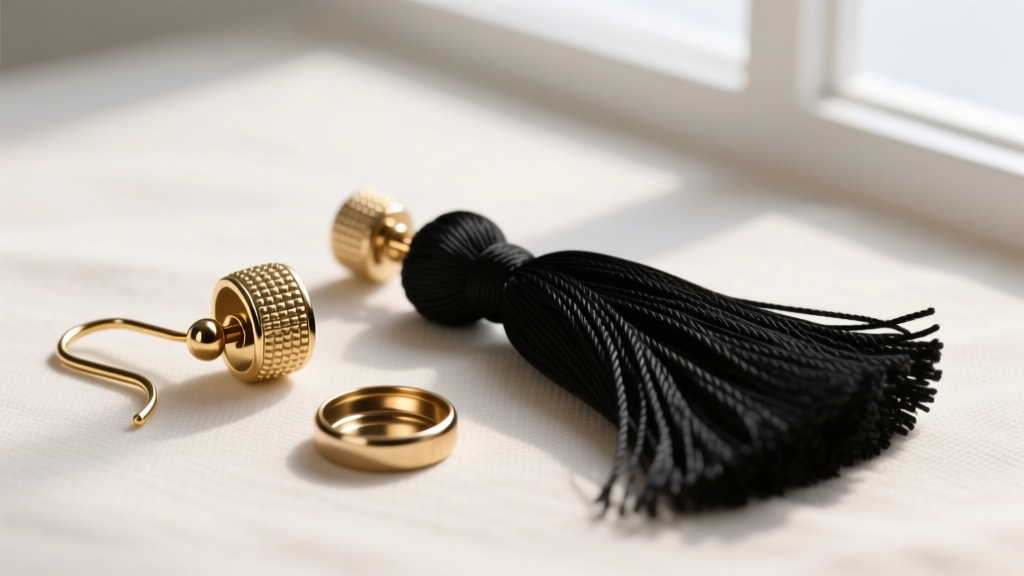
A common failure point in tassel earrings is hardware fatigue. A standard 2.5-inch rayon tassel with a brass bead cap weighs approximately 4 to 6 grams per earring. By comparison, a standard diamond stud weighs less than 1 gram. This pendulum weight creates a lever effect on the earlobe.
- 22-Gauge (0.6mm): Too thin. The wire will bend and warp under the swinging weight of a tassel, leading to permanent deformation.
- 20-Gauge (0.8mm): The ideal standard. Provides enough rigidity to support a 3-inch tassel while remaining comfortable for standard lobe piercings.
- 18-Gauge (1.0mm): Recommended for oversized, heavy tassels (3+ inches) or for those with slightly stretched piercings who need a thicker wire to prevent the earring from slipping out.
Always opt for leverback or secure French wire hooks with a silicone stopper. The kinetic energy of a swinging tassel can easily dislodge a standard friction-backed post.
Step-by-Step: Matching Tassel Length to Face Shape Geometry
The elongated nature of tassel earrings makes them a powerful tool for manipulating facial proportions. The goal is to create optical balance rather than exaggerating existing angles. Use the following framework to select your ideal millimeter (mm) length.
1. Round Face Shapes
The Goal: Create vertical elongation and soften the width of the cheekbones.
The Rule: Choose narrow, dense tassels that hang between 2.5 to 3.5 inches (65mm - 90mm). Avoid short, wide, or 'chunky' tassels that end exactly at the jawline, as this will visually widen the face. A sleek, 3-inch rayon drop draws the eye downward, creating a slimming illusion.
2. Square Face Shapes
The Goal: Soften a strong, angular jawline and add movement.
The Rule: Opt for medium-length tassels (1.5 to 2.5 inches / 40mm - 65mm) that feature a rounded bead cap or a mixed-media top (like a smooth black onyx bead transitioning into the thread). The curve of the cap contrasts with the angularity of the jaw.
3. Heart Face Shapes
The Goal: Balance a wider forehead with a narrow, pointed chin.
The Rule: Select shorter, wider tassels (1 to 1.5 inches / 25mm - 40mm) or chandelier-style tassel hybrids that flare out slightly at the bottom. This adds necessary visual weight to the lower half of the face, balancing the narrower chin.
4. Oval Face Shapes
The Goal: Maintain natural symmetry.
The Rule: You have the versatility to wear any length. However, a 2-inch (50mm) tassel is the universal 'sweet spot' that provides movement without overwhelming your balanced proportions.
How to Clean and Restore Black Thread Tassels (Without Ruining Them)
Because tassels are essentially bundled textiles, they are highly susceptible to crushing, tangling, and dust accumulation. You cannot simply drop them into an ultrasonic jewelry cleaner or wash them with soap and water; doing so will permanently ruin the thread alignment and strip the dye. According to care guidelines referenced by Jewelers Mutual, delicate textile jewelry requires specialized, non-abrasive maintenance.
The Steam-and-Comb Method
When your tassels emerge from storage looking bent or frizzy, follow this exact restoration protocol:
- Hang the Earrings: Secure the ear wires on a jewelry stand or the edge of a table so the tassels hang completely freely.
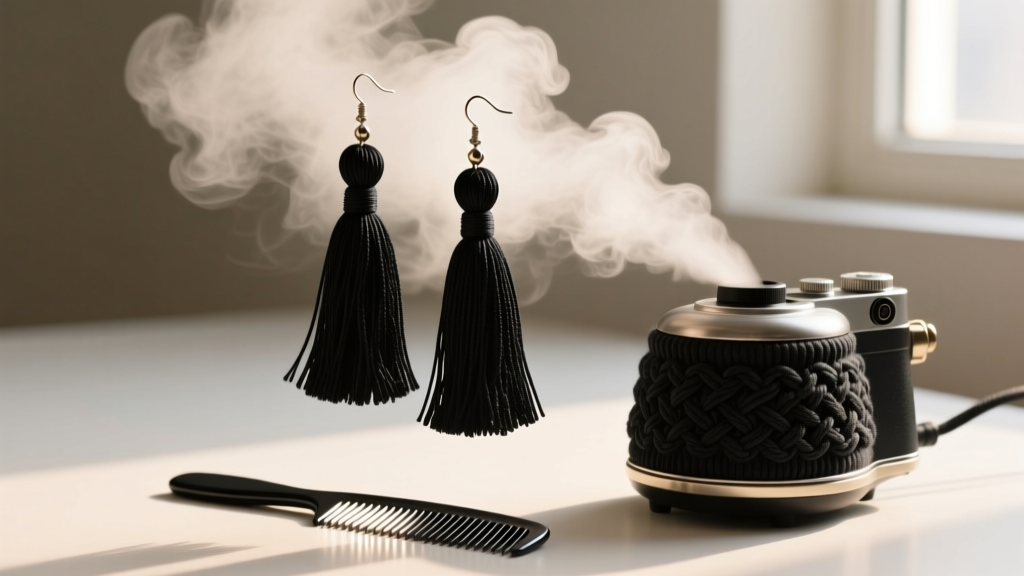
- Prepare Distilled Steam: Use a handheld garment steamer filled only with distilled water. Tap water contains calcium and magnesium minerals that will leave permanent, chalky white spots on the black threads when the water evaporates.
- Apply Indirect Heat: Hold the steamer nozzle about 4 inches away from the tassel. Allow the steam to penetrate the threads for 15 to 20 seconds. Do not let the hot metal nozzle touch the threads, or they will melt (if synthetic) or scorch (if silk).
- Comb While Damp: Immediately use a fine-tooth mustache comb or a clean, soft-bristled makeup spoolie. Gently stroke the threads from the top cap down to the blunt end. This realigns the fibers while they are pliable from the steam.
- Air Dry: Let them hang undisturbed for 10 minutes to set the new, straight shape.
Expert Warning: Never use liquid water or damp cloths on rayon or silk black tassels. Water spotting on dark, deeply dyed textiles is notoriously difficult to reverse and often results in permanent, uneven fading.
Styling Formulas: 3 Ways to Wear Black Tassel Earrings
Styling long, kinetic earrings requires a strategic approach to necklines and hair placement. The 'Rule of the Gap' dictates that there must be at least 1 inch of bare skin between the bottom of the earring and the top of your garment's neckline to prevent visual clutter.
Formula 1: The Architectural V-Neck
Pair a deep V-neck blouse or dress with 2.5-inch black rayon tassels set in matte black ruthenium or oxidized silver hardware. The V-neck mimics the downward point of the tassel, creating a cohesive, elongating vertical line. Keep the hair swept up in a sleek chignon to expose the neck and allow the tassels to swing freely against the skin.
Formula 2: The Strapless Statement
For off-the-shoulder or strapless evening gowns, the expanse of bare collarbone and shoulder demands a heavier visual anchor. Opt for dramatic 3.5 to 4-inch tassels with gold vermeil caps. The high contrast between the pitch-black thread, the bright gold hardware, and bare skin creates a striking, editorial look that requires no additional necklaces.
Formula 3: The Minimalist Crew Neck
Wearing tassels with a high crew neck or turtleneck is notoriously difficult due to the lack of a 'gap.' To solve this, downsize to 'micro-tassels' (0.5 to 1 inch) that sit tightly against the earlobe, acting almost like a drop earring. This provides the textural interest of the thread without the threads physically brushing against and snagging on the fabric of your sweater.
Troubleshooting Common Tassel Earring Issues
Even with meticulous care, tassel earrings present unique wear-and-tear challenges. Use this troubleshooting matrix to solve the most common issues reported by jewelry collectors.
| Issue | Root Cause | Actionable Solution |
|---|---|---|
| Threads Snagging | Rough skin, rings, or velcro catching the delicate rayon fibers. | Always put your earrings in after applying makeup, styling hair, and getting dressed. Remove them before washing your face. |
| Lobe Fatigue / Stretching | Prolonged wear of 5g+ earrings causing micro-tears in the fistula. | Use silicone 'lobesaver' support patches behind the ear. These distribute the weight of the wire across a wider surface area of the lobe. |
| Fraying at the Tips | Friction against high-collared coats or scarves. | Apply a microscopic drop of clear, flexible jewelry glue (like G-S Hypo Cement) to the very tip of the tassel binding to seal the threads. Avoid superglue, which dries brittle and white. |
| Hardware Tarnish | Sweat and oils reacting with brass or silver caps. | Wipe the metal caps with a dry microfiber cloth after every wear. Never use liquid silver polish, as it will seep into the thread binding and stain the black dye. |
Mastering the art of wearing black tassel earrings is about understanding the intersection of textile physics and personal geometry. By selecting the correct thread composition, respecting the weight limits of your earlobes, and employing the steam-and-comb restoration method, you can ensure your earrings remain a dynamic, flawless focal point of your style arsenal for years to come. For further education on metal alloys and hypoallergenic hardware, consult the educational resources provided by the Gemological Institute of America (GIA).


