How to Style, Clean, and Repair Gold Chain Dangle Earrings
Master the art of wearing gold chain dangle earrings. Learn step-by-step styling for face shapes, proper cleaning methods, and DIY chain repairs.


Gold chain dangle earrings are a cornerstone of modern jewelry styling, offering a perfect blend of kinetic movement and metallic luster. However, their delicate nature makes them prone to tangling, stretching, and catching on fabrics. Whether you are wearing a minimalist 14k cable chain or an elaborate 18k paperclip design, understanding the metallurgy, styling geometry, and maintenance protocols of your earrings is essential for longevity.
In 2026, the trend has shifted heavily toward modular and customizable chain dangles, allowing wearers to swap charms and adjust lengths. This guide provides a comprehensive, expert-level breakdown of how to style, clean, and perform basic repairs on your gold chain dangles to keep them in pristine condition.
The Metallurgy and Anatomy of Chain Dangles
Before styling or cleaning, it is crucial to understand the material science behind your jewelry. Pure 24k gold is far too soft for chain dangles; the weight of the dangling elements would cause the links to stretch and eventually snap. According to the Gemological Institute of America (GIA), jewelry chains are typically crafted from 14k (58.3% gold) or 18k (75% gold) alloys.
- 14k Gold: Offers superior tensile strength due to a higher percentage of alloy metals like copper, silver, and zinc. This is the ideal choice for ultra-fine chains (under 1.5mm thick) supporting heavy pendants.
- 18k Gold: Provides a richer, deeper yellow hue but is more susceptible to work-hardening and link deformation. Best reserved for thicker, structural chains like heavy Figaro or Cuban links.
Ear Wire Gauge: The standard ear wire is 20-gauge (0.81mm). However, if your gold chain dangle earrings exceed 4 grams in total weight, a 20-gauge wire will slowly bend open, leading to lost earrings. Always opt for 18-gauge (1.02mm) ear wires or secure latch-back closures for heavier dangles.
Step-by-Step Styling Guide by Face Shape
The kinetic nature of chain dangles draws the eye downward, making them a powerful tool for balancing facial proportions. Here is how to select the right chain length and link type for your specific geometry.
1. Round Faces
Goal: Create vertical elongation.
Strategy: Choose linear, unembellished cable or box chains that drop between 3 to 4 inches below the earlobe. Avoid chandelier styles or chains that terminate in wide, horizontal geometric shapes, as these will accentuate the width of the face.
2. Square Faces
Goal: Soften strong jawlines and angular features.
Strategy: Opt for rolo or figaro chains that feature organic, curved terminations, such as teardrop charms or rounded bar pendants. A drop length of 2 to 2.5 inches keeps the visual weight centered around the cheekbones rather than the jaw.
3. Heart-Shaped Faces
Goal: Add visual volume to the lower half of the face to balance a narrower chin.
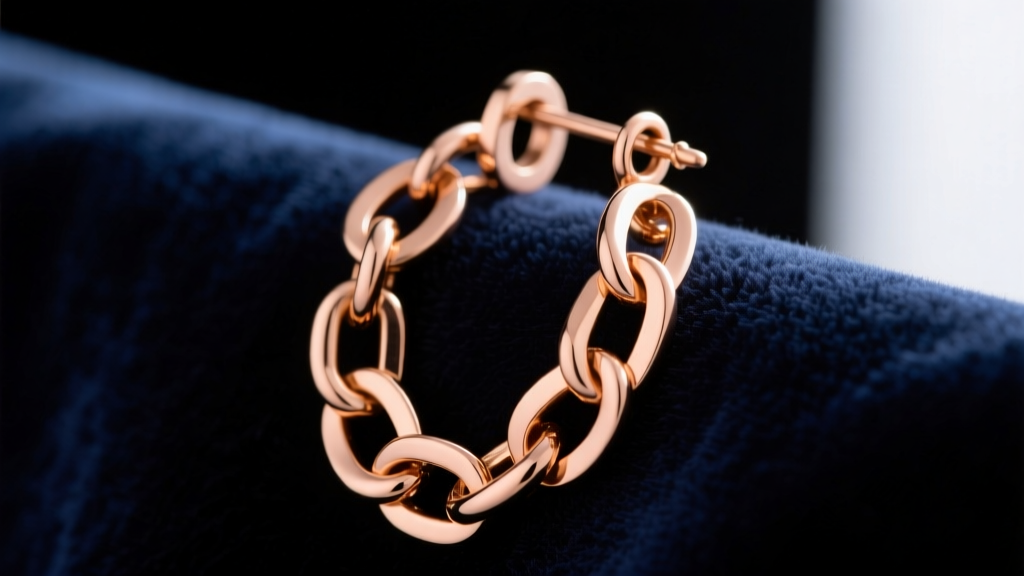
Strategy: Select chandelier-style gold chain dangles that flare outward at the bottom. Paperclip chains with multiple branching drops work exceptionally well here, creating a widening effect near the collarbone.
The Proper Cleaning Protocol for Gold Chains
Chain links accumulate sebum, dead skin cells, and cosmetic residues in their microscopic crevices, which dulls the gold's reflectivity. Jewelers of America recommends a gentle, non-abrasive approach to preserve the alloy's finish.
- The Soak: Mix three drops of phosphate-free, mild dish soap into a bowl of lukewarm distilled water. Submerge the earrings for exactly 15 minutes. Avoid hot water, which can weaken the adhesive on any gemstone terminals.
- The Agitation: Using an extra-soft baby toothbrush, gently sweep the bristles *along* the direction of the chain links. Never scrub in a circular motion, as this can force debris deeper into the jump rings.
- The Rinse: Rinse under a gentle stream of lukewarm water. Ensure the drain is securely plugged.
- The Dry: Pat dry with a lint-free microfiber cloth. Avoid paper towels, as their wood pulp fibers will snag on the chain links and cause micro-scratches.
Chain Link Types and Their Failure Points
Not all chains are created equal. Understanding the structural vulnerabilities of different link types will help you prevent breakages before they occur.
| Link Type | Snag Risk | Tensile Strength | Common Failure Mode |
|---|---|---|---|
| Cable | Low | High | Links stretching oval if pulled sharply. |
| Paperclip | High | Medium | Catching on hair or knitwear, bending the elongated links. |
| Rolo | Low | Very High | Jump rings connecting the clasp wearing thin over time. |
| Figaro | Medium | High | The long link flattening under heavy pendant weight. |
Troubleshooting: Untangling and Fixing Jump Rings
Fine gold chains are notorious for tangling, especially when stored loosely in a jewelry box. Furthermore, the jump rings connecting the chain to the ear wire are the most common point of failure.
How to Untangle Fine Gold Chains
Never pull at a knot in a fine gold chain; you will permanently kink the metal. Instead, lay the earring on a flat, hard surface. Sprinkle a small amount of talcum powder or baby powder directly onto the knot. Using two fine sewing needles, gently work the center of the knot loose. The powder acts as a dry lubricant, reducing friction between the microscopic links.
How to Close a Loose Jump Ring
If the jump ring connecting your dangle to the ear wire has pulled open, do not simply squeeze it shut from the sides. This creates a weak point that will easily pull apart again.
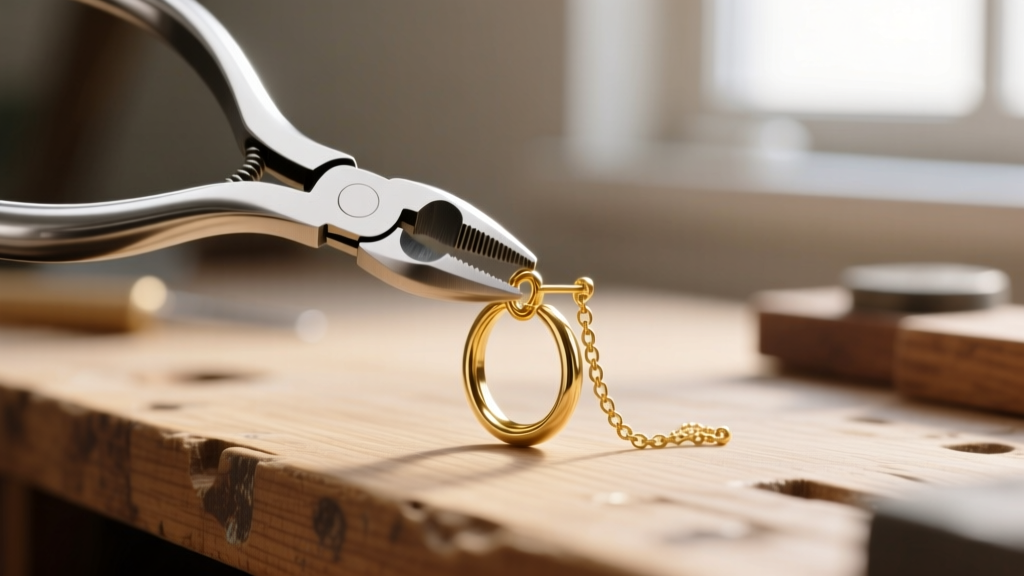
The Jeweler's Technique: Hold the jump ring with two pairs of flat-nose pliers, one on each side of the split. Twist your hands in opposite directions (one toward you, one away) to open the ring laterally. To close it, twist it back until the ends align perfectly, then apply a slight inward pressure to ensure a flush, seamless closure.
When to Seek Professional Repair
While DIY maintenance can handle tangles and loose jump rings, certain issues require professional intervention. If a chain link has snapped completely, or if the ear wire has fractured at the solder joint, take the piece to a bench jeweler.
Modern jewelers use laser welding to repair fine gold chains. Unlike traditional torch soldering, which requires heating a large section of the chain and risking damage to nearby gemstones or altering the gold's color, laser welding uses a highly focused beam to fuse the metal at a microscopic level. This ensures the repaired link retains the exact same tensile strength and flexibility as the rest of the chain.
By respecting the metallurgy of your gold chain dangle earrings and adhering to these meticulous care and styling protocols, you ensure that these dynamic pieces remain a flawless, kinetic staple in your jewelry rotation for decades to come.


