How to Style, Clean, and Protect Opal Pink Earrings
Learn to style, clean, and store opal pink earrings. Expert guide on gauge sizes, metal pairings, and safe cleaning for natural and synthetic opals.

Understanding Your Opal Pink Earrings: Natural vs. Synthetic
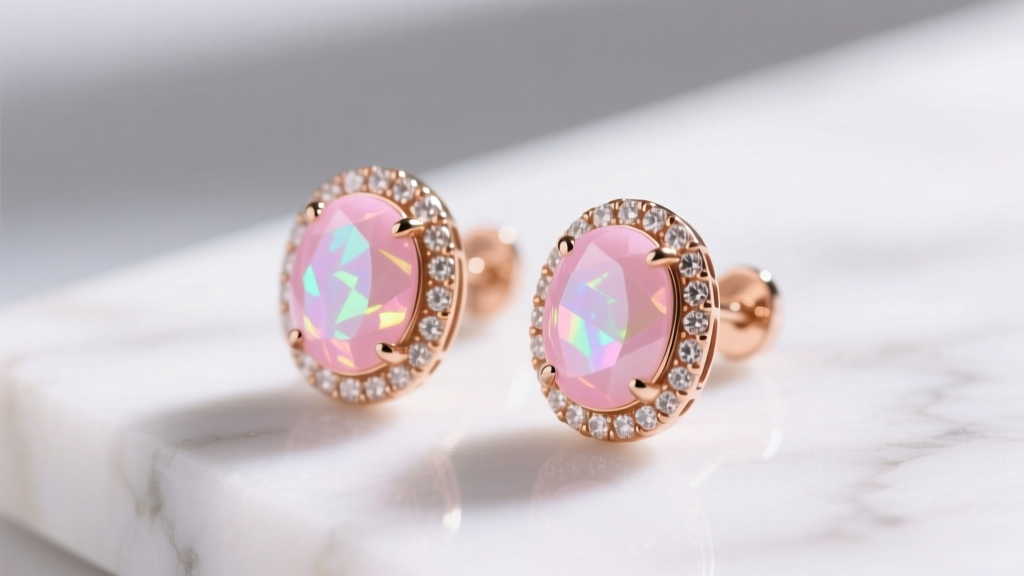
Before diving into styling and maintenance, it is crucial to identify exactly what kind of stone you are working with. Opal pink earrings generally feature one of two types of stones: natural Peruvian pink opal or high-grade synthetic opal (such as Kyocera). Natural Peruvian pink opal is a rare, opaque gemstone prized for its soft, pastel pink hue and lack of the traditional 'play-of-color' seen in Australian opals. Synthetic pink opals, on the other hand, are lab-created to mimic this exact pastel aesthetic but offer a more uniform color and higher durability against temperature shocks.
Both varieties sit between 5.5 and 6.5 on the Mohs scale of mineral hardness, according to the Gemological Institute of America (GIA). This means they are significantly softer than diamonds (10) or sapphires (9), and even softer than quartz (7). Because of this relative softness and the stone's natural porosity, opal pink earrings require a highly specific, gentle approach to daily wear, cleaning, and long-term storage to prevent 'crazing' (a network of fine cracks) or surface scratching.
Step 1: Selecting the Correct Metal and Gauge Size
The longevity of your earrings depends heavily on the metal housing the opal and the gauge (thickness) of the post or wire. For fresh piercings or high-movement cartilage placements, the metal must be biocompatible to prevent contact dermatitis, which can lead to swelling and subsequent damage to the earring's setting.
| Piercing Type | Recommended Metal | Standard Gauge Size | Best Earring Style |
|---|---|---|---|
| Standard Earlobe | 14k or 18k Solid Gold | 20g (0.8mm) or 18g (1.0mm) | Bezel-set studs, small drops |
| Upper Lobe / Flat | ASTM F136 Implant-Grade Titanium | 16g (1.2mm) | Threadless labret studs |
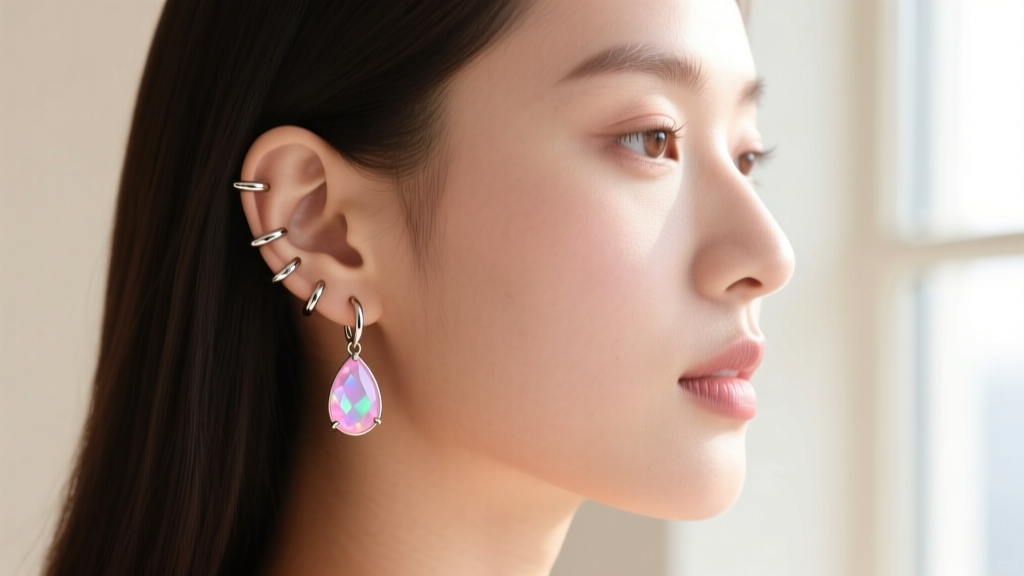
| Helix / Cartilage | ASTM F136 Titanium or 14k Gold | 16g (1.2mm) | Huggies, clickers, flat-backs |
| Tragus / Conch | ASTM F136 Implant-Grade Titanium | 16g (1.2mm) or 14g (1.6mm) | Prong-set or bezel cabochons |
According to the Association of Professional Piercers (APP), implant-grade titanium (ASTM F136) is the gold standard for any piercing that is still healing or prone to irritation. If you are buying opal pink earrings for a cartilage piercing, ensure the opal is set in a titanium flat-back labret. Avoid sterling silver for any long-term cartilage wear, as the copper alloy in silver can tarnish when exposed to sweat, and the resulting chemical reaction can degrade the porous surface of a natural pink opal over time.
Step 2: Styling Opal Pink Earrings for Your Features
Pink opals possess a unique, milky translucency that interacts beautifully with light. Styling them effectively requires considering both your skin's undertone and your face shape.
Metal Pairings by Skin Undertone
- Cool Undertones: Pair your pink opals with platinum, white gold, or titanium. The crisp, silvery metals enhance the cool, milky aspects of the pink stone, giving it a bright, ethereal glow.
- Warm Undertones: Rose gold and 18k yellow gold are your best allies. Rose gold, in particular, creates a monochromatic, romantic harmony with the pastel pink hues of the opal, making the stone look richer and more saturated.
- Neutral Undertones: You can comfortably wear mixed-metal settings. A two-tone bezel (e.g., a yellow gold post with a white gold bezel) adds striking contrast.
Face Shape Guidelines
- Round Faces: Opt for elongated opal pink drop earrings or dangles. The vertical lines draw the eye downward, creating an illusion of length and balancing the width of the cheeks. Avoid large, round opal studs which can emphasize facial roundness.
- Angular/Square Faces: Choose curved designs like opal pink hoops or huggies. The soft, circular geometry of the hoops contrasts beautifully with a strong jawline, while the soft pink color adds a gentle touch.
- Heart-Shaped Faces: Teardrop or chandelier styles featuring pink opals work exceptionally well. The wider top and narrower bottom of the earring mirror and balance the natural proportions of a heart-shaped face.
Step 3: The Safe Cleaning Protocol
Cleaning opals is where most jewelry owners make catastrophic mistakes. Because opals contain up to 20% water within their silica structure, exposing them to extreme heat, harsh chemicals, or ultrasonic vibrations will cause the water to evaporate rapidly, leading to irreversible crazing and cloudiness.
CRITICAL WARNING: Never place opal pink earrings in an ultrasonic jewelry cleaner. The high-frequency vibrations can shatter the stone internally, and the heat generated by the water bath will dry out the opal's natural moisture content.
Step-by-Step Manual Cleaning
- Prepare a Mild Solution: Mix a few drops of unscented, phosphate-free baby shampoo or mild castile soap into a bowl of lukewarm (never hot) distilled water. Distilled water is preferred over tap water to prevent hard water mineral deposits from clinging to the opal's surface.
- Spot Clean the Metal: Dip a soft-bristled baby toothbrush into the solution and gently brush only the metal setting, post, and backing. Avoid aggressively scrubbing the opal itself.
- Wipe the Opal: Take a lint-free microfiber cloth dampened with the soapy water and gently wipe the face and back of the pink opal to remove skin oils and lotion residue.
- Rinse Quickly: Briefly pass the earrings under a gentle stream of lukewarm distilled water to rinse away the soap. Do not let them soak.
- Dry Immediately: Pat the earrings completely dry with a fresh microfiber cloth. Ensure no moisture is trapped between the bezel setting and the stone.
Step 4: Proper Storage to Prevent Crazing
How you store your opal pink earrings when they are not on your body is just as important as how you clean them. Opals are highly sensitive to extreme environmental changes. Storing them in a bone-dry environment (like a safety deposit box or near a heating vent) will draw the moisture out of the stone.
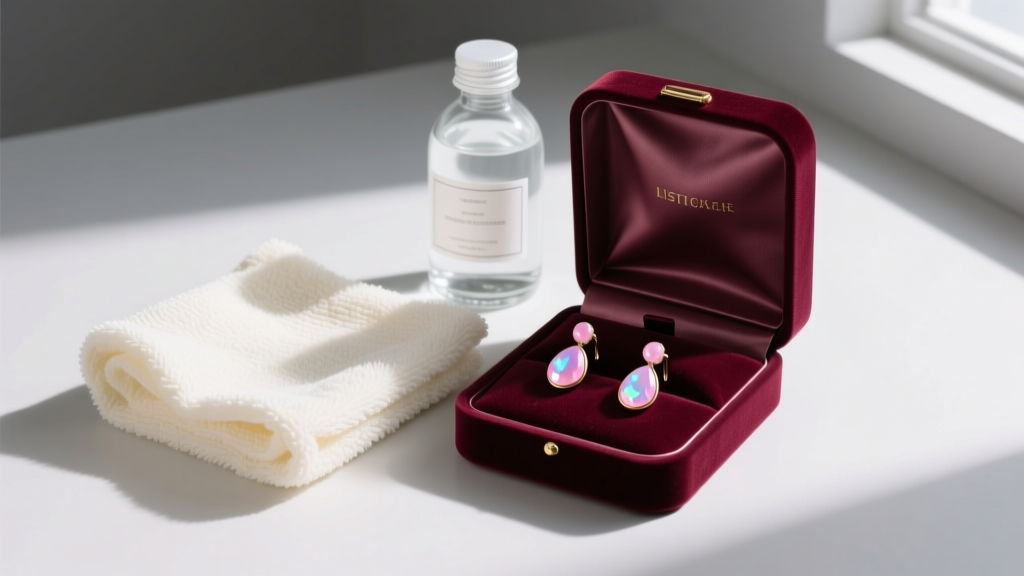
The Ideal Storage Environment: Store your earrings in a soft, fabric-lined jewelry box or a velvet pouch. Velvet and silk allow for a micro-climate that retains a tiny amount of ambient humidity, which keeps the opal stable. If you live in an exceptionally arid climate, place a slightly damp (not wet) cotton ball in a small, separate plastic baggie, and place that baggie inside your jewelry box to maintain ambient humidity without allowing direct water contact with the metal or stone.
Troubleshooting Common Opal Issues
Even with meticulous care, issues can arise. Here is how to troubleshoot the most common problems associated with pink opal jewelry:
- Cloudiness or Loss of Luster: This is usually caused by a buildup of dead skin cells, sebum, or hand lotions on the surface of the stone. Perform the manual cleaning protocol outlined above. If the opal is set in a closed-back bezel, ensure moisture isn't trapped behind the stone, which can cause a foggy appearance.
- Surface Scratches: Because pink opal is a 5.5 on the Mohs scale, it can easily be scratched by dust (which contains quartz, a 7). If your cabochon becomes heavily scratched, do not attempt to buff it yourself with jewelry polishing compounds, as these contain harsh abrasives. Take the piece to a professional lapidary who can safely re-polish the cabochon using specialized cerium oxide.
- Loose Stones in Prong Settings: Opals are fragile. If you notice the stone rattling or shifting in a prong setting, stop wearing the earring immediately. Take it to a jeweler to have the prongs tightened. Never use pliers yourself, as the pressure can easily cleave the opal in half.
By understanding the unique geological properties of pink opals and adhering to strict, gentle maintenance routines, your opal pink earrings will remain a vibrant, flawless staple in your jewelry collection for decades.