How to Style and Customize Teapot Earrings: A Step-by-Step Guide
Learn how to style, select, and customize teapot earrings. Our step-by-step guide covers gauge sizing, face shapes, and weight management.

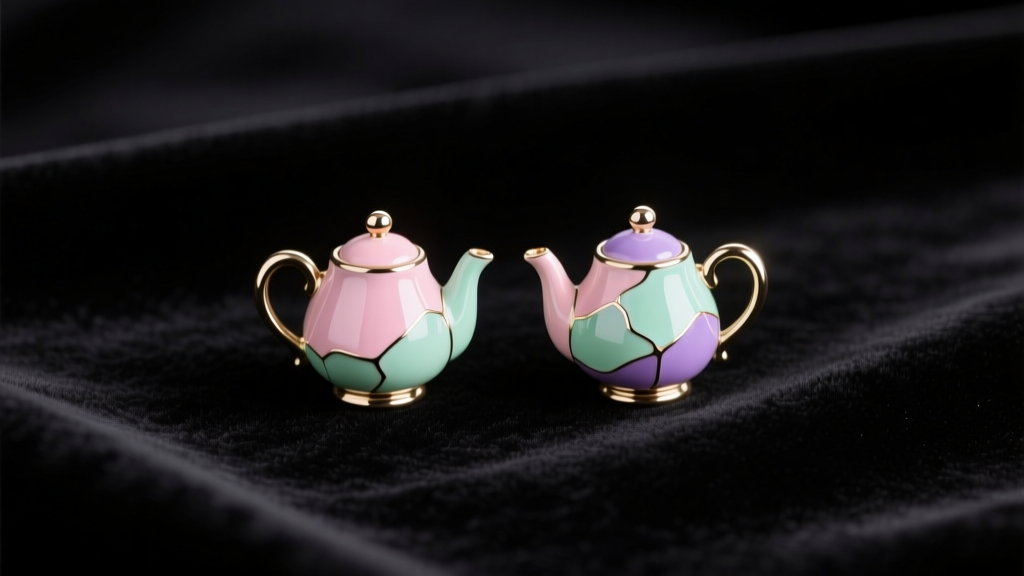
The Resurgence of Whimsical Jewelry: Mastering the Teapot Silhouette
In the ever-evolving landscape of 2026 jewelry trends, novelty and whimsical pieces have transcended costume jewelry bins to become staple conversation starters. Among these, teapot earrings hold a unique position. They offer a blend of vintage cottagecore charm and surrealistic artistry. However, the teapot silhouette presents a distinct structural challenge for jewelry makers and wearers alike. Unlike a simple geometric drop or a balanced hoop, a teapot features an asymmetrical mass distribution due to the protruding spout and the lateral handle. This off-center center of gravity can cause standard ear wires to tilt, dig into the lobe, or stretch the piercing over time.
This comprehensive, step-by-step guide will teach you how to properly select, customize, and style teapot earrings. We will dive deep into the metallurgy of earring findings, the physics of lobe weight distribution, and the aesthetic rules of balancing novelty shapes with various face structures.
Step 1: Understanding the Physics and Anatomy of Teapot Earrings
Before customizing or styling, you must understand the anatomy of the teapot charm. A standard novelty teapot earring consists of four distinct zones that affect how it hangs from the ear:
- The Lid (Top Drill Hole): This is the suspension point. If the hole is drilled too far forward, the teapot will tilt backward, hiding the design behind the earlobe.
- The Body (Main Mass): The central reservoir. In cast brass or resin, this holds 80% of the earring's weight.
- The Spout (Directional Pointer): This creates a forward weight bias. If the spout is overly elongated, it acts as a lever, pulling the top of the earring away from the face.
- The Handle (Counterweight): The loop on the back. A thick, ornate handle can actually help balance a heavy spout, provided the suspension hole is perfectly centered.
Because of this complex geometry, selecting the right hardware is not just about aesthetics; it is about biomechanical comfort.
Step 2: Selecting and Upgrading the Hardware
Most mass-produced teapot earrings come with cheap, 22-gauge brass or plated steel fishhook wires. These are notoriously problematic. The thin wire bends easily under the asymmetric weight of a teapot, and the base metals often contain nickel, a primary culprit for contact dermatitis, as noted by the Mayo Clinic. To upgrade your earrings for daily wear, follow this hardware swap protocol.
Gauge Sizing and Wire Thickness
Standard ear piercings are typically done at 20-gauge (0.81mm) or 18-gauge (1.02mm). For a heavy novelty piece like a cloisonne enamel teapot, you need an 18-gauge wire to prevent the 'cheese-cutter effect,' where thin wire slowly migrates through the earlobe tissue under stress.
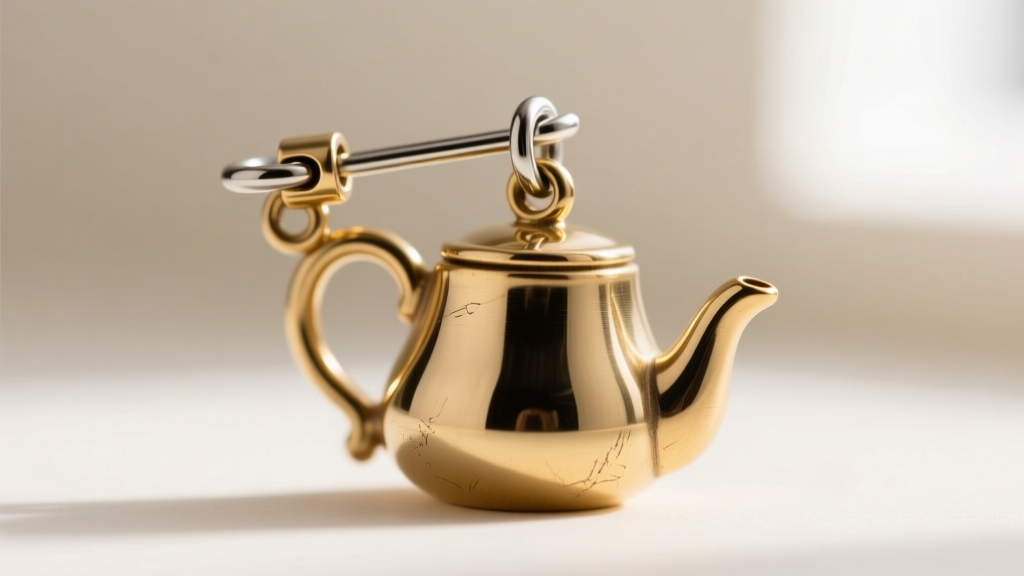
The Leverback Solution
Swap standard fishhooks for leverback ear wires. Leverbacks feature a hinged clasp that snaps shut, preventing the heavy teapot from swinging off the ear during movement. When sourcing replacement findings from professional suppliers like Rio Grande, look for ASTM F136 implant-grade titanium or solid 14k gold. These materials offer the necessary rigidity to support a 4-gram teapot charm without warping.
Step 3: Balancing Visual Weight for Your Face Shape
Teapot earrings are inherently wide and visually 'loud.' Styling them requires an understanding of visual weight and facial geometry. The goal is to create harmony, not to let the earrings overpower your features. Use the following framework to match the teapot silhouette to your face shape.
| Face Shape | Ideal Teapot Silhouette | Styling Rationale |
|---|---|---|
| Round | Elongated 'Tall-Boy' Drops | Vertical lines elongate the face. Avoid wide, squat Victorian teapots which will emphasize facial width. |
| Square | Classic Curved Teapots | The soft, bulbous curves of a traditional teapot body soften a strong jawline and angular cheekbones. |
| Heart | Bottom-Heavy Teapots with Dangles | Adding a small chain or bead dangling from the spout draws the eye downward, balancing a wider forehead. |
| Oval | Any Silhouette (Including Asymmetric) | Oval faces can carry the visual weight of wide, surrealistic, or highly ornate teapot designs effortlessly. |
Step 4: Customizing and Modifying for Comfort
If you have acquired a pair of vintage or heavy artisan teapot earrings that cause lobe fatigue, you can modify them at home using basic jewelry tools. Here is a step-by-step modification guide to improve comfort and wearability.
Tools Required
- Chain-nose pliers (smooth jaw to prevent scratching)
- Flush cutters
- Silicone earring backs (jumbo size for heavy pieces)
- 4mm or 5mm closed jump rings (sterling silver or titanium)
The Modification Process
- Remove the Heavy Base Wire: Use your chain-nose pliers to gently twist open the jump ring connecting the teapot lid to the original ear wire. Never pull the ring apart laterally; always twist it open like a door hinge to maintain its circular shape.
- Attach a Lightweight Connector: If the teapot sits too close to the lobe, it will look cramped. Add a 5mm closed jump ring to create a 'drop' effect, allowing the teapot to swing freely and find its natural center of gravity.
- Secure the Backing: Slide a jumbo silicone earring back onto the new ear wire. The wide surface area of the silicone disc will distribute the weight of the teapot across a broader section of the back of your earlobe, significantly reducing pressure points.
Step 5: Material Maintenance and Cleaning Protocols
Teapot earrings are crafted from a variety of materials, each requiring specific maintenance to preserve the intricate details of the spout, handle, and lid. Improper cleaning can strip cold enamel or tarnish raw brass.
Cloisonne and Champleve Enamel
High-end teapot earrings often feature glass enamel fired into metal cells. These are highly durable but susceptible to thermal shock. Never clean them with boiling water or ultrasonic cleaners. Instead, use a soft microfiber cloth dampened with distilled water and a drop of mild, phosphate-free dish soap. Dry immediately to prevent water spots on the glass surface.
Cold Enamel (Epoxy Resin)
More common in affordable novelty jewelry, cold enamel is essentially colored resin. It is highly sensitive to alcohol and harsh chemicals. Avoid using jewelry polishing dips or rubbing alcohol, as these will cloud the resin and cause it to craze over time. Simply wipe with a dry, lint-free cloth.
Raw Brass and Bronze
Uncoated brass teapot charms develop a natural patina, which many collectors love for its antique, steampunk aesthetic. However, brass can react with the acids in your skin, leaving a harmless but unsightly green mark on your earlobe. To prevent this without altering the look of the metal, apply a thin coat of clear, flexible nail polish or a specialized jewelry shield spray to the back of the teapot body and the ear wire. Reapply every few months.
Final Thoughts on Styling Novelty Earwear
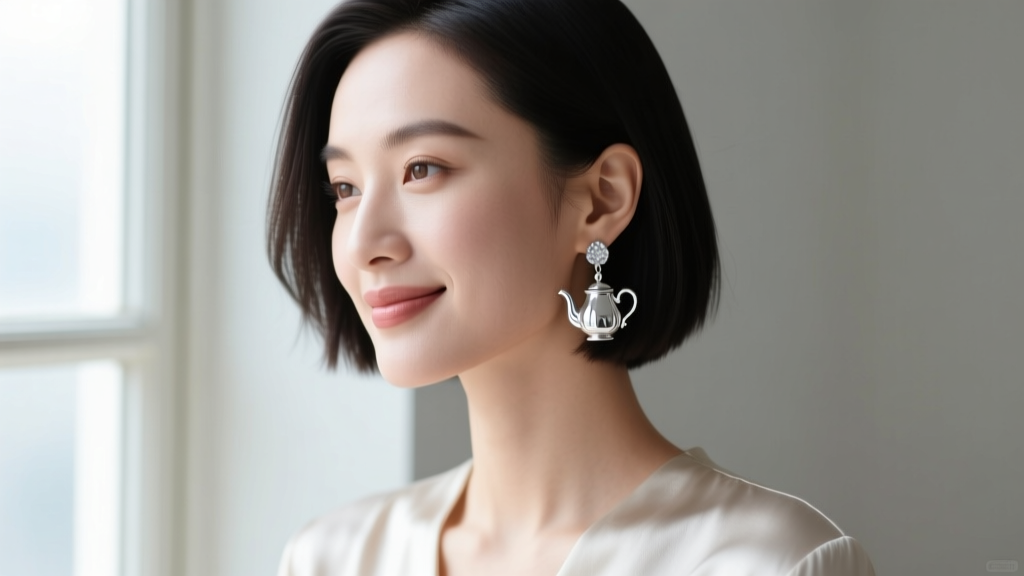
Wearing teapot earrings is an exercise in personal expression. In 2026, the 'more is more' approach to jewelry encourages mixing these whimsical pieces with unexpected wardrobe choices. Pair a delicate, sterling silver teapot drop with a structured, minimalist blazer for a sophisticated office look, or lean into the eccentricity by matching a chunky, polymer-clay teapot with a vintage, floral-print dress. By understanding the mechanics of the hardware, respecting the weight distribution, and choosing the right silhouette for your face, you can transform a simple novelty charm into a masterclass of personal style.


