How to Style Dainty Pearl Drop Earrings: A Step-by-Step Guide
Master the art of ear stacking with our step-by-step guide to styling dainty pearl drop earrings. Learn about pearl grades, metals, and face shapes.

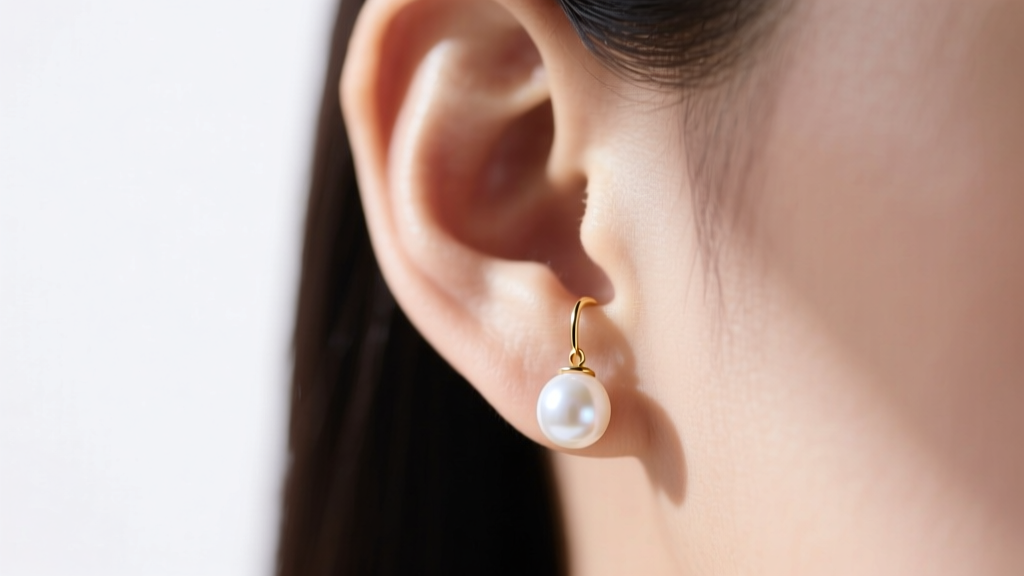
Introduction to the Dainty Pearl Drop
The transition of pearls from traditional, maximalist heirlooms to modern, minimalist staples has redefined contemporary jewelry. At the forefront of this "quiet luxury" movement are dainty pearl drop earrings. Unlike heavy statement pieces, dainty drops typically feature pearls ranging from 4mm to 7mm, offering a subtle, luminous accent that works seamlessly for both boardroom meetings and evening events. However, styling these delicate pieces requires more than just slipping them on. To truly elevate your look and protect your investment, you must understand pearl grading, metal hardware integrity, and facial geometry. This step-by-step guide will walk you through the exact process of selecting, styling, and maintaining dainty pearl drop earrings like a professional gemologist and stylist.
Step 1: Selecting the Right Pearl Type and Grade
The foundation of any beautiful pearl earring is the nacre—the crystalline substance that gives the pearl its luster and iridescence. According to the Gemological Institute of America (GIA), nacre thickness directly impacts both the durability and the optical performance of the pearl. When shopping for dainty drops, you will primarily encounter three categories. Freshwater pearls are cultured without a bead nucleus, meaning they are solid nacre, but they often exhibit a softer, satiny luster. Akoya pearls are bead-nucleated and prized for their sharp, mirror-like reflection. Hanadama pearls represent the absolute pinnacle of Akoya quality, certified by the Pearl Science Laboratory of Japan for having exceptionally thick nacre (minimum 0.6mm) and flawless luster.
| Pearl Type | Nacre Structure | Luster Profile | Average Price (5mm Pair) |
|---|---|---|---|
| Freshwater | Solid Nacre | Satiny, Soft Glow | $30 - $90 |
| Akoya | Bead-Nucleated (0.4mm+) | Sharp, Mirror-Like | $150 - $350 |
| Hanadama | Bead-Nucleated (0.6mm+) | Extreme Mirror, Iridescent | $450 - $900+ |
For a truly dainty aesthetic, stick to the 5mm to 6.5mm size range. Anything larger than 8mm begins to cross into statement territory, losing the delicate, understated charm that defines the dainty drop style.
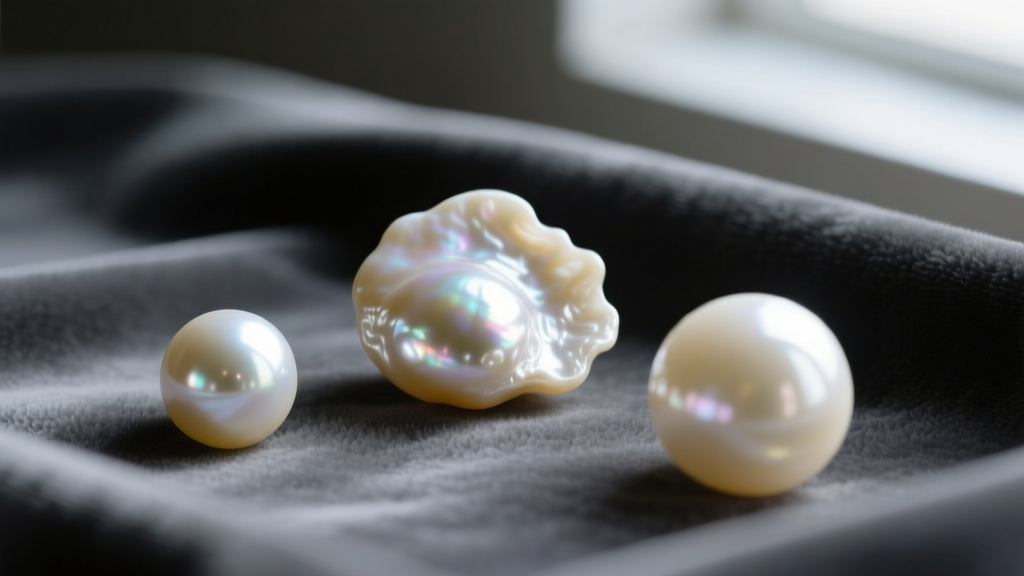
Step 2: Matching Metal Hardware and Wire Gauge
The metal setting of a dainty pearl drop is just as critical as the pearl itself. Because these earrings are lightweight, the wire or post must be thin enough to look delicate but thick enough to withstand daily manipulation. The industry standard for drop earring wires is 20-gauge (0.81mm). This thickness provides excellent structural integrity, resisting bends and warps when you take the earrings in and out of your piercings. Some ultra-minimalist brands use 22-gauge (0.64mm) wire for a barely-there look, but be warned: 22-gauge gold is highly malleable and will require frequent, careful reshaping with nylon-jaw jewelry pliers.
Choosing the Right Metal Alloy
Opt for 14k or 18k solid gold, or platinum. Avoid gold vermeil or gold-plated brass for drop earrings. The constant friction of the wire sliding through the earlobe will wear through a 2.5-micron gold vermeil layer within six to twelve months, exposing the base metal and potentially causing contact dermatitis. If you prefer a silver tone, choose rhodium-plated sterling silver or platinum to prevent tarnish from transferring to the porous surface of the pearl.
Step 3: Styling by Face Shape and Ear Anatomy
Dainty pearl drops are incredibly versatile, but tweaking the exact shape and drop length can dramatically enhance your natural facial geometry. Use this framework to select your perfect pair:
- Round Faces: Avoid perfectly spherical pearls, which can exaggerate facial roundness. Instead, opt for elongated baroque drops or oval-shaped pearls suspended on a slightly longer chain (15mm-20mm drop) to create vertical lines and lengthen the face.
- Square Faces: Soften a strong, angular jawline with perfectly round 5mm or 6mm Akoya drops. The soft curves of the pearl will beautifully contrast and balance sharp facial features.
- Heart-Shaped Faces: Look for teardrop-shaped pearls or settings that are slightly wider at the base. This adds visual weight to the lower half of the face, balancing a narrower chin.
- Oval Faces: You have the most versatility. Classic round pearls on a standard 10mm French wire hook will look perfectly proportioned and elegant.
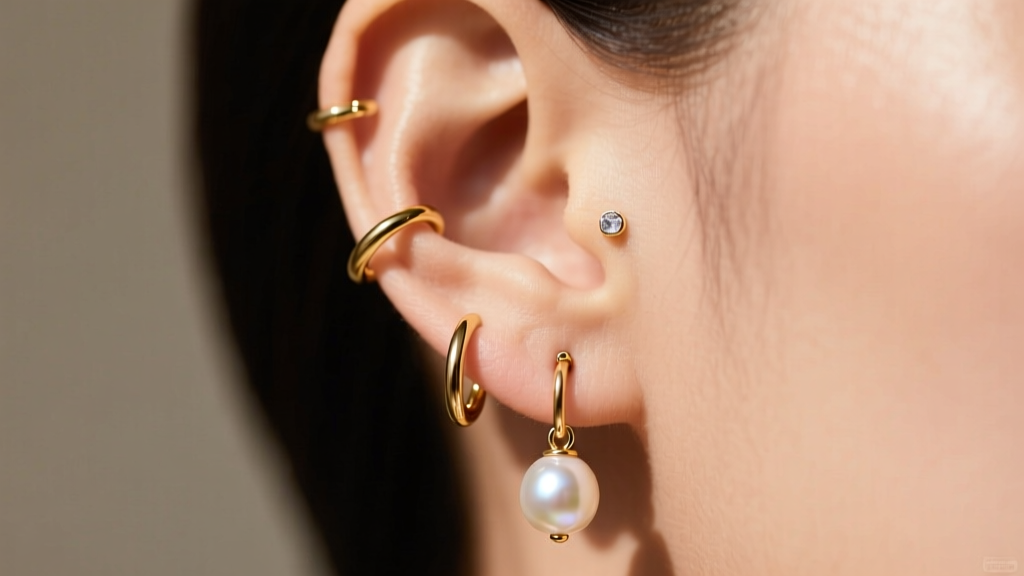
Step 4: Building the Perfect Ear Stack
Dainty pearl drops serve as the ultimate anchor piece for a curated ear stack. When building your arrangement, follow the "Rule of Thirds" to ensure visual balance without overcrowding. Place the dainty pearl drop in your primary lobe piercing. Because the pearl draws the eye downward with its luminous weight, your secondary and tertiary piercings should feature pieces that hug the ear and draw the gaze upward.
Stylist Pro-Tip: Pair a 6mm white Akoya pearl drop in the main lobe with a 3mm solid gold ball stud in the second hole, and a seamless 16-gauge gold huggie hoop in the helix or third lobe piercing. This creates a cohesive gradient of texture and size that looks intentional, not chaotic.
Step 5: Long-Term Care and Troubleshooting Protocol
Pearls are organic gems, ranking a mere 2.5 to 4.5 on the Mohs hardness scale. They are highly porous and deeply susceptible to the acids found in everyday cosmetics, perfumes, and hairsprays. To preserve the nacre, strictly follow the GIA Pearl Care Guide mantra: "Last on, first off." Always put your pearl earrings on after your makeup and fragrance have fully dried, and remove them before washing your face or showering.
Troubleshooting Common Pearl Drop Issues
Even with meticulous care, dainty pearl drops can experience hardware issues over time. Here is how to handle them like a professional jeweler:
- The Pearl is Spinning or Loose: Many dainty drops secure the pearl to the metal cup using a tiny dab of jeweler's epoxy. If the pearl becomes loose, never use superglue (cyanoacrylate). Superglue emits fumes that can permanently cloud the pearl's luster—a destructive phenomenon known as "blooming." Instead, carefully clean the post with isopropyl alcohol, apply a microscopic dot of two-part clear jeweler's epoxy using a toothpick, and let it cure for 24 hours.
- Dull or Cloudy Nacre: Unlike diamonds or sapphires, pearls cannot be professionally polished. Once the nacre is etched by acid or worn away by friction, the damage is irreversible. Prevention is your only defense. After every wear, gently wipe the pearls with a slightly damp, lint-free microfiber cloth to remove skin oils and environmental pollutants.
- Bent French Wires: If your 20-gauge wire becomes misshapen, do not pull it with your fingers. Use nylon-jaw pliers to gently bend the wire back into its original "fishhook" curve. The nylon coating prevents the metal teeth of the pliers from scratching the gold.
Conclusion
Mastering the art of styling dainty pearl drop earrings requires a blend of aesthetic intuition and gemological knowledge. By carefully selecting the right nacre quality, respecting the structural limits of wire gauges, and adhering to a strict maintenance protocol, your dainty drops will remain a luminous, timeless fixture in your jewelry collection for decades. Whether worn alone for a touch of understated elegance or stacked for a modern, curated look, the dainty pearl drop remains an unparalleled testament to refined personal style.


