Why "My Earring Hurts": The Hidden Cost of Budget Jewelry
Discover why your cheap jewelry causes pain. We assess the true cost of budget earrings, from nickel allergies to gauge sizes, to find real value.

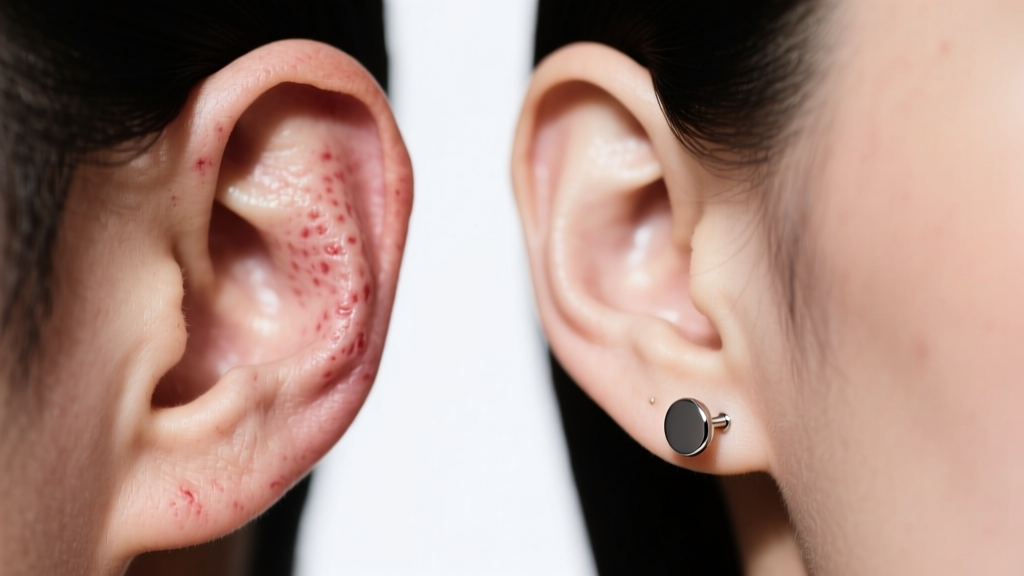
If you have ever looked in the mirror, touched your earlobe, and thought, my earring hurts, you are not alone. Millions of jewelry wearers experience daily discomfort, ranging from dull aches and itching to sharp, localized pain and severe contact dermatitis. While it is tempting to blame a new piercing or a heavy earring design, the true culprit is often the hidden cost of budget jewelry. Fast fashion and discount accessory brands cut corners on material science, metallurgy, and structural engineering to hit attractive price points. The result? A physical and financial toll on your body.
In this comprehensive value assessment, we dissect the exact reasons why cheap earrings cause pain, analyze the metallurgy of budget versus investment pieces, and provide a practical framework to evaluate the true cost-per-wear of your jewelry collection. Understanding these mechanics is the first step toward building a comfortable, sustainable, and pain-free jewelry wardrobe.
The True Cost of "Cheap": Why Budget Earrings Cause Pain
When you purchase a pair of earrings for under $15, you are rarely paying for the actual metal. Instead, you are funding mass manufacturing, marketing, and shipping. To maintain profit margins, manufacturers rely on base metals like brass, copper, or low-grade steel alloys, which are then flash-plated with a microscopic layer of gold or silver.
The primary reason your earring hurts is nickel-induced contact dermatitis. According to the American Academy of Dermatology, nickel allergy is the most common contact allergy worldwide, affecting roughly 18% of adults. Budget jewelry often contains high, unregulated levels of nickel to add brightness and hardness to the base alloy. When sweat and natural skin oils interact with the porous flash-plating, the nickel salts leach directly into the epidermis, triggering an immune response characterized by redness, swelling, and intense itching.
Beyond allergies, budget brands frequently skip the final polishing stages. Under a microscope, a cheap earring post looks like a jagged mountain range. These microscopic burrs create micro-tears in the delicate fistula (the piercing hole), introducing bacteria and causing chronic, low-grade infections that manifest as tenderness and crusting.
Material Breakdown: What You Are Actually Paying For
To assess value, we must look past the aesthetic and examine the metallurgical grade of the jewelry. The Association of Professional Piercers (APP) sets rigorous standards for body jewelry, emphasizing that not all "surgical steel" is created equal. Below is a breakdown of common earring materials, their true costs, and their associated pain risks.
| Material Grade | Avg. Price Range | Nickel Content | Pain & Allergy Risk | Value Rating |
|---|---|---|---|---|
| Brass/Copper Alloy (Plated) | $5 - $15 | High (Variable) | Extreme (Contact Dermatitis) | Poor |
| 316L Surgical Steel | $12 - $25 | 8% - 10% | High for Sensitive Ears | Fair |
| Gold Vermeil (Sterling Base) | $30 - $60 | Trace (if pure) | Moderate (Wear-off risk) | Good |
| ASTM F136 Titanium | $35 - $85 | 0% (Nickel-Free) | Lowest (Biocompatible) | Excellent |
| 14k/18k Solid Gold | $80 - $250+ | 0% (if alloyed properly) | Extremely Low | Excellent (Heirloom) |
The Mid-Tier Trap: 316L Surgical Steel
Many consumers assume "surgical steel" is synonymous with "hypoallergenic." This is a dangerous marketing myth. 316L stainless steel contains up to 10% nickel. While the nickel is bound within the crystalline structure of the steel, the acidic environment of a healing or irritated piercing can cause nickel ions to leach out. If your earring hurts after a few hours of wearing steel, you are likely experiencing a mild localized allergic reaction, not just physical friction.
Gauge Size and Post Thickness: The Overlooked Pain Factor
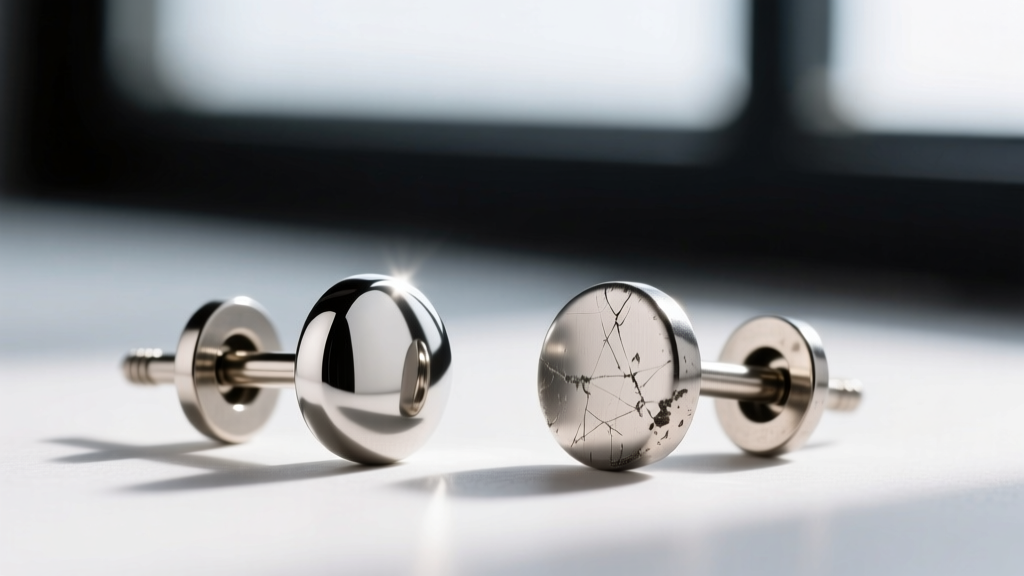
Material is only half the battle; the physical dimensions of the earring post dictate how it interacts with your tissue. Standard earlobe piercings are typically done at 18-gauge (1.02mm) or 16-gauge (1.29mm). However, budget jewelry brands frequently use 20-gauge (0.81mm) or even 22-gauge (0.64mm) wire for their posts to save on raw metal costs.
When you insert a 22-gauge wire into an 18-gauge fistula, the thin wire acts like a cheese cutter. The lack of surface area means the weight of the earring is concentrated on a microscopic edge, leading to downward migration, tissue thinning, and a sharp, stinging pain. Conversely, some cheap cast earrings feature thick but poorly calibrated posts that measure a bulky 14-gauge (1.62mm). Forcing a thick, unpolished post into a standard lobe piercing causes blunt force trauma to the fistula, resulting in immediate swelling and a throbbing ache that lasts for days.
Backing and Clutch Mechanics: Where Budget Brands Cut Corners
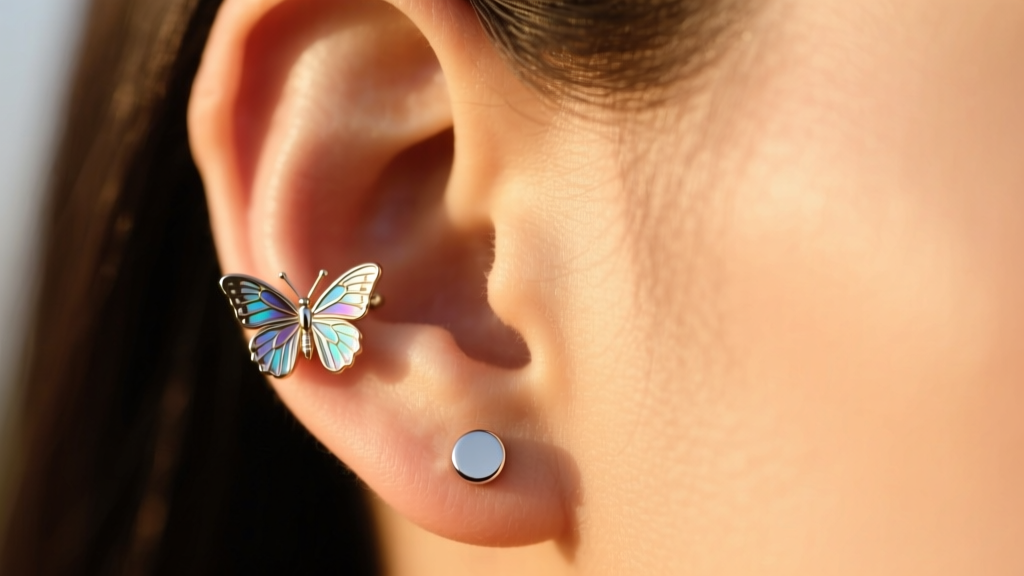
If the front of your earring is beautiful but the back is a torture device, the overall value of the piece plummets. The standard "butterfly clutch" or "push back" is the default for 95% of commercial earrings because it is incredibly cheap to stamp out of sheet metal. However, from an anatomical perspective, butterfly backs are deeply flawed.
- Pressure Necrosis: The small surface area of the butterfly wings concentrates the clamping pressure of the earring onto two tiny points on the back of your earlobe. Over time, this restricts blood flow, causing tissue death (necrosis) and deep, painful indentations.
- Bacterial Traps: The hollow tubes and crevices of a butterfly back trap dead skin cells, sebum, and shampoo residue. This creates a breeding ground for bacteria, leading to the infamous "cheese" smell and chronic low-grade infections.
- Thread Damage: Budget externally threaded posts feature screw threads cut directly into the post. Every time you push the clutch on or pull it off, those sharp threads scrape the inside of your piercing, causing micro-trauma.
The High-Value Alternative: Internally threaded or threadless flat-back labrets. These feature a smooth post with a flat disc that sits flush against the back of the ear, distributing pressure evenly across a wide surface area. While they cost more upfront ($30–$60 per piece), they virtually eliminate back-of-ear pain and sleep discomfort.
The Value Assessment Framework: Cost Per Wear (CPW)
To truly evaluate whether a piece of jewelry is a "good deal," discard the initial price tag and calculate the Cost Per Wear (CPW) alongside the Pain Penalty. Budget jewelry often suffers from a high failure rate—tarnishing, breaking, or causing infections that require expensive antibiotic creams or dermatologist visits.
The Formula: (Initial Cost + Medical/Skincare Mitigation Costs) / Number of Wears = CPW
If you buy a $10 pair of plated hoops that make your ears itch after two hours, and you only wear them twice before throwing them away, your CPW is $5.00. If you invest in a $70 pair of solid 14k gold or ASTM F136 titanium huggies that you wear 300 days a year for five years, your CPW drops to roughly $0.04 per wear. The investment piece pays for itself within the first three months while entirely eliminating the "my earring hurts" dilemma.
How to Salvage or Replace Your Current Collection
If your budget is currently tight, you do not necessarily need to throw away your entire collection, but you must be strategic about mitigation.
- Coat the Posts: For occasional wear, coat the posts of cheap earrings with a specialized jewelry shield or a thin layer of clear, non-toxic nail polish to create a temporary barrier against nickel leaching. Reapply after every three wears.
- Upgrade Your Backings: You can purchase silicone or 14k gold flat-disc replacements for standard push-backs. Swapping out the backing reduces pressure necrosis and eliminates the sharp metal edges digging into your neck.
- Prioritize Your Daily Drivers: If you cannot afford to replace everything at once, start with your "sleepers" or daily studs. Upgrade your everyday lobe studs to implant-grade titanium or solid gold first, as these remain in the fistula the longest and pose the highest risk for chronic irritation.
Ultimately, your ears are a sensitive, highly vascular canvas. Treating them to biocompatible, precision-machined materials is not a luxury; it is a fundamental requirement for comfort. By shifting your mindset from fast-fashion volume to long-term metallurgical value, you can permanently silence the complaint that your earring hurts.


