Heart Dangle Earrings: Technical Guide to Weight, Gauges & Alloys
Discover the technical engineering behind heart dangle earrings. Learn about optimal gauge sizes, weight distribution, and hypoallergenic alloys.

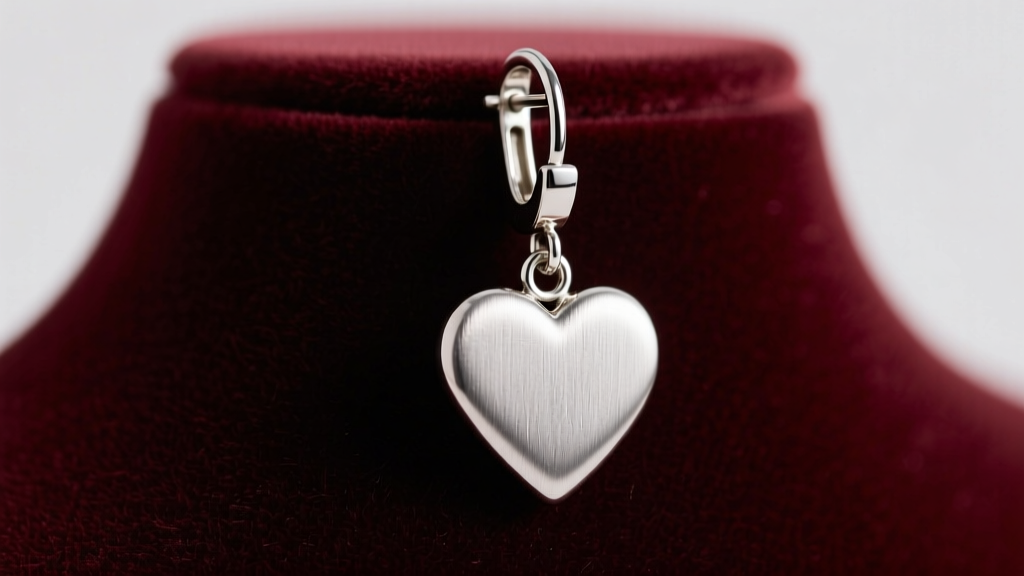
The Physics of Dangle: Weight Distribution and Lobe Health
Heart dangle earrings are frequently categorized as seasonal or novelty jewelry, but from a metallurgical and ergonomic standpoint, designing a pair that will not stretch the lobe or snap at the solder joint requires serious engineering. The heart silhouette is inherently bottom-heavy. The cleft of the heart creates a high center of gravity relative to its widest point, meaning that when a solid cast heart swings, it generates significant pendulum torque on the fistula (the piercing hole).
In 2026, advanced CAD software like MatrixGold allows jewelers to map the exact center of mass before casting. If the center of mass sits more than 4mm below the jump ring axis, the earring will swing aggressively with normal head movements. This dynamic load accelerates lobe stretching. According to the Association of Professional Piercers (APP), continuous dynamic loading on a standard earlobe piercing exceeding 10 grams will eventually cause migration, commonly referred to as the "cheese-cutter effect."
Weight Thresholds and Lobe Strain
| Total Earring Weight | Recommended Max Wear Time | Lobe Strain Risk | Required Construction Method |
|---|---|---|---|
| Under 4 grams | Unlimited (24/7 safe) | Minimal | Solid cast or stamped sheet |
| 4.1 - 8.0 grams | 12-16 hours daily | Moderate | Solid cast with hollowed back |
| 8.1 - 14.0 grams | 4-8 hours (events only) | High | Hollow-form electroforming |
| Over 14.0 grams | Under 2 hours | Severe (Immediate stretch risk) | Not recommended for standard lobes |
Metallurgy and Alloy Selection for Dynamic Loads
When evaluating heart dangle earrings, the metal alloy dictates both the biocompatibility and the structural integrity of the piece. Standard 925 Sterling Silver is highly popular for its affordability, but it possesses a relatively low yield strength (approximately 150 MPa) and a Vickers hardness of around 60-70 HV in its annealed state. Under the dynamic, swinging load of a dangle earring, sterling silver wire will slowly bend and deform, eventually leading to clasp failure or a warped ear wire.
For structural reliability, jewelers must utilize higher-yield metals. ASTM F136 ELI (Extra Low Interstitial) Titanium boasts a yield strength of roughly 860 MPa, making it virtually immune to bending under the weight of a dangle. For precious metals, 14k or 18k gold alloys—specifically those mixed with palladium or nickel for increased tensile strength—are mandatory for the structural components (the wire and jump rings), even if the heart charm itself is cast in a softer 22k gold.

The Tarnish and Fatigue Factor
Beyond tensile strength, metal fatigue is a critical failure point in dangle earrings. The jump ring connecting the heart charm to the ear wire undergoes thousands of micro-flexions. In 2026, leading manufacturers have shifted away from traditional torch soldering for these high-stress joints, opting instead for laser welding. Laser welding creates a localized, high-purity fusion zone that resists metal fatigue far better than silver or gold solder, which can introduce brittle alloys into the joint.
Wire Gauge and Clasp Mechanics
The gauge (thickness) of the ear wire is the primary defense against lobe tearing. The standard jewelry industry wire gauge for dangles is 20-gauge (0.81mm). However, for any heart dangle exceeding 6 grams, an 18-gauge (1.02mm) wire is technically required to distribute the shear force across a wider surface area of the fistula tissue. Using a 22-gauge (0.64mm) wire on a heavy heart charm is a critical design flaw that guarantees tissue migration over time.
Equally important is the clasp mechanism. The traditional French wire (fish hook) relies on gravity and friction, making it entirely unsuitable for heavy or asymmetrical dangles that can easily catch on hair or clothing. The Jewelers of America guidelines emphasize secure closures for valuable or heavy pieces. Below are the technical failure modes of common clasps used on heart dangles:
- French Wire (Fish Hook): High failure rate. The wire easily bends outward if the earring catches, leading to loss. Requires a secondary silicone earring back, which can trap moisture and bacteria against the lobe.
- Standard Leverback: Moderate security. The tension spring can weaken over time if the lever is snapped shut too aggressively. Ensure the leverback features a flush-fit closure with less than 0.2mm of tolerance.
- Locking Snap-Hinge: Maximum security. Features a mechanical click-lock that requires intentional lateral pressure to open. Ideal for heavy, solid-cast heart dangles worn during active movement.
Expert Troubleshooting: Preventing the "Forward Tilt"
The most common aesthetic and ergonomic complaint with heart dangle earrings is the "forward tilt." This occurs when the earring hangs at a 30-to-45-degree angle away from the face, rather than sitting flush against the earlobe. This tilt is not just an aesthetic failure; it shifts the center of gravity forward, applying uneven pressure to the bottom of the piercing hole and accelerating stretching.
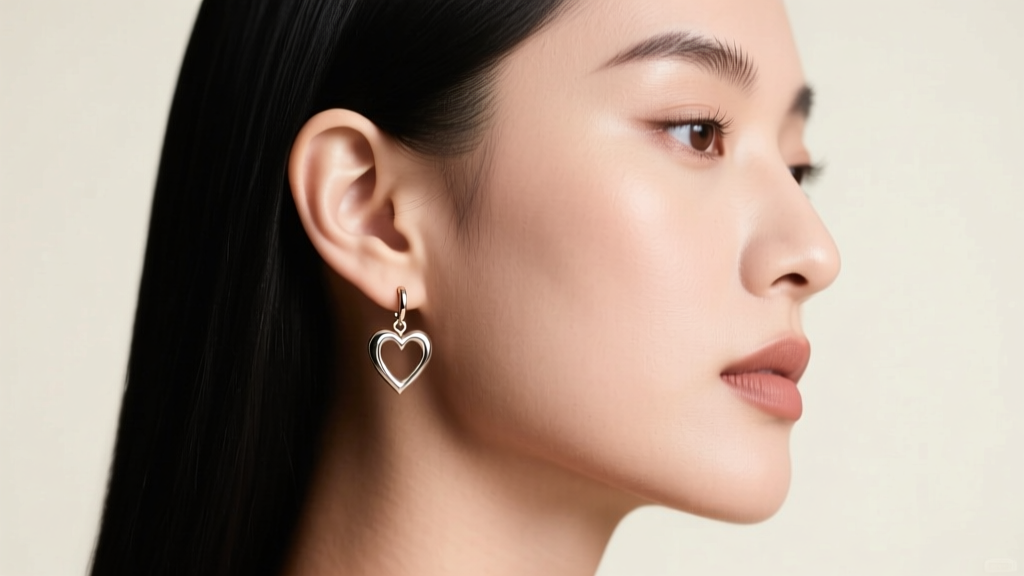
The forward tilt is usually caused by a jump ring that is too thick or tightly closed, preventing the heart charm from pivoting freely, or by an ear wire that lacks the proper forward curve to counterbalance the charm's weight. Master jewelers correct this by utilizing an articulated double-jump ring system, allowing the charm to swing on an X-Y axis, or by adding a microscopic counterweight bead to the rear of the ear wire's curve to pull the assembly back flush to the lobe.
"A dangle earring should act like a plumb line. If the heart charm is pulling the ear wire forward, you don't need a heavier charm; you need to re-engineer the ear wire's curvature and reduce the gauge of the connecting jump ring to restore articulation." — Master Bench Jeweler Technical Notes, 2025.
Final Specifications for Custom Commissioning
If you are commissioning custom heart dangle earrings or evaluating a technical spec sheet from a manufacturer, ensure the following parameters are met to guarantee a piece that is both beautiful and biologically safe for long-term wear:
- Alloy: Ear wire and jump rings must be ASTM F136 Titanium, Niobium, or minimum 14k Palladium White Gold. Avoid sterling silver for structural wire components.
- Gauge: 18-gauge (1.02mm) for any design exceeding 6 grams; 20-gauge (0.81mm) for lightweight, hollow-form designs under 6 grams.
- Clasp: Locking snap-hinge or tension-calibrated leverback. Never rely on friction-only French wires for asymmetrical heart shapes.
- Articulation: Ensure the jump ring interior diameter is at least 1.5x the thickness of the wire it connects to, allowing for fluid pendulum motion without binding.
By treating heart dangle earrings as precision-engineered wearable architecture rather than simple stamped novelties, you ensure the longevity of both the jewelry and the health of the earlobe tissue.


