How to Style Gold Swirl Earrings for Cartilage & Lobes
Learn how to style, size, and clean gold swirl earrings for lobe and cartilage piercings. Expert tips on gauges, gold purity, and face shapes.

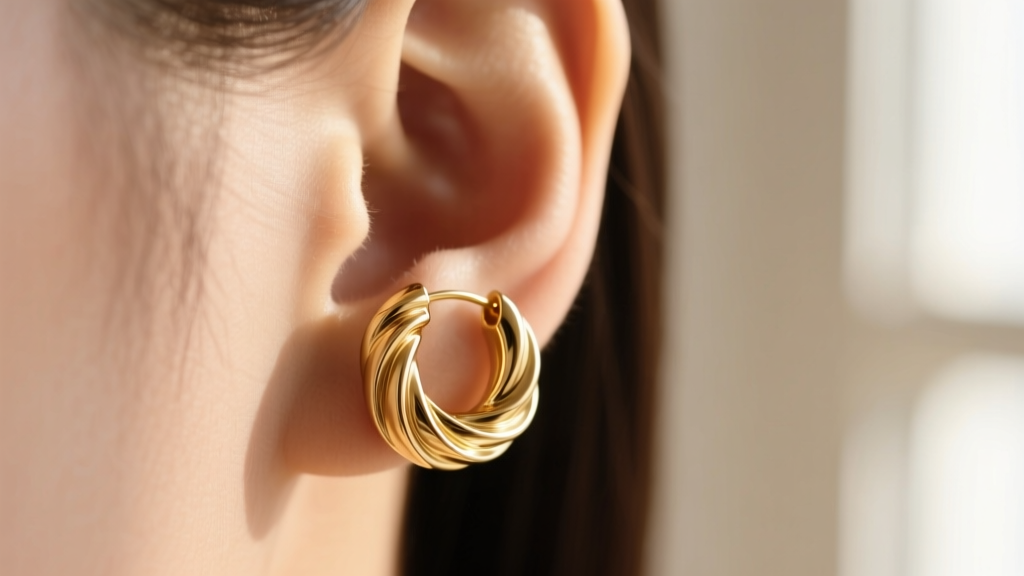
Gold swirl earrings are a masterclass in kinetic jewelry design. Unlike static studs or rigid hoops, the spiraling geometry of a swirl earring creates continuous visual movement, catching light from multiple angles. However, styling them requires more than just picking a pretty design. Because swirls rely on precise wire bending and structural tension, choosing the wrong gauge or gold purity can lead to bent wires, irritation bumps, or premature tarnishing.
This comprehensive guide breaks down exactly how to select, style, and maintain gold swirl earrings for both standard lobe and cartilage piercings, ensuring your jewelry remains as structurally sound as it is visually striking.
Understanding Gold Purity and Swirl Construction
When shopping for gold swirl earrings, the karat weight dictates not just the color, but the structural integrity of the spiral wire. According to the Gemological Institute of America (GIA), pure 24k gold is far too soft for jewelry that requires shape retention.
14k vs. 18k Solid Gold for Swirls
For intricate swirl designs, 14k solid gold is often the superior choice. The higher alloy content (typically copper and zinc) gives 14k gold a higher tensile strength than 18k gold. If you buy an 18k gold swirl ear cuff or a delicate 20-gauge swirl wire, the natural softness of the 75% pure gold means the spiral will easily warp when you insert or remove it. 14k gold (58.3% pure) holds its spiral tension beautifully, making it ideal for threadless swirl ends and continuous hoops.
The Truth About Gold Vermeil Swirls
If you are on a budget, gold vermeil is an acceptable alternative, provided you verify the plating thickness. True vermeil requires a minimum of 2.5 microns of gold plated over a sterling silver base. Anything less is standard gold plating, which will quickly wear off on the high-friction curves of a swirl design.
Step-by-Step: Matching Swirl Earrings to Piercing Gauges
The most common mistake buyers make is ignoring wire thickness. A swirl earring that is too thin for your piercing will slide around, causing micro-tears and irritation bumps. The Association of Professional Piercers (APP) emphasizes the importance of matching jewelry gauge to the specific piercing anatomy.
| Piercing Type | Standard Gauge | Ideal Swirl Wire Thickness | Best Swirl Backing/Closure |
|---|---|---|---|
| Standard Lobe | 20g (0.81mm) or 18g (1.02mm) | 18g for structural stability | Friction push-backs or huggie clickers |
| Helix / Cartilage | 16g (1.29mm) | 16g (1.29mm) exact match | Threadless ends or seamless continuous hoops |
| Conch | 16g or 14g (1.63mm) | 14g for heavy swirl drops | Flat-back labret posts with swirl tops |
| Ear Cuff (No Piercing) | N/A | 20g or 22g for adjustable tension | Adjustable tension gap |
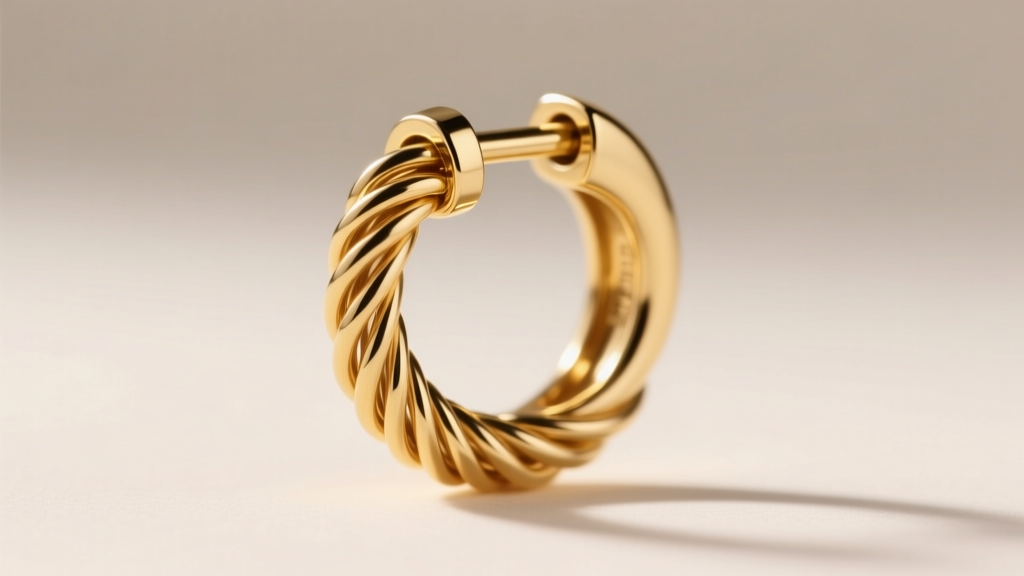
How to Style Gold Swirl Earrings for Your Face Shape
The directional flow of a gold swirl can subtly alter the perceived proportions of your face. Here is how to manipulate the spiral geometry to your advantage:
- Round Faces: Opt for elongated drop earrings where the gold swirl spirals inward and downward. This creates a vertical line that elongates the jawline. Avoid wide, outward-flaring swirl studs, which add horizontal volume.
- Square Faces: Choose swirl huggies or medium-sized hoops where the spiral wraps continuously around the earlobe. The circular motion softens sharp jawlines and angular cheekbones.
- Heart-Shaped Faces: Look for asymmetrical swirl designs or ear cuffs that draw the eye horizontally across the upper ear. A 16g gold swirl helix hoop balances a narrower chin by adding visual weight to the upper half of the face.
- Oval Faces: You have the most versatility. Experiment with bold, outward-spiraling ear cuffs or stacked lobe swirls to add striking architectural volume.
Step-by-Step Cleaning and Maintenance Routine
The crevices of a swirl design are notorious for trapping sebum, dead skin cells, and hair products. A strict cleaning regimen is non-negotiable to prevent contact dermatitis and metal degradation.
The 5-Minute Weekly Wash
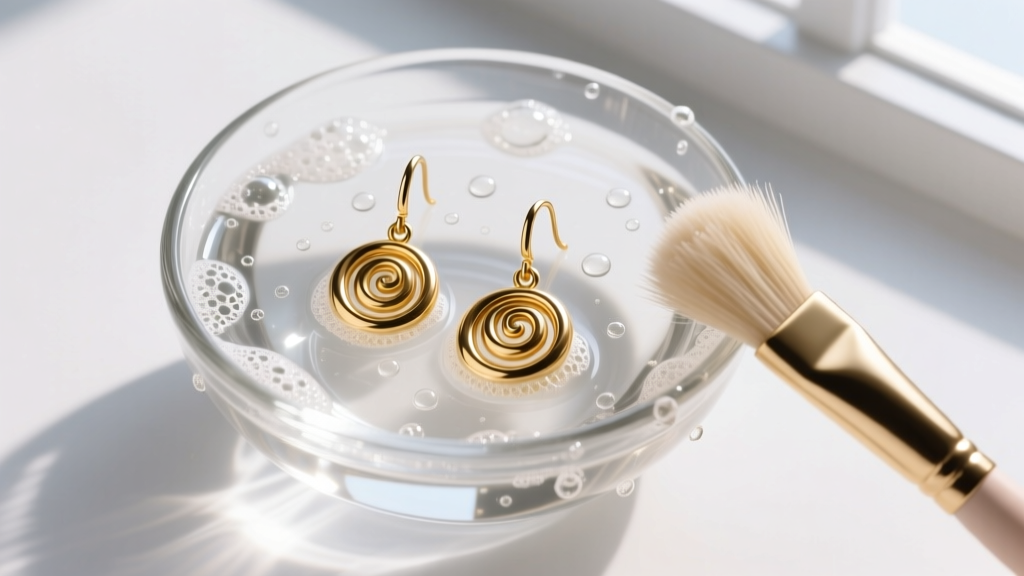
- Prepare the Solution: Mix three drops of mild, phosphate-free dish soap (like Dawn) into a bowl of lukewarm distilled water. Avoid hot water, which can weaken the bonding agents in vermeil pieces.
- Soak: Submerge your gold swirl earrings for exactly 3 to 5 minutes. This loosens trapped debris without compromising the metal.
- Agitate Gently: Use a baby-soft toothbrush or a dedicated jewelry brush to gently sweep the inner curves of the spiral. Never use hard bristles, which will leave micro-scratches on high-polish gold.
- Rinse and Dry: Rinse under lukewarm distilled water and pat completely dry with a lint-free microfiber cloth. Moisture trapped in the tight coils of a swirl will accelerate tarnishing, especially on sterling silver bases.
Troubleshooting Tarnish and Snags
Problem: The swirl wire keeps snagging on your hair or sweaters.
The Fix: This usually means the terminal end of the wire has slightly bent outward. Do not use standard metal pliers, which will crush the wire and strip the gold finish. Instead, invest in a pair of nylon jaw jewelry pliers. The soft nylon grips allow you to gently squeeze the terminal end back into its flush alignment without marring the metal.
Problem: Your vermeil swirl ear cuff has lost its gold luster on the high-contact curves.
The Fix: Once the 2.5-micron gold layer wears through to the sterling silver, polishing cloths will not bring it back. You must send the piece to a professional jeweler for re-plating. To prevent this, never wear vermeil swirls in the shower or pool; chlorine and sulfur are highly corrosive to thin gold layers.
Final Thoughts on Swirl Jewelry
Gold swirl earrings bridge the gap between organic fluidity and precise architectural design. By respecting the tensile limits of gold alloys, strictly matching your gauge sizes, and maintaining a disciplined cleaning routine, your spiral jewelry will remain a dynamic, eye-catching staple in your collection for years to come.


