Avant-Garde Winter: The 2026 Guide to Earrings with Fur
Discover the 2026 trend of earrings with fur. Explore sustainable bio-faux materials, face-shape styling tips, and care guides for statement winter pieces.

The Resurgence of Textural Maximalism
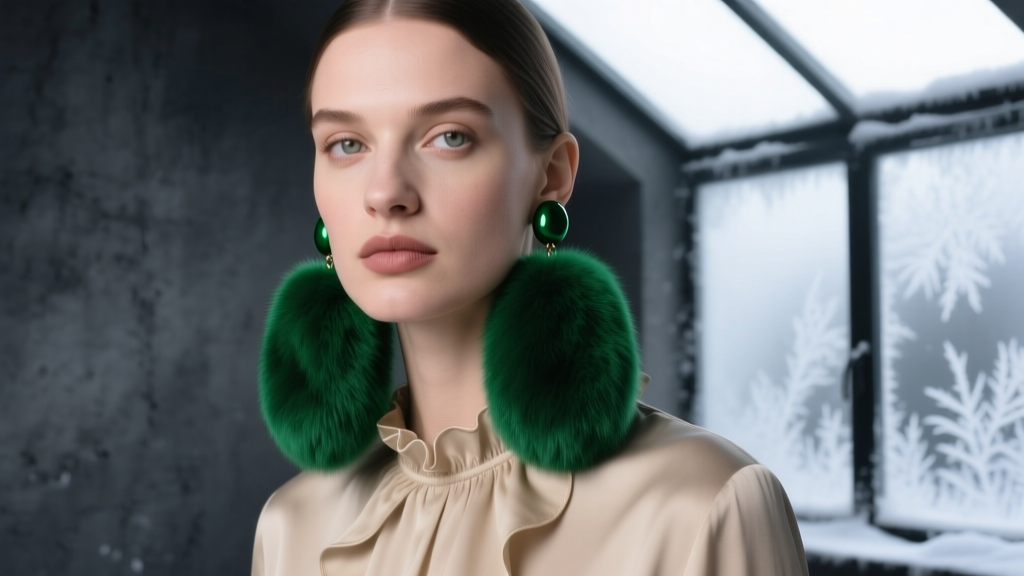
As we navigate the 2026 winter fashion landscape, textural maximalism has firmly overtaken the quiet luxury movement. At the forefront of this tactile rebellion are earrings with fur—statement pieces that blend avant-garde aesthetics with cozy, oversized proportions. Once relegated to niche vintage markets or controversial real-fur trims, the modern iteration of fur earrings relies heavily on sustainable innovation and architectural jewelry design. Designers are no longer treating fur as a mere accent; it is the primary medium, sculpted into pommels, tassels, and oversized hoops that frame the face with dramatic volume.
The shift toward bio-based and upcycled materials has completely revitalized this category, making it a staple for eco-conscious fashion enthusiasts who refuse to compromise on visual impact. Whether you are exploring high-fashion runways or artisan markets, understanding the material science, hardware requirements, and styling geometry of these pieces is essential for pulling off the look without sacrificing comfort or ear health.
Material Breakdown: Bio-Fur vs. Modacrylic vs. Upcycled
The days of stiff, unnatural-looking acrylics are behind us. In 2026, the market for earrings with fur is segmented into three distinct material categories, each offering a different hand-feel, weight, and environmental footprint.
Bio-Based Faux Furs
Led by innovations like KOBA® and ECOPEL’s plant-based collections, bio-furs utilize corn-derived polymers (such as DuPont Sorona) blended with recycled polyester. These fibers mimic the exact cuticle structure of mink and shearling, offering a buttery soft hand-feel. According to ECOPEL, bio-based faux furs reduce greenhouse gas emissions by up to 63% compared to traditional petroleum-based modacrylics. For jewelry, this translates to lightweight, highly durable pommels that resist matting even when exposed to winter humidity.
Premium Modacrylics
Modacrylic remains the workhorse of the faux fur industry. Brands utilizing Kanecaron fibers achieve incredible colorfastness, allowing for the neon and jewel-toned fur earrings trending this season. While slightly heavier than bio-furs, modacrylics hold structural shapes exceptionally well, making them ideal for sculptural, geometric fur cuffs and stiff tassels.
Upcycled and Deadstock Vintage
For the zero-waste consumer, artisan jewelers are sourcing deadstock shearling and vintage fur coats, cutting them into precise geometric inlays for brass and silver settings. This route offers unmatched authenticity and warmth, though the supply chain is inherently limited, resulting in one-of-a-kind capsule drops.
Hardware Engineering: Gauges and Weight Distribution
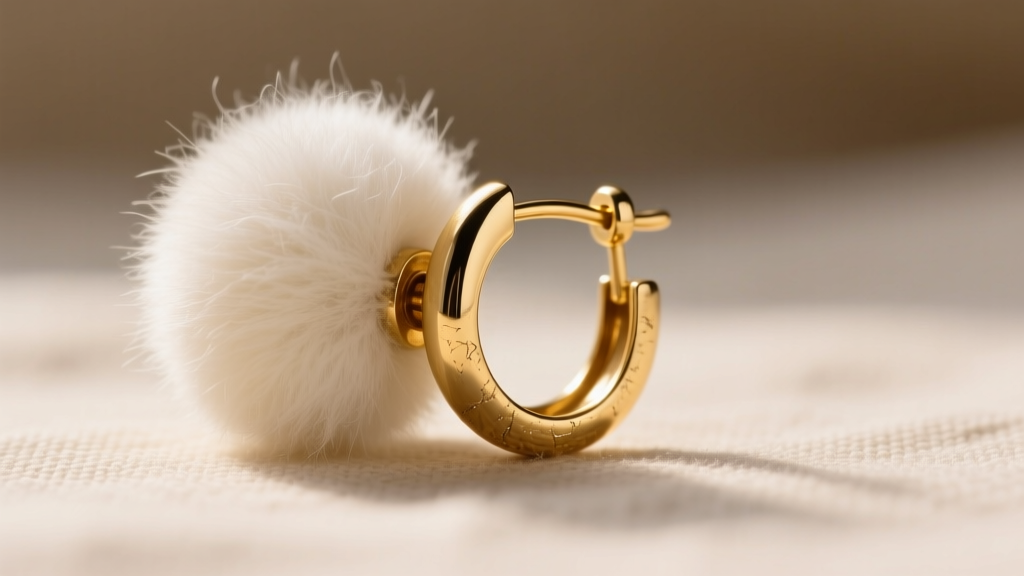
The most common failure point for heavy statement earrings is inadequate hardware. Fur, even faux, adds significant mass and catches the wind, creating a pendulum effect that can stretch or tear standard ear piercings. If you are investing in oversized earrings with fur, you must scrutinize the findings.
| Hardware Type | Wire Gauge | Max Weight Capacity | Best Use Case |
|---|---|---|---|
| Standard French Wire | 20g (0.8mm) | 8-12 grams | Small fur studs, lightweight bio-fur tassels |
| Heavy-Duty Leverback | 14g (1.6mm) | 20-25 grams | Medium shearling hoops, clustered pommels |
| Clip-On / Screwback | N/A (Base plate) | 35+ grams | Oversized avant-garde drops, runway pieces |
For pieces exceeding 15 grams, a 14-gauge or 12-gauge wire is non-negotiable. As noted by jewelry findings experts at Rio Grande, thicker wire gauges distribute the downward force across a wider surface area of the earlobe’s fistula, preventing the dreaded 'cheese-cutter' effect. Additionally, always pair heavy fur drops with silicone O-ring earring backs or specialized locking silicone stoppers to prevent the earring from slipping out during movement.
Proportion and Face Shape Guidelines
Because fur inherently adds visual weight and physical volume to the sides of the head, styling earrings with fur requires a strategic approach to facial geometry. The goal is to complement your natural bone structure rather than overwhelming it.
Round and Square Faces
If you have a round or square jawline, avoid wide, spherical fur studs or short, bushy hoops, which will accentuate the width of your face. Instead, opt for elongated fur tassels or vertical drop earrings featuring a sleek brass chain that terminates in a narrow fur pom-pom. The vertical line draws the eye downward, creating an illusion of length and softening angular jawlines.
Oval and Heart Faces
Oval faces possess balanced proportions that can easily carry the season's most extreme textural trends. Oversized, spherical shearling studs or wide, fur-wrapped huggie hoops look exceptionally harmonious. For heart-shaped faces (wider forehead, narrow chin), teardrop-shaped fur dangles or bottom-heavy chandelier designs help add visual weight to the lower half of the face, balancing the narrower chin.
Cartilage vs. Lobe Placement
A major trend in 2026 is the migration of texture into the upper ear. However, cartilage piercings (helix, flat, rook) are fundamentally different from lobes. Cartilage is avascular and heals with less structural elasticity than the fleshy lobe. Never place heavy fur drops in a standard 18g or 16g helix piercing. The weight will cause migration, irritation bumps, and potential tearing.
Instead, utilize tension-based ear cuffs lined with lightweight, short-pile bio-fur for the upper ear. If you must use a pierced cartilage stud, opt for flat-back labret posts in 14g titanium, featuring a micro-fur inlay (under 5mm in diameter) secured within a bezel setting to prevent the fur from catching on hair and pulling the jewelry.
Maintenance and Storage Protocols
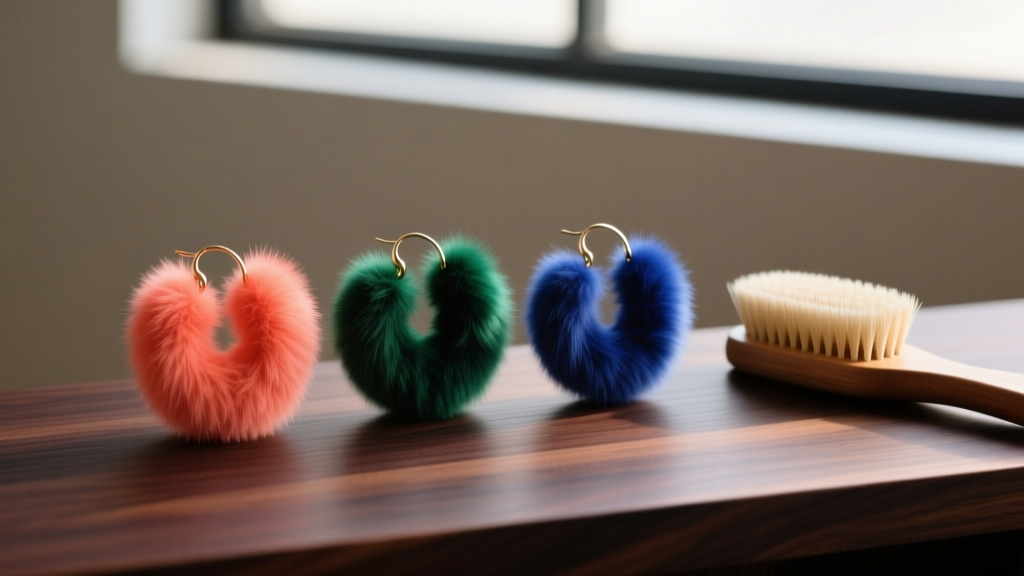
Fur earrings are highly susceptible to humidity, friction, and cosmetic buildup. To maintain the plushness and structural integrity of your pieces, implement the following care routine:
- Dry Brushing: After every 3-4 wears, gently brush the fur with a clean, wide-toothed comb or a specialized faux-fur grooming brush to remove dust and realign the fibers.
- Moisture Avoidance: Never wear fur earrings in heavy rain or snow. If they become damp, shake off excess moisture and allow them to air-dry at room temperature. Never use a hairdryer, as heat will melt modacrylic and bio-polymer fibers.
- Cosmetic Shielding: Apply hairspray, perfumes, and heavy serums before putting on your earrings. Alcohol-based products can degrade the backing of the faux fur and dry out the fibers.
- Cedar Storage: Store your pieces in a breathable cedar box or cotton pouch. Avoid plastic bags, which trap humidity and cause the fur to mat and develop a musty odor over time.
Market Pricing and Accessibility
The market for earrings with fur spans a wide spectrum, reflecting the diverse materials and craftsmanship involved. Fast-fashion retailers offer modacrylic studs and basic hoops in the $15 to $35 range, though these often utilize flimsy 22-gauge wires that require immediate replacement for comfort.
The sweet spot for quality and design lies in the indie artisan sector, priced between $60 and $140. Here, you will find heavy-duty leverback hardware, ethically sourced upcycled shearling, and innovative bio-furs. At the luxury tier ($400 to $1,200+), designers like Ganni and Miu Miu offer runway-grade pieces featuring intricate brass armatures, mixed-metal chain integrations, and proprietary plant-based plush textiles that push the boundaries of wearable art.
"The integration of bio-based textiles into fine jewelry findings represents a crucial pivot. We are no longer choosing between sustainability and luxury; the 2026 consumer demands both in a single, uncompromising piece." — Vogue Business Sustainability Index
Whether you opt for a pair of vibrant, sculptural bio-fur hoops or understated vintage shearling studs, the key to mastering this trend lies in respecting the physical properties of the materials. By prioritizing robust hardware, mindful proportions, and diligent care, your statement earrings will remain a luxurious, textural staple in your winter wardrobe for years to come.


