How to Style Lady Bug Earrings for Every Face Shape
Discover how to choose and style lady bug earrings for your face shape. Learn about materials, gauge sizes, and enamel care in this expert guide.


The Resurgence of Whimsical Jewelry in 2026
In the ever-evolving landscape of jewelry trends, 2026 has seen a definitive pivot away from stark minimalism toward expressive, nature-inspired motifs. Among the most coveted of these is the lady bug earring. Symbolizing luck, protection, and playful elegance, these whimsical pieces have graduated from childhood novelties to high-end sartorial statements. However, styling such a distinct motif requires a nuanced understanding of proportion, metallurgy, and facial geometry. Whether you are opting for a subtle 14k gold stud or a dramatic gemstone-encrusted dangle, this comprehensive guide will walk you through the exact steps to select, style, and maintain your lady bug earrings with expert precision.
Step 1: Mapping Lady Bug Silhouettes to Face Shapes
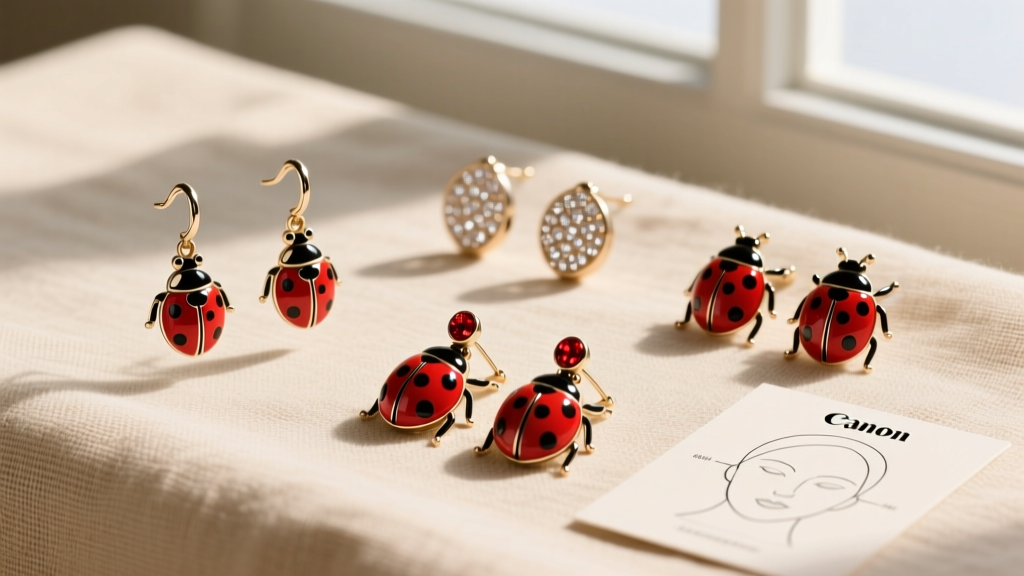
The most common mistake consumers make when purchasing novelty or animal-motif jewelry is ignoring the relationship between the earring's silhouette and their natural facial geometry. A lady bug's natural shape is oval and slightly domed. When translated into jewelry, this can either complement or clash with your jawline and cheekbones. Below is a strategic framework for matching the right style of lady bug earring to your specific face shape.
| Face Shape | Recommended Lady Bug Style | Styles to Avoid | Proportional Goal |
|---|---|---|---|
| Round | Vertical dangles, teardrop ladybugs | Wide dome studs, circular huggies | Elongate the jawline and add verticality |
| Oval | Classic dome studs, ear cuffs | Overly long, heavy chandeliers | Maintain natural balance and highlight cheekbones |
| Square | Curved drop earrings, asymmetrical crawlers | Geometric or boxy ladybug designs | Soften the jawline with organic, curved lines |
| Heart | Bottom-heavy dangles, huggie charms | Top-heavy studs that widen the forehead | Draw attention downward to balance a narrow chin |
For those with round faces, a lady bug dangle that suspends the insect from a delicate 14k gold chain creates a slimming vertical line. Conversely, if you have an oval face, you possess the versatility to pull off a classic 8mm x 6mm dome stud sitting flush against the earlobe, which draws immediate attention to your eyes and natural symmetry.
Step 2: Decoding Materials, Gauges, and Gemstones
Aesthetic appeal means little if the jewelry causes contact dermatitis or fails structurally. Understanding the anatomy of your lady bug earrings is critical for both comfort and longevity.
Base Metals and Post Gauges
The post—the part that actually pierces your skin—dictates the biocompatibility of the earring. According to the Association of Professional Piercers (APP), the gold standard for sensitive ears and fresh piercings is implant-grade titanium (ASTM F-136). If you are buying lady bug earrings for cartilage piercings (like the helix or tragus), ensure the post is at least 18-gauge (1.0mm) or 16-gauge (1.2mm) and features a flat-back labret threading rather than a standard butterfly clutch, which can harbor bacteria and cause pressure necrosis on the back of the ear.
For standard lobe piercings, a 20-gauge (0.81mm) or 18-gauge post in 14k or 18k solid gold is ideal. Avoid 'gold-plated brass' or 'surgical steel' (which often contains nickel) if you have known metal sensitivities.
The Spots: Enamel vs. Gemstones
The iconic spots on a lady bug's wings are typically rendered in one of three ways, each with distinct pricing and durability profiles:
- Cold Enamel (Epoxy Resin): Common in budget jewelry ($15–$40). It is essentially painted resin. While vibrant, it is highly susceptible to chipping, yellowing from UV exposure, and melting if exposed to harsh chemicals.
- Vitreous (Guilloché) Enamel: Found in fine jewelry ($150–$500+). This is crushed glass fused to metal at extreme temperatures. It offers a luminous, translucent depth and is highly durable, though it can shatter if dropped on a hard tile floor.
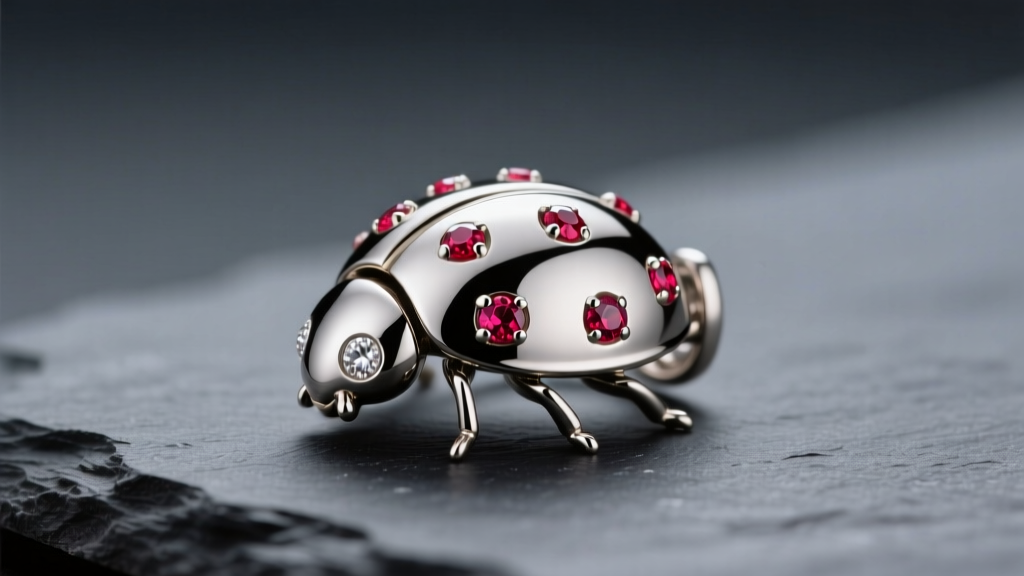
- Natural Gemstones: High-end designers often use natural rubies or rhodolite garnets for the spots. The Gemological Institute of America (GIA) notes that natural rubies possess a Mohs hardness of 9, making them exceptionally resistant to scratching, whereas garnets (Mohs 6.5-7.5) require slightly more careful storage to avoid abrasion against harder diamonds or sapphires in your jewelry box.
Step 3: Navigating Price Tiers and Quality Markers
When shopping for lady bug earrings, price is a direct reflection of material integrity and craftsmanship. Here is what you should expect at different price points in the current market:
'True craftsmanship in novelty jewelry lies in the micro-details: the precision of the pave setting on the insect's thorax, the seamless integration of the enamel, and the weight distribution of the clutch back.' — Master Jeweler's Bench Notes, 2025.
- The Fashion Tier ($15 - $45): Typically made from brass or zinc alloy with a thin flash-plating of gold or silver. The spots are cold enamel or glued-in acrylic stones. Verdict: Fun for seasonal wear, but expect the plating to oxidize and the enamel to chip within 6 to 12 months of regular use.
- The Demi-Fine Tier ($60 - $180): Crafted from solid 925 sterling silver or heavy gold vermeil. You will often see cubic zirconia (CZ) or lab-created sapphires used for the spots. Verdict: Excellent for daily wear, provided you remove them before showering to protect the vermeil finish.
- The Fine Jewelry Tier ($250 - $1,500+): Solid 14k or 18k gold, featuring vitreous enamel or natural rubies/garnets. The posts will be solid gold, and the butterfly backs will be reinforced with 'la pousette' locking mechanisms for security. Verdict: Heirloom-quality pieces that retain intrinsic metal value and withstand daily wear.
Step 4: Troubleshooting and Enamel Care
Lady bug earrings, particularly those featuring intricate enamel work or delicate pave gemstone settings, require specialized maintenance. The most frequent failure mode reported by jewelers is the destruction of enamel and the fracturing of included gemstones due to improper cleaning methods.
The Ultrasonic Cleaner Trap
Never place enamel or gemstone-set lady bug earrings in an ultrasonic jewelry cleaner. The high-frequency sound waves create microscopic cavitation bubbles that implode against the jewelry. While this is excellent for stripping grime from plain diamond solitaires, it will instantly shatter vitreous enamel and can shake gemstones loose from their microscopic prong settings.
The Correct Cleaning Protocol
- Mix a few drops of mild, phosphate-free dish soap into a bowl of lukewarm (not hot) water.
- Submerge the earrings for exactly 3 to 5 minutes to loosen sebum and cosmetic buildup.
- Use a baby-soft toothbrush to gently sweep the bristles over the back of the lady bug's wings and around the post base.
- Rinse under a gentle stream of distilled water to prevent hard water spotting on the gold or gemstones.
- Pat dry with a lint-free microfiber cloth. Never use tissue paper, as the wood pulp fibers can scratch high-polish gold and catch on pave settings.
Final Thoughts on Styling
Styling lady bug earrings in 2026 is all about juxtaposition. Because the motif is inherently playful and rooted in nature, it pairs beautifully with structured, tailored clothing—think a sharp blazer or a crisp poplin shirt—creating a sophisticated tension between the serious and the whimsical. By prioritizing biocompatible metals, selecting a silhouette that honors your facial geometry, and committing to proper enamel care, your lady bug earrings will remain a lucky, luxurious staple in your collection for years to come.


