How to Style and Maintain Chunky Circle Nugget Earrings
Learn how to style, safely wear, and clean heavy circle nugget earrings. Expert tips on lobe support, gold verification, and everyday maintenance.

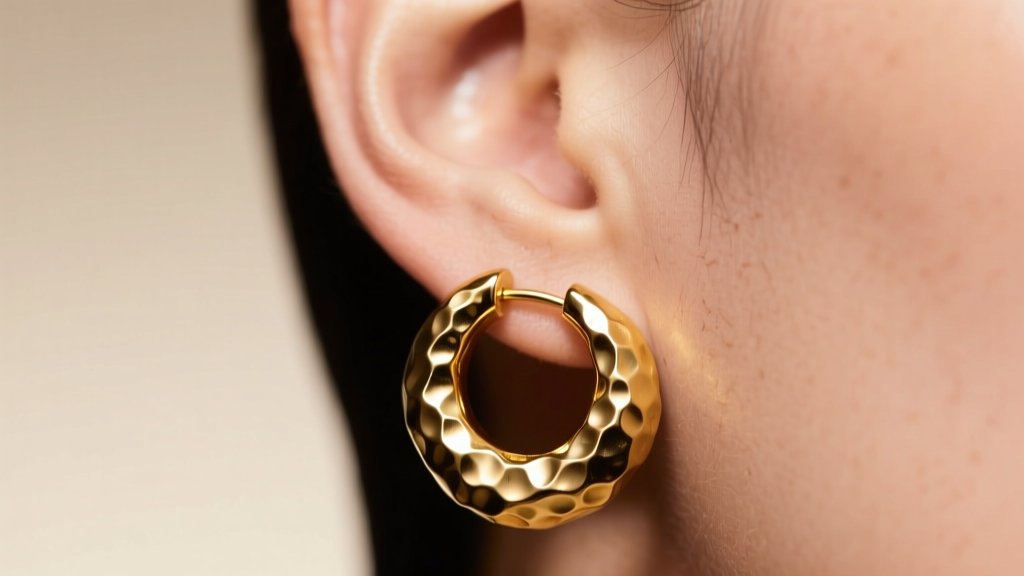
The Rise of the Circle Nugget Earring
In the evolving landscape of fine jewelry, circle nugget earrings have carved out a distinct niche by marrying organic, raw textures with structured, geometric silhouettes. Unlike traditional smooth hoops or polished studs, nugget earrings feature a molten, uneven surface that catches light from multiple angles, mimicking the appearance of raw, unrefined gold or silver. When shaped into a continuous circle or a thick, rounded stud, this texture creates a bold, sculptural statement piece that dominates 2026 ear styling trends.
However, the very nature of these pieces—their dense, solid metal construction and intricate crevices—presents unique challenges for the wearer. Heavy gold alloys can stretch delicate earlobes, and deep textural grooves can trap environmental debris. This comprehensive guide provides actionable, step-by-step instructions on how to safely wear, strategically style, and meticulously maintain your circle nugget earrings to ensure they remain a staple in your collection for decades.
Step-by-Step: Safely Wearing Heavy Nugget Earrings
The most common failure mode when wearing solid gold or silver nugget earrings is the 'cheese-cutter effect.' This occurs when a heavy earring (typically weighing between 8 and 20 grams per piece) rests on a thin, standard-gauge post, gradually slicing through the earlobe tissue over time.
Assessing Your Post Gauge and Lobe Health
Standard ear piercings are usually done at 20-gauge (0.8mm) or 18-gauge (1.0mm). If your circle nugget earrings exceed 10 grams in weight, an 18-gauge post is structurally insufficient. You must verify the post thickness using a digital caliper. For heavy nuggets, look for jewelers who fabricate their pieces with a 16-gauge (1.2mm) or 14-gauge (1.6mm) post. If your earrings already have thin posts, you must use mechanical support to distribute the weight.
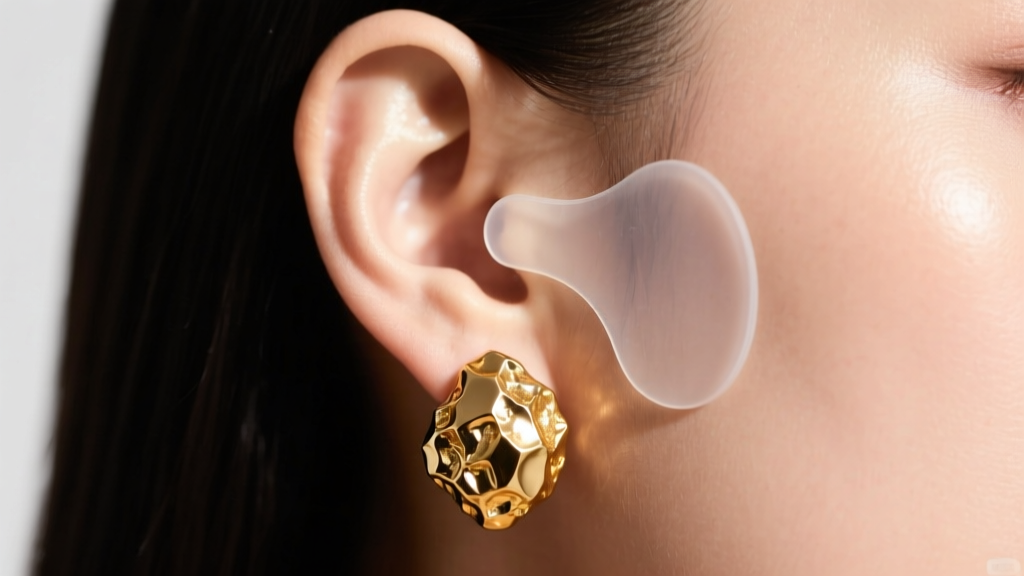
Applying Silicone Support Patches
To prevent lobe tearing and maintain an upright, flattering drape, use silicone earring support patches. These 0.5mm thick, hypoallergenic adhesive discs distribute the weight of the earring across a wider surface area of the earlobe.
- Clean the back of your earlobe with an alcohol wipe and let it dry completely to ensure adhesion.
- Peel the silicone patch and apply it directly over the piercing hole on the back of the lobe.
- Pierce the earring post through the pre-punched hole in the silicone patch.
- Secure the earring back (preferably a heavy-duty friction back or a locking silicone bullet) tightly against the patch.
Styling Frameworks for Round Nugget Textures
Because circle nugget earrings possess high visual weight and a highly reflective, irregular surface, they act as a focal point for the face. Styling them requires balancing their chunky proportions with your natural facial architecture and neckline. According to leading aesthetic stylists, the molten texture of nugget jewelry softens harsh angles, making it a versatile tool for facial contouring.
| Face Shape | Ideal Circle Nugget Proportion | Styling Tip |
|---|---|---|
| Round | Elongated oval-nugget hoops | Draw the eye downward to lengthen the jawline and neck. |
| Square | Soft, perfectly round medium nuggets | Soften angular jawlines with organic, molten metal textures. |
| Heart | Bottom-heavy teardrop-nugget circles | Add visual weight to the lower half of the face to balance a narrow chin. |
| Oval | Any proportion, including chunky studs | Experiment with oversized 20mm+ circular nuggets for high-fashion impact. |
Wardrobe Pairing: The rugged elegance of circle nugget earrings pairs best with structured, minimalist clothing. A crisp, oversized white button-down or a sleek, high-neck ribbed knit sweater provides a blank canvas that allows the intricate gold textures to pop without competing with busy patterns.
How to Clean and Restore Textured Gold Nuggets
The deep, porous crevices that give nugget earrings their signature look are also magnets for sebum, dead skin cells, and cosmetic residue. While ultrasonic cleaners are standard for smooth diamond jewelry, the intense 40,000 Hz cavitation waves can actually drive microscopic debris deeper into the matte or sandblasted finishes of a nugget earring, or loosen adhesives in accent-stone variations.
The Manual Deep-Clean Method
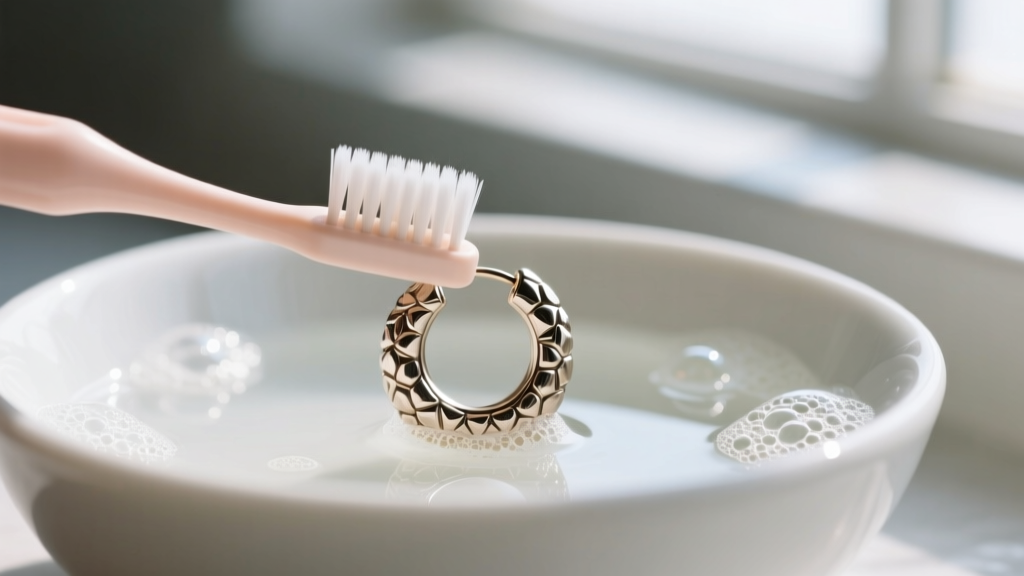
- Prepare the Solution: Mix a 50/50 solution of warm distilled water and ammonia-free dish soap (such as Dawn Powerwash) in a small ceramic bowl. Avoid harsh chemical dips, which can strip the intentional oxidation or patina applied to the crevices of the nugget for contrast.
- Soak Briefly: Submerge the circle nugget earrings for exactly 3 to 5 minutes. Do not exceed this, as prolonged soaking can weaken the structural integrity of the post solder joint.
- Agitate with Precision: Using a soft-bristled baby toothbrush (0.1mm bristles), gently scrub the earring in circular motions. Focus specifically on the deep grooves and the area where the post meets the main body of the nugget.
- Rinse and Dry: Rinse under a gentle stream of lukewarm water. Pat dry with a lint-free microfiber cloth, and use a hairdryer on the 'cool' setting to blow moisture out of the deepest crevices to prevent water spotting.
Authenticity Check: Verifying Your Nugget Metal
Because circle nugget earrings require a significant amount of metal to achieve their chunky, molten aesthetic, they are prime targets for counterfeiters who use gold-plated brass or tungsten cores. When investing in fine jewelry, verifying the metal composition is critical. The Gemological Institute of America (GIA) outlines strict standards for gold purity and hallmarking that every collector should understand.
Examine the post or the inner curve of the hoop for a stamped hallmark. You are looking for 585 (14k gold) or 750 (18k gold). For heavy, textured earrings, 14k gold is often the superior choice. Pure gold is exceptionally soft; 14k gold is alloyed with copper, silver, and zinc, giving it a Vickers hardness of approximately 135. This makes it highly resistant to bending at the post joint, which is a common failure point for heavy 18k gold (Vickers hardness ~125) nugget earrings.
Troubleshooting Common Nugget Earring Issues
Even with meticulous care, heavy textured earrings can present mechanical and dermatological challenges. Here is how to troubleshoot the most frequent issues reported by wearers.
The Post is Bending or Warping
If your earring post bends when inserting it into your piercing, the metal is too soft for the weight of the nugget, or the gauge is too thin. Take the earrings to a professional bench jeweler and request a 'post upgrade.' They can laser-weld a thicker, 14-gauge stainless steel or 14k white gold post onto the existing nugget body, providing the necessary rigidity without altering the yellow gold aesthetic.
Itching and Contact Dermatitis
If your earlobes become red, itchy, or flaky after wearing your circle nugget earrings, you may be experiencing contact dermatitis. According to the American Academy of Dermatology (AAD), nickel is a primary culprit in jewelry allergies. Some lower-tier 10k or 14k gold alloys use nickel as a hardening or whitening agent. If you suspect a nickel allergy, switch to earrings explicitly stamped as 'nickel-free' or have a jeweler rhodium-plate the post and backing to create a hypoallergenic barrier between the metal and your skin.
Dulling of the Molten Texture
Over time, the high points of the nugget texture can become overly polished from friction against hair and clothing, while the crevices remain dark, creating a harsh, unnatural contrast. To restore the original, uniform matte-molten finish, a jeweler can perform a light 'sandblasting' or 'matte finishing' technique using a fiberglass brush, returning the circle nugget earrings to their original, rugged glory.
Pro-Tip for Travel: Never toss heavy circle nugget earrings loosely into a jewelry box or travel pouch. The dense gold or silver will easily scratch softer gemstones or become scratched itself if the textured surfaces grind together. Always store them individually in hard-shell, velvet-lined compartments or wrap each earring securely in a soft, anti-tarnish flannel bag.


