How to Style Vintage Nicole Miller Earrings by Face Shape
Learn how to style vintage and modern Nicole Miller earrings for your face shape, plus expert tips on authenticating and converting heavy clip-ons.

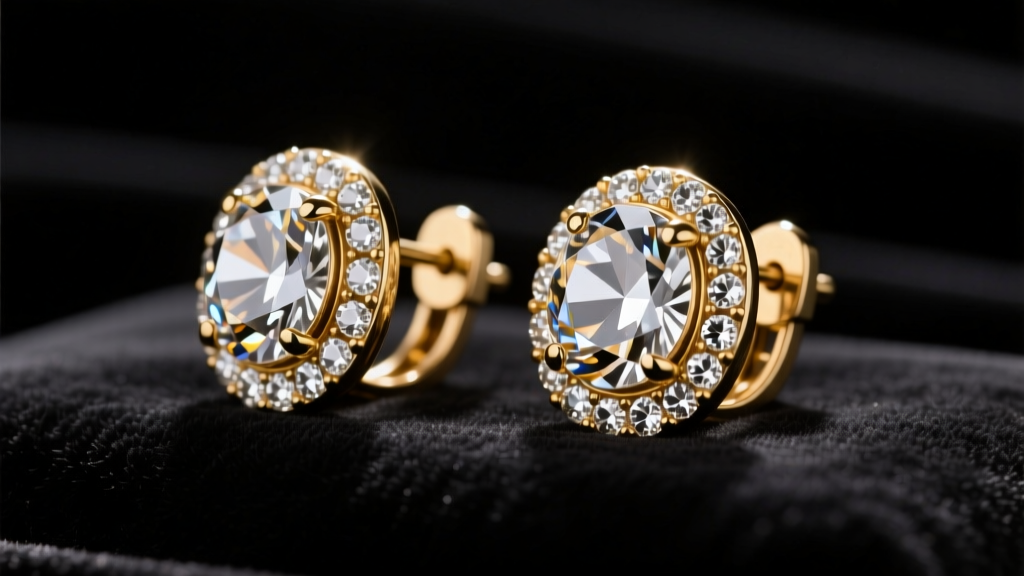
The Enduring Appeal of Nicole Miller Fashion Jewelry
As we navigate the 2026 vintage revival, the demand for bold, unapologetic fashion jewelry has reached a fever pitch. At the forefront of this movement are vintage Nicole Miller earrings, celebrated for their architectural silhouettes, heavy base metals, and brilliant Austrian crystal pavé. Unlike fine jewelry, which relies on precious metals and stones for its value, Nicole Miller’s fashion pieces derive their worth from exceptional craftsmanship, historical design relevance, and sheer visual impact. However, because these pieces were often designed as statement-making clip-ons or oversized posts, styling them requires a strategic approach to balance their substantial weight and dramatic proportions.
In this comprehensive guide, we will break down exactly how to style Nicole Miller earrings based on your facial structure, how to authenticate vintage pieces from the 1980s and 1990s, and provide a jeweler-level tutorial on converting heavy clip-ons into comfortable pierced earrings.
The DNA of Nicole Miller Earrings: Materials and Construction
Before styling, it is crucial to understand what you are working with. According to archives maintained by The Metropolitan Museum of Art's Costume Institute, the late 20th-century fashion jewelry boom relied on specific manufacturing techniques that Nicole Miller mastered:
- Base Metals: Most vintage pieces utilize gold-tone brass or silver-tone pewter. Brass provides the necessary weight and structural integrity for large designs, but it also means a single earring can weigh between 15 and 25 grams.
- Embellishments: Miller frequently utilized high-quality Austrian crystals, glass cabochons, and cold enamel (an epoxy-based resin that mimics vitreous enamel but is less prone to shattering upon impact).
- Hardware: The brand is famous for its comfortable, wide paddle-back clip-ons and tension-adjustable screw-backs, designed specifically to distribute the heavy weight of the earring across a wider surface area of the earlobe.
Step-by-Step Face Shape Matching Guide
Because Nicole Miller earrings are inherently bold, they can easily overwhelm delicate features if not chosen carefully. Use this framework to match specific Miller silhouettes to your face shape.
1. Round Faces: Elongate with Art Deco Drops
If you have a round face (where the width and length of the face are roughly equal, with soft jawlines), your goal is to create vertical elongation. Avoid large, circular Nicole Miller hoops or wide geometric studs, as these will emphasize the roundness of your cheeks.
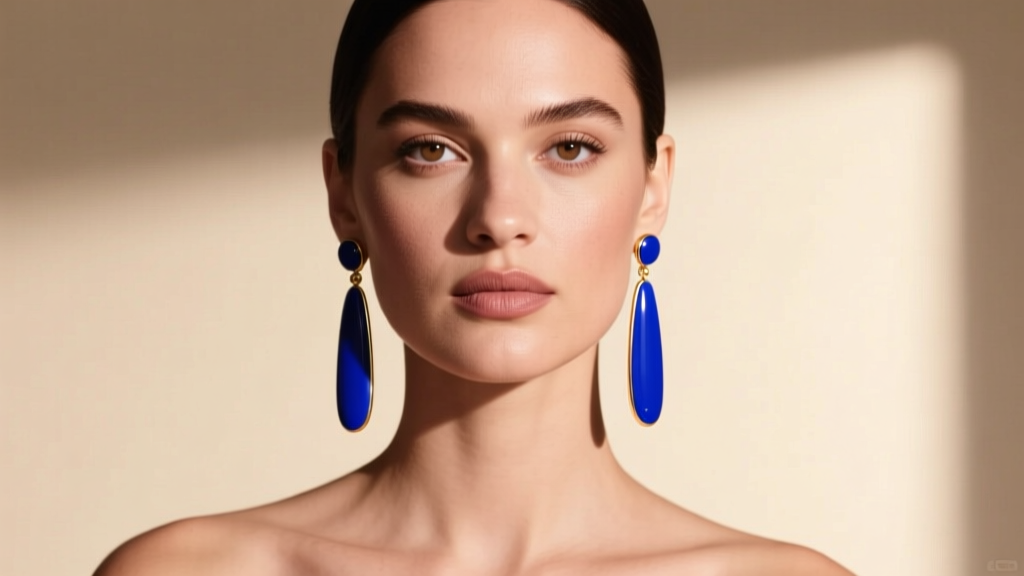
The Fix: Opt for Nicole Miller’s Art Deco-inspired dangle earrings or long, linear crystal drop styles. The vertical movement draws the eye downward, visually lengthening the neck and sharpening the jawline. Look for pieces that hang at least 2 inches below the earlobe.
2. Square Faces: Soften with Convex Enamel and Hoops
Square faces feature strong, angular jawlines and a broad forehead. The objective here is to soften those sharp angles without adding unnecessary width at the jaw.
The Fix: Seek out vintage Nicole Miller convex enamel earrings, rounded gold-tone hoops, or teardrop-shaped crystal clips. The curved lines of the jewelry will contrast beautifully with the natural angles of your bone structure. Avoid strict geometric squares or harsh triangular dangles.
3. Heart Faces: Balance with Chandelier and Teardrop Styles
Heart-shaped faces are characterized by a wider forehead and a narrow, pointed chin. You want to draw attention downward and add visual weight to the lower half of the face.
The Fix: Nicole Miller’s chandelier earrings or wide-bottomed teardrop designs are perfect. The volume at the bottom of the earring perfectly balances a narrow chin. Avoid top-heavy studs or inverted triangles, which will only exaggerate the width of your forehead.
How to Authenticate Vintage Nicole Miller Pieces
The secondary market for vintage fashion jewelry is flooded with reproductions. When sourcing Nicole Miller earrings from estate sales or online vintage dealers, authentication relies on examining the maker's mark, the hardware quality, and the copyright stamps. For deeper verification, collectors often cross-reference pieces with established vintage jewelry databases like those found on Ruby Lane.
| Era | Maker's Mark Style | Common Hardware | Notable Characteristics |
|---|---|---|---|
| Early 1980s | "Nicole Miller" in clean block letters or early cursive | Simple clip-ons, basic post backs | Often unmarked for copyright; heavier brass bases |
| Mid-to-Late 1980s | Signature cursive script with "©" symbol | Wide paddle-back clips, screw-backs | Introduction of "epi d'or" (gold-plated) markings on premium lines |
| 1990s | Engraved script, sometimes accompanied by "N.M." | Omega clips, hinged clips | More use of matte gold finishes and dark enamel contrasts |
| 2000s+ | Laser-etched script, often smaller and less deep | Standard butterfly posts, lever-backs | Lighter base metals, increased use of acrylic and resin |
Step-by-Step Guide: Converting Heavy Clip-Ons to Pierced Posts
Many of the most spectacular vintage Nicole Miller earrings from the 1980s were designed as clip-ons. If you have pierced ears but covet a specific vintage clip-on design, you can convert them. However, because these pieces are heavy, standard jewelry glue will fail. You must use jeweler-grade techniques.
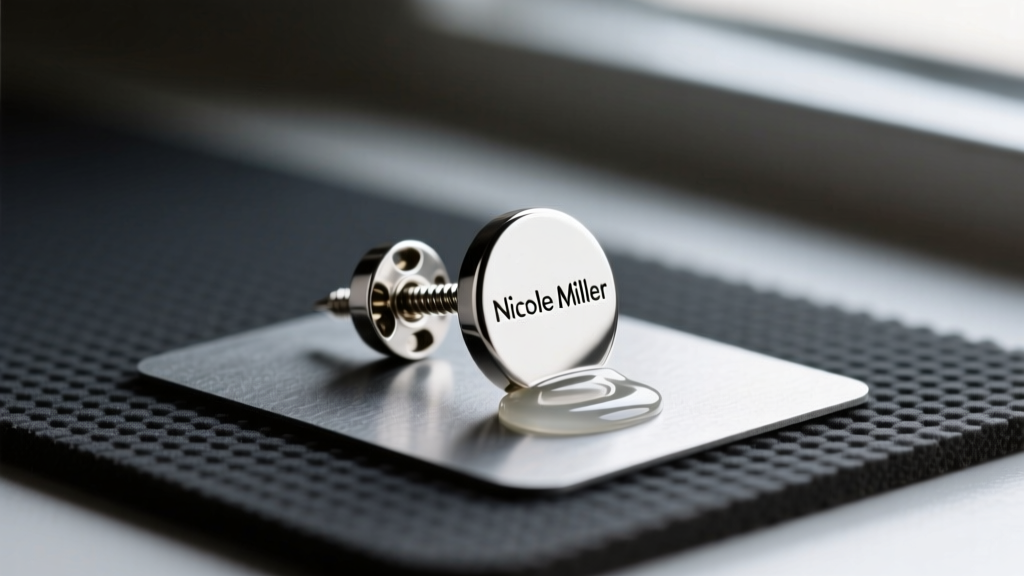
Tools Required
- Flush cutters or a jeweler's saw
- 400-grit sandpaper
- Isopropyl alcohol (90% or higher)
- Two-part clear epoxy (e.g., J-B Weld ClearWeld or professional jeweler's epoxy; avoid standard E6000 for heavy brass)
- 18-gauge (1.0mm) sterling silver or surgical steel post pads (18-gauge is thicker and will support heavy brass better than standard 20-gauge posts)
The Conversion Process
- Remove the Clip Mechanism: Using flush cutters, carefully snip the hinge or the base of the paddle-back clip as close to the brass foundation as possible. If the clip is soldered on, use a jeweler's saw to separate it without damaging the decorative front.
- Flatten and Sand: File down any remaining metal nubs until the back is completely flat. Sand the flat surface with 400-grit sandpaper to create a rough texture, which provides mechanical grip for the epoxy.
- Degrease the Surface: Wipe the sanded area thoroughly with isopropyl alcohol. Any skin oils or polishing compound residue will cause the epoxy to fail.
- Mix and Apply Epoxy: Mix your two-part clear epoxy according to the manufacturer's instructions. Apply a generous layer to the sanded brass base and the back of the 18-gauge post pad.
- Cure Under Tension: Press the post pad firmly into place. Use a small piece of painter's tape or a specialized jewelry curing jig to hold the post perfectly perpendicular to the earring face while the epoxy cures for a full 24 hours.
Expert Warning: When wearing converted heavy brass earrings, always use oversized silicone friction backs or specialized locking earring backs (like La Pousette) to prevent the weight of the earring from tearing the earlobe over time.
Long-Term Care and Verdigris Prevention
Because vintage Nicole Miller earrings rely on brass and copper alloys beneath their gold-tone plating, they are highly susceptible to verdigris—the green, crusty oxidation that occurs when copper reacts with the acids and moisture in human sweat. Once verdigris breaches the plating, it can stain the skin and degrade the metal.
To prevent this, adopt a strict care regimen endorsed by gemological and jewelry conservation experts, such as those at the Gemological Institute of America (GIA):
- Barrier Protection: After cleaning your earrings, apply a micro-thin layer of Renaissance Wax (a micro-crystalline wax used by museums). This creates an invisible, breathable barrier that blocks moisture from reaching the base metal.
- Post-Wear Wiping: Never put vintage fashion jewelry directly into a jewelry box after wearing it. Wipe the posts, clips, and backplates with a dry, lint-free microfiber cloth to remove skin oils and perfume residue.
- Storage Environment: Store your Nicole Miller pieces in a climate-controlled environment. Include silica gel packets in your jewelry drawers to absorb ambient humidity, which is the primary catalyst for cold enamel clouding and metal oxidation.
Final Thoughts on Styling Statement Pieces
Styling Nicole Miller earrings is an exercise in balancing historical boldness with modern elegance. By understanding the architectural intent behind her designs, matching the silhouette to your unique facial geometry, and properly maintaining the base metals, you can seamlessly integrate these vintage masterpieces into your 2026 wardrobe. Whether you are rocking a pair of 1980s gold-tone crystal clips or a converted enamel drop, the key is to let the jewelry command the room.


