How to Style and Wear Long Dangling Earrings Without Earlobe Damage
Learn how to style and wear long dangling earrings safely. Discover weight distribution tips, face shape guides, and lobe-saving hacks for heavy drops.

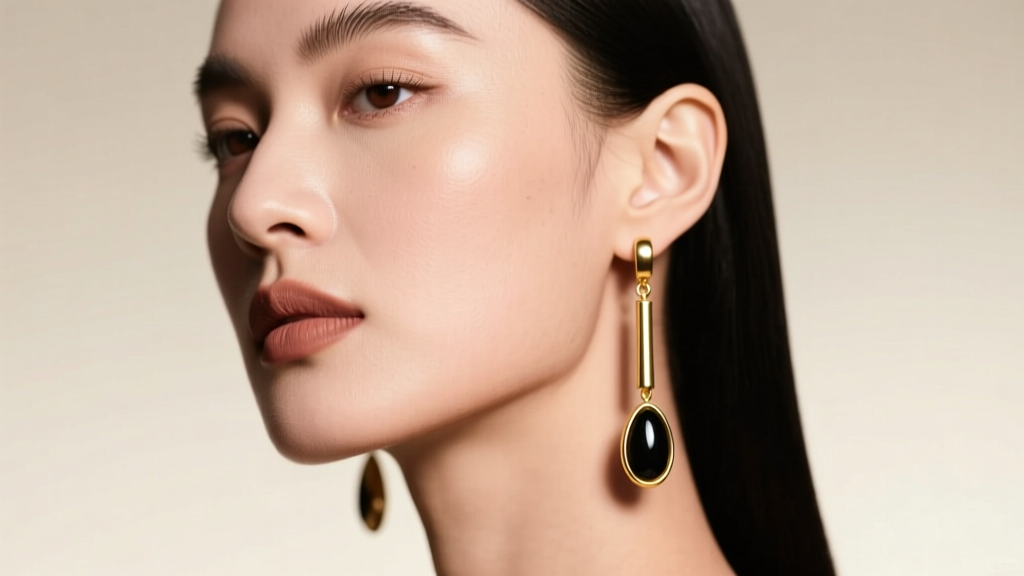
Long dangling earrings are a staple of editorial fashion and evening wear, offering dramatic movement and face-framing elegance. However, the physics of wearing elongated, heavy drops often leads to a common but preventable issue: earlobe stretching, micro-tearing, and sagging. If you love the look of chandelier, chain, or shoulder-grazing drops, understanding weight distribution, gauge thickness, and proper support is non-negotiable. This step-by-step guide will teach you how to style and wear long dangling earrings safely, preserving your piercing integrity while maximizing your aesthetic.
The Physics of Long Drops: Weight vs. Gauge
When you wear long dangling earrings, gravity is constantly pulling downward on your earlobe tissue. This creates what piercers call the "cheese cutter effect." When a heavy earring (e.g., 20 grams) hangs from a thin 20-gauge (0.81mm) wire, the downward force concentrates on a microscopic surface area of the fistula (the piercing channel). Over time, this slices through the collagen matrix, causing permanent stretching and the dreaded "slit lobe" effect.
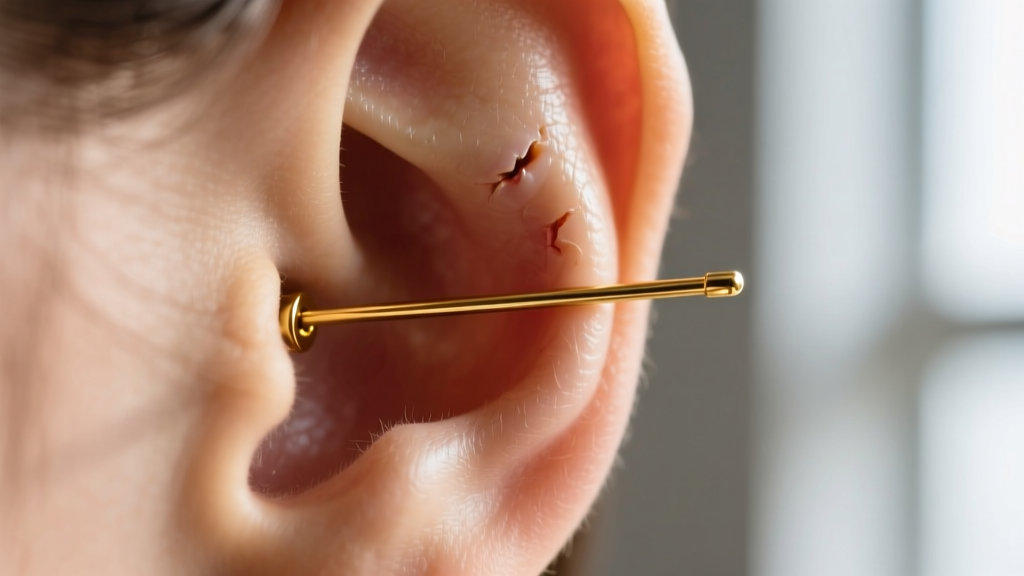
According to guidelines from the Association of Professional Piercers (APP), standard earlobe piercings are typically done at 18G or 20G. These gauges are perfectly suited for lightweight studs and small hoops, but they are not engineered to support heavy kinetic loads without assistance. To wear long drops safely, you must either increase the wire thickness, reduce the earring weight, or artificially support the lobe.
Step-by-Step: Choosing the Right Weight and Backing
Not all long dangling earrings are created equal. A 3-inch chain made of hollow aluminum might weigh 3 grams, while a 2-inch solid brass geometric drop could weigh 25 grams. Always check the gram weight before purchasing, and match the earring back to the load.
| Weight Class | Grams | Max Wear Time | Recommended Backing | Ideal Wire Thickness |
|---|---|---|---|---|
| Featherlight | 1g - 5g | 24+ Hours | Standard Friction Back | 20G (0.81mm) |
| Medium | 6g - 14g | 8 - 12 Hours | Silicone Stopper / O-Ring | 18G (1.02mm) |
| Heavyweight | 15g - 25g+ | 4 - 6 Hours | Lobe Support Patch | 16G (1.29mm) or thicker |
How to Match Long Dangling Earrings to Your Face Shape
Beyond weight, the visual length and silhouette of your earrings should complement your bone structure. Here is a quick framework for selecting the right drop length:
- Round Face: Avoid circular hoops or wide, voluminous chandeliers that add horizontal width. Opt for linear, rectangular long dangling earrings that extend 2.5 to 3.5 inches below the lobe to visually elongate the jawline and neck.
- Square Face: Soften a strong, angular jaw with long drops that feature curved elements, teardrops, or organic shapes. Keep the widest part of the dangle below the jawline to draw the eye downward.
- Heart Face: Balance a narrow chin with long dangling earrings that are wider at the bottom, such as A-line, inverted triangle, or tassel silhouettes that add visual weight to the lower half of the face.
- Oval Face: You have the most versatility. Experiment with extreme lengths, including shoulder-dusting pieces exceeding 4 inches, or asymmetrical designs.
3 Hacks to Prevent Earlobe Sagging and Tearing
If you already own heavy long dangling earrings, use these three professional styling hacks to protect your tissue:
1. Apply Earring Support Patches
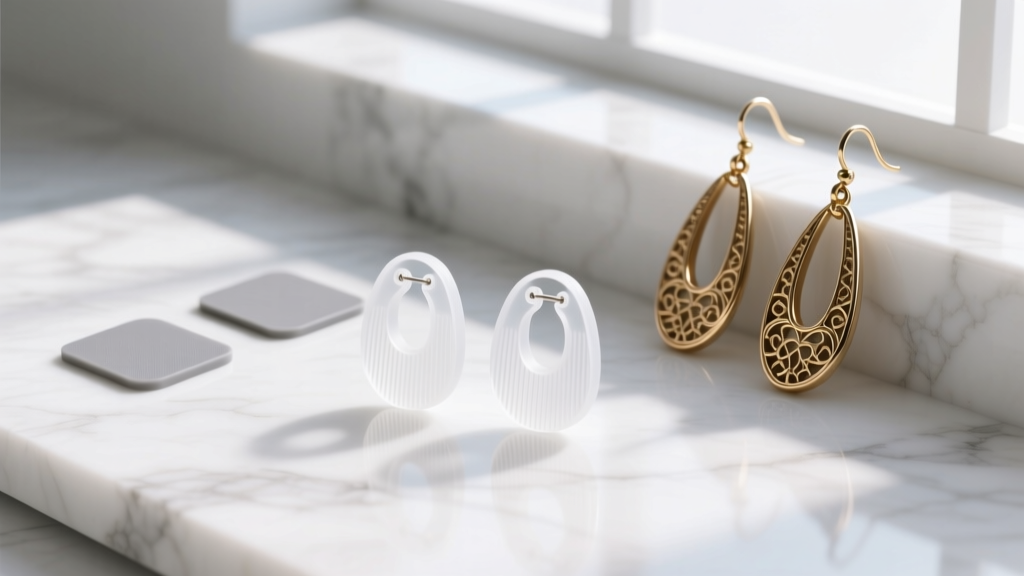
Products like Lobe Wonder are adhesive, hypoallergenic patches that stick to the back of your earlobe. They feature a reinforced hole that distributes the weight of the earring across a wider surface area of skin, completely eliminating the cheese cutter effect. How to apply: Cleanse the back of your lobe with alcohol, let it dry completely, peel the patch, align the hole with your piercing, and press firmly for 10 seconds before inserting your earring.
2. Upgrade to Leverbacks with Silicone O-Rings
Fishhook wires are notorious for slipping out of the ear, especially when the heavy dangle catches on clothing or hair. Swap them for leverback closures, which snap shut securely. For added safety, slide a tiny silicone O-ring over the leverback closure to lock it in place.
3. The French Wire Conversion
If a heavy drop uses a thin, flimsy post, take it to a local jeweler and have them solder on a thick 16-gauge French wire or a sturdy leverback. The initial cost (usually $20-$40) is worth saving your earlobe from surgical repair later.
Step-by-Step: Safely Inserting and Removing Long Drops
Traumatic tearing often happens not while wearing the earrings, but during insertion and removal. Follow this protocol:
- Never pull by the dangle: When removing the earring, do not pull on the decorative chain or drop. Pinch the actual wire or post at the base of the earlobe to guide it out.
- Support the lobe: Place your index finger behind your earlobe to provide a backstop. This prevents the wire from dragging and stretching the exit hole.
- Mind your hair: Always put your long dangling earrings in after you have finished styling your hair and applying hairspray. Removing them should be the very first step when undressing to prevent snagging on collars or scarves.
Material Matters: Hypoallergenic Options for Heavy Drops
Heavy earrings cause more friction against the fistula. Friction causes micro-abrasions. Micro-abrasions drastically increase the risk of contact dermatitis. The American Academy of Dermatology (AAD) notes that nickel is the most common culprit for jewelry allergies, and heavy, swinging earrings guarantee prolonged, aggressive contact with the skin.
Avoid white gold (which often contains nickel alloys) and cheap brass for heavy, long-wear drops. Instead, insist on ASTM F-136 implant-grade titanium, niobium, or solid 14k/18k yellow gold. Titanium is exceptionally beneficial for long dangling earrings because of its low density; a physically large, dramatic titanium drop will weigh significantly less than the exact same design cast in stainless steel or brass.
"The heavier the earring, the more it swings and rubs against the fistula. If your jewelry contains nickel, that increased friction and micro-trauma almost guarantees an allergic flare-up and delayed healing."
Final Thoughts on Ear Health
Long dangling earrings are an incredible way to elevate your personal style, but they demand respect for your anatomy. By paying strict attention to gram weights, upgrading your wire gauges, utilizing support patches for heavyweight pieces, and choosing biocompatible metals, you can enjoy dramatic, shoulder-grazing drops for decades without compromising the health and shape of your earlobes.


