Styling 1920s Earrings: The Art Deco Revival Guide
Discover how the 1920s earrings trend is reshaping 2026 jewelry fashion. Learn to style authentic Art Deco drops, geometric studs, and filigree dangles.

The Anatomy of Authentic 1920s Earrings
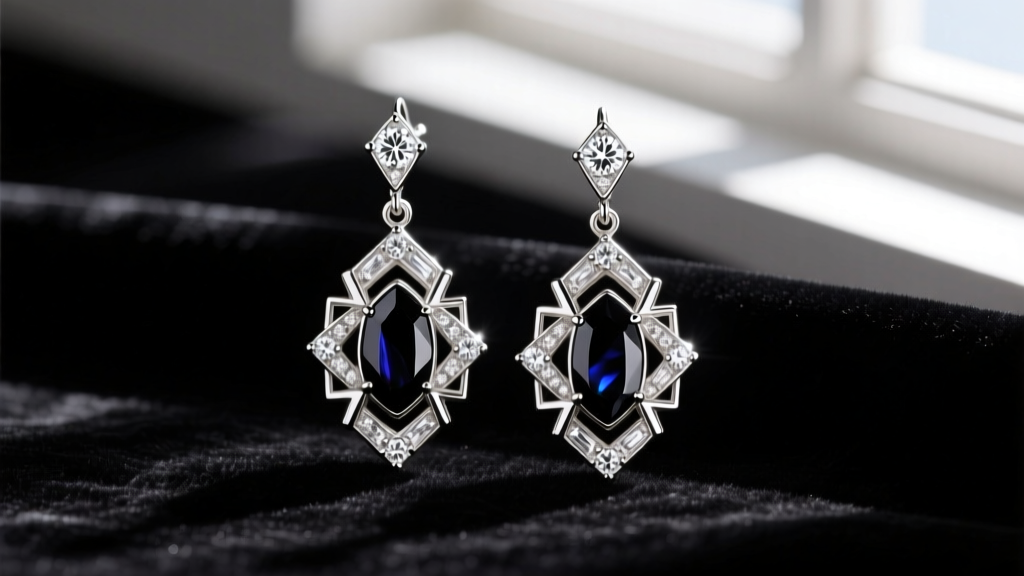
The resurgence of 1920s earrings in 2026 is not merely a cyclical fashion moment; it is a profound appreciation for the architectural precision of Art Deco design. Emerging in the aftermath of World War I, the Art Deco movement rejected the flowing, organic, and asymmetrical lines of the preceding Art Nouveau era. Instead, it embraced rigid geometry, machine-age symmetry, and bold color contrasts. When analyzing authentic 1920s earrings, the first hallmark of the era is the meticulous use of calibre-cut gemstones. Unlike standard faceted stones, calibre-cut onyx, rubies, sapphires, and emeralds were custom-faceted to fit flush into intricate geometric metal channels, creating seamless mosaics of color and light.
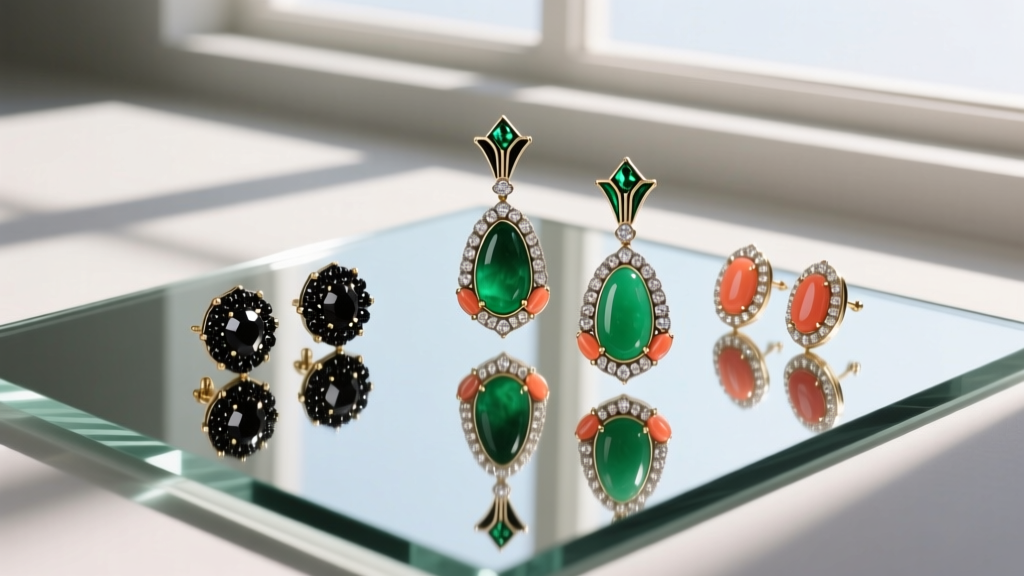
Platinum was the undisputed metal of the 1920s. Its unparalleled tensile strength allowed master jewelers to create impossibly delicate, lace-like filigree patterns and millegrain edging—tiny, beaded metal borders that added texture and caught the light without adding excessive weight to the earlobe. According to the Gemological Institute of America (GIA), the contrast between brilliant white platinum and diamonds against deep black onyx, vibrant carved coral, or opaque jade became the defining visual signature of the decade. These material choices were not just aesthetic; they reflected the era's fascination with global travel, Egyptian revival motifs following the discovery of Tutankhamun's tomb, and the rise of Cubism in fine art.
The 2026 Art Deco Revival: What's Trending Now
As we navigate the jewelry trends of 2026, the 1920s earrings aesthetic has been reimagined for the modern collector. While the geometric silhouettes remain, contemporary jewelers are adapting the style to address modern demands for wearability and ethical sourcing. Today's Art Deco revival frequently incorporates lab-grown diamonds, allowing designers to create the dense, pavé-set geometric patterns characteristic of the 1920s at a more accessible price point. Furthermore, the use of aerospace-grade titanium in high-end reproductions has revolutionized the wearability of long, dramatic Art Deco chandelier drops, reducing the weight on the earlobe by nearly 40% compared to traditional platinum or white gold constructions.
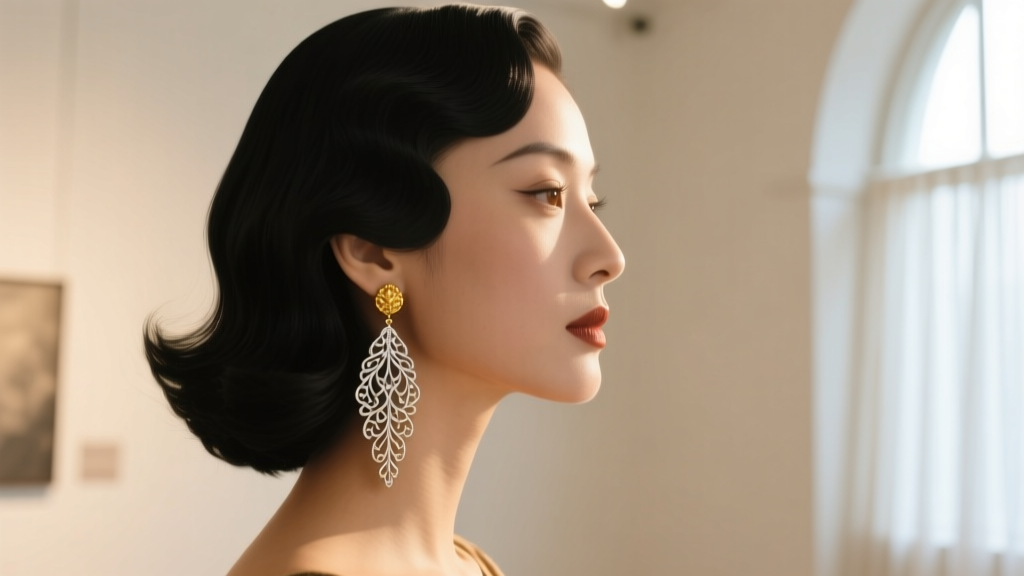
Another major trend in 2026 is the modular 1920s earring. Taking cues from the convertible jewelry of the Great Depression—when pieces were designed to serve multiple purposes to maximize value—modern designers are creating Art Deco drops with detachable lower sections. This allows the wearer to transition from a bold, shoulder-grazing geometric dangle for evening wear to a simple, onyx-inlaid diamond stud for the office, all within the same architectural framework.
Material & Gauge Specifications: Vintage vs. Modern
For the serious collector or the stylist sourcing pieces for editorial shoots, understanding the structural differences between authentic 1920s earrings and modern reproductions is critical. The most significant point of failure when wearing authentic vintage pieces is the earring back. In the 1920s, pierced ears were relatively uncommon among affluent Western women; thus, the vast majority of fine jewelry earrings were designed as screw-backs for unpierced ears or featured thick shepherd hooks.
The post thickness on a vintage screw-back typically measures between 16-gauge (1.2mm) and 14-gauge (1.6mm). Attempting to force these thick, threaded posts through a modern piercing—which is typically accustomed to 20-gauge (0.8mm) or 22-gauge (0.6mm) standard friction posts—can cause severe trauma, stretching, and irritation to the earlobe. Professional jewelers often perform a 'post conversion,' carefully cutting off the original screw-back and laser-soldering a modern 18k white gold or platinum 19-gauge friction post. Below is a comparative breakdown of what to expect when evaluating 1920s earrings today.
| Specification | Authentic 1920s Vintage | 2026 Art Deco Reproductions |
|---|---|---|
| Primary Metals | 950 Platinum, 18k White Gold (often rhodium-plated) | 14k/18k Gold, Platinum, Titanium, Oxidized Silver |
| Earring Backs | Screw-backs, Lever-backs, Thick Shepherd Hooks (14g-16g) | Standard Friction Posts (19g-20g), Secure Omega Clips |
| Stone Cuts | Calibre-cut, Baguette, Trapezoid, Old European Cut Diamonds | Custom Step-cuts, Brilliant Round, Lab-Grown Baguettes |
| Weight per Ear | 8g - 18g (Heavy drops often require ear supports) | 3g - 10g (Optimized for modern comfort standards) |
| Price Range | $1,500 - $85,000+ (Highly dependent on provenance) | $350 - $12,000 (Dependent on metal and diamond carat) |
Styling 1920s Earrings for Modern Face Shapes
The rigid geometry of Art Deco jewelry can be incredibly unforgiving if not matched correctly to the wearer's facial structure. The sharp angles and linear drops that defined the flapper era require strategic styling to balance modern aesthetics. Here is a definitive guide to matching 1920s earrings to specific face shapes:
- Round Faces: Opt for long, linear geometric drops featuring vertical baguette diamonds and elongated onyx pendants. The strict verticality creates an optical illusion that elongates the face and draws the eye downward, avoiding wide, circular filigree clusters that will exaggerate facial width.
- Square Faces: Soften a strong, angular jawline by selecting 1920s earrings that incorporate curved elements within the Deco framework. Look for circular platinum filigree dangles, or geometric drops that terminate in a smooth, rounded jade or coral cabochon. Avoid sharp, triangular chandelier designs.
- Oval Faces: The universal face shape can carry the boldest, most complex Art Deco designs. Wide, geometric cluster studs or short, multi-tiered chandelier clips that sit snugly against the earlobe will highlight the natural symmetry of an oval face without overwhelming it.
- Heart-Shaped Faces: To balance a wider forehead and narrower chin, choose 1920s earrings that add visual weight and width at the bottom of the earlobe. Teardrop-shaped pendants featuring a wide base of calibre-cut sapphires or a flared geometric fringe will beautifully complement this bone structure.
Sourcing Authentic vs. Art Deco-Inspired Pieces
Navigating the secondary market for authentic 1920s earrings requires a trained eye and an understanding of international hallmarks. According to the Victoria and Albert Museum (V&A), French jewelry from this period dominates the high-end market. When sourcing pieces from reputable platforms like 1stDibs or major auction houses, always inspect the post or clip for French hallmarks. The 'eagle head' (tête d'aigle) indicates 18k gold, while the 'dog head' (tête de chien) is the official French assay mark for platinum. Be highly skeptical of pieces claiming to be authentic 1920s platinum that lack these stamps or feature modern laser-welding marks near the findings.
For collectors on a budget, silver and marcasite 1920s earrings offer an accessible entry point into the era. Marcasite—a trade name for faceted pyrite—was heavily used in the 1920s to mimic the sparkle of diamonds in more affordable pieces. However, buyers must be aware that the shellac or glue used to set marcasite chips in the 1920s degrades over time. When purchasing vintage marcasite drops, gently tap the piece over a dark cloth; if loose, glittering chips fall out, the piece will require professional restoration before it can be safely worn.
Care and Maintenance for Antique Drops
The materials that make 1920s earrings so visually striking also make them incredibly fragile when subjected to modern cleaning methods. The most critical rule in maintaining antique Art Deco jewelry is to never, under any circumstances, place them in an ultrasonic cleaner. The high-frequency vibrations will instantly shatter the delicate millegrain edging, fracture porous stones like carved coral, lapis lazuli, and jade, and dissolve the century-old adhesive holding marcasite and calibre-cut channel stones in place.
Instead, clean platinum and diamond components using a soft, baby-hair brush dipped in a mild solution of warm water and phosphate-free dish soap. Gently brush the pavé settings from the back to dislodge accumulated skin oils and lotions that dull the diamonds. For the opaque stones—onyx, coral, and jade—simply wipe them with a damp, lint-free microfiber cloth. Store 1920s earrings individually in soft, acid-free tissue paper within a lined jewelry box to prevent the diamond baguettes from scratching the softer, polished surfaces of the onyx or jade inlays. By respecting the structural limitations of these century-old masterpieces, collectors can ensure the Art Deco revival continues to shine brilliantly for decades to come.


