Bird Stud Earrings: 2026 Trend Analysis & Styling Guide
Explore the 2026 avian jewelry trend. Our guide breaks down bird stud earrings, from 18k gold swallows to enamel sparrows, for lobe and cartilage piercings.

The Resurgence of Avian Motifs in 2026 Fine Jewelry
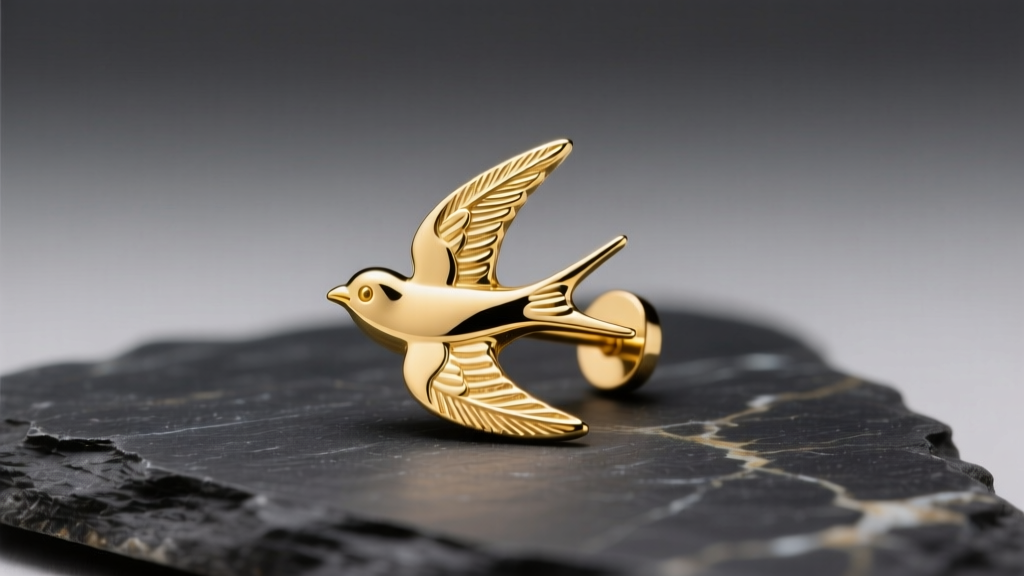
As we navigate the 2026 jewelry landscape, the shift away from ubiquitous floral and celestial motifs has paved the way for dynamic, micro-sculptural avian designs. Bird stud earrings are no longer relegated to vintage costume jewelry boxes; they have been reimagined by contemporary fine jewelers as symbols of freedom, migration, and precision craftsmanship. From the aerodynamic silhouette of a diving swallow to the intricate, puffed-feather detailing of a perched dove, avian studs offer a unique blend of organic movement and structural elegance.
This year's trend analysis reveals a consumer preference for 'quiet luxury' mixed with personalized symbolism. Swallows, traditionally associated with safe returns and nautical navigation, are dominating the helix and lobe markets. Meanwhile, sparrows and wrens—representing community and resilience—are becoming the go-to choices for minimalist tragus and conch placements. Understanding how to style, size, and care for these intricate pieces is essential for both jewelry collectors and everyday wearers.
Material & Gauge Specifications for Bird Studs
Because bird silhouettes often feature asymmetrical weight distribution and protruding elements (like beaks or tail feathers), the structural integrity of the post and the biocompatibility of the metal are paramount. The Association of Professional Piercers (APP) strictly recommends implant-grade materials for any jewelry worn in cartilage or healing lobes to prevent contact dermatitis and rejection.
| Material Grade | Recommended Gauge | Avg. Price Range | Best Placement |
|---|---|---|---|
| Implant-Grade Titanium (ASTM F136) | 16G (1.2mm) or 18G (1.0mm) | $45 - $120 | Helix, Tragus, Flat |
| 14k / 18k Solid Yellow Gold | 18G (1.0mm) or 20G (0.8mm) | $150 - $450 | Standard Lobe, Upper Lobe |
| Niobium (Anodized) | 16G (1.2mm) | $35 - $85 | Cartilage, Healing Piercings |
Expert Warning: Avoid gold-plated brass or copper alloys for cartilage placements. The friction from hair and headphones can wear away the plating, exposing base metals that cause severe localized allergic reactions and greenish skin discoloration.
Lobe vs. Cartilage: Placement Strategies for Bird Silhouettes
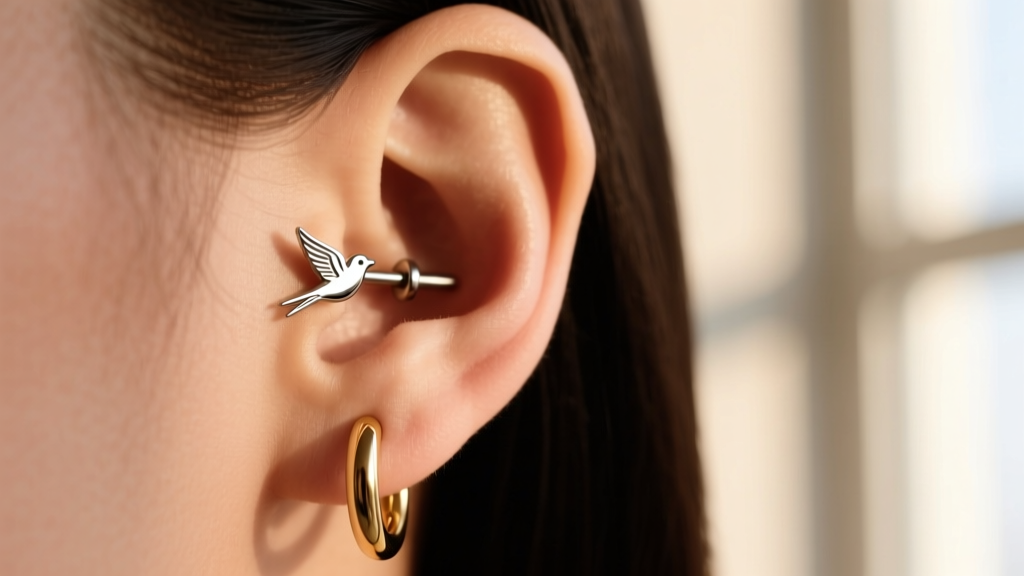
The anatomy of a bird stud dictates its ideal placement. Unlike symmetrical geometric shapes, birds have distinct directional flow—meaning they must be oriented correctly to follow the natural lines of the ear.
The Helix Swallow & The Flat-Backed Labret
For upper cartilage placements like the helix or flat, a standard butterfly back is a functional nightmare. Butterfly backs harbor bacteria, trap hair, and press unevenly against the curved back of the ear. Instead, high-end avian studs designed for cartilage utilize threadless or internally threaded flat-back labret posts. A 16-gauge (1.2mm) titanium post provides the necessary rigidity to support the wider wingspan of a swallow without bending, while the flat disc sits flush against the concha, eliminating pressure points during sleep.
The Tragus Sparrow & The Cheese-Cutter Effect
The tragus is a thick, highly mobile piece of cartilage that experiences constant friction from earbuds and phone receivers. Bird studs placed here must have a compact, 'perched' profile (typically 3mm to 4mm in height). If you attempt to wear a delicate 20-gauge (0.8mm) post in a tragus that was pierced at 16-gauge, you risk the 'cheese-cutter effect'—where the thin wire slowly migrates through the tissue due to the weight of the jewelry and mechanical stress. Always match your stud's post thickness to your piercing's original gauge.
Enamel vs. Gemstone: Comparing Detail Techniques
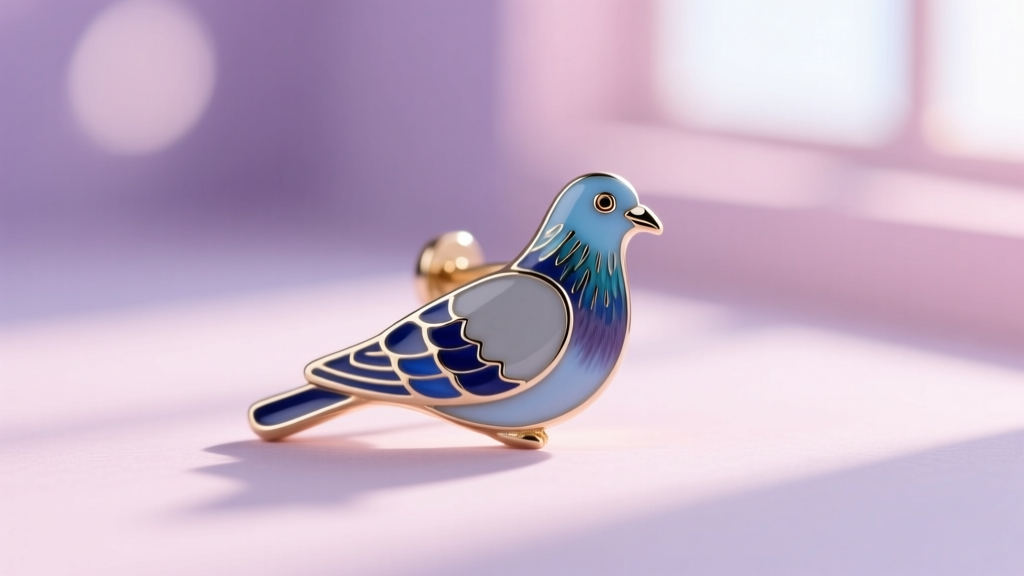
To capture the vibrant plumage of species like the kingfisher or the pigeon, jewelers rely on either vitreous enamel or micro-pavé gemstones. Understanding the difference is crucial for long-term wearability.
- Vitreous (Kiln-Fired) Enamel: This traditional technique involves fusing powdered glass to metal at temperatures exceeding 1,400°F. The result is a scratch-resistant, luminous finish that will not yellow over time. According to the Gemological Institute of America (GIA), properly fired enamel is as durable as many semi-precious stones, making it ideal for everyday bird studs.
- Cold Enamel (Epoxy Resin): Often found in mass-produced, lower-priced avian jewelry, cold enamel is essentially painted resin. While it allows for intricate color gradients, it is highly susceptible to chipping, scratching, and UV degradation. If your bird stud's blue feathers begin to look dull or chalky after six months, it is likely cold enamel.
- Gemstone Accents: For a more luxurious approach, designers use tsavorite garnets for emerald-green wings or micro-set sapphires for the eyes. While stunning, gemstone-inlaid birds require prong maintenance; a loose micro-prong can easily catch on knitwear and dislodge the stone.
Troubleshooting Common Bird Stud Failures
Avian jewelry presents unique mechanical challenges due to its organic, asymmetrical geometry. Here is how to troubleshoot the most common issues reported by collectors:
1. The Forked Tail Snag
The Problem: Swallows and magpies feature elongated, forked tail feathers. These protruding points act as tiny levers that catch on sweater threads, hair, and towels, often resulting in a bent post or a lost earring.
The Solution: For active wear or cartilage placements where hair frequently falls over the ear, opt for 'swept-wing' or 'folded-wing' silhouettes (like a resting dove or owl). These designs keep the perimeter of the stud smooth and snag-free.
2. Post Bending on Heavy Heads
The Problem: Large, solid 14k gold bird heads (such as eagles or owls) can weigh upwards of 1.5 grams. When paired with a standard 20-gauge friction post, the leverage applied when pulling off a tight turtleneck can permanently bend the gold post.
The Solution: Request a custom bezel-set backing plate or upgrade to an 18-gauge or 16-gauge post. If the jeweler uses a threadless system, the slight bend in the pin that creates the tension lock will distribute the stress more evenly than a traditional friction notch.
3. Asymmetrical Drooping
The Problem: Because a bird in flight is top-heavy at the wings, the stud may rotate forward or droop downward on the earlobe, making the bird look like it is diving into the neck.
The Solution: Utilize a 'jumbo' or 'disc' friction back for lobe placements. The wider surface area of a 6mm or 8mm silicone or gold disc back provides a broader anchor point against the back of the lobe, counteracting the top-heavy center of gravity and keeping the bird flying perfectly horizontal.
Curating Your 2026 Avian Ear Stack
The ultimate goal of the modern ear stack is curated balance. If your focal point is an intricate, 18k gold diving swallow in the upper lobe, anchor it with minimalist, textured gold hoops or simple diamond solitaires in the lower lobes. Allow the bird stud to dictate the narrative of your ear curation. By prioritizing implant-grade metals, correct gauge sizing, and snag-free silhouettes, your avian jewelry will remain a timeless, wearable piece of art for decades to come.


