Trend Forecast: Styling Different Earring Types for 2026
Discover the 2026 trend forecast for styling different earring types. Learn expert pairings, gauge specs, and material grades for the modern curated ear.

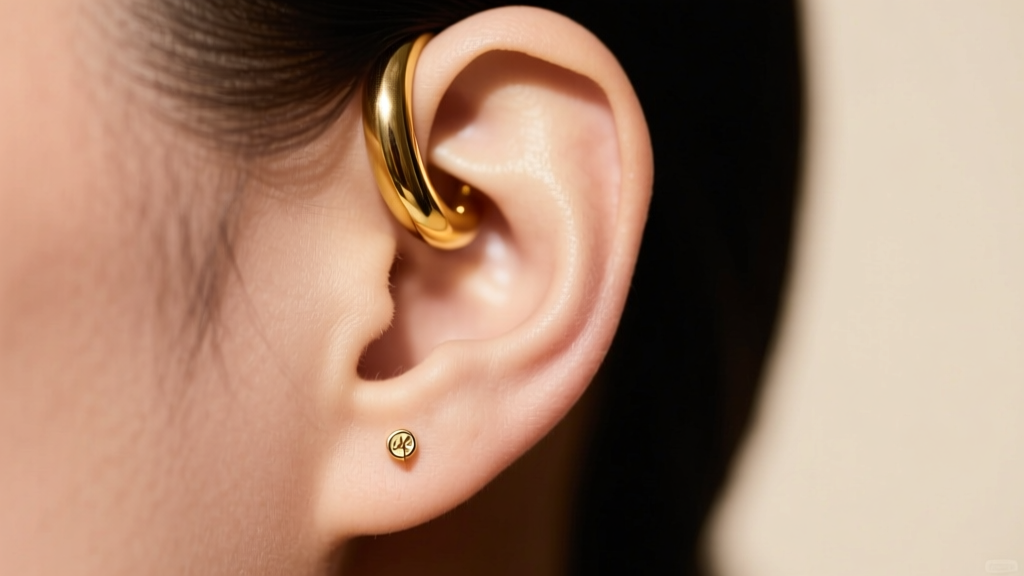
The 2026 Shift: From Matchy-Matchy to Architectural Asymmetry
The concept of the 'curated ear' has matured significantly over the last decade, but as we navigate 2026, the styling landscape has shifted from chaotic constellation clusters to deliberate, architectural asymmetry. Today’s collectors and stylists are no longer simply accumulating piercings; they are engineering balanced, weighted compositions. Understanding how to mix different earring types—from structural huggies to tension-fit ear cuffs and threadless cartilage ends—is now a foundational skill in modern jewelry styling.
According to industry analysis from JCK Online, consumer spending in the fine jewelry sector has heavily pivoted toward modular, high-quality components. Buyers are investing in versatile 14k gold and implant-grade titanium pieces that can be swapped between the lobe, helix, and tragus. This trend demands a rigorous understanding of jewelry mechanics, gauge sizing, and material biocompatibility.
Deconstructing the Anatomy: Gauge, Weight, and Placement
Before mixing different earring types, one must understand the structural limitations of the ear's anatomy. A common styling failure occurs when a heavy drop earring is placed in a delicate upper lobe piercing, leading to migration or tissue tearing. The Association of Professional Piercers (APP) emphasizes that jewelry weight and gauge must be matched to the specific tissue density of the piercing site.
| Piercing Site | Standard Gauge | Ideal Earring Types | Max Weight Recommendation |
|---|---|---|---|
| Standard Lobe | 20g (0.8mm) - 18g (1.0mm) | Drop earrings, Dangles, Lightweight Hoops | 8-12 grams per earring |
| Upper Lobe / Helix | 16g (1.2mm) | Huggies, Threadless Studs, Flat-back Labrets | 3-5 grams per earring |
| Tragus / Conch | 16g (1.2mm) - 14g (1.6mm) | Large Gem Studs, Seamless Segment Rings | 5-7 grams per earring |
| Auricle (Scapha) | N/A (Non-pierced) | Tension-fit Ear Cuffs, Chain Drapes | Under 4 grams to prevent slipping |
Top 3 Earring Type Pairings Dominating 2026
To master the modern aesthetic, stylists are relying on three primary pairings that balance visual weight across the ear's vertical axis.
1. The Huggie & Threadless End Combo (Lobe + Helix)
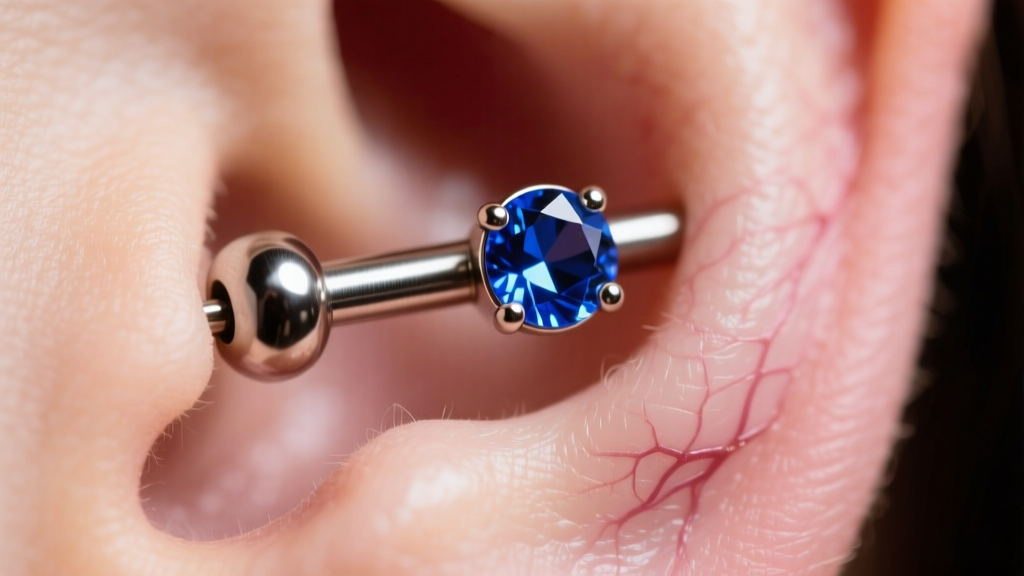
The 10mm to 12mm huggie hoop remains a staple, but in 2026, it is being paired with ultra-minimalist threadless ends in the helix. Threadless jewelry utilizes a press-fit mechanism where a slightly bent pin on the decorative end is pushed into a hollow post, creating tension that holds it securely without threading. This eliminates the bulk of a traditional screw-on ball, allowing for a flush, seamless look against the cartilage. For this pairing, opt for a 14k yellow gold huggie with a 1.2mm wire thickness in the lobe, and a 16-gauge titanium threadless end featuring a 1.5mm bezel-set diamond in the helix. The contrast between the metallic volume of the huggie and the pinpoint sparkle of the threadless end creates perfect visual equilibrium.
2. The Ear Cuff & Drop Earring Illusion (Mid-Ear to Lobe)
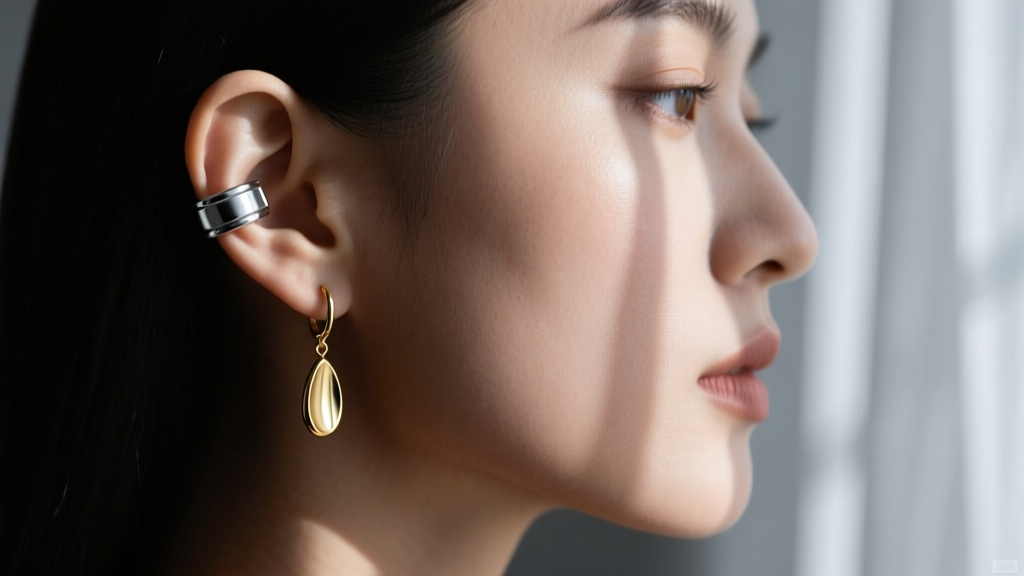
For those seeking a dramatic, editorial look without committing to additional cartilage piercings, the ear cuff and drop earring combination is trending heavily. The key to this styling trick is placing a C-shaped, tension-fit ear cuff on the upper scapha (the outer rim of the ear) and anchoring the look with a long, 20-gauge drop earring in the standard lobe. To ensure the ear cuff stays secure, look for designs with an adjustable tension band and a matte or brushed finish, which provides more grip against the skin than high-polish metals. The drop earring should feature a lightweight chain or delicate wirework to prevent dragging the lobe downward, maintaining the illusion of a connected, flowing line of jewelry.
3. The Statement Hoop & Micro-Stud Cluster (Upper Lobe)
Continuous segment rings (often mistaken for seamless hoops) have replaced standard hinged hoops in the upper lobes due to their superior security and comfort. A 14-gauge, 8mm continuous hoop in the upper lobe provides a bold, structural anchor. This is then surrounded by a micro-cluster of 18-gauge flat-back labrets in the mid-helix. The flat-back design ensures the jewelry sits flush against the ear, preventing the 'bed-head' poke that plagues traditional butterfly-back studs. This pairing leans heavily into the 'industrial elegance' trend, mixing raw, geometric metal with precise, star-map-like gem placements.
Material Grades: What the 2026 Consumer Demands
Aesthetic trends mean little if the materials cause allergic contact dermatitis or tarnish. The modern consumer is highly educated on metallurgy, largely driven by stricter global standards like the EU Nickel Directive (EN 1811:2011). When styling different earring types, material selection is paramount.
- ASTM F136 Implant-Grade Titanium: The undisputed king of cartilage piercings. It is completely nickel-free, lightweight, and can be anodized to produce vibrant colors without using surface dyes that can chip or fade.
- 14k Palladium White Gold: Unlike traditional white gold, which is alloyed with nickel and requires rhodium plating, palladium white gold is naturally hypoallergenic and maintains its cool-grey hue permanently. It is ideal for structural components like huggie hinges.
- Niobium: Highly favored for ear cuffs and large statement hoops due to its extreme malleability and lightweight nature, allowing for larger designs that won't weigh down the ear tissue.
For a comprehensive breakdown of gold alloys and their suitability for body jewelry, the Gemological Institute of America (GIA) provides extensive metallurgical data confirming that higher karat gold (like 22k or 24k) is too soft for structural earring posts, making 14k and 18k the optimal choices for durability and biocompatibility.
Price Point Analysis: Investment vs. Modular Styling
Building a versatile collection of different earring types requires a strategic approach to budgeting. The 2026 market is distinctly bifurcated into 'investment anchors' and 'modular accents'.
Investment Anchors ($150 - $600+): These are your structural pieces—14k solid gold huggies, continuous segment rings, and high-quality ear cuffs. Because these pieces endure the most mechanical stress (opening, closing, bearing weight), they must be crafted from durable alloys with precision-engineered hinges and closures.
Modular Accents ($35 - $90): Threadless ends, micro-studs, and interchangeable gems. By investing in high-quality titanium or gold posts (the hardware that stays in the ear), consumers can frequently swap out the decorative ends to match their daily aesthetic without the cost of buying entirely new earrings. A single 16-gauge threadless post can house a $40 opal end for daytime wear and a $85 diamond end for evening events.
Troubleshooting Common Styling Failures
Even with the best intentions, mixing different earring types can lead to physical discomfort if the physics of the ear are ignored. Here is how to troubleshoot the most common issues:
- The 'Snag and Tear' Helix: If your helix huggie constantly catches on hair or masks, the internal diameter (ID) is likely too large. Switch to a huggie with a 6.5mm or 7mm ID to ensure it hugs the cartilage tightly, eliminating the gap where snags occur.
- Lobe Migration from Drops: If your lobe piercing hole is elongating, your drop earrings are too heavy. Transition to hollow-tube gold designs or titanium wirework, which offer the visual volume of a large drop earring at a fraction of the gram weight.
- Ear Cuff Slippage: Ear cuffs slip when the ear's natural oils reduce friction. Before applying a tension cuff, wipe the scapha with a mild astringent or alcohol wipe to remove oils, ensuring a secure, all-day grip without the need to painfully over-tighten the metal.
Conclusion
Styling different earring types in 2026 is an exercise in anatomical awareness, material science, and visual balance. By moving away from symmetrical, mass-produced sets and embracing architectural asymmetry, threadless mechanics, and biocompatible metals, you elevate your ear curation from a simple accessory choice to a masterclass in personal styling. Whether you are anchoring a look with a 14k gold huggie or adding a subtle sparkle with a titanium threadless end, the modern curated ear is defined by intention, quality, and expert placement.


