Swoboda Earrings: Material Guide & Authenticity Tips
Discover the unique materials, wire gauges, and natural stones used in vintage Swoboda earrings. Learn how to authenticate and restore these 1960s classics.

The Mid-Century Legacy of Swoboda Jewelry
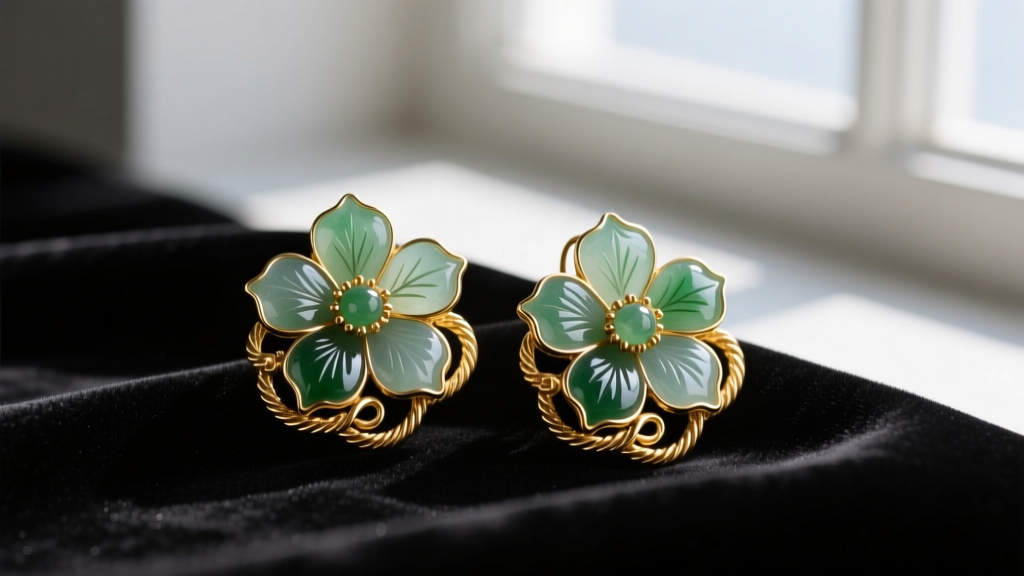
In the landscape of vintage American jewelry, few names evoke the organic, botanical elegance of the mid-century era quite like Swoboda. Operating primarily out of California from the 1950s through the 1970s, the brand carved out a distinct niche by combining heavy, sculptural wire-wrapping techniques with natural, unfoiled semi-precious stones. As we evaluate these pieces in the 2026 collector's market, understanding the specific material properties of vintage Swoboda earrings is no longer just a matter of historical curiosity—it is essential for authentication, valuation, and long-term preservation.
Unlike the mass-produced rhinestone costume jewelry of the same era, Swoboda relied on a highly specific palette of base metals, electroplating processes, and lapidary materials. For modern collectors and jewelry historians, distinguishing a genuine 1960s Swoboda piece from a contemporary imitation requires a deep dive into the metallurgy and gemology that defined the brand's golden years.
The Metallurgy of Swoboda: Base Metals and Plating
A common misconception among novice collectors is that the rich, golden hue of vintage Swoboda earrings indicates solid gold or gold-filled construction. In reality, the vast majority of Swoboda's structural wire and floral stems were crafted from brass and finished with a heavy gold electroplate (HGE). According to Lang Antiques University, mid-century California jewelers frequently favored brass for its malleability and tensile strength, which allowed for the intricate, multi-layered wire wrapping that became Swoboda's signature.
Plating Thickness and Wear Patterns
The gold electroplating used by Swoboda was notably thicker than standard flash plating, often measuring between 2 to 3 microns. This substantial coating allowed the earrings to survive decades of wear. However, brass is an alloy of copper and zinc, and over sixty years, environmental exposure can lead to a phenomenon known as dezincification. When examining vintage Swoboda earrings today, look closely at the high-friction areas near the earring posts and wire loops. If the underlying brass has begun to leach zinc, you will notice a distinct reddish-copper undertone showing through the gold plate, accompanied by a brittle texture in the metal itself.
Wire Gauge Specifications and Fatigue Risks
The architectural integrity of Swoboda's botanical designs relied heavily on specific wire gauges. The primary 'stems' and structural petals were typically formed using 16-gauge to 18-gauge brass wire, providing the rigid backbone necessary to hold heavy stone cabochons. Conversely, the binding wire used to secure the stones and wrap the stems was much finer, usually ranging from 24-gauge to 26-gauge.
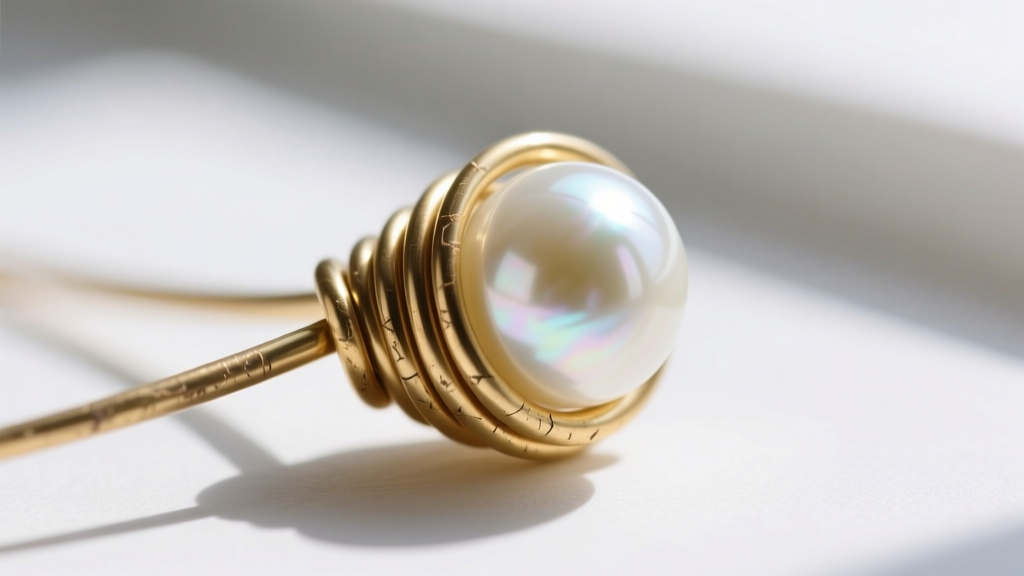
This disparity in wire gauge presents a significant conservation challenge in 2026. Decades of temperature fluctuations and minor physical stress cause metal fatigue, particularly in the thicker 16-gauge structural wires. Attempting to bend or reshape a vintage Swoboda floral stem to adjust the earring's profile is highly discouraged; the work-hardened brass will often snap cleanly rather than bend. Authenticators should look for the original, undisturbed curvature of the thick wire as a hallmark of an unaltered, pristine piece.
Gemological Profile: Natural Stones vs. Imitations
Perhaps the most defining material characteristic of genuine Swoboda earrings is the brand's uncompromising use of natural, semi-precious gemstones and freshwater pearls. While competitors utilized molded glass, lucite, or dyed howlite, Swoboda sourced genuine nephrite jade, banded agate, lapis lazuli, turquoise, and rock crystal quartz. The Gemological Institute of America (GIA) notes that the lapidary techniques of the 1960s favored bold, asymmetrical cabochons and deeply carved floral motifs, which Swoboda integrated seamlessly into their wire matrices.
Material Comparison Chart: Swoboda's Core Gemstones
| Stone Material | Mohs Hardness | Common Swoboda Cut | 2026 Authentication Tip |
|---|---|---|---|
| Nephrite Jade | 6.0 - 6.5 | Double-sided carved leaves/petals | Look for natural fibrous inclusions and a waxy luster; glass imitations will show spherical gas bubbles under magnification. |
| Banded Agate | 6.5 - 7.0 | Freeform cabochon, polished | Authentic agate will feel distinctly cool to the touch and shows sharp, concentric banding; dyed agate often has color pooling in micro-fractures. |
| Lapis Lazuli | 5.0 - 6.0 | Smooth dome cabochon | Genuine Swoboda lapis often features natural pyrite flecks (gold) and calcite veining (white); solid, uniform blue is likely synthetic sodalite. |
| Baroque Pearl | 2.5 - 4.5 | Uncarved, natural irregular shape | Real freshwater pearls exhibit a subtle 'tooth' when rubbed gently; plastic or coated glass pearls will feel perfectly smooth. |
The Role of Baroque Freshwater Pearls
Swoboda was instrumental in popularizing the use of irregular, baroque freshwater pearls in high-end costume jewelry. Rather than hiding the asymmetrical shapes of these pearls, Swoboda's wire-wrapping techniques were specifically engineered to cradle and highlight their unique, organic contours. When authenticating these pearls, examine the drill holes. Genuine mid-century pearls will show clean, sharp drill margins, whereas modern synthetic pearls often reveal a chipped or peeling coating around the wire entry point.
Hardware Evolution: From Screw-Backs to Friction Posts
The hardware attached to the rear of Swoboda earrings provides critical chronological data for dating a piece. In the 1950s and early 1960s, the brand predominantly utilized screw-back mechanisms. These early screw-backs were crafted from the same gold-plated brass as the earring face and featured a distinct, flat paddle lever for tightening against the earlobe.
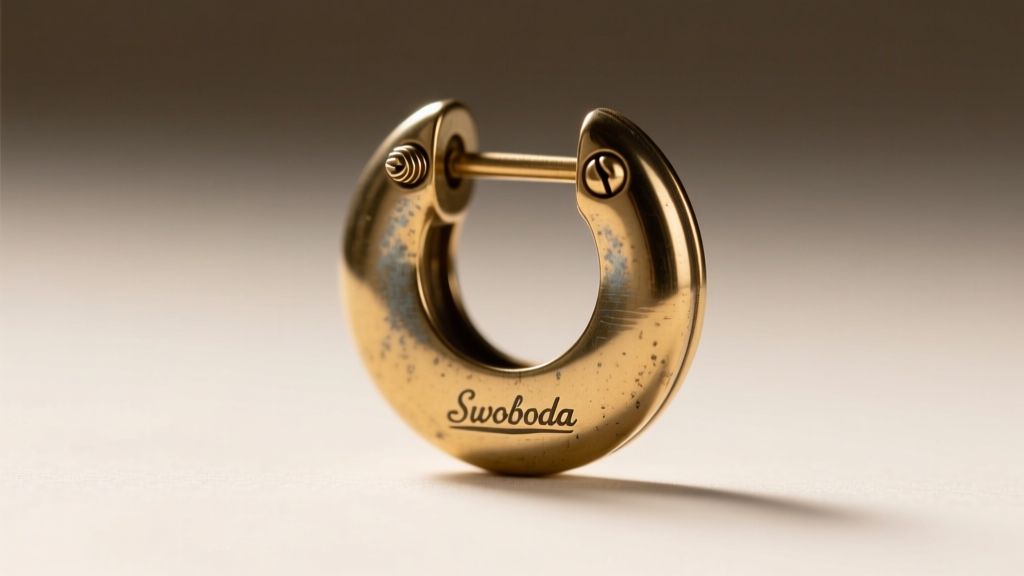
By the late 1960s and into the 1970s, Swoboda transitioned toward early clip-on mechanisms with adjustable tension screws, and eventually, standard friction posts for pierced ears. Collectors should note that the transition to pierced earrings was slower in the mid-century market than many realize. Furthermore, genuine Swoboda pieces are notoriously under-marked. While some later pieces feature a small, stamped 'Swoboda' hallmark on the earring back or the base of the post, the majority of their most iconic 1960s floral earrings rely entirely on the distinct wire-wrapping style and specific brass weight for identification, rather than a physical signature.
2026 Collector's Guide to Restoration and Care
Preserving the material integrity of vintage Swoboda earrings requires a nuanced approach that respects both the delicate gold electroplate and the porous nature of the semi-precious stones. The most common issue encountered by collectors today is the buildup of verdigris—a toxic, pale green copper acetate that forms when the underlying brass reacts with moisture, skin oils, and atmospheric acids over decades.
Safely Removing Verdigris Without Damaging Plating
Never use commercial silver dips, ultrasonic cleaners, or abrasive polishing cloths on Swoboda earrings. Ultrasonic waves can easily shatter the internal fracture lines of vintage jade or turquoise, while abrasive cloths will strip the 2-micron gold plating down to the bare brass in seconds. Instead, use a targeted chemical approach:
- Isolation: Use a wooden toothpick or a dry, stiff-bristled micro-brush to gently flake away dry, crusty verdigris from the wire crevices.
- Solvent Application: Dip a cotton swab in a mild acid solution, such as a 50/50 mix of distilled white vinegar and water. Carefully apply the swab strictly to the brass wire, avoiding all contact with the gemstones.
- Neutralization: Immediately follow up with a swab dampened in distilled water to halt the acid reaction, then dry thoroughly with a microfiber cloth.
Stone-Specific Hydration and Oiling
Materials like turquoise and nephrite jade are prone to desiccation over half a century of storage. If the jade appears chalky or the turquoise has lost its depth of color, a microscopic application of mineral oil using a soft brush can temporarily restore the stone's optical depth. However, this should be done sparingly, as excess oil can attract dust and create a sludge within the tight 24-gauge wire bindings. By understanding and respecting the specific material properties of these mid-century masterpieces, collectors can ensure that Swoboda's botanical legacy continues to thrive well into the future.


