Sword Earrings Through Ear: Best Metals & Material Guide
Discover the best metals for sword earrings through ear piercings. Compare titanium, gold, and niobium for safe, comfortable ear styling.

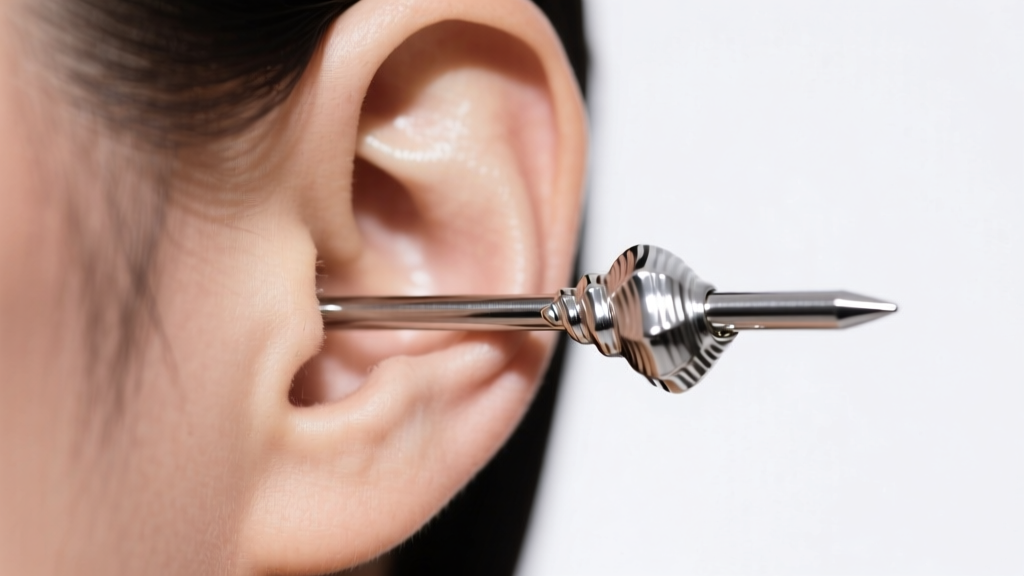
The Anatomy of a "Through-Ear" Sword Earring
The visual impact of sword earrings through ear piercings is undeniable. Whether styled as a horizontal spear traversing a conch piercing, a dramatic transverse lobe barbell, or an angled standard lobe piercing designed to mimic a blade entering the skin, this aesthetic relies heavily on the structural integrity of the jewelry. Unlike standard studs or lightweight hoops, a sword earring is essentially an elongated straight barbell featuring a decorative hilt or blade on one terminus and a secure backing on the other.
Because of the extended length of the bar—often ranging from 1 inch (25mm) to over 2 inches (50mm) for illusion or cartilage spears—the physics of the jewelry change dramatically. The elongated lever arm creates torque, meaning any accidental bump to the decorative hilt transfers multiplied force directly to the delicate fistula (the piercing channel). Consequently, choosing the correct material is not merely a matter of aesthetics or allergy prevention; it is a critical structural requirement to prevent migration, rejection, and tissue tearing.
Material Comparison Chart: What Works and What Fails
When selecting metals for long-bar rigid jewelry, we must evaluate biocompatibility, weight density, and tensile strength. Below is a comprehensive breakdown of how common body jewelry materials perform specifically in long-form sword applications.
| Material | Grade / Standard | Weight | Rigidity | Price Range (USD) | Verdict for Sword Bars |
|---|---|---|---|---|---|
| Implant-Grade Titanium | ASTM F-136 (Ti6Al4V ELI) | Very Light | Exceptional | $45 - $90 | The absolute gold standard for long bars. |
| Niobium | Commercially Pure (C.P.) | Medium | Moderate | $35 - $70 | Good for shorter spears; can bend if too long. |
| Solid Gold | 14k or 18k Nickel-Free | Heavy | High (but dense) | $150 - $400+ | Risky for long bars due to pendulum weight effect. |
| Surgical Steel | 316L / 316LVM | Heavy | High | $15 - $30 | Avoid. Contains nickel; too heavy for long-term wear. |
| Acrylic / Resin | N/A (Illusion cuffs only) | Ultra Light | Brittle | $10 - $25 | Only for non-pierced ear cuffs; never for true piercings. |
Deep Dive: Implant-Grade Titanium vs. Solid Gold
The two most requested materials in high-end body jewelry are implant-grade titanium and solid gold. However, when applied to sword earrings through ear placements, their physical properties yield vastly different long-term results.
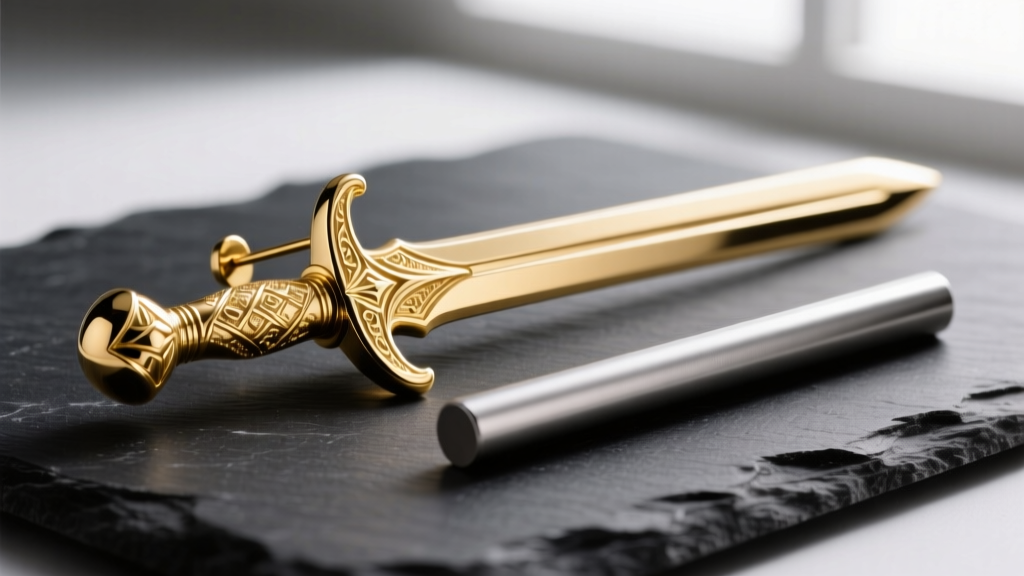
ASTM F-136 Titanium: The Structural Champion
According to the Association of Professional Piercers (APP), ASTM F-136 (Ti6Al4V ELI) is the premier alloy for initial and long-term piercings. For a sword earring, titanium's primary advantage is its extraordinary strength-to-weight ratio. A 14-gauge (1.6mm) titanium bar that is 45mm long weighs a fraction of its gold or steel counterparts. This minimized weight reduces the "pendulum effect"—the constant downward drag that causes the piercing channel to slowly stretch and migrate downward over time, a phenomenon piercers refer to as the "cheese cutter" effect.
Furthermore, titanium's high Young's modulus (stiffness) ensures the bar will not warp or bend if you sleep on it or catch the sword hilt on a sweater. Brands like Anatometal and NeoMetal machine their titanium bars to exacting tolerances, ensuring a perfectly straight axis that keeps the fistula relaxed.
14k vs. 18k Gold: Weight and Alloy Considerations
Gold is undeniably luxurious, and a gold sword hilt catching the light is a stunning aesthetic choice. However, gold is a dense, heavy metal. An 18k gold barbell contains 75% pure gold, making it significantly heavier and softer than 14k gold (which is 58.5% pure gold alloyed with strengthening metals like silver, copper, and zinc).
If you insist on a solid gold sword earring for a transverse lobe or conch, opt for 14k gold over 18k to maximize structural rigidity and minimize weight. Keep the bar length as short as anatomically possible. If the piercing requires a bar longer than 1.25 inches (32mm), the sheer weight of the gold will likely cause chronic irritation, swelling, and eventual rejection due to the constant gravitational pull on the tissue.
The Dangers of Surgical Steel and Acrylic in Long Bars
Many mass-market retailers sell "surgical steel" sword earrings. The term "surgical steel" is largely a marketing fabrication; it usually denotes 316L stainless steel, which contains up to 10% nickel. While encased in a passivation layer of chromium oxide, the friction of a long, rigid bar moving through the ear can wear down this microscopic layer, leading to nickel contact dermatitis. Furthermore, 316L steel is heavy. A steel sword earring will drag on the lobe, causing severe fatigue to the piercing channel.
Similarly, acrylic or resin "sword" earrings should never be worn through an actual piercing. Acrylic is porous, harboring bacteria, and degrades when exposed to the body's natural oils and sebum. It is also highly brittle; a long acrylic bar will easily snap inside the ear canal if pressure is applied, requiring surgical intervention to remove the shards.
Gauge, Threading, and Weight Distribution
Material is only half the equation. The mechanical design of the sword earring dictates its safety and comfort.
- The 14-Gauge Imperative: While standard lobe piercings are often done at 18g (1.0mm) or 16g (1.2mm), a true "through-ear" sword earring should ideally be worn at 14g (1.6mm). The thicker diameter provides the necessary core strength to prevent the bar from bowing or bending under the weight of the decorative hilt.
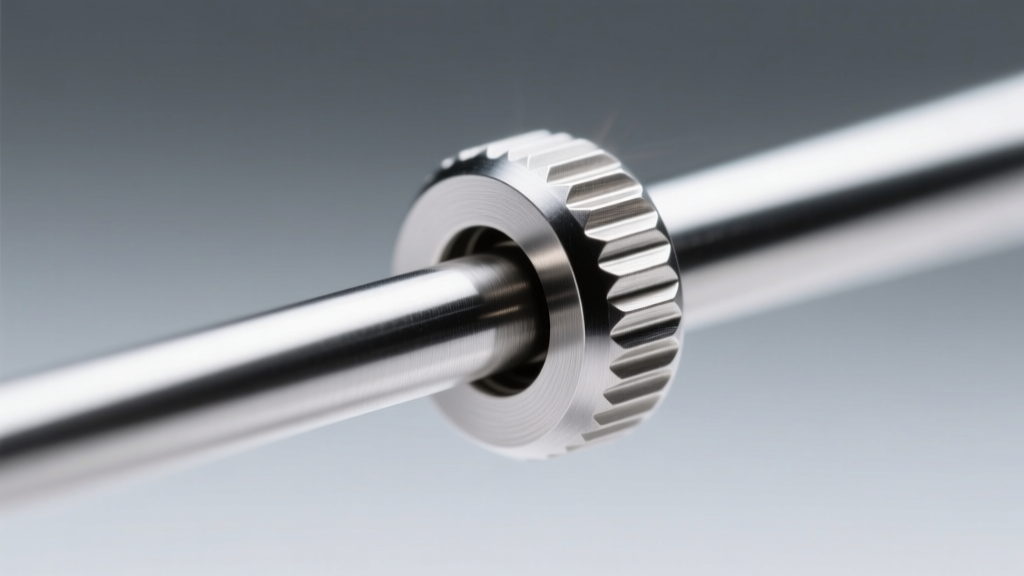
- Threadless (Push-Fit) vs. Internally Threaded: For long barbells, threadless systems (where a slightly bent pin is pushed into a hollow receiving tube) are vastly superior. They create a seamless, gap-free joint that won't harbor bacteria or catch on hair. Externally threaded jewelry—where the screw threads are on the bar itself—acts like a cheese grater on the fistula during insertion and should be strictly avoided.
- Backing Weight: To counterbalance a heavy, ornate sword hilt on the front, the back of the earring must feature a sufficiently wide, flat disk (usually 4mm to 6mm in diameter). This distributes the counter-pressure over a wider area of the back of the ear, preventing the backing from sinking into the tissue.
Illusion vs. True Piercing: The Ear Cuff Alternative
If your anatomy does not support a transverse lobe or horizontal conch piercing, or if you wish to avoid the commitment and healing time of a rigid barbell, the "illusion" sword ear cuff is a highly viable alternative. These pieces utilize a tension-fit C-cuff that wraps around the outer helix or lobe edge, with a faux bar extending across the ear to mimic a piercing.
"For illusion cuffs, you can safely use lighter, less expensive materials like brass, silver, or gold-plated base metals, because the jewelry does not penetrate the skin and bypasses all risks of internal rejection or fistula trauma."
However, ensure the tension of the cuff is adjustable. A cuff that is too tight will restrict blood flow to the cartilage, causing necrosis or severe pain after a few hours of wear.
Final Verdict: Choosing Your Metal
When investing in sword earrings through ear placements, prioritize physics and biocompatibility over sheer visual flash. Implant-grade ASTM F-136 titanium remains the undisputed champion for long, rigid barbells, offering the perfect synthesis of featherlight comfort and unbreakable rigidity. If you desire the prestige of gold, restrict the design to shorter bars in 14k alloys to mitigate the destructive pendulum effect. By respecting the mechanical forces at play, you can safely rock the striking, warrior-inspired aesthetic of the ear spear for years to come without compromising your tissue health.


