Tabi Earrings Heaven Mayhem: Avant-Garde Metal Guide
Explore the technical specs, materials, and biomechanics of Tabi earrings by Heaven Mayhem. An expert deep dive into avant-garde ear styling.

The Architecture of the Bifurcated Motif in Ear Jewelry
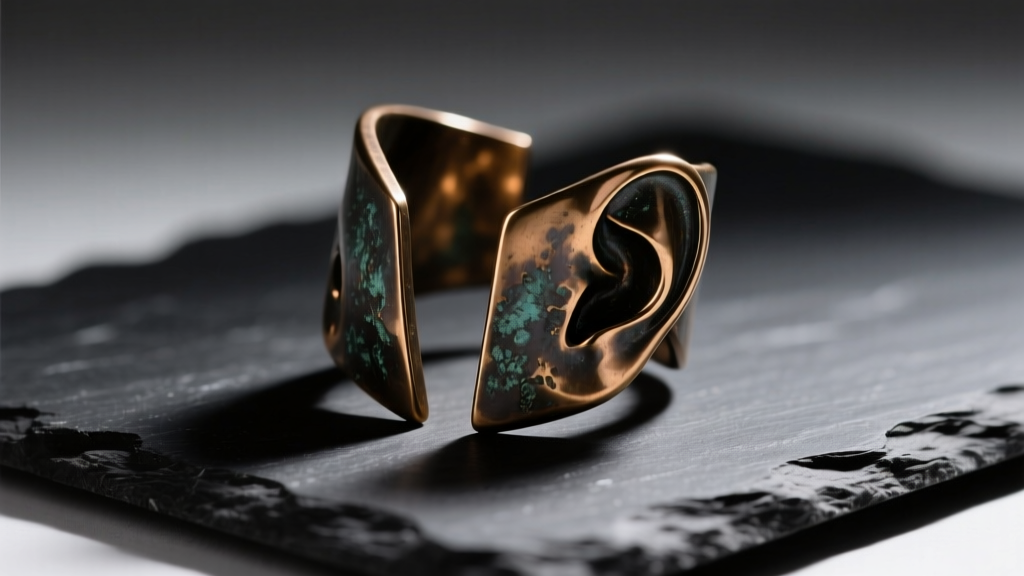
When evaluating the structural and aesthetic impact of the tabi earrings heaven mayhem releases, one must first understand the translation of the split-toe silhouette into micro-sculptural ear adornment. Originally popularized in avant-garde footwear, the bifurcated hoof-like design presents unique center-of-gravity challenges when adapted for the earlobe or helix. Unlike symmetrical geometric drops, the asymmetric weight distribution of the tabi motif creates a pendulum effect that places uneven shear stress on the piercing fistula. In the 2026 archival collections, Heaven Mayhem addressed this by implementing a counter-weighted posterior lobe clutch system, shifting the focal point while maintaining the aggressive, conceptual frontal profile.
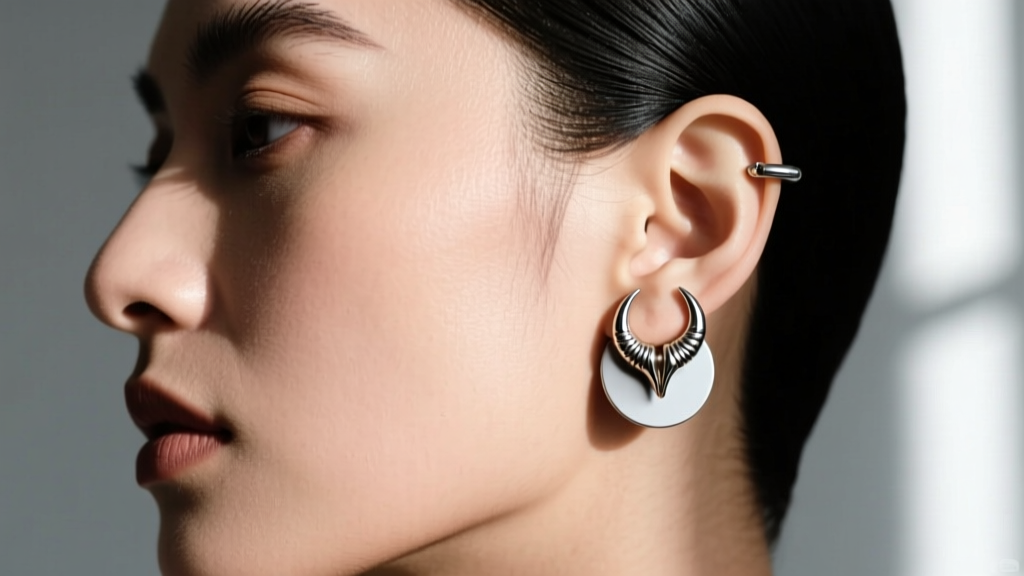
The visual impact of this silhouette is heavily dependent on the wearer's facial topography and ear protrusion. Because the designs feature outward-jutting prongs that mimic the split-toe geometry, they add significant horizontal volume to the side profile. For individuals with round or square face shapes, this horizontal extension provides a balancing, elongating effect, drawing the eye outward and softening strong jawlines. However, for those with prominent ears (protruding more than 2cm from the mastoid bone), wearing large, outward-facing sculptural pieces on the mid-helix can exaggerate ear prominence. In these cases, the technical solution is to utilize the brand's inward-curving conch cuffs or forward-facing tragus studs from the same collection, which project the motif anteriorly rather than laterally.
Metallurgical Breakdown and Material Science
The material science behind these pieces relies heavily on lost-wax casting for complex organic textures, followed by Physical Vapor Deposition (PVD) for color stability. According to material science resources from the Gemological Institute of America, PVD coatings are exceptionally hard (often exceeding 2000 HV on the Vickers scale), but they are not impervious to the acidic pH of human sebum and cosmetic chemical interactions. Ensuring that base metals are properly sealed is vital for those with metal sensitivities.
| Material Grade | Density (g/cm³) | Nickel Release | Tensile Strength |
|---|---|---|---|
| 316L Surgical Steel | 8.00 | < 0.5 µg/cm²/week | 485 MPa |
| Cast Brass (PVD Coated) | 8.45 | Variable (Sealed) | 350 MPa |
| Grade 23 Titanium (6Al-4V) | 4.43 | 0.00% | 895 MPa |
Due to the lost-wax investment casting method used for the brass and bronze variants, keen-eyed collectors should inspect the posterior flat surfaces for sprue cut-off marks. In high-end avant-garde jewelry, these marks are laser-welded and hand-filed to a mirror finish. If you acquire a piece on the secondary market and notice a raised, unpolished node near the base of the post, it indicates a rushed finishing process or a counterfeit cast from a silicone mold rather than the original wax master. Authentic pieces will feature a seamless transition between the 14G post and the main sculptural body, often reinforced with a hidden structural rib to withstand lateral bending forces.
Biomechanics and Lobe Support for Heavy Sculptural Pieces
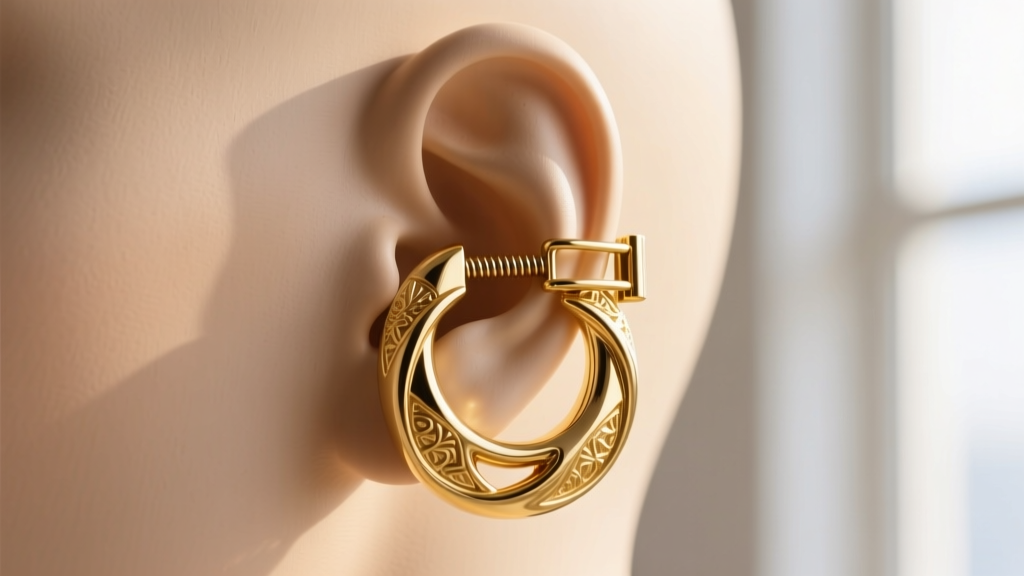
The physical reality of wearing heavy, sculptural avant-garde jewelry requires a clinical approach to tissue management. The average standard lobe piercing can comfortably support 4 to 6 grams of static weight before experiencing chronic downward migration or tissue thinning. Several pieces within this lineup exceed 11 grams per ear. To mitigate the risk of lobe tearing and fistula elongation, wearers must employ secondary support structures.
- Polyurethane Adhesive Patches: Applied directly behind the earlobe, these invisible patches distribute the shear force across a 2cm² surface area rather than concentrating it on the 1.2mm fistula tract.
- Omega-Clip Tension Calibration: For non-pierced adaptations or hybrid clip-ons, the omega wire must be calibrated to exert exactly 15-20 grams of clamping force. Too little results in the earring slipping off the pinna; too much causes ischemic necrosis of the outer ear cartilage.
- Threadless Pin Tension: For cartilage climbers in this collection, the 18-gauge threadless pin must be bent to a 7-degree angle prior to insertion to ensure the internal spring tension locks securely against the 16-gauge post.
Gauge Sizing, Threading, and Cartilage Compatibility
A critical failure point in avant-garde jewelry is the mismatch between decorative mass and post thickness. According to the Association of Professional Piercers, standard earlobe piercings are typically 20G (0.81mm) or 18G (1.0mm). However, supporting the heavy bronze and steel alloys used in these sculptural pieces requires a minimum of 16G (1.2mm) to prevent the post from bending under lateral torque. Heaven Mayhem’s 2026 technical specifications indicate a shift toward 14G (1.6mm) internally threaded posts for their largest drop variants.
Internally threaded posts are non-negotiable for fresh or healing cartilage piercings, as external threads can cause micro-tears in the fistula lining during insertion. For those looking to wear the cartilage-specific tabi cuffs on the helix or conch, verifying your piercing gauge with a professional using a taper gauge is mandatory before forcing a 14G post into an 18G hole, which can cause immediate blowout and hypertrophic scarring.
Patina Management and Long-Term Care
If the PVD layer on a brass-cast piece is compromised through abrasive polishing, the underlying copper and zinc alloys can react with sweat, resulting in verdigris (green oxidation) and localized skin irritation. Dermatological guidelines on contact dermatitis from the American Academy of Dermatology emphasize the importance of maintaining this barrier layer for sensitive skin types.
Recommended Maintenance Protocol
- Daily: Wipe with a dry, lint-free microfiber cloth to remove sebum and acidic sweat accumulation.
- Monthly: Use a pH-neutral jewelry cleaner. Avoid ultrasonic cleaners, as the high-frequency cavitation can delaminate PVD coatings on cast brass.
- Oxidation Control: For raw bronze variants intended to develop a patina, use a diluted liver of sulfur solution to control the darkening process, sealing it afterward with a micro-crystalline wax.
Market Positioning and 2026 Pricing Tiers
Navigating the acquisition of these pieces requires an understanding of the avant-garde secondary market versus direct retail. The collection operates in a niche tier of experimental body modification, with pricing reflecting the complex casting and finishing labor involved.
| Piece Category | Material | Retail Price (Est.) | Secondary Market (2026) |
|---|---|---|---|
| Standard Lobe Studs | 316L Steel / PVD | $140 - $180 | $110 - $150 |
| Heavy Drop Dangles | Cast Brass / Bronze | $280 - $350 | $300 - $450 |
| Cartilage Climbers | Grade 23 Titanium | $220 - $260 | $250 - $320 |
Ultimately, the technical execution of these earrings bridges the gap between runway conceptualism and wearable biomechanics. By prioritizing internal threading, counter-weighted designs, and hypoallergenic PVD sealing, the collection sets a new benchmark for how extreme silhouettes can be safely integrated into daily ear styling.


