How Do You Take Out Earrings? Safe Removal & Value Guide
Learn how do you take out earrings safely without damaging fine jewelry. Compare backing values, removal costs, and DIY vs. pro troubleshooting.

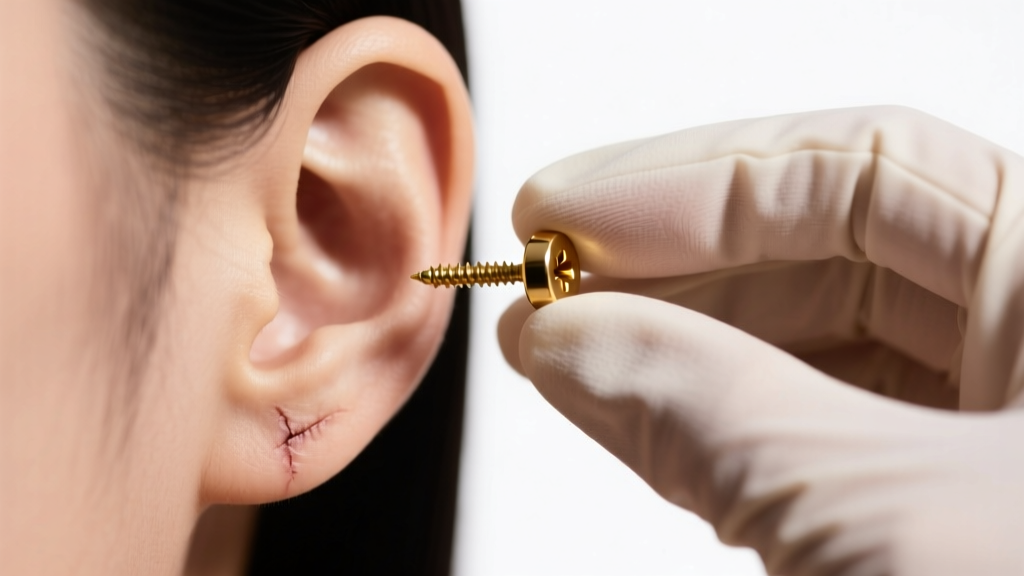
The Hidden Costs of Improper Earring Removal
When investing in fine jewelry, most buyers focus on the 4Cs of diamonds or the purity of the gold. However, the mechanics of how you interact with your jewelry daily can make or break its long-term value. If you have ever asked yourself, "how do you take out earrings without bending the post or losing the stone?" you are already thinking like a savvy jewelry investor. With precious metal markets fluctuating and 14k gold prices reaching historic highs in 2026, preserving the structural integrity of your earrings is a financial necessity.
Improper removal techniques lead to three primary financial drains: bent posts, stripped threads, and lost gemstones. A standard 20-gauge (0.81mm) gold post is remarkably soft. Yanking a stubborn friction back off at an angle can easily bend the post, requiring a $25 to $40 jeweler repair fee to straighten and re-polish. Worse, forcing a cross-threaded screw back can strip the internal threading, effectively ruining a $50 setting. Understanding the exact mechanics of your earring backings is the first step in protecting your investment.
How Do You Take Out Earrings Based on Backing Type?
The method for removal depends entirely on the clasp mechanism. Using the wrong technique is the fastest way to degrade your jewelry's resale value.
Friction Backs (The Budget Standard)
Friction backs, commonly known as butterfly clutches, rely on the tension of two small metal loops gripping the post's notch. They are standard on most budget and mid-tier earrings. To remove them, do not simply pull straight back, which puts lateral stress on the post. Instead, pinch the backing firmly between your thumb and index finger, and gently twist while pulling away from the earlobe. If the backing is stuck due to dried skin cells or hairspray buildup, apply a drop of sterile saline solution to soften the debris before attempting removal.
Screw Backs (The High-Value Investment)
Screw backs are the gold standard for high-value diamond studs, typically featuring M1.0 or M1.2 threading machined directly into the post. To remove them, grip the front of the earring (the gemstone setting) securely with one hand to prevent the post from twisting inside the piercing fistula. With your other hand, turn the backing counter-clockwise. If it resists, do not force it. Forcing a misaligned thread will strip the metal, destroying the locking mechanism. The Gemological Institute of America (GIA) recommends using a specialized rubber grip pad to gain traction on smooth metal backs without scratching the gold.
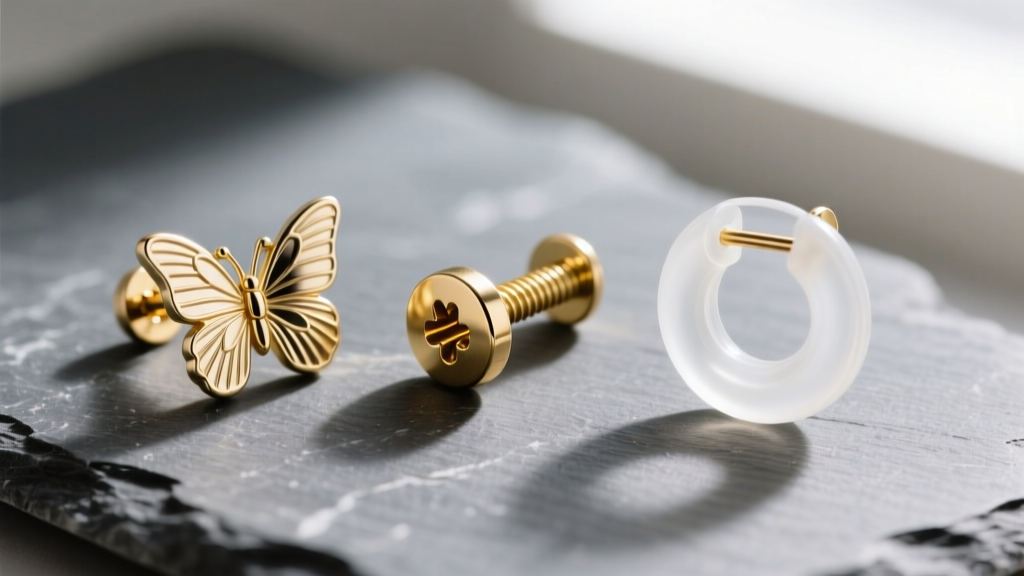
Hinged and Latch Backs (Hoops & Huggies)
Huggies and medium-sized hoops often utilize a hinged snap closure. The value proposition here is convenience, but the failure point is the hinge pin. To open, locate the tiny seam opposite the hinge and gently pull the post away from the catch until you hear a soft click. Never use your fingernails to pry the post out, as this can snap a natural nail or bend the delicate 18-gauge (1.02mm) wire. Use a piece of dental floss looped around the post to gently leverage it open if your grip is slipping.
Cost-Benefit Analysis: Upgrading Your Earring Backs
Many jewelers offer backing upgrades at the point of purchase, but is the premium worth it? Below is a value assessment of common backing types based on security, cost, and longevity.
| Backing Type | Upgrade Cost | Loss Risk | Best Application |
|---|---|---|---|
| Friction (Butterfly) | $0 (Included) | High | Budget fashion jewelry, temporary wear |
| Screw Back | $15 - $35 | Very Low | High-value diamond studs, daily wear |
| Silicone O-Ring | $3 (for 50) | Medium | Active wear, healing cartilage piercings |
| La Pousette | $40 - $60 | Low | Vintage, heirloom, and heavy drop earrings |
Value Verdict: If your earrings contain gemstones valued over $500, spending $30 to upgrade to threaded screw backs yields an immediate positive ROI by virtually eliminating the risk of loss. For heavy vintage drops, La Pousette backs (which use a spring-loaded trigger mechanism) provide the best security-to-weight ratio.
Troubleshooting Stuck Earrings: DIY vs. Professional Help
Knowing how do you take out earrings when they are genuinely stuck is a critical troubleshooting skill. Earrings can become trapped due to swelling, embedded skin, or cross-threading. The decision to attempt DIY removal or seek professional help should be based on a strict cost-and-safety matrix.
When to DIY (Cost: $0 - $10)
- Dried Debris: Soak a cotton pad in warm sterile saline and hold it against the backing for 5 minutes to dissolve sebum and dead skin.
- Slipping Grip: Use nitrile gloves or a silicone jar opener to gain maximum traction on smooth metal backs.
- Mild Swelling: Apply a cold compress to the earlobe for 10 minutes to reduce tissue volume before attempting to unclasp the backing.
When to See a Professional (Cost: $25 - $150)
If the earring back is embedded in the skin, or if the piercing is infected, stop immediately. The Association of Professional Piercers (APP) strongly advises against using pliers or excessive force on embedded jewelry, as this can cause severe tissue tearing and scarring. A professional piercer will typically charge between $25 and $50 to safely use sterile hemostats and taper tools to remove the jewelry. If the tissue has completely healed over the backing, a minor dermatological procedure (costing $100 to $150) may be required to excise the tissue and free the post.
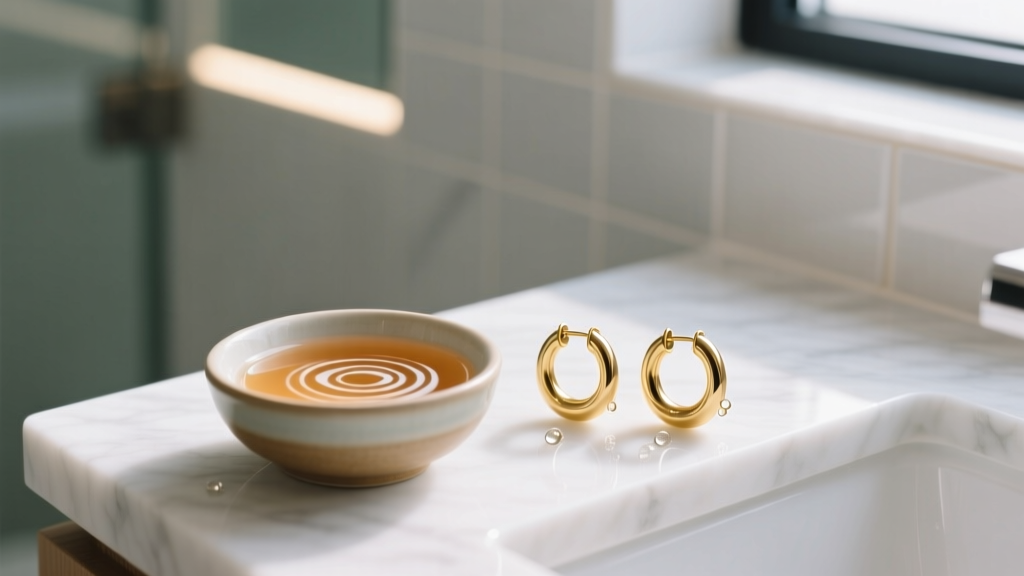
Expert Insight: Never use household tools like needle-nose pliers to grip fine gold or platinum posts. The hardened steel teeth of the pliers will instantly gouge the soft precious metal, permanently reducing the piece's appraisal value and creating micro-tears that harbor bacteria.
Preserving Resale Value During Removal and Storage
The removal process does not end when the earring leaves your ear. How you handle the piece immediately after removal dictates its condition for future wear or resale. Always remove earrings over a soft surface, such as a folded towel or a jewelry tray lined with microfiber. Dropping a diamond stud onto a hard tile floor can chip the girdle of the stone, instantly dropping its clarity grade and market value.
Once removed, wipe the post and backing with a lint-free microfiber cloth to remove skin oils and cosmetics. Store screw backs threaded completely onto their posts to prevent losing the backing or damaging the threads in a crowded jewelry box. By treating the removal process as a deliberate, value-preserving ritual rather than a rushed afterthought, you ensure your fine jewelry retains both its structural beauty and its financial worth for decades to come.


