Tear Drop Pearl Earrings: Pearl Grades & Metal Settings
Discover the ultimate material guide for tear drop pearl earrings. Compare nacre thickness, pearl origins, metal settings, and hardware durability.

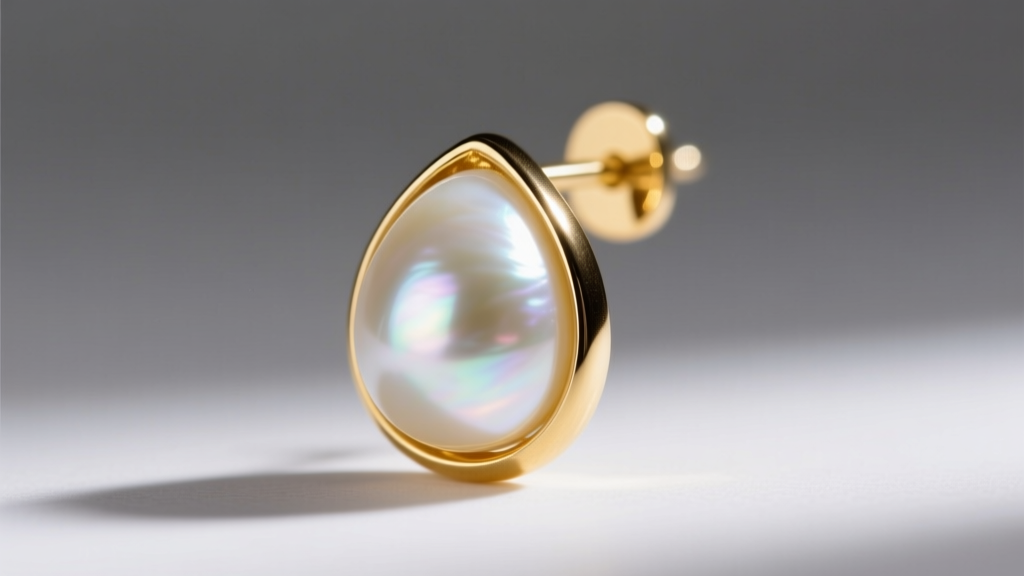
The Anatomy of Tear Drop Pearl Earrings
The pyriform, or tear drop, shape is one of the most elegant and challenging silhouettes to perfect in pearl jewelry. Unlike perfectly round pearls, which can be evaluated primarily on luster and surface cleanliness, tear drop pearl earrings require a meticulous assessment of symmetry, material density, and weight distribution. When a pearl forms with this elongated teardrop shape, the nacre deposition is inherently asymmetrical. This makes the underlying material properties—both of the pearl itself and the metallic hardware used to mount it—the critical factors in the earring's longevity and aesthetic appeal.
As of 2026, advancements in bead nucleation and tissue-grafting techniques have yielded higher-quality drop-shaped pearls than ever before. However, consumers and collectors must still navigate a complex matrix of pearl varieties, metal alloys, and mounting mechanics to ensure they are investing in pieces that will not degrade, detach, or lose their luster over time.
Pearl Varieties: Nacre Thickness, Luster, and Origin
The physical properties of a tear drop pearl vary drastically depending on the mollusk species and the cultivation environment. The thickness of the nacre (the crystalline substance that forms the pearl) dictates not only the optical luster but also the structural integrity of the drill hole.
Akoya vs. Freshwater Tear Drops
Japanese and Chinese Akoya pearls (Pinctada fucata martensii) are bead-nucleated. Their nacre thickness typically ranges from a fragile 0.2mm to a robust 0.8mm. High-quality Akoya tear drops exhibit a sharp, mirror-like luster due to the tight, uniform alignment of their aragonite crystals. However, if the nacre is too thin (under 0.3mm), the elongated shape is prone to "peeling" at the drill hole site where stress is concentrated.
Conversely, traditional freshwater pearls are tissue-nucleated, meaning they are composed of solid nacre. While this makes them incredibly durable, achieving a symmetrical tear drop shape in solid-nacre freshwater pearls is exceptionally rare. Modern Edison freshwater pearls, which utilize bead nucleation, have bridged this gap, offering large, symmetrical tear drops with thick nacre (often exceeding 2.0mm) at a fraction of the cost of saltwater alternatives.
South Sea and Tahitian Options
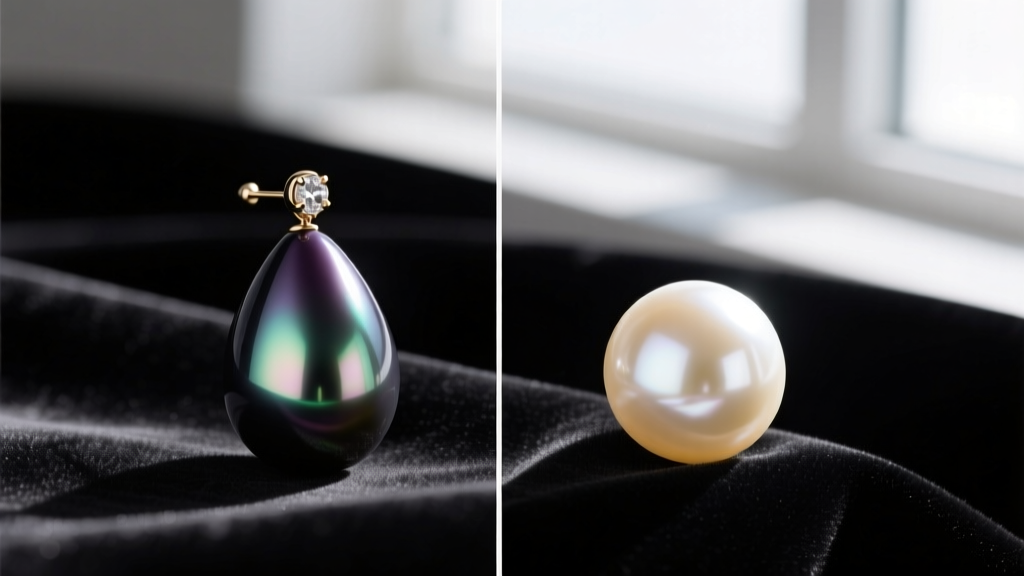
For luxury buyers, White and Golden South Sea pearls (Pinctada maxima) offer unparalleled nacre thickness, usually between 2.0mm and 6.0mm. This immense depth of nacre gives South Sea tear drops a soft, satiny luster rather than a sharp reflection. Tahitian pearls (Pinctada margaritifera) provide striking dark body colors with peacock or aubergine overtones. According to the Gemological Institute of America (GIA), Tahitian nacre thickness must legally be at least 0.8mm to be exported from French Polynesia, ensuring a baseline of structural durability for tear drop settings.
Hardware & Settings: Metals that Complement Pearls
The metal setting of a tear drop earring must do more than look beautiful; it must support the pearl's uneven center of gravity. Because tear drops hang downward, the earring post and cup bear continuous torque. Below is a technical comparison of the most common metals used in high-end pearl settings.
| Metal Type | Hardness (Vickers) | Average Setting Price | Best Pearl Pairing & Properties |
|---|---|---|---|
| Platinum (950) | ~125 HV | $250 - $600+ | South Sea & Tahitian. Dense, heavy, and hypoallergenic. Prevents post bending under the weight of large 13mm+ tear drops. |
| 18k Yellow Gold | ~120-140 HV | $150 - $400 | Akoya & Golden South Sea. Rich color enhances warm pearl overtones. Softer than 14k, requiring thicker post gauges for stability. |
| 14k White Gold | ~135-160 HV | $90 - $250 | White Akoya & Edison. Excellent tensile strength for thin, elegant posts. Usually rhodium-plated to prevent nickel allergies. |
| Sterling Silver (925) | ~60-70 HV | $30 - $100 | Freshwater. Prone to sulfide tarnishing. Must be rhodium-plated when paired with pearls to prevent chemical transfer to the nacre. |
Evaluating Drilling Techniques and Adhesives
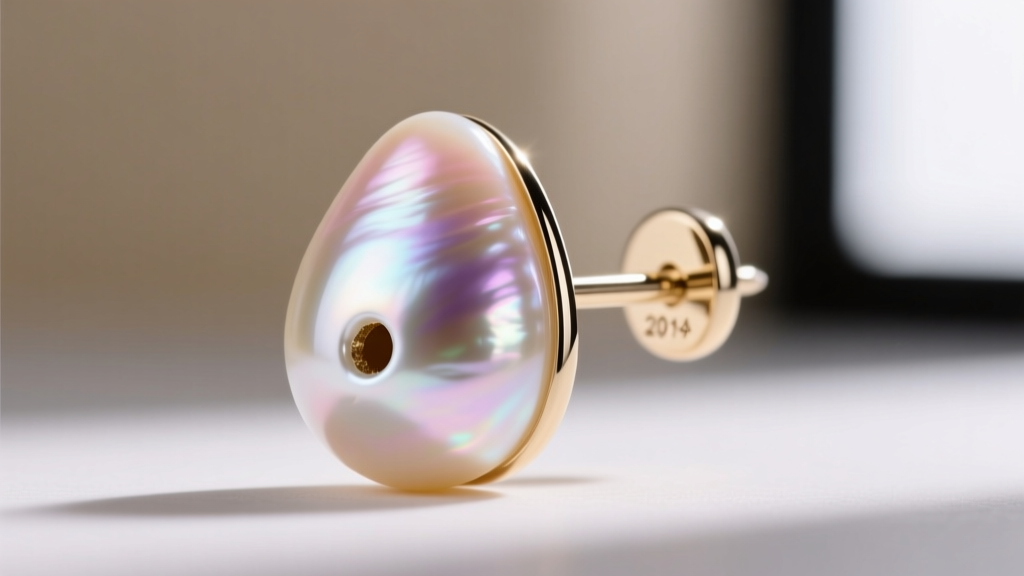
The most critical point of failure in tear drop pearl earrings is the junction where the pearl meets the metal. Unlike round pearls, which can be fully drilled and strung on a wire, high-quality tear drops are almost exclusively half-drilled and mounted on a peg setting.
The Mechanics of Half-Drilled Peg Settings
A half-drilled pearl features a drill hole that penetrates only 1/3 to 1/2 of the pearl's total length. This preserves the structural integrity of the pearl's tip and prevents the "blowout" effect, where the drill bit chips the nacre as it exits the opposite side. The metal peg (or post) must be precisely sized. A standard pearl post is either 20-gauge (0.81mm) or 18-gauge (1.02mm). If the peg is too thick, it can crack the pearl during mounting; if too thin, the pearl will wobble and eventually snap the post.
Furthermore, the "cup" at the base of the peg must be sized to exactly 70% to 80% of the pearl's base diameter. A cup that is too small leaves a visible gap of adhesive, while a cup that is too large will not sit flush against the pearl's natural curvature, creating a stress point that will eventually pop off.
Adhesive Selection: Epoxy vs. Cyanoacrylate
Mass-market jewelers often use cyanoacrylate (super glue) to attach half-drilled pearls. This is a catastrophic failure point. Cyanoacrylate cures brittle and degrades rapidly when exposed to moisture, skin oils, and temperature fluctuations. Expert jewelers exclusively use two-part jeweler's epoxies, such as Epoxy 330 or Devcon 5-Minute Epoxy. These adhesives cure with a slight flexibility, absorbing the micro-shocks of daily wear and maintaining a secure bond for decades. The GIA's pearl care guidelines emphasize that improper chemical adhesives can also seep into the nacre layers, causing irreversible yellowing.
Care, Maintenance, and Material Degradation
Pearls are organic gems, ranking a mere 2.5 to 3.0 on the Mohs scale of hardness. This makes them highly susceptible to scratching and chemical degradation. When caring for tear drop pearl earrings, you must consider the vulnerabilities of both the nacre and the metal setting.
- Chemical Exposure: Perfumes, hairsprays, and cosmetics contain alcohols and volatile organic compounds (VOCs) that can dissolve the conchiolin (the organic protein binding the aragonite crystals in the nacre). Always put your earrings on after applying cosmetics.
- Cleaning Protocols: Never use ultrasonic cleaners or steamers on pearl earrings. The high-frequency vibrations can shatter the pearl from the inside out, especially around the half-drilled hole. Clean only with a damp, lint-free microfiber cloth.
- Storage Mechanics: Store tear drop earrings flat. Hanging them on a jewelry tree for extended periods places constant gravitational stress on the adhesive bond, which can lead to creeping failure over time.
"When evaluating a vintage pair of tear drop pearl earrings, the first thing I inspect is the glue line. A yellowed, brittle glue line indicates cyanoacrylate degradation, meaning the earring is a drop-risk. A clean, slightly flexible, and invisible bond indicates professional two-part epoxy mounting."
Final Verdict: Matching Budget to Material Grade
Investing in tear drop pearl earrings requires balancing the visual symmetry of the pearl with the mechanical reliability of the hardware. For everyday wear under $500, look for high-luster Edison freshwater tear drops set in 14k white gold with 20-gauge posts and peg cups. For heirloom-grade investments exceeding $2,000, demand White or Golden South Sea tear drops with verified nacre thickness over 2.0mm, mounted in 18k gold or Platinum using professional jeweler's epoxy. By understanding the material science behind the jewelry, you ensure your earrings remain secure, lustrous, and structurally sound for a lifetime.


