Brass Earrings: Technical Guide to Alloys, Tarnish, and Skin Safety
Explore the metallurgy of brass earrings. Learn about alloy grades, tarnish prevention, gauge strengths, and skin safety for sensitive ears.

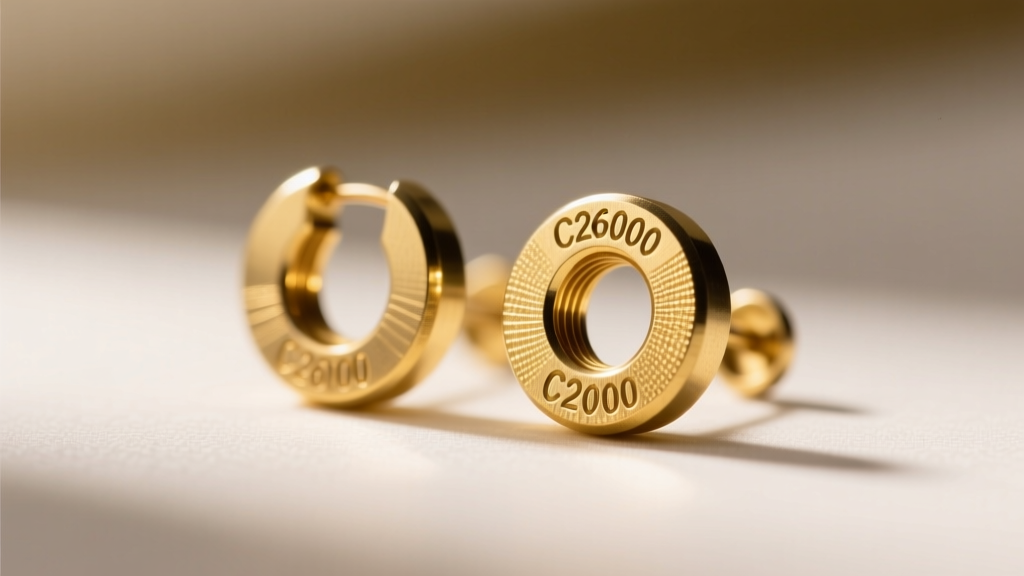
Brass is one of the most polarizing metals in the jewelry industry. Prized for its warm, gold-like hue and exceptional malleability, it is a favorite among artisan jewelers and large-scale manufacturers alike. However, as of 2026, consumer demand for transparency regarding material safety and longevity has forced a deeper look into what actually goes into your ear piercings. To truly understand brass earrings, we must move beyond basic style guides and examine the metallurgy, structural mechanics, and dermatological realities of this copper-zinc alloy.
The Metallurgical Breakdown: Alloy Compositions and Safety
Brass is not a single elemental metal; it is an alloy primarily composed of copper (Cu) and zinc (Zn). The ratio of these two elements dictates the metal's color, tensile strength, and most importantly, its biocompatibility. According to the Copper Development Association, there are dozens of brass alloys, but only a select few are appropriate for body jewelry.
Jeweler's Brass vs. Free-Machining Brass
The most critical distinction in earring manufacturing is between C26000 (Cartridge Brass) and C36000 (Free-Machining Brass). Cartridge brass consists of roughly 70% copper and 30% zinc. It is highly ductile, resists stress corrosion cracking, and is entirely lead-free, making it the gold standard for brass ear wires and posts.
Conversely, C36000 contains up to 3% lead (Pb) to improve machinability. While excellent for plumbing fixtures, leaded brass should never be used for earring posts that penetrate the skin, as prolonged exposure to bodily fluids can cause heavy metal leaching. When purchasing brass earrings, always verify that the manufacturer uses C26000 or explicitly certifies their alloy as lead-free.
| Alloy Designation | Composition | Best Jewelry Application | Safety / Risk Profile |
|---|---|---|---|
| C26000 (Cartridge) | 70% Cu, 30% Zn | Ear wires, posts, huggies | Excellent (Lead-free, highly ductile) |
| C28000 (Muntz) | 60% Cu, 40% Zn | Heavy dangles, structural hoops | Good (Stiffer, slightly more brittle) |
| C36000 (Free-Machining) | Cu, Zn, ~3% Pb | None (Avoid in jewelry) | Poor (Lead leaching risk in piercings) |
| C85700 (Red Brass) | 85% Cu, 15% Zn | Vintage-style studs, cast pieces | Good (Warm color, high copper content) |
Structural Integrity: Gauge Sizes and Weight Distribution
Brass possesses a Young's Modulus of approximately 97 GPa. To put this in perspective, it is significantly stiffer than pure 24k gold (~79 GPa) but more flexible than surgical steel (~200 GPa). This mechanical profile makes brass ideal for intricate, lightweight dangles, but it requires careful gauge selection for structural components like hoops and huggies.
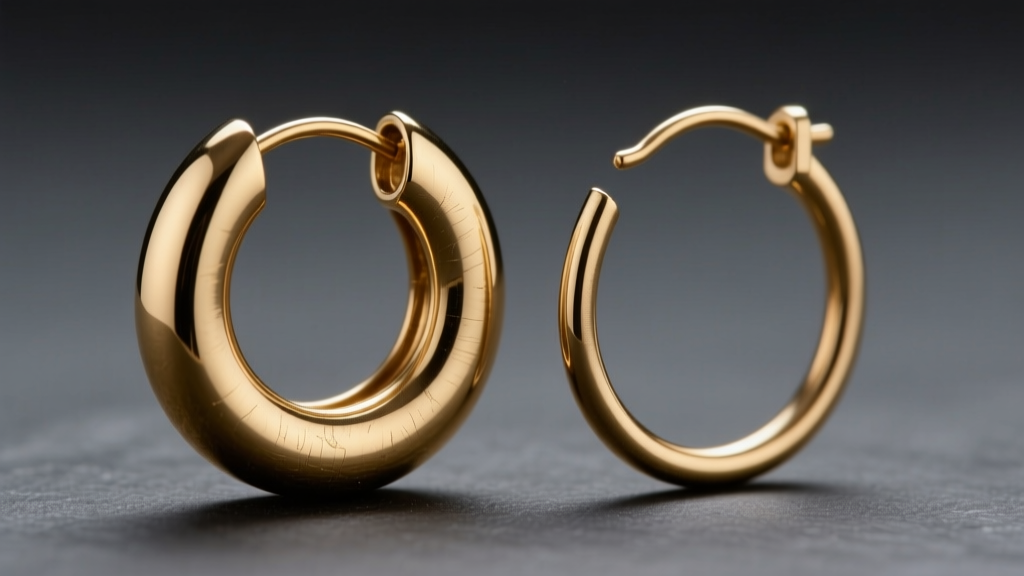
For standard lobe piercings, an 18-gauge (1.02mm) or 20-gauge (0.81mm) C26000 brass ear wire is standard. However, brass is denser than aluminum and titanium. If you are designing or purchasing large, continuous brass hoops, the weight of the metal can cause the wire to warp or pull through the earlobe over time. For any brass hoop exceeding 30mm in diameter, experts recommend stepping up to a 14-gauge (1.63mm) or 12-gauge (2.05mm) wire to maintain structural rigidity and distribute the weight safely across the fistula.
The Oxidation Mechanics: Why Brass Tarnishes
The most common complaint regarding brass earrings is tarnish. This is not a flaw in the manufacturing, but a predictable chemical reaction. Copper, the primary element in brass, reacts with atmospheric oxygen, moisture, and sulfur compounds to form cuprous oxide (Cu2O) and eventually copper sulfide (CuS), which manifests as a dark, mottled brown or black patina.
Modern Prevention Technologies
In the past, jewelers relied on thin lacquer sprays that would inevitably chip, exposing the raw metal to air and causing patchy tarnishing. As of 2026, advanced barrier technologies have revolutionized brass maintenance:
- E-Coating (Electrophoretic Deposition): A microscopically thin, uniform layer of UV-resistant acrylic is electrically bonded to the brass. This provides a durable, hypoallergenic barrier that can last 2-5 years before wearing off.
- Parylene Conformal Coating: Originally used in aerospace, this vapor-deposited polymer creates a pinhole-free, biocompatible shield that completely halts oxidation without altering the metal's tactile feel.
- Renaissance Wax: For uncoated, raw brass earrings, applying a microcrystalline wax buffer limits oxygen exposure and is easily reapplied by the wearer.
Dermatological Realities: The "Green Skin" Phenomenon
It is vital to differentiate between a true metal allergy and a chemical chelation reaction. The infamous "green skin" effect caused by brass earrings is not an allergic response; it is a harmless, albeit unsightly, chemical reaction.
Human sweat contains water, sodium chloride (salt), and lactic acid, with a pH typically ranging from 4.5 to 7.0. When raw brass rests against the skin, the acidic environment causes the copper to oxidize and form copper chloride and copper carbonate salts. These green compounds are then absorbed into the stratum corneum (the outermost layer of skin). This can be easily washed away with soap and water and is entirely non-toxic.
"True contact dermatitis in jewelry is almost exclusively triggered by nickel. Under the strict guidelines of the EU Nickel Directive, the migration rate of nickel from post-assemblies must not exceed 0.5 µg/cm²/week. High-quality C26000 brass contains virtually zero nickel, making raw brass inherently safe for those with nickel sensitivities, provided the green oxidation is managed." — European Chemicals Agency (ECHA) Guidelines on Skin Sensitizers
If a wearer experiences actual itching, swelling, or weeping at the piercing site, they are likely reacting to trace nickel impurities in low-grade, unregulated brass alloys, or to the solder used to attach the earring post. Always opt for laser-welded or high-purity silver-soldered joints rather than cheap nickel-based brazing alloys.
Expert Maintenance and Restoration Protocol
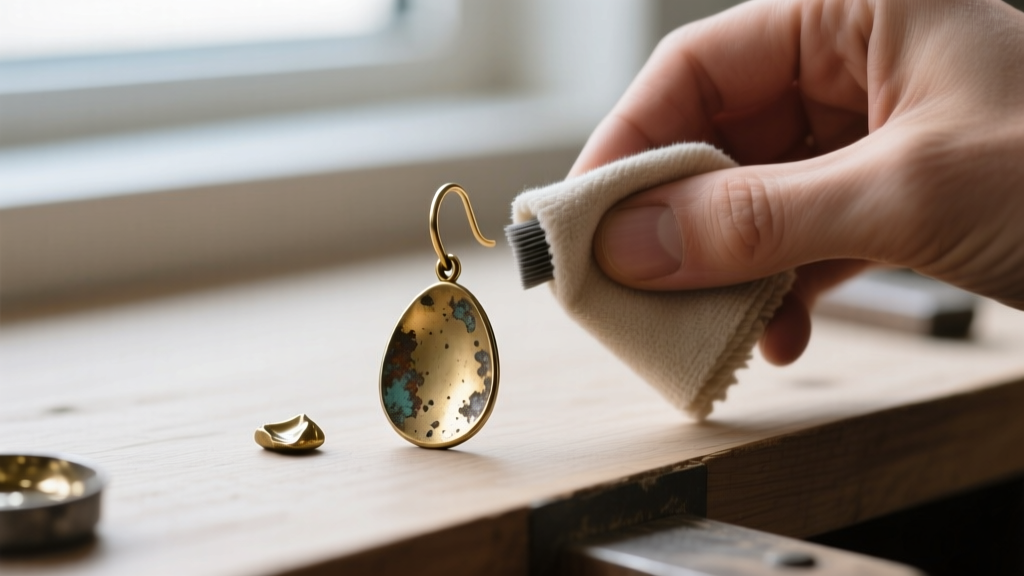
When brass earrings inevitably lose their luster, proper restoration requires understanding the chemistry of the cleaning agents. Many commercial brass dips rely on harsh ammonias and strong mineral acids.
The Danger of Dezincification
Using highly alkaline cleaners (like pure ammonia) on high-zinc brass alloys (such as C28000) can trigger dezincification. This is a form of corrosion where the zinc is selectively leached out of the alloy, leaving behind a porous, structurally weakened copper sponge. This will cause the earring to become brittle and snap under minimal pressure.
The Safe Restoration Method
- Mild Acid Bath: Submerge the earrings in a solution of equal parts distilled white vinegar (acetic acid) and warm water with a pinch of non-iodized salt for no more than 3 minutes. The mild acid dissolves the copper oxide layer without attacking the zinc.
- Neutralization: Immediately rinse the earrings in a baking soda and water solution to halt the acidic reaction.
- Mechanical Polishing: Use a specialized non-abrasive jeweler's rouge or a microfiber cloth to buff the metal to a high shine. Avoid rotary tools with stiff bristles, which can leave micro-scratches that accelerate future tarnishing.
By understanding the exact alloy composition, respecting the mechanical limits of the gauge, and utilizing modern barrier coatings, brass earrings can offer the luxurious aesthetic of high-karat gold with a fraction of the cost, all while remaining safe and structurally sound for daily wear.


